Why the Conceptual Frameworks of Soft and Hard Power Have Become Redundant
As the discipline of international relations has evolved, new terminology has emerged within its specialised vocabulary. A number of concepts have been popularised and consolidated as established theoretical frameworks, among them both soft power and hard power. These terms have become firmly embedded in the lexicon of international relations (IR), to the extent that they are often treated as parallel, alternative or complementary to older concepts whose meanings have become increasingly ambiguous in contemporary usage.
In light of conceptual developments within IR, however, it is increasingly apparent that the distinction between soft and hard power has become redundant in the contexts of diplomacy and warfare. The purpose of this article is to demonstrate that these concepts have become obsolete in their analytical utility, both in tracing the evolution of power as a concept and in understanding how war and diplomacy are currently practised in the conduct of foreign policy.
Soft Power
The term soft power is employed to denote the means by which a state exerts its influence over another without resorting to overt coercion. Such methods vary in scope, and include cultural and societal instruments such as music, cuisine, fashion and cinema.
The United States of America has demonstrated a paradigmatic example of effective soft power, as evidenced by the growth and influence of the American entertainment industry worldwide, widely known as Hollywood, a term derived from the Californian city in which the industry has flourished. With regard to the culinary domain, a prominent example is McDonald’s, a global fast-food chain with a presence across every content, including those of numerous developing countries.
The role of cuisine as an instrument of soft power has been a subject of interest in the field of IR for a considerable period. The notion that the presence of a McDonald’s restaurant in a given country does not lead to military conflict between that nation and its neighbouring territories has been well-documented, with particular exceptions. The underlying implication of this argument is that multinational corporations such as McDonalds would exclusively establish operations in developing countries, signifying a commitment to stability and democratic principles. In essence, countries that have those states of governance tend to be interconnected and bound by economic ties. As a result, there appears to be a lack of evident rationale for the dissolution of the relationship, since doing so would risk undermining the economic stability of the state.
This phenomenon can also be illustrated through clothing. Items such as Levi’s jeans, Nike trainers, as well as the suit and tie collectively symbolise the Western world and its cultural norms. In contrast tot he prevalent adoption of the Western suit in international settings, we have observed that nations such as China, North Korea, and those within the Arab world have demonstrated a consistent commitment to cultivating their own distinct sartorial traditions. This commitment is further manifested through the deliberate and strategic presentation of these cultural expressions during international forums, where clothing becomes a visible marker of identity, autonomy and political positioning.
In the realm of military attire, it has long been customary for military leaders to symbolise their authority and power through the adoption of Western suits instead of military uniforms (ACUs). This symbolic shift suggests a move away from militarism towards a civilian mode of governance. This is often intended to convey a message to the international community, that of democratisation and reintegration into the global community, which typically distances itself from governments that emerge through undemocratic transitions of power. Conversely, the Alliance of Sahel States (comprising Niger, Mali, and Burkina Faso) has pursued a divergent course. The leaders of these states have come to power through military coups and have chosen not to abandon military dress. On the contrary, they have elected to retain this attire, even in the context of international engagements on the global stage, thereby underscoring their profound disillusionment with the Western world, and most notably with France.
Hard Power
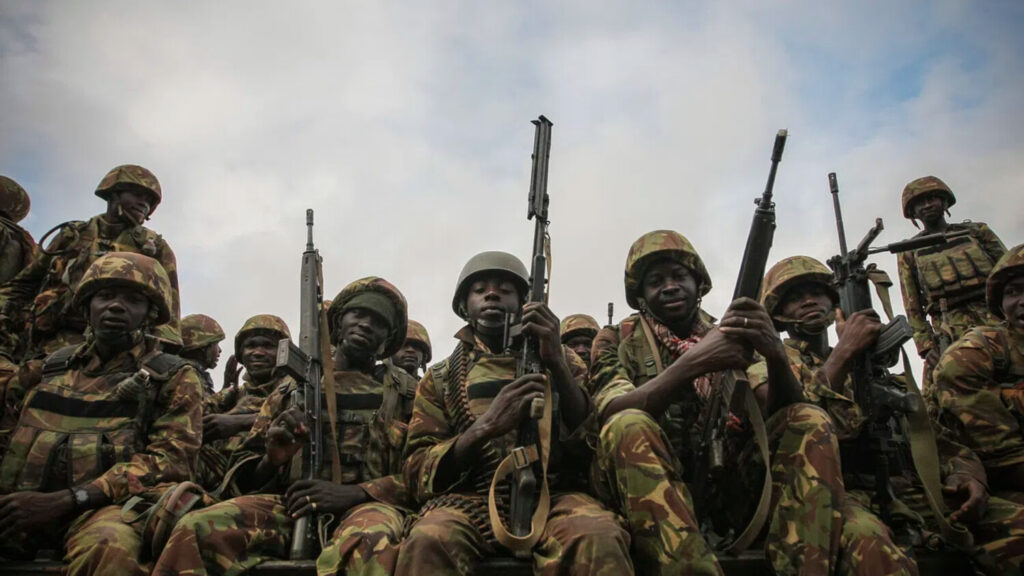
With regard to hard power, it refers to the set of methods used to compel a state to act in a particular way despite its reluctance. The instruments available for this purpose may include the deployment of travel bans, asset freezes, international arrest warrants, the imposition of economic sanctions, or direct military intervention. These actions, when taken collectively, can be interpreted as hostile towards a nation, state, or particular political figures. This approach often results in a definitive outcome, potentially causing unintended consequences for the population. The aforementioned acts of aggression or retaliation are intended to intimidate and pressure the targeted actor. In strategic terms, they are often employed as a form of escalation or prelude to a broader military action, including preventive and pre-emptive strikes against those who fail to comply with the prevailing international order.
The use of travel bans by a wide range of states, with the United States as one of the most prominent proponents, is well documented. This instrument is typically applied to individuals who are accused or suspected of committing serious offences within their own countries. These offences may include gross violations of human rights, substantial public funds misappropriation or embezzlement, pervasive corruption, and other acts of significant societal harm against the nation’s own population. By restricting full or partial access to the United States, these measures are intended to signal that the targeted individuals are considered a threat to the international order.
A considerable number of political stakeholders in regimes often opt to maintain their financial assets in institutions based in Western territories, which offer stable legal frameworks and reliable financial protections. This practice allows them to safeguard their their financial assets in locations that are geographically distant from their nation of origin, particularly in contexts where their own domestic institutions may be unable to guarantee asset security in the event of regime change that contravenes constitutional principles.
The targeted freezing of assets has emerged as an effective coercive instrument. By restricting access to overseas financial holdings, such measures can exert direct pressure on political insiders, limiting their ability to operate, signal impunity or transfer resources. Asset freezes therefore function as a means of compelling compliance, constraining political behaviour, or exerting control over key actors within contested political systems.
The objective of economic sanctions is to impose a suffocating environment on a specific political regime. The objective of the policy is to deprive the subjects of their main incomes by implementing a blockade of specific goods, or by prohibiting financial transactions with other countries. The objective of this initiative, as outlined in the strategic plan, is to dismantle the nation’s financial autonomy. This is expected to culminate in the incitement of a popular uprising, driven by the impoverished populace.
The final stage of these non military measures – although perceived as acts of war in themselves – is direct military intervention in the conventional sense. It is imperative to understand that military sanction should not be regarded as a standalone measure to restrict the actions of a nation. . Rather, it typically represents the culmination of a graduated sequence of coercive policies and assertive actions. In this sense, military intervention extends beyond the deployment of ground forces alone. It also encompasses a broad spectrum of proactive measures, including the establishment of no-fly zones, cyber operations, aerial bombardment and the use of unmanned aerial systems for surveillance or strike purposes. Additionally, the implementation of a peacekeeping force is a critical component of military intervention, serving to maintain order and ensure the safe return of conflict parties.
What Differs?
Despite the evolution of the definition of diplomacy and the potential for diverse interpretations within different contexts, the fundamental concept may be broadly defined as the conduct of international relations through peaceful means. The purpose of this article is to emphasize the word “peaceful” in order to assert the principle of attrition and highlight the main component that differentiates diplomacy from war. It is key to understand that the dynamics of diplomacy and war are inextricably linked, and a comprehensive understanding of this duality is necessary to comprehend contemporary geopolitical dynamics. As the famous saying goes: “The concepts of diplomacy and war can be considered as two sides of the same coin, representing opposing yet interconnected facets of human interaction and international relations.”
Soft power is defined as the ability to influence other nations through persuasion and attraction rather than through force. This influence is rooted in culture, the arts, and science. In the realm of diplomacy, soft power is cultivated through the mediums of education, science, public diplomacy, and digital diplomacy. In this section, the fundamental premise of the article is elucidated: the necessity of incorporating soft power as a component of diplomacy. However, as previously stated, the practice of diplomacy has undergone significant evolution. Diplomacy is a multifaceted concept that can be approached from various perspectives. The role, function, and status of diplomats have undergone significant changes over time, yet their fundamental objective has remained constant.
In essence, diplomacy can be understood as a form of form of soft power, a concept that already encompasses its objectives and underlying meaning. To assess the extent to which soft power and diplomacy overlap and therefore risk conceptual redundancy, it is necessary to examine the definition of soft power and the channels through which it is exercised. In this regard, particular attention should be paid to education, science and culture.
A closer examination of these domains reveals an exact correspondence with the theme, word, and concept of diplomacy. The United Nations system serves as the global body of diplomacy, with one of its agencies, the United Nations Educational, Social and Cultural Organization (UNESCO), being particularly prominent. The UNESCO is a specialized agency of the United Nations (UN) that was established with the objective of promoting world peace and security through international cooperation in the fields of education, science, culture, and the arts. As previously noted, the soft power layer encompasses the realms of education and science, which fall under the purview of UNESCO, a constituent of the global diplomatic system. Therefore, it is necessary to determine the theoretical framework that enables the incorporation of soft power into existing paradigms, particularly in the context of diplomatic initiatives.
Despite the utilization of a multilateral aspect of diplomacy, this approach was deliberately employed to demonstrate that specific elements are already encompassed within the broader scope of diplomacy, particularly in the context of its highest-level interactions. Therefore, the redundancy of soft power should be regarded as a concept with self-autonomy. Rather than being replaced by a simple synonym or alternative word, it should be re-evaluated in a manner with greater nuance. If treated too loosely or absorbed uncritically into existing frameworks, it risks losing analytical clarity and, at best, its distinct juridical and theoretical identity.