The Sahel is Burning: What Will It Take to End the Violence?
Terrorism remains a scourge on The Sahel. Western military involvement has spilled hostilities to neighbouring countries. Dissatisfied, Mali, Niger and Burkina Faso look collectively from French to Russian support as Jihadist insurgencies rage. Yet, government weakness is only partly to blame. Different armed groups continue to exploit small rural communities who are disillusioned by poor public infrastructure, political and economic marginalisation, and patronage-driven legitimacy, fragmenting conflict dynamics across the region.
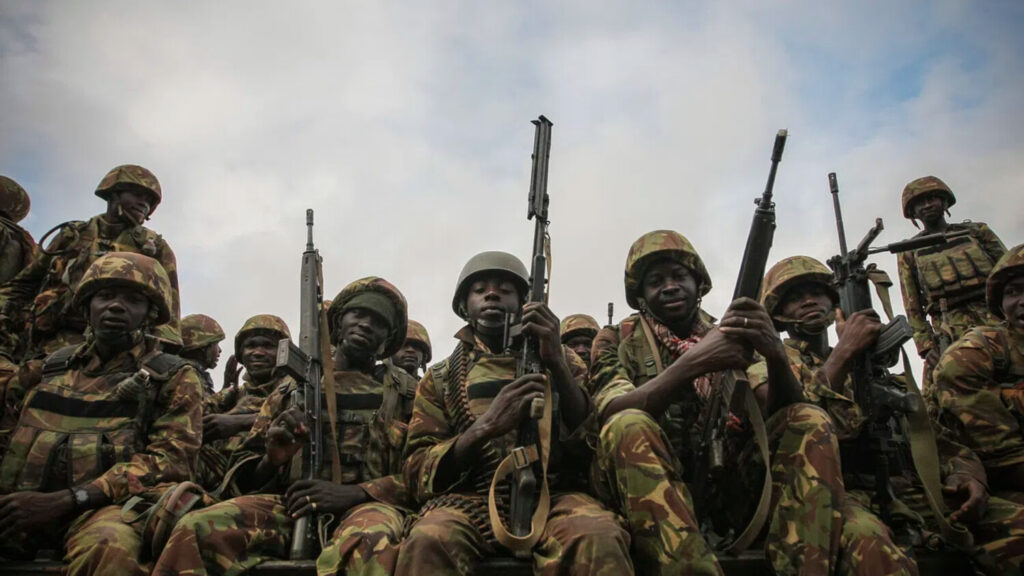
The Sahel has emerged as the world’s new epicentre of terrorism. As of 2025, there were 5,582 terrorism-related deaths globally, and over half of these deaths occurred in the Sahel, making it the world’s leading terrorism hotspot for the third consecutive year. Despite promises by military juntas to restore stability, insecurity remains widespread. Last month, Niger’s military government faced an alleged mutiny from within its own ranks, with the presidential guard and the Russian-backed Africa Corps intervening to protect General Tchiani’s rule. Earlier this year, attacks killed Mali’s defence minister, while rebel forces recaptured the strategic city of Kidal. At the same time, jihadist groups, particularly JNIM, continue to mount major attacks, including against Malian forces, while extending their operations across borders.
The Sahel’s transformation into the world’s foremost terrorism hotspot cannot be explained solely by weak central governments. Rather, it emerged from the interaction between weak state institutions, regional conflict spillover, and a decade of security strategies that contained the instability but failed to resolve its underlying drivers.
The roots of the crisis lie in weak and highly centralised states, limited public services, patronage-driven legitimacy and longstanding grievances over political and economic marginalisation. These vulnerabilities have been compounded by competition over land and resources and, increasingly, environmental pressures. Where governments have struggled to provide security or basic services, armed groups exploited local grievances to establish influence.
How Mali’s Crisis Became a Regional Insurgency
From 2011 onwards, the Libyan civil war contributed to a large flow of weapons and fighters into northern Mali, strengthening armed groups amid longstanding Tuareg grievances against the central government. The Tuareg rebels initially wanted greater autonomy in northern Mali. But Islamist groups such as AQIM, Ansar Dine and MUJAO then became increasingly powerful. In response to the deteriorating security situation, the Malian government requested French support. Operation Serval, launched in 2013, succeeded in pushing jihadist groups away from major urban centres, but those groups regrouped in rural areas and expanded their operations into Burkina Faso and Niger, particularly across the strategically important Liptako-Gourma corridor, the cross-border area shared by three countries. France subsequently transformed the Operation Serval into the regional Operation Barkhane in 2014. What had begun as a Malian crisis gradually evolved into a broader regional security crisis.
The Algiers Accord in 2015 involved a peace agreement between the Malian government and the separatist Tuareg groups, but jihadist organisations were excluded. It therefore did not address the expanding Islamist insurgency in central Mali, allowing the conflict to evolve beyond the scope of the peace agreement. Several UN-led and EU-led missions, mandates and task forces were subsequently established, including the French-backed G5 Sahel Joint Force to counter violent armed groups. The response placed counterterrorism at the centre of the regional security architecture, but jihadist groups proved resilient, and the structural political and governance problems remained unresolved.
Military Juntas and the Turn Towards Russia
Following the 2020 coup in Mali that ousted President Keïta, public dissatisfaction with the Western military presence intensified. Despite a decade of international peacekeeping and security assistance, instability remained severe. Relations with Western security partners subsequently deteriorated, with French and European forces withdrawing from Mali in 2022. In 2023, Mali’s transitional government requested the withdrawal of the UN MINUSMA, bringing an end to its decade-long peacekeeping presence. Similar developments unfolded in Burkina Faso following Captain Traoré’s coup and the withdrawal of French troops from the country in 2023. The final member of the trio was Niger, where the 2023 coup further accelerated anti-French sentiment and the departure of its forces. These developments were further reinforced by the trio’s exit from ECOWAS in 2024 and the establishment of the Alliance of Sahel States (AES). The emergence of AES vis-à-vis ECOWAS embodied the rise of two competing blocs in Western Africa. AES sought to improve collective defence and mutual assistance between its members, reducing their perceived reliance on Western support.
Against this backdrop, the AES governments have increasingly turned towards Russia as an alternative security partner for military support, diplomatic backing, and greater freedom from Western security frameworks. In July 2026, Russia pledged to deepen military cooperation and strengthen support against jihadist and separatist groups through collaboration with the Africa Corps, Russia’s successor force to the Wagner Group on the continent.
All three countries are currently governed by military juntas that have significantly distanced themselves from Western security frameworks while deepening security ties with Russia. Yet the shift in security partnerships has not fundamentally altered the security picture. Jihadist groups continue to conduct major attacks, suggesting that replacing Western security partners with Russia has not, by itself, addressed the underlying drivers of the insurgency.
Breaking the Cycle of Violence
Fragile state institutions, limited public services and persistent local grievances continue to undermine stability, particularly in rural areas where state presence is weak. Addressing these challenges requires sustained diplomatic engagement with the AES and development initiatives that strengthen local ownership and state capacity.
Greater efforts are also needed to expand civic space and strengthen political inclusion. Giving communities greater opportunities to communicate local concerns to central governments could help address grievances before they become violent.
In the shorter term, cooperation between ECOWAS and the AES remains essential. Joint training programmes, intelligence sharing, and cross-border security coordination could address common threats, especially jihadist groups operating across the Sahel. Given these shared security challenges, regional cooperation is likely to be more sustainable than reliance on external military patrons. The AU and ECOWAS should pursue an active regional role, while AES should be wary not to develop a new form of dependency on outside powers for its domestic security.
Without meaningful progress on governance and development, military gains are likely to remain temporary while the underlying drivers of instability persist. The central lesson of the past decade is that changing security partners has not changed the fundamental challenge: insurgencies cannot be defeated through military force alone when weak institutions and unresolved local grievances continue to sustain them.