The War Beneath the Waves: Undersea Cables and the New Geopolitics of Political Risk in the UK
Britain’s reliance on undersea cables is creating new strategic vulnerabilities amid rising geopolitical tensions. Growing activity around critical subsea infrastructure highlights the risks posed by disruption, coercion and hybrid threats. Strengthening resilience, deterrence and international cooperation is therefore becoming a national-security priority
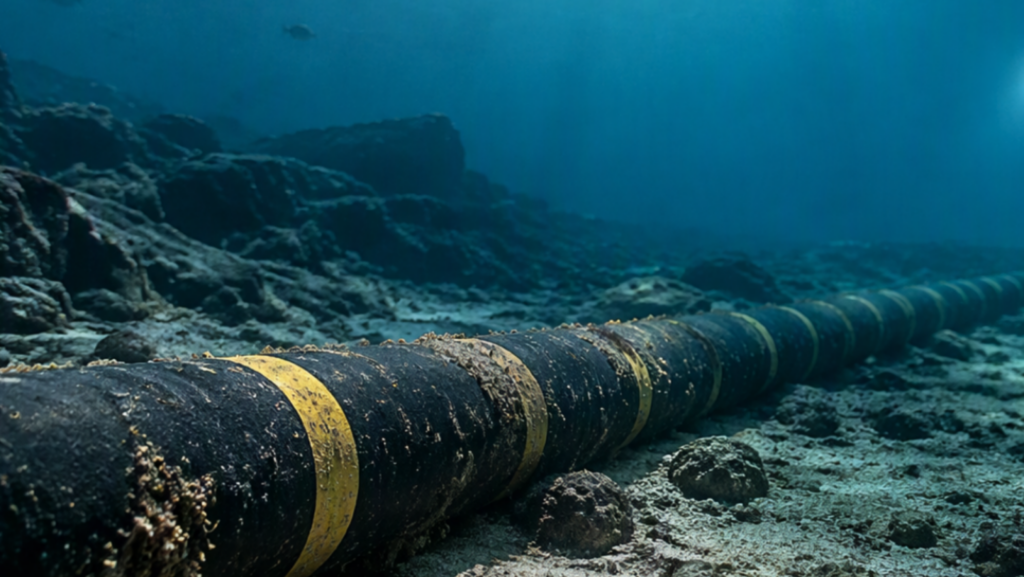
For decades, undersea cables remained largely invisible, yet they have become the lifelines of the UK’s digital economy, government communications and essential services (Joint Committee on the National Security Strategy [JCNSS], 2025). Their strategic significance is now increasingly exposed. In April 2026, the UK Ministry of Defence reported heightened Russian activity around critical undersea infrastructure, highlighting the seabed’s growing importance to hybrid security and national defence (Ministry of Defence [MoD], 2026). In response, the UK Government announced stronger protections for subsea cables amid heightened concerns over Russian activity (Department for Science, Innovation and Technology [DSIT], 2026). The issue, therefore, extends beyond protecting physical infrastructure: undersea cables are becoming strategic assets whose disruption could expose Britain’s economic resilience, digital sovereignty and national-security vulnerabilities. The seabed is consequently emerging as a new frontier of geopolitical competition.
The Hidden Infrastructure of British Power
For Britain, power increasingly travels beneath the sea. Subsea cables carry almost all of the UK’s international digital connectivity, linking its financial markets, government systems, businesses and essential services to the wider world (Joint Committee on the National Security Strategy [JCNSS], 2025). Their strategic importance, however, lies precisely in their invisibility: infrastructure that appears commercially routine can become a national-security vulnerability when geopolitical conditions deteriorate. The UK’s National Security Strategy now places greater emphasis on resilience, sovereign capability and reducing vulnerabilities that adversaries could exploit for coercion (Cabinet Office, 2025). This transforms the seabed from a peripheral infrastructure space into a strategic domain. The central challenge is therefore not simply protecting cables from physical damage, but protecting Britain’s economic sovereignty, digital resilience and freedom of action in an increasingly contested geopolitical environment.
Britain’s dependence on subsea connectivity creates a vulnerability that extends far beyond the physical cables themselves. The UK Government’s National Risk Register identifies the total loss of transatlantic telecommunications cables as a serious national risk, with potential consequences for internet access, financial services, supply chains and payment systems (Cabinet Office, 2025). More importantly, the Register indicates that a major disruption could temporarily overwhelm the existing repair sector, requiring government coordination and prioritisation of restoration. This exposes a deeper strategic problem: Britain’s digital resilience depends not only on technological redundancy, but also on the availability of specialised vessels, crews, spare capacity and rapid recovery mechanisms. Consequently, an apparently localised incident beneath the Atlantic could generate cascading effects across the British economy. The vulnerability of subsea infrastructure is therefore fundamentally a question of national resilience and strategic preparedness.
The Seabed as a Geopolitical Battleground
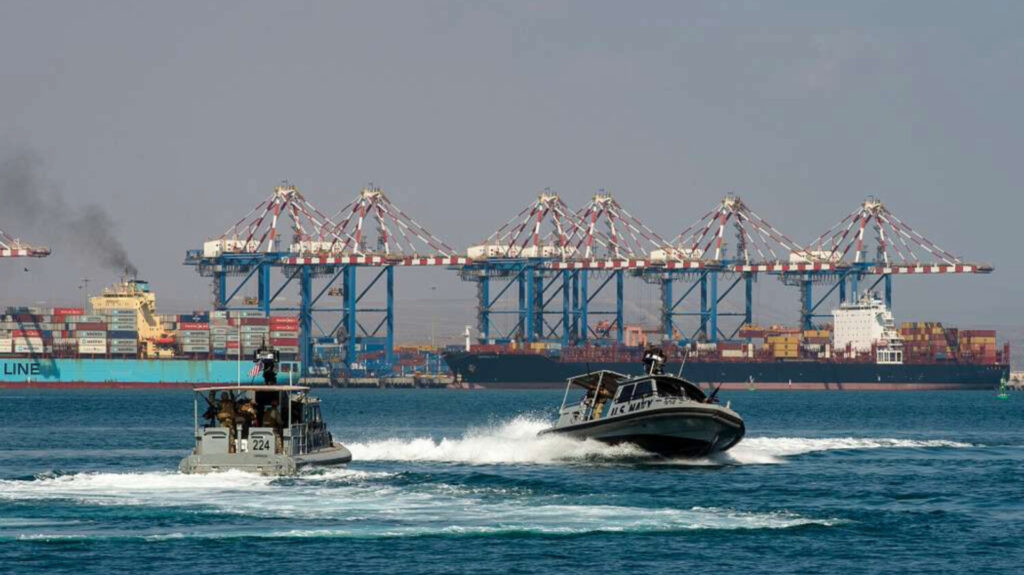
The seabed is emerging as a new arena of geopolitical competition, where strategic rivalry increasingly operates below the threshold of conventional war. Recent damage to undersea cables and other critical infrastructure in the Baltic Sea has pushed NATO to treat the protection of the seabed as a defence and deterrence issue rather than merely an infrastructure concern. NATO’s launch of Baltic Sentry in January 2025, involving frigates, maritime patrol aircraft, naval drones and integrated surveillance, reflects this strategic shift (NATO, 2025). The significance extends beyond the Baltic: control, monitoring and protection of undersea infrastructure now intersect with maritime power, intelligence, hybrid warfare and economic security. The seabed is therefore becoming a contested strategic space in which states can exert pressure without crossing the threshold of open conflict. For Britain, this transformation makes the security of its underwater connections an increasingly important dimension of national power.
Political Risk in the Undersea Domain
Political risk beneath the sea is difficult to manage because disruption can occur without the clarity of conventional conflict. Damage to an undersea cable may result from accident, natural hazards, criminal activity or deliberate state action, while establishing responsibility can be politically and technically difficult. Recent research shows that cable-sabotage risk increases particularly during periods of geopolitical tension, with the “gray zone” offering hostile actors opportunities to disrupt critical infrastructure while remaining below the threshold of open warfare (Zhang et al., 2026). This ambiguity creates a distinctive form of political risk for Britain: uncertainty over intent can delay attribution, complicate deterrence and make proportionate retaliation politically difficult. The strategic danger therefore lies not only in physical disruption, but in the uncertainty surrounding it. Undersea infrastructure has become a domain where ambiguity itself can be weaponised.
Russia, Hybrid Warfare and the UK’s Strategic Exposure
Russia’s growing interest in critical undersea infrastructure illustrates how modern conflict is moving into spaces where attribution, deterrence and response become increasingly difficult. The UK Ministry of Defence reported in April 2026 that Russian specialised submarines associated with the Main Directorate of Deep-Sea Research (GUGI) had operated around UK waters and critical underwater infrastructure, prompting sustained monitoring by British and allied forces (Ministry of Defence [MoD], 2026). The significance extends beyond any single operation. Russia’s use of surveillance, specialised underwater capabilities and potentially deniable activity reflects a broader hybrid approach in which strategic pressure can be applied without crossing the threshold of conventional war. RUSI has similarly highlighted the challenge posed by Russia’s ability to exploit ambiguity while probing European vulnerabilities (Morley-Davies, 2025). For Britain, the danger is therefore not simply physical sabotage; it is the possibility that uncertainty itself becomes a tool of strategic coercion.
Britain is not starting from zero. Its subsea network has substantial route diversity, established repair capacity and alternative links, meaning that individual cable failures do not automatically translate into national connectivity crises (Department for Science, Innovation and Technology [DSIT], 2026). Yet resilience is not the same as invulnerability. The government now proposes stronger obligations for cable operators, tougher penalties for reckless damage and new emergency powers to respond to major incidents (DSIT, 2026). The strategic challenge is therefore to move from a reactive model of repairing damaged infrastructure toward a proactive system of deterrence, surveillance, redundancy and rapid recovery. Britain must also recognise that digital resilience cannot be secured by government alone: cable operators, defence agencies, regulators and international partners all possess parts of the solution. Protecting Britain’s digital lifelines ultimately requires treating subsea connectivity as a permanent national-security priority, rather than an invisible commercial utility.
The Emerging Geopolitics of Connectivity
The politics of undersea cables is no longer confined to protecting infrastructure from physical disruption; it increasingly concerns who shapes the networks through which the global economy communicates. As submarine cables become contested spaces of geoeconomic competition, decisions over ownership, investment, suppliers, routes and maintenance can influence strategic dependence and political leverage (Abels & Bieling, 2025). This transformation is particularly significant because connectivity networks cross national borders while linking states, corporations and financial systems into a single infrastructure ecosystem. For Britain, the implication is profound: protecting digital connectivity requires looking beyond territorial waters towards the wider architecture of global infrastructure. The struggle over cables is therefore becoming a struggle over connectivity itself: who builds it, who controls its critical nodes, and who possesses the capacity to withstand disruption. The seabed is consequently emerging as an important frontier of twenty-first-century geoeconomic power.
Securing the Seabed, Securing the State
Securing Britain’s seabed is ultimately about securing the state itself. The challenge cannot be reduced to guarding individual cables; it requires a resilient system capable of detecting threats, absorbing disruption and restoring connectivity before economic and political consequences escalate. Britain’s growing cooperation with Ireland illustrates this shift: in March 2026, both governments agreed a Subsea Infrastructure Bilateral Collaboration Framework for information sharing, coordinated responses and joint exercises following major cable incidents (UK Government, 2026). This approach reflects a crucial strategic reality: underwater infrastructure crosses borders, so national protection cannot remain entirely national. Effective security must combine surveillance, legal deterrence, private-sector responsibility, rapid repair capacity and international coordination. The real test of British resilience is therefore not whether every cable can be protected from disruption, but whether the state can ensure that disruption does not become strategic paralysis.
Conclusion
Undersea cables have become critical to Britain’s economic resilience, national security and strategic autonomy, exposing how dependence on digital connectivity can create vulnerabilities far beyond the seabed. Growing Russian activity demonstrates that these networks are increasingly entangled with hybrid security, geopolitical competition and the risks of disruption below the threshold of conventional conflict. Britain’s response must therefore extend beyond repairing damaged cables to building stronger surveillance, redundancy, rapid-repair capacity, deterrence and international cooperation. The seabed can no longer be treated as an invisible extension of commercial infrastructure; it is becoming a strategic domain in its own right. Ultimately, protecting Britain’s digital lifelines is not simply about safeguarding cables; it is about preserving the country’s economic stability, national resilience and freedom of strategic action.
Recommendations
- Britain should recognize subsea cables as critical national-security infrastructure.
- The UK should strengthen continuous surveillance of critical seabed infrastructure.
- Government and industry should expand cable-route redundancy and network resilience.
- Britain should increase specialized cable-repair capacity for rapid restoration.
- The UK should strengthen mechanisms for attributing suspicious undersea incidents.
- Cable operators should be integrated more closely into national-security planning.
- Britain should deepen subsea-security cooperation with NATO allies and international partners.
- The UK should adopt a long-term strategy combining resilience, deterrence and international cooperation.
Bibliography
Abels, J. & Babić, M., 2026. Cable wars? Mapping the political economy of submarine cables in an era of geoeconomic competition. Globalizations. Available at: https://doi.org/10.1080/14747731.2025.2599691
Cabinet Office, 2025. National Security Strategy 2025: Security for the British People in a Dangerous World. London: HM Government.
Cannon, B.J., Matsuo, K. & Matsuda, M., 2026. Mapping undersea cable risk from bathymetry to geopolitics: Evidence-based rankings and tailored resilience strategies. Marine Policy, 186, Article 107012. Available at: https://doi.org/10.1016/j.marpol.2025.107012
Department for Science, Innovation and Technology, 2026. Plan to toughen protections for subsea internet cables amid heightened Russian activity. London: GOV.UK, 29 May.
Joint Committee on the National Security Strategy, 2025. Subsea Telecommunications Cables: Resilience and Crisis Preparedness. London: UK Parliament.
Ministry of Defence, 2026. Defence Secretary No9 Speech – 09 April 2026. London: GOV.UK, 9 April.
Morley-Davies, J., 2025. How Might the Kremlin Test NATO’s Collective Defence? London: Royal United Services Institute (RUSI), 3 January.
NATO, 2025. NATO Launches “Baltic Sentry” to Increase Critical Infrastructure Security. Brussels: NATO, 14 January.