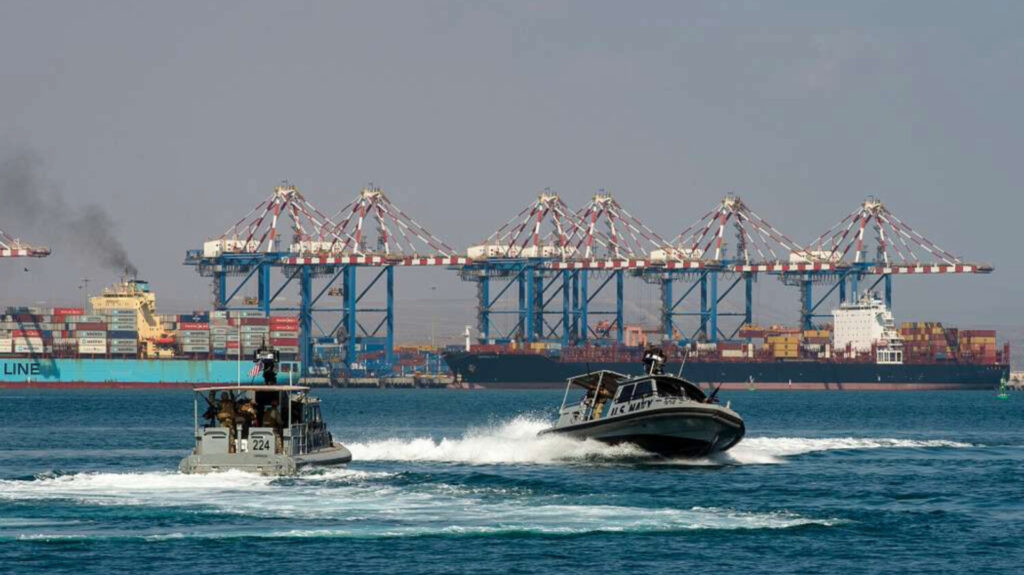
Ethiopia’s Stubborn Port Concentration: 96.7% Still Via Djibouti Despite Diversification Rhetoric
Years of diplomacy on alternative ports have barely shifted cargo, leaving Ethiopia’s trade exposed to a single corridor and a volatile Red Sea.
For a landlocked country, having a port can be a matter of national security. Over the years, Ethiopia has continued to explore alternatives beyond Djibouti, Berbera, some Kenyan corridors and even negotiations to use ports on the Somali coast. It seems obvious: no economy should allow its foreign trade to be concentrated in one foreign access point, particularly in proximity to one of the most volatile maritime areas in the world. Yet Ethiopia’s latest transportation reports show that political diversification has been significantly further ahead than cargo diversification. As a result, Ethiopia has yet to break its reliance on Djibouti by 2025/2026, which remains heavily dominant, even in the presence of multiple years of debate (APA News, 2026; World Bank, 2023).
What the Cargo Data Shows
Even more cargo underlines that Ethiopia has expanded trade, not reduced gateway risk. Ministry of Transport and Logistics cargo data estimated that, in 2025/2026, the import and export cargo carried in all modes was around 17.57mn tonnes, and analysis of the same ministry data showed that Djibouti’s share of maritime-gateway traffic was 96.71 per cent (APA News, 2026). Berbera was 2.74, Tadjoura 1.23 and Mombasa-Moyale was 0.56. While the strategic significance matters more than the percentage shares, none of the alternatives is operating at a scale capable of taking a large percentage of traffic away from the main route.
These published figures raise a methodological caveat, reinforcing that we need improved logistics reporting. The published gateway percentages can’t quite seem to add up to 100%, and the separately reported Djibouti tonnage doesn’t apparently point to 17.57 million tonnes under one numerator (APA News, 2026; Addis Fortune, 2026). This does not refute the main conclusion-Djibouti is described as tantamount in all sources-but perhaps analysts should not take from this more precision than the underlying release can support. The concentration message is unequivocal for policy purposes, even if the ministry may wish to clarify how it is calculating the corridor shares and total cargo.
One Port, One Road, and a Volatile Sea
Ethiopia’s exposure is aggravated by the path cargo takes after departing the port. Roads accounted for about 80% of freight in the whole fiscal year, and the Ethio-Djibouti railway accounted for less than 20% (APA News, 2026). This yields a double concentration: one big single maritime corridor and one big single mode of inland transportation. The capacity of the railway provides resilience and capacity, but its part is too limited at present to compensate for the high concentration of the country’s economy in trucking. If crossing borders, road security, fuel supplies, or trucking capacity were to be compromised, then the impact would add to a maritime shock rather than coincide with it.
The risk posed by the Ethiopia cargo structure is equally relevant given the country’s heavy reliance on imports. Official figures suggest that imports far surpass exports, with fuel accounting for the bulk of inbound tonnage (Addis Fortune, 2026). For this reason, corridor dependency would be problematic not just to traders but also to the transport sector, factor of production, and those affected by price formation domestically. In a landlocked economy that depends on an extremely narrow supply chain for essential imports, wait times and higher freight rates can quickly percolate out from port gates to all else in the economy. This is to say that concentration must be viewed as macroeconomic dependence and not port dependency.
The instability in the Red Sea means this exposure is no longer hypothetical. A UN Conference on Trade and Development report on transport and logistics cautioned that red sea disruptions required “lengthier journeys around the Cape of Good Hope and resulted in increased and more volatile freight rates” (UNCTAD, 2025). Diversification of access points would not insulate Ethiopia from the shock but it could help cushion the domestic effect of an interruption at one gateway or connecting corridor. However, the recent experience in 2025/26 illustrates that Addis Ababa faces few short-term options and the maritime environment has become more perilous.
Diversification on Paper, Not in Cargo
In reaction, diplomatic positions on alternative ports have so far been primarily signals of intent. In 2021, Ethiopia and DP World announced intentions to investigate the development of the Ethiopian side of the Berbera corridor, framing the route explicitly as an Ethiopian attempt to diversify port access (DP World 2021). The 2024 Ethiopia-Somaliland memorandum further politicized the issue, igniting a dispute over sovereignty with Somalia, before Ethiopia and Somalia announced in the Ankara Declaration that they would pursue access via Somalia’s sovereign territory (Reuters 2024; Republic of Türkiye Ministry of Foreign Affairs 2024). While the cargo share of Berbera in 2025/26 demonstrates that the supply side has navigated the political challenges and feels confident enough to attempt shipping through the port, it also exemplifies the difference between having the option and developing a commercially feasible corridor. Agreements are only meaningful if customs, road, inland terminals, shipping, and commercial users move sufficient volume through these routes.
The single route has become even more important, to the extent that diversification has effectively come to a halt. Since it relies on an already existing corridor – both in terms of infrastructure, institutional practices, and investments – Ethiopia has managed to do itself one better, at the same time improving the Modjo dry port and the Djibouti logistics system (World Bank, 2026). Given the efficiency of the incumbent route, this gives it a decisive advantage: each incremental step in cost reductions on the incumbent route makes alternative routes difficult to justify on a purely commercial basis. The policy problem, then, is not to weaken Djibouti but to develop politically credible backup routes without lessening the efficiency of the dominant, and many might say most reasonable, choice.
What Ethiopia Should Do Next
Ethiopia should consider diversification as cargo that can reasonably be diverted rather than signed deals or proposed ports. This implies clear corridor-share goals, resolution of regulatory and customs issues across alternative routes and investment in the inland infrastructure needed to make those routes commercially viable. Alongside this, Ethiopia needs to improve rail’s share of the journey on the Djibouti corridor, lest gateway concentration be further magnified by over-reliance on road transport. Djibouti will continue to be important, and it need not be critically important, as the 96.71% figure can be a stark reminder that the downside of Ethiopia’s maritime strategy was that solutions on paper came too quickly relative to resilience on the ground.
References
Addis Fortune. (2026, August 22). Ethiopia moves 17.57m tons of cargo in fiscal year. https://addisfortune.news/ethiopia-moves-17-57m-tons-of-cargo-in-fiscal-year
APA News. (2026, August 27). Djibouti port handles 96.7% of Ethiopian trade cargo. https://apanews.net/djibouti-port-handles-96-7-of-ethiopian-trade-cargo/
DP World. (2021, May 6). Ministry of Transport of Ethiopia and DP World sign MoU for the development of the Ethiopian side of the Berbera Corridor. https://www.dpworld.com/en/news/ministry-of-transport-of-ethiopia-and-dp-world-sign-mou-for-the-development-of-the-ethiopian-side-of-the-berbera-corridor
Republic of Türkiye Ministry of Foreign Affairs. (2024, December 11). Ankara Declaration by the Federal Democratic Republic of Ethiopia and the Federal Republic of Somalia facilitated by the Republic of Türkiye. https://www.mfa.gov.tr/etiyopya-federal-demokratik-cumhuriyeti-ve-somali-federal-cumhuriyeti-nin-ankara-bildirisi.en.mfa
Reuters. (2024, January 2). Somalia rejects port deal between Ethiopia and Somaliland. https://www.reuters.com/world/africa/somalias-cabinet-calls-emergency-meet-ethiopia-somaliland-port-deal-2024-01-02/
UN Trade and Development. (2025). Review of maritime transport 2025: Staying the course in turbulent waters. United Nations. https://unctad.org/publication/review-maritime-transport-2025
World Bank. (2023, July 20). Addis-Djibouti corridor to get major upgrade that is key to unlocking connectivity and trade for Ethiopia and the Horn of Africa. https://www.worldbank.org/en/news/press-release/2023/07/20/addis-djibouti-corridor-to-get-major-upgrade-that-is-key-to-unlocking-connectivity-and-trade-for-ethiopia-afe-hoa
World Bank. (2026, May 28). Building Ethiopia’s logistics future: From bottlenecks to flow. https://www.worldbank.org/en/news/feature/2026/05/28/building-ethiopia-s-logistics-future-from-bottlenecks-to-flow