US Billionaires in Britain: Why Platform Power Is Now a National Security Issue
On September 13, 2025, over 100,000 far-right ‘Unite the Kingdom’ demonstrators flooded central London, turning the heart of the capital into a sea of Union Jacks and St George’s crosses — a spectacle marking the largest right-wing gathering in modern British history (Yalahuzian, Tessier, & McDill, 2025). Protesters labelled the march as a patriotic festival of pride and free speech, but anti-racism activists denounced it as little more than an expression of hostility toward foreigners. A torrent of remigration chants, abuse aimed at Keir Starmer’s handling of immigration policy, and clashes that left at least 26 police officers injured dominated both domestic and international headlines (Al Jazeera, 2025). These events unfolded in a way that defied precedent, symbolising a unique political moment: the power of digital platforms to supercharge political action at transnational scales like never before.
Platforms as Political Actors
Arguably the most extraordinary facet of the ‘Unite the Kingdom’ march, beyond its sheer scale, was its address via video link by U.S. billionaire Elon Musk. As a vocal critic of the UK’s efforts to regulate harmful online content — arguing that such measures imperil free speech — and an outspoken supporter of the march’s figurehead, Tommy Robinson, Musk’s address resonated with the protesters’ convictions (Blackburn, 2025). With incendiary force, he warned, “Violence is coming for you; you either fight back or you die,” and further demanded a radical upheaval of the British government, calling for the “dissolution of Parliament and a new vote” (Abbott, 2025). Musk’s intervention unmistakably reframed the rally from a domestic far-right protest into a moment of global amplification. Commanding the world’s most influential digital platforms, the tech magnate effectively lent his endorsement to a movement rooted in exclusionary nationalism in a country thousands of miles from his own.
In the UK, national security concerns regarding social media have historically been framed primarily around the risks of cyberattacks and intelligence leaks (Ghlionn, 2025). Yet Musk’s overtly partisan broadcast at London’s September rally signals the growing obsolescence of such assumptions. The nexus of national security and social media has evolved to the extent that platforms now function as autonomous political actors, wielding substantive agency to manipulate societal outcomes across the globe. When the architect of a powerful digital network legitimises street protests, mobilisation surges, rhetoric hardens, and the reverberations through mainstream politics are profound. Undoubtedly, Musk’s speech to the British public will be remembered as more than a passing moment; it marks a precedent for an era in which unaccountable digital sovereignty poses a profound security threat to states worldwide.
From Fringe to Mainstream
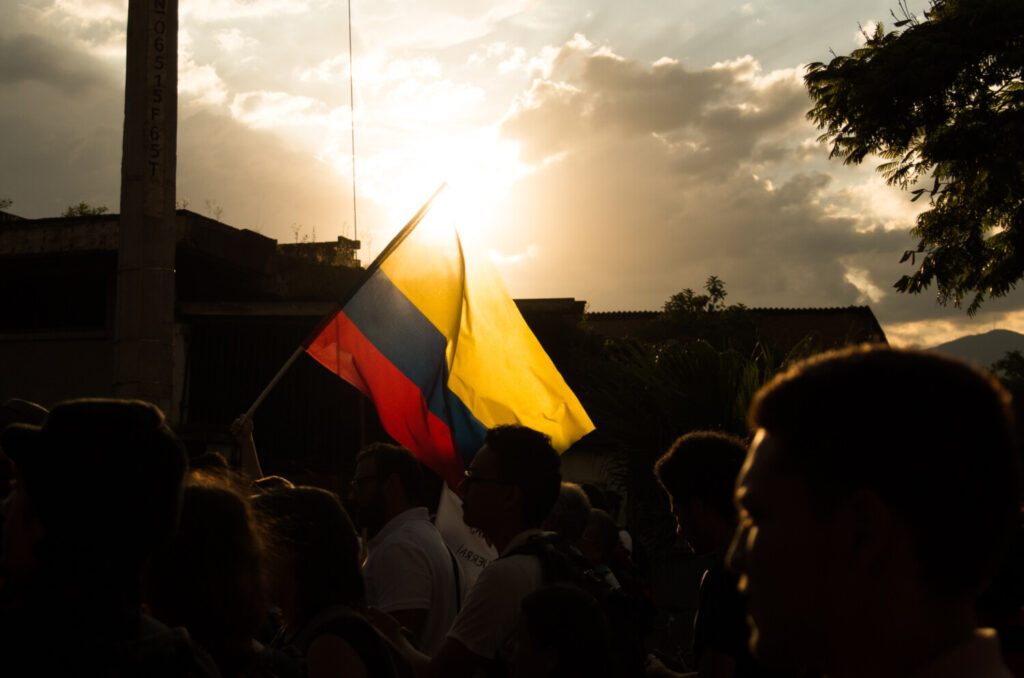
With the growing politicisation of digital platforms, once-fringe ideas are entering everyday discourse (Figure 1). Banners and chants attacking Islam and minority groups were transmitted unfiltered across feeds during the ‘Unite the Kingdom’ march. Ideologies that were once confined to the political margins are now reframed under the guise of free speech, digitally disseminated to millions, and used to recruit adherents on an unprecedented scale. As Abbott (2025) recalls, “I was on the anti-racist counter-march, and we were outnumbered 20 to one. This was startling: on anti-racist marches, we usually easily outnumber the racists.” Amid digitally networked anti-immigration protests, intensifying discontent over small boats within Westminster, and a government unable to unite its diverse population, the prospect of a far-right UK government is all too real (Osuh, 2025).
The Digital Sovereignty Dilemma
The arrests that ensued from the violent ‘Unite the Kingdom’ march are concerning, but the deeper national security question lies elsewhere: who gets to decide which protests warrant mass visibility in the information age? If private actors with global reach can propel localised rallies to transnational prominence overnight, the state’s capacity to maintain social cohesion is undermined. This is not a policing issue; it is an issue that is seeing democracies around the world lose control of political narratives to the likes of Elon Musk (Osuh, 2025).
In attempts to counter this impending reality, official responses in the UK have adhered to a familiar script: condemn the violence, caution against extremism, and rely on the hope that the unrest will subside. As Starmer remarked the day after the protest, in a measured and predictably conventional statement: “We will not stand for people feeling intimidated on our streets because of their background or the colour of their skin” (Abbott, 2025). None of these typical measures directly address the underlying structural transformation currently at play. Platform power, and its growing intersection with politics, is now an independent variable in the security calculus, necessitating robust new accountability frameworks (Siddique, 2025). The longer governments refuse to treat platform amplification as a geopolitical force, the longer divisive figures will be granted viral reach, perpetuating the momentum of men wrapped in British flags targeting minorities (Abbott, 2025).
Toward Digital Accountability
The ‘Unite the Kingdom’ march should be remembered less for its spectacle of aggression than for what it laid bare about digital platforms — functioning not as neutral hosts, but as political actors in their own right. This is not to diminish the very real and harrowing abuse endured by minorities on the 13th. Rather, it is to argue that unless we confront the bigger picture — the manipulation of digital technologies to spread racist ideologies — such harm will only intensify. Action is needed to prevent democracies from being subject to the whims of international tech titans driven wholly by self-interest (Siddique, 2025). The task now is to treat digital amplification as a national security issue, for 21st-century sovereignty rests less on control over land than on control over platforms.
Bibliography
- Abbott, D. (2025). What I saw at Saturday’s rally was racism, pure and simple. Labour won’t tackle it until we can call it what it is. [online] the Guardian. Available at: https://www.theguardian.com/commentisfree/2025/sep/14/diane-abbott-tommy-robinson-lon don-rally-labour [Accessed 17 Sep. 2025].
- Al Jazeera (2025). Clashes in London as 110,000 join far-right rally against immigration. [online] Al Jazeera. Available at: https://www.aljazeera.com/news/2025/9/13/over-100000-attend-london-rally-led-by-far-righ t-activist-tommy-robinson?utm_source=chatgpt.com [Accessed 17 Sep. 2025].
- Blackburn, G. (2025). PM Starmer slams Musk’s ‘violence’ comments at UK anti-migrant rally. [online] euronews. Available at: https://www.euronews.com/2025/09/15/pm-starmer-condemns-elon-musks-violence-is-comi ng-comments-at-uk-anti-migrant-rally [Accessed 17 Sep. 2025].
- Curtice, J., Mezzanzanica, M. and Bailey, K. (2025). BSA 42 | Politics and social media | National Centre for Social Research. [online] National Centre for Social Research. Available at: https://natcen.ac.uk/publications/bsa-42-politics-and-social-media. [Accessed 17 Sep. 2025].
- Ghlionn, J. (2025). Is Elon Musk a national security threat? [online] The Hill. Available at: https://thehill.com/opinion/5196156-elon-musk-china-influence/. [Accessed 17 Sep. 2025].
- Osuh, C. (2025). For some minority Britons the ‘unite the kingdom’ rally shows far-right politics is becoming legitimised. [online] the Guardian. Available at: https://www.theguardian.com/politics/2025/sep/16/for-some-minority-britons-the-unite-thekingdom-rally-shows-far-right-politics-is-becoming-legitimised [Accessed 17 Sep. 2025].
- Siddique, H. (2025). What did Elon Musk say at far-right UK rally and did his remarks break the law? [online] the Guardian. Available at: https://www.theguardian.com/politics/2025/sep/15/what-did-elon-musk-say-at-far-right-uk-r ally-and-did-his-remarks-break-the-law. [Accessed 17 Sep. 2025].
- Yalahuzian, V., Tessier, Y. and Mcdill, S. (2025). Police and protesters scuffle as 110,000 join anti-migrant London protest. Reuters. [online] 13 Sep. Available at: https://www.reuters.com/world/uk/police-protesters-scuffle-110000-join-anti-migrant-london -protest-2025-09-13/. [Accessed 17 Sep. 2025].