The Significance of Geographical Names and Trump’s Strategic Intentions — Gulf of Mexico or Gulf of America?
As Donald Trump returns to office after Joe Biden’s five-year presidency, he is signing a succession of controversial executive orders that appear to be an attempt to symbolically solidify his re-entry into the White House. Thus far, these decisions do not directly address his promise to improve the quality of life for Americans, but rather fit into the guiding narrative of his first presidential campaign of 2015 – ‘Make America Great Again’. Trump aims to establish a clear distinction from his predecessor, portraying himself as a leader with a “strong hand” who decisively influences the political landscape of international relations. Nonetheless, the question arises as to whether altering geographical names can be interpreted as an indication of US dominance.
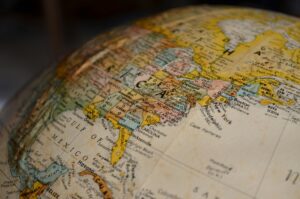
The new president signed an executive order restoring the former name of the highest peak in North America, Mount McKinley in the state of Alaska, replacing the name Denali, which had been in force since 2015 (Rios, Verónica Calderón and Gutierrez, 2025). In addition, he decided to rename the Gulfof Mexico as the Gulf of America (Rinaldi and Linton, 2025). It was the renaming of the Gulf of Mexico that caused the most controversy. While Mount Denali is on US territory and its naming is solely at the discretion of the US authorities, the waters of the Gulf of Mexico are adjacent to three countries: the United States, Mexico and Cuba (Kinnard, 2025). Nevertheless, according to Trump, “Gulf of America” more accurately reflects the United States’ role in the region, as the country holds jurisdiction over approximately half of the gulf and bears significant economic and environmental responsibilities (Kinnard, 2025). The designation should therefore acknowledge this ownership. Mexico also relies heavily on the Gulf, not only as a vital source of resources but also as a symbol of its historical and cultural identity (Rios, Verónica Calderón and Gutierrez, 2025). Considering the name’s long standing usage, modifying it may be viewed as an endeavor to revise history.
Legal constraints and political implications
Changing the geographical name of a region outside of the borders of a specific state is a complex yet feasible endeavor (Kinnard, 2025). This pertains to an area of international waters lacking any individual state’s sovereign jurisdiction. According to the Law of the Sea, nations that possess access to the waters, are designated as the primary stakeholders in any potential modification of its name (United Nations, 1982). The process necessitates consensus among stakeholders, as decisions regarding geographical nomenclature in internationally recognized areas must consider the perspectives of all parties involved. According to international law, a nation’s sovereignty extends solely 12 nautical miles from its coastline. Consequently, any renaming by the U.S. would lack legal validity beyond this limit, indicating that international waters and territories would continue to be acknowledged by their historical names.
Despite this fact, Donald Trump’s administration has shown no willingness to negotiate over the renaming of the Gulf of Mexico, making a unilateral decision on the issue. However, the decision applies only within the United States and in official federal documents, meaning that other countries, most notably Mexico, are not obliged to adopt the new name. The President of Mexico, Claudia Sheinbaum, has unequivocally stressed that the country will continue to use the existing term ‘Gulf of Mexico’ (Rios, Verónica Calderón and Gutierrez, 2025).
Meanwhile, Google Maps has revised its labeling to display the name ‘Gulf of America’ in U.S. territory, whereas in Mexico, the original title ‘Gulf of Mexico’ remains unchanged (Gerken, 2025). In other countries, both designations are presented, with ‘Gulf of Mexico’ as the principal label and the ‘Gulf of America’ enclosed in parentheses. This is not the first occurrence of a geographical renaming controversy. An illustrative instance is the body of water designated as the Sea of Japan by Japan, whereas South Korea identifies it as the East Sea. Likewise, the Persian Gulf is designated as the Arabian Gulf in specific nations (Kinnard, 2025). The differences in nomenclature signify wider geopolitical, historical, and cultural tensions among countries.
Political branding as Trump administration’s strategy
Árpád Ferenc, in his publication ‘The Role of Country Names in Country Branding’, highlights the fundamental importance that a country name has in shaping its international image. The author points out that the name of a country not only has an identifying function, but also evokes certain associations with the values and characteristics attributed to the country (Ferenc Papp-Váry, 2007). In many cases, the decision to modify a name reflects the intention to symbolise a new beginning, sending an unambiguous signal about the political or social transformation of a country. In the case of the Gulf of Mexico, the question arises as to whether these actions reflect a strategic effort to reshape the United States’ image through nation branding, or if they signify an assertion of unilateral dominance over other nations. At the outset of his administration, Trump aimed to convey a significant alteration in US foreign policy, and the suggested name change may be perceived as an element of this overarching strategy. This action may be viewed as an endeavor to reestablish the United States’ position within the global order—a form of ‘new beginning’ aimed at signifying the US’s return to a dominant role on the international stage. If it is solely a display of power, it may result in heightened diplomatic tensions and a deterioration of US international prestige, rather than a genuine enhancement of its global image. The decision also holds considerable symbolic significance. The alteration of a geographical name, while not impacting physical reality, can yield significant political ramifications.
The concept of ‘power’
Geographical names often carry significant diplomatic weight, and a unilateral decision to change them could lead to international tensions. This issue is part of the broader context of international relations, in which the concept of power, defined as the ability of a state to achieve its intended objectives in a particular situation, plays a key role (Rom, Hidaka and Bzostek Walker, 2022). The literature distinguishes between two main types of power: hard power and soft power, which allow a better understanding of the mechanisms of state influence in the international arena, including in the context of symbolic changes such as the modification of geographical names.
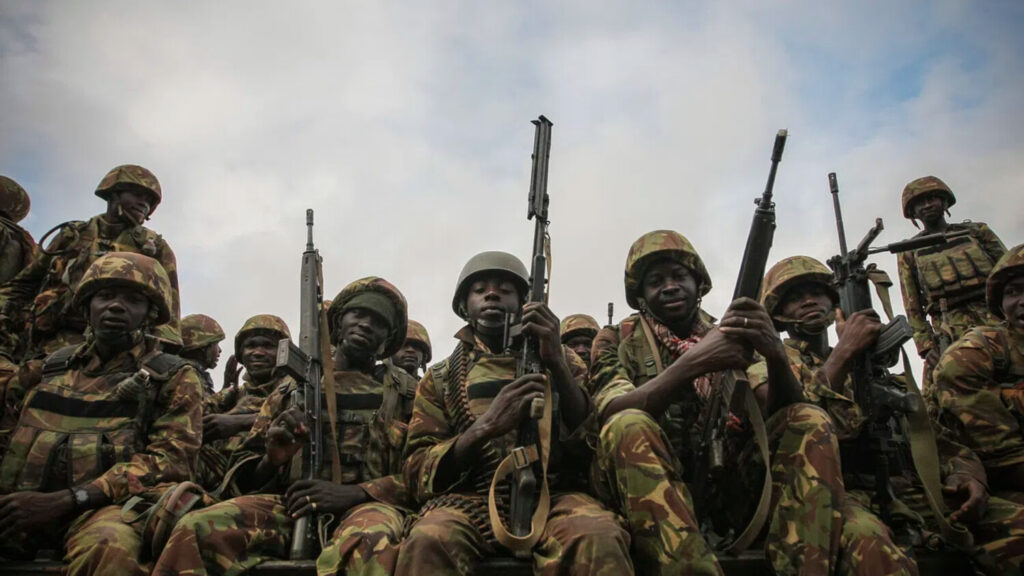
Hard power refers to the use of military and economic means to influence the behaviour of other international actors (Bloor, 2022). It is characterised by coercion, the use of force and aggression, making it most effective in situations where a stronger state imposes its will on a weaker one. On the other hand, soft power relies on the ability to attract and persuade, rather than the use of coercion (Bloor, 2022). It is based on negotiation, relationship building and the development of a positive image of the state, leading to long-term and stable international ties.
One explicit proponent of hard power is Donald Trump, who has consistently used this method during his previous as well as re-elected presidency. His actions have been characterised by an aggressive approach and a lack of inclination towards international cooperation. In his foreign policy, Trump often bypassed consultation with other countries, pursuing American interests without taking into account the opinions of international actors. Such a strategy stemmed from the conviction that the United States, in its role as a global leader, could make decisions unilaterally and that the fear of losing relations with this superpower would induce other countries to accept them. However, the case of the dispute over the name of the Gulf of Mexico shows that not all states are succumbing to this pressure. Mexico, despite its lesser economic and military power compared to the US, has strongly opposed the proposal to rename this geographical formation.
In conclusion, renaming the Gulf of Mexico would not have brought Donald Trump any tangible material benefit. Rather, such an action was a display of power and an attempt to impose his own narrative on international relations. However, such a stance is not conducive to building support on the global stage and, on the contrary, could lead to conflicts, even with key neighbours such as Mexico. In the long term, this strategy may undermine the US position as a global leader by increasing tensions and weakening international confidence in US foreign policy.
Bibliography:
Bloor, K. (2022). Power and Development in Global Politics. [online] E-International Relations. Available at: https://www.e-ir.info/2022/05/21/power-and-development-in-global-politics/#google_vignette. [Accessed 17 Feb. 2025]
Ferenc Papp-Váry, Á. (2007). The role of country names in country branding. [online] Available at: http://www.papp-vary.hu/english/The_Role_of_Country_Names_in_Country_Branding.pdf [Accessed 8th Feb. 2025].
Gerken, T. (2025). Mexico asks Google Maps not to rename Gulf of Mexico. BBC. [online] 30 Jan. Available at: https://www.bbc.com/news/articles/clyn1rgngn8o. [Accessed 17 Feb. 2025]
Kinnard, M. (2025). Can Trump change the name of the Gulf of Mexico to ‘Gulf of America’? [online] PBS News. Available at: https://www.pbs.org/newshour/politics/can-trump-change-the-name-of-the-gulf-of-mexico-to-gulf-of-america. [Accessed 17 Feb. 2025]
Rinaldi, O. and Linton, C. (2025). Trump signs executive order to rename Gulf of Mexico, Denali. [online] Cbsnews.com. Available at: https://www.cbsnews.com/news/trump-rename-gulf-of-mexico-denali/. [Accessed 17 Feb. 2025]
Rios, M., Verónica Calderón and Gutierrez, F. (2025). ‘It’s absurd’: Mexicans mock and shrug off Trump’s order to rename Gulf of Mexico. [online] CNN. Available at: https://edition.cnn.com/2025/01/28/americas/mexicans-mock-trump-gulf-of-mexico-intl-latam/index.html. [Accessed 17 Feb. 2025]
Rom, M.C., Hidaka, M. and Bzostek Walker, R. (2022). 14.1 What Is Power, and How Do We Measure It? – Introduction to Political Science | OpenStax. [online] openstax.org. Available at: https://openstax.org/books/introduction-political-science/pages/14-1-what-is-power-and-how-do-we-measure-it. [Accessed 17 Feb. 2025]
United Nations (1982). United Nations Convention on the Law of the Sea. [online] United Nations. United Nations. Available at: https://www.un.org/depts/los/convention_agreements/texts/unclos/unclos_e.pdf. [Accessed 17 Feb. 2025]