The Shaping of Haiti’s Crisis by Foreign Powers
From forced indemnity and military occupation to international stabilisation, Haiti’s struggle for sovereignty has been shaped by external interests, economic pressure and the pursuit of strategic control.
The current instability in Haiti is one that unfolded gradually. It developed along corridors of extraction, debt, foreign strategic interests, and pressure-based policy that collided with the island’s subtle political landscape.
Haiti has time and again been obliged to pay for peace while external actors as well as the country’s political and economic elite capitalize on the precursors of conflict. If Haiti’s history was a palimpsest, identical marks would keep cropping up. First, extraction followed by documentation justifying it then, force dressed in the form of assistance and one that conforms to the same logic. Furthermore, external actors have shaped Haiti’s crisis in three main waves: the French indemnity and debt structure, the US occupation and coercion, and international missions, specifically UN-led initiatives, operating within the stabilization paradigm while creating new harms and dependencies.
The Genesis
Haiti’s successful revolt of enslaved people helped pave the way for independence from France in 1804. France acknowledged Haiti’s independence only after it was coerced into paying substantial indemnity, effectively transforming it into a bill. On 17 April 1825, Haiti was subjected to a blockade by French warships and only then did Haiti consent to pay 150 million gold francs that was framed as compensation for “lost property” following independence, but the amount bore little relation to the actual losses (United Nations News, 2025). Haiti’s freedom therefore became collateral while the compensation turned into a long shadow over state competency.
Decades later, the United States (US) occupied Haiti (1915–1934). It argued that it was restoring law and order, but the occupation tightened its grip on financial control and restructured the economy to align with foreign interests (U.S. Department of State, Office of the Historian, n.d.), a benign façade concealing harmful motives. Over the course of 1911–1915, seven Haitian presidents were assassinated or toppled, which amplified US apprehensions of foreign intervention, in particular Germany.
In 1914, Woodrow Wilson’s administration deployed US Marines, seized $500,000 from the Haitian National Bank and transferred it to New York for “safe keeping,” (United States Department of State, Office of the Historian, n.d.) placing the bank and any leverage that Haiti possessed under American control.
How Foreign Powers Gained Financial Leverage Over Haiti, 1825–1914
In 1915, the assassination of President Jean Vilbrun Guillaume Sam saw President Wilson deploy US Marines to Haiti to “prevent anarchy” although the primary outcome was protecting US assets and an avenue for tightening control. The 1915 Haitian-American Treaty consolidated this control by establishing a Haitian Gendarmerie/ Gendarmerie d’Haïti which was under the control of the US Marines, granting the US power over Haitian finances and right of intervention. This included shaping the August 1915 election toward Philippe Sudré Dartiguenave, a pro-American candidate, in spite of growing tension as Haitians believed that the electoral outcome had been manipulated (United States Department of State, Office of the Historian, n.d.). Indeed, whoever defines the rules shapes the gameplay.
While constitutional provisions define who is permitted to own land and restrictions are directed towards financiers and foreign enforcement, attempts to dictate a 1917 constitution cleared the path for foreign land ownership. However, this was banned following the Haitian Revolution to guard against external control of the state. Due to significant backlash, the move was opposed by the Haitian legislature but the US compelled its dissolution until 1929. Additionally, widely frowned upon Gendarmerie policies like censorship of the press, involuntary labour, and racial segregation provoked a rebellion in 1919–1920 triggering a 1921 US Senate investigation and restructuring that centralised power.
Thereafter, Haiti was relatively stable, but poverty remained endemic. By 1929, strikes and uprisings prompted US withdrawal thereby training Haitian officials to facilitate the transfer of governance in 1930. Following Franklin D. Roosevelt’s 1934 Good Neighbor Policy, the US withdrew officially, while maintaining long-lasting economic ties (United States Department of State, Office of the Historian, n.d.), leaving the island “free” in name, yet subject to influence in practice. The strings don’t always disappear, they just change hands.
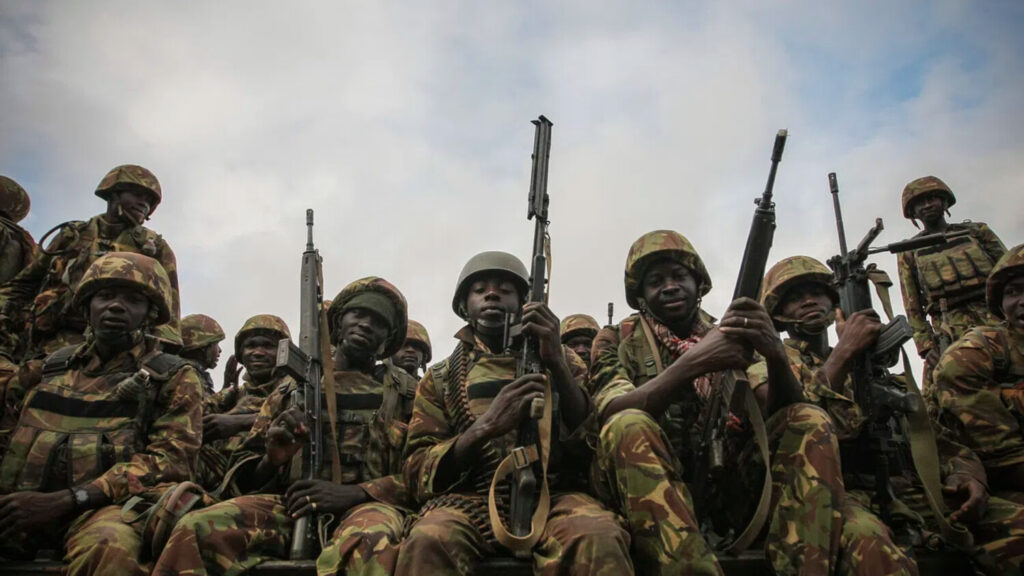
Following the US exit, external influence did not disappear, it simply changed costume. In modern times, the UN and its allies deployed stabilisation missions. One of the most protracted and most significant was the 2004–2017 United Nations Stabilisation Mission in Haiti (MINUSTAH) (United Nations, n.d.). The U.N.’s Haiti peacekeeping mission has not been spared either as it has encountered strong backlash. Critics argue the peacekeepers were responsible for introducing cholera to the island nation in 2010, which resulted in great suffering and fatalities; embroiled in scandals involving UN personnel accused of sexually abusing locals, including allegations in which Haitian children were involved; and acted as an occupying force, all of which tainted the mission (Beaubien, 2017).
Nonetheless, despite the mission’s controversial nature, MINUSTAH provided certain intervals of relative stability, including electoral support and security improvements (Beaubien, 2017). The harms however turned stabilisation into an erosion of legitimacy. When a mission is meant to protect the population and instead causes widespread harm to civilians, the crisis emerges as not only a security problem but also a moral and institutional dilemma.
Natural Wealth: A Security-and-Debt Predicament
Minerals hardly ever appear as neutral development. They arrive as boundaries, contracts, permits, and enforcement. For Haiti’s extractive industries, in particular gold, has continuously provoked unease that the country’s governance competence, oversight systems, and accountability mechanisms are feeble and unable to prevent harm.
In spite of its dense population, Haiti is prone to environmental degradation. Over the past decade, the mining sector’s rapid growth has been driven by foreign investors and met with widespread opposition as public concern deepens over farmland degradation and contaminated water. A 2017 draft mining law draws criticism for neglecting to safeguard the rights of those displaced by mining activities, providing limited time to assess environmental implications, and permitting confidentiality of the company’s environmental and social records for 10 years thereby compromising public engagement (Human Rights Watch, 2022; Bretton Woods Project, 2015). While mining policy-making potentially advances in parallel with substandard safety provisions and limited public accountability (Bretton Woods Project, 2015), the situation is a natural wealth and a security-and-debt predicament as opposed to a gold-standard developmental framework.
Thus, Haiti’s political risk isn’t just instability, it’s embedded in the business model. When uncertainty is high, negotiation leverage tilts toward the actor that can guarantee enforcement, whether through armed actors, international support, opaque financial structures, or state capture.
The True Cost and Reckoning
While Haiti’s voice matters, it has been answered by strategic pressure and dictated terms that turn survival into a debt extraction. In addition, the UN account on the 1825 indemnity and the ransom-like behavior draws attention to how the settlement plunged the country into a debt trap and how calls for restitution continue to reverberate today (United Nations News, 2025). The consequences go beyond fiscal factors. It conditioned the state from one generation to the next to use creditor logic. In essence, stability turns into the ability to pay out while development is overshadowed by tending a wound that failed to heal within Haiti’s budget.
Mineral wealth is portrayed as a gift. However, in fragile states, Haiti included, it acts as a magnet for predatory incentives with the real stakes extending beyond the ore and onto who determines the terms for extracting it. Haiti’s freedom was sold on a gunpoint ledger. For one, France’s 1825 settlement (indemnity) functioned more like ransom as opposed to a true settlement given its coercive and exploitative nature. Furthermore, foreign power has had a double face. It has been presented as peacekeeping troops, development projects, and loans. Still, assistance has become a kind of cage where the door remains closed from the outside. The impact takes the form of political volatility influenced by external interference and economic dependency portrayed as partnership.
Haiti’s protracted relationship with foreign power left lasting effects, structures that continue to linger even when a new government promises change. The detrimental effects aren’t abstract, they manifest in daily life through crushing debt and economic bottlenecks that prolong recovery; long-term intervention that prioritise foreigner convenience over Haitians’ needs; loss of sovereignty as external factors influence government policy; and skewed growth that serves foreign agendas over local progress.
While extraction activities boom where ownership regulations and labour regimes are predictable, external actors gain an upper hand by controlling financial institutions and fiscal systems. As a result, Haiti’s resources continue to be channelled to service foreign demands while plunging the country into an unshakeable debt trap.
References
Beaubien, J. (2017). U.N. To Pull Controversial Peacekeepers From Haiti. U.N. To Pull Controversial Peacekeepers From Haiti. https://www.npr.org/sections/goatsandsoda/2017/04/22/525113236/u-n-to-pull-controversial-peacekeepers-from-haiti
Bretton Woods Project. (2015). World Bank support for Haitian mining: far from a gold standard. World Bank support for Haitian mining: far from a gold standard. https://www.brettonwoodsproject.org/2015/09/world-bank-support-for-haitian-mining-far-from-a-gold-standard/
Human Rights Watch. (2022). World Report 2022: Haiti. World Report 2022: Haiti. https://www.hrw.org/world-report/2022/country-chapters/haiti
United Nations. (n.d.). MINUSTAH Fact Sheet: United Nations Stabilisation Mission in Haiti. MINUSTAH Fact Sheet: United Nations Stabilisation Mission in Haiti. https://peacekeeping.un.org/en/factsheet/minustah
United Nations News. (2025). How Haiti paid for its freedom – twice over. https://caribbean.un.org/en/293392-how-haiti-paid-its-freedom-%E2%80%93-twice-over
United States Department of State, Office of the Historian. (n.d.). U.S. Invasion and Occupation of Haiti, 1915–34. U.S. Invasion and Occupation of Haiti, 1915–34. https://history.state.gov/milestones/1914-1920/haiti