Sudan: A Three-Year Conflict Bankrolled by Gold
Sudan’s war, triggered in April 2023, is the culmination of long-standing institutional fragility, elite rivalry, and unresolved centre-periphery conflicts dating back to Bashir’s rule. The SAF-RSF conflict has since evolved into a sustained, externally entangled war financed through illicit gold networks, producing the world’s largest displacement and humanitarian crisis while exposing how resource extraction and fragmented sovereignty can structurally prolong violence.
Once a beacon of potential in Northeast Africa, Sudan has transformed into a relentless battlefield following the war between the Sudanese Armed Forces (SAF) and Rapid Support Forces (RSF) on April 15, 2023. It has resulted in the largest humanitarian crisis in the world. Although the catastrophic consequences were unprecedented, the war itself was a predictable eventual outcome given the decades of systemic instability and political uncertainty with Omar al-Bashir’s coup d’etat in 1989. For 30 years, there was a growing restlessness among the Sudanese people due to economic mismanagement, political oppression, unresolved conflicts in regions like Darfur and Kordofan, and systemic racism which was a major factor in the secession of South Sudan in 2011.
Architecture of the Collapse
In late 2018, while economic hardship had been growing for years, the price of bread tripled overnight and became the tipping point to the 2019 revolution that ended al-Bashir’s authoritarian regime. A transitional (military to civilian) government agreement was reached; however, the SAF, led by Abdel Fattah al-Burhan, and the RSF, a paramilitary group led by Mohamed Hamdan Dagalo (Hemedti), failed to honour the agreement and dissolved the civilian leadership in late 2021. Subsequently, disputes began between the two military powers regarding the integration of the RSF into the regular army and establishing a unified command structure under the leadership of the SAF. After a series of failed negotiations and diplomatic friction, war erupted between the two in April 2023 and has now entered its third anniversary.
From a human rights perspective, the conflict has violated international humanitarian law. It also has created mass displacement and the destruction of civilian infrastructure. According to the United Nations High Commissioner for Refugees (2026), more than 11.5 million people have been forcibly displaced as of April 20, 2026. Many are seeking asylum in neighbouring countries such as Egypt, South Sudan, Uganda, Chad, and Ethiopia. The Office of the High Commissioner for Human Rights estimates that at least 14 million people have been displaced, describing the need for humanitarian relief as complicated and overwhelming (2026). UN agencies have openly labeled the situation in Sudan as the world’s worst humanitarian crisis due its severity and the world’s lack of attention to it, especially regarding food insecurity and starvation. Nearly 34 million people (65% of the population) need urgent humanitarian assistance and 19 million (approximately two out of five people) are facing high levels of acute food insecurity (World Food Programme, 2026).
The Enablers Beyond the Border
There have been many questions and investigations from international organizations and human rights groups regarding this conflict. How has it been sustainable for this long? Ample open source and investigative economic research are being conducted to determine the number of entities involved and to what extent. During the first year of the war, international reports corroborated by trade data indicated that the United Arab Emirates is the primary patron of the RSF by providing them with arms and medical supplies in exchange for Sudanese gold. A UN Security Council report identified new weapon supply lines in Eastern Chad; specifically, flight-tracking experts observed cargo aircraft originating from Abu Dhabi International Airport and arriving in Am Djarass, with transit stops in Kenya, Rwanda and Uganda (2024). The same report highlighted that more than 50% of Sudanese gold was smuggled out of the country rather than going through official channels.
Additionally, open-source investigations found that Colombian mercenaries were heavily involved with the RSF in their military activity. Global Securities Services Group (GSSG) – a UAE-based company with multiple links to senior UAE government officials – was reportedly responsible for funding these mercenaries to fight alongside the RSF, and that crimes against humanity on El Fasher in October 2025 would not have occurred without this UAE-Colombian network (Conflict Insights Group, 2026).
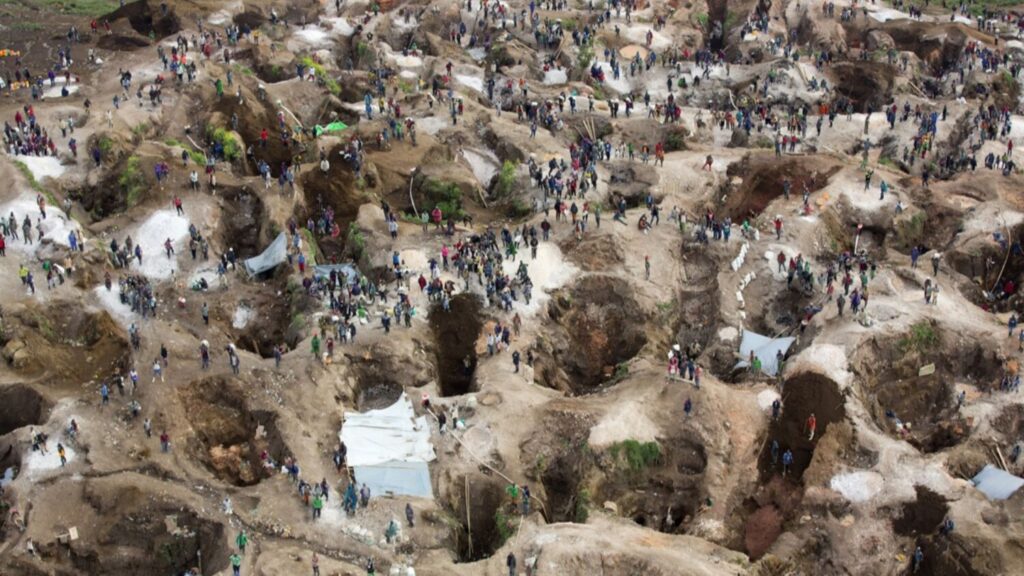
Gold was documented to have been transported from mines in strategic RSF-controlled regions in Darfur and Kordofan to the UAE through unofficial, makeshift runways or via neighboring countries such as Chad, Libya, Uganda, and Egypt (Zarma, 2026). These complex logistical networks positioned the UAE as the primary destination for 90% of smuggled gold for refining and international sale (Zarma, 2026).
Measuring Violence in Ounces
Since April 2023 the price of gold has only continued to rise at an unprecedented rate driven by a series of global events. Throughout this period, the RSF leveraged this valuation to conduct strategic military offensives to strengthen its presence across Sudan and seize control of key logistical regions – maneuvers that left a trail of human rights violations and war crimes.
In the first year of the war, the UAE was reported to have imported 17 tonnes of gold from Sudan, 14 tonnes from Uganda, and approximately 14 tonnes from Rwanda. By the second year, these figures surged significantly; UAE imports included 29 tonnes from Sudan, 27 tonnes from Egypt, 18 tonnes from Chad, 9 tonnes from Libya, 31 tonnes from Uganda and 19 tonnes from Rwanda (SwissAid, 2025). During this period the RSF launched an offensive and began its 18-month siege on El Fasher. In 2025, gold prices continued to rise sharply and heavy escalations in El Fasher were reported, notably severe civilian targeting events involving killings (Birru, 2025), as well as bombardment of Internally Displaced Persons camps and health facilities (OHCHR, 2026). In the same year, Switzerland imported approximately 316 tonnes of gold from the UAE (SwissAid, 2025).
October 2025 marked a pivotal turning point in the conflict; the SAF withdrew from El Fasher, the RSF seized the city and committed mass killings among other war crimes (Human Rights Council, 2026). In 2026, resource-driven RSF hostilities continue at high intensity, mirroring global market fluctuations and all-time high gold prices resulting from the regional outbreak of the US-Israel war on Iran.
Policy Recommendations
There are illicit small-scale mining operations with unofficial logistical networks sustaining the conflict and contributing to the violation of international humanitarian law. Given that African gold remains a valuable commodity for regional markets – particularly within the Gulf Cooperation Council – the African Union, in coordination with a selection of GCC states, should establish an official African-Arab gold exchange. Such an initiative would formalize the market, ensuring transparency and compliance with international human rights standards regulated by a joint certification mechanism to verify the legitimacy of the gold’s production and trade. Moreover, the international community must impose strict sanctions on aviation and cargo service providers tied to RSF supply chains, and mandate public disclosure of high-risk suppliers to ensure corporate accountability (The Sentry, 2025).
Bibliography
1. UNHCR (2026). ‘Sudan Situation’. Operational Data Portal. Available at: https://data.unhcr.org/en/situations/sudansituation
2. OHCHR (2026). ‘Three years of war in Sudan: A crisis the world can’t ignore’. Office of the High Commissioner for Human Rights, 20 April. Available at: https://www.ohchr.org/en/stories/2026/04/three-years-war-sudan-crisis-world-cant-ignore #:~:text=UN%20Human%20Rights%20in%20Sudan&text=Since%20the%20conflict%20 began%20in,more%20alarming%20is%20its%20invisibility.
3. WFP (2026). ‘Sudan Emergency’. World Food Programme, 28 April. Available at: https://www.wfp.org/emergencies/sudan
4. UN Security Council (2024). ‘Final report of the Panel of Experts on the Sudan’. United Nations, 15 January. Available at: https://digitallibrary.un.org/record/4039195/files/S_2024_65-EN.pdf
5. CIG (2026). ‘Blood Money: How UAE support & Foreign Mercenaries Enabled the Fall of El Fasher’. Conflict Insights Group, 22 April. Available at: https://static1.squarespace.com/static/6967365f36aacc18599406e8/t/69e7da4dad33435 e658c982c/1776802495385/BloodMoneyCIG.pdf
6. Zarma, H. (2026). ‘How the Rapid Support Forces Smuggle Gold from Sudan to the UAE’. Brown Land News, 24 February. Available at: https://blnews.net/2026/02/how-the-rapid-support-forces-smuggle-gold-from-sudan-to-th e-uae/#:~:text=(Based%20on%20verified%20reports%20and,for%20refining%20and%2 0international%20sale.
7. Press Release (2025). ‘United Arab Emirates: More Than Ever a Hub for Conflict Gold’. SwissAid, 4 November. Available at: https://www.swissaid.ch/en/media/united-arab-emirates-more-than-ever-a-hub-for-conflic t-gold/
8. Birru, J. (2025). ‘El Fasher & Kordofan: the strategic fronts in Sudan’s shifting war – Expert comment’. ACLED, 29 October. Available at: https://acleddata.com/expert-comment/el-fasher-and-kordofan-strategic-fronts-sudans-sh ifting-war-expert-comment#:~:text=During%20its%20siege%20of%20El,flee%20were%2 0targeted%20and%20killed.
9. OHCHR (2026). ‘They were shooting us like animals: RSF final offensive & capture of besieged El Fasher’. Office of the High Commissioner for Human Rights, 13 February. Available at: https://www.ohchr.org/en/documents/country-reports/ohchr-report-rsf-final-offensive-andcapture-besieged-el-fasher-24-30
10. Human Rights Council (2026). ‘Sudan: Hallmarks of Genocide in El-Fasher’. Office of the High Commissioner for Human Rights, 19 February. Available at: https://www.ohchr.org/en/documents/thematic-reports/ahrc6177-sudan-hallmarks-genoci de-el-fasher-report-independent
11. The Sentry (2025). ‘Sudan Mercenaries Linked to Business Partner of Top UAE Bureaucrat’. The Sentry, November. Available at: https://thesentry.org/wp-content/uploads/2025/11/Sudan-RSF-UAE-TheSentry-Nov2025- 2.pdf