South Asia’s Faultline: Depth, Drift and Delhi
The current cycle of strikes and counter-attacks between two countries has compromised a fragile ceasefire, which was reportedly mediated by Qatar and Turkey last year when both countries were experiencing similar spirals of attacks (Hagan, 2025). It has also been observed that both countries have been embroiled in an increasingly severe conflict since the Taliban authorities retook control of Kabul in 2021. The relationship between the two countries has deteriorated dramatically, with deadly border skirmishes in recent months.
The critical question, therefore, is why and how the Taliban and Islamabad have shifted from being major partners to overt adversaries following the Taliban’s return to power in 2021. The 1,600-mile (2,574-kilometer) mountainous border known as the “Durand Line” has long been a source of friction between the two countries, and part of the answer may lie there. The current phase of conflict between Kabul and Islamabad can only be understood by analyzing the historical trajectory of their interactions, in which the logic of “strategic depth” has gradually given way to strategic drift and unexpected security implications.
From Strategic Depth to Strategic Drift: Kabul–Islamabad Relations
Afghanistan has historically been viewed as a buffer state by great powers due to its strategic geographic location. The conflict between the Russian and British empires maintained Afghanistan’s status as a buffer state, while the ‘Durand Line’ was drawn to delineate a zone of British and Afghan spheres of influence rather than to construct a permanent international border, as is widely believed (Sahak, 2025). Before the British departed, Afghanistan requested British to renegotiate the Durand Line, but the British refused and considered it as a permanent international border. As a result, Afghanistan refused to accept it as an international border with Pakistan, dividing Pashtun areas among them.
Though Afghanistan’s governmental structure has undergone substantial turmoil over time, the divide of Pashtun land between the countries has remained a source of tension, with conflicts breaking out on many occasions. However, the collapse of the nationalistic administration in 1992 triggered nearly a decade of civil war. By this time, Islamabad had already fought two wars with its Indian neighbor and was eager to forge friendly relations with Afghanistan. Islamabad had multiple reasons to do so which includes the expectating Taliban’s Islamic ideology countering Pashtun identity in the border areas, and to counter Indian influence in the region (Miller, 2021). As a result, it began supporting the Taliban (a student group founded in 1994), who gained control of a large area of Afghanistan, including Kabul, with the help of Pakistan in 1996 (Harvey & Saifi, 2025).
However, the Taliban was ousted from Afghanistan in late 2001 as part of the US-led War on Terror. Although Islamabad has refuted the allegations, it is commonly believed that Pakistan continued to support the Taliban even after it was removed from power. Such support is frequently understood as benefiting Pakistan’s strategic goals such as utilizing the Taliban to resist Pashtun nationalism, securing strategic depth against India, and safeguarding expanding Chinese investments, particularly the development of Gwadar Port. In exchange, Pakistan sheltered millions of Afghan refugees over decades of conflict. Islamabad’s support for the Taliban became apparent when it became one of only three nations, along with Saudi Arabia and the United Arab Emirates, to publicly recognize the Taliban regime during its initial term of rule in Afghanistan. Pakistan was also one of the last states to cut diplomatic ties with the group (BBC News, 2022).
Throughout this time, Pakistan also leveraged Afghanistan’s landlocked geography and reliance on Pakistani transit routes as a structural source of influence in bilateral ties. Until the US exit in 2021, Islamabad maintained a relative advantage, establishing itself as a critical security intermediary while pursuing its strategic interests in accordance with an offensive realist logic that saw power not as a means to an end, but as an end in itself. During this period, the Durand Line dispute was largely sidelined, with both Pakistan and the Taliban prioritizing the latter’s return to power. Islamabad made a realistic security trade-off by prioritizing regional influence over the ongoing threat posed by the Tehrik-i-Taliban Pakistan (TTP) from the northwest. Finally, with Pakistan’s support, the Taliban military crushed their Afghan opponents and secured control of the country.
Following the Taliban’s return to power in 2021, Islamabad anticipated a more cooperative and strategically aligned bilateral relationship. However, the Taliban’s immediate focus has turned to gaining international legitimacy. Therefore, diplomatic recognition by major countries was vital for both political legitimacy and economic survival, allowing access to financial systems, trade diversification, foreign investment inflows, and fiscal stabilization.
As Kabul sought to broaden its diplomatic reach, it steadily moved closer to India, unsettling Islamabad and widening regional tensions. This move heightened Islamabad’s security concerns, both over Pashtun nationalism near northwest border region and the loss of its strategic depth doctrine, as Afghanistan’s expanding engagement with New Delhi foreshadowed a potential rebalancing of regional alliances.
This realignment essentially integrates India more directly into the region’s security calculus.
New Delhi’s Role Amid Kabul’s Regional Recalibration
India has always maintained friendly relations with Afghanistan, typically guided by the strategic reasoning that a “neighbour’s neighbour” could serve as a natural ally. Over the years, New Delhi has built a strong development cooperation with Kabul, investing more than USD 3 billion in critical sectors such as electricity production, water supply, road connectivity, healthcare, education, agriculture, and capacity building (“Indian Investments in Afghanistan”, 2022). These activities not only improved bilateral relations, but also increased India’s soft power footprint throughout the country. Afghanistan plays a crucial geopolitical role in India’s continental outreach plan, serving as a gateway to Central Asia. To put this idea into action and lessen reliance on Pakistan-controlled transit channels, India invested in the development of Iran’s Chabahar Port, creating an alternative connectivity corridor.
Simultaneously, persistent tensions with Pakistan prompted New Delhi to strengthen its engagement with Kabul as part of a larger balancing strategy within the regional security matrix. However, when the Taliban reclaimed control in 2021, this strategic setup was thrown off balance. Islamabad’s supportive stance in the aftermath of the Taliban takeover indicated that it expects to gain more geopolitical leverage in Afghanistan (“Turning Tides”, 2025). At the same time, New Delhi faced a strategic dilemma: whether to favor pragmatic national interests or to maintain its long-standing opposition to offering legitimacy to a regime associated with violence. This normative-strategic contradiction led to initial confusion in India’s Afghanistan strategy. Although the ambiguity remains, New Delhi has gradually recalibrated its approach, maintaining a cautious and limited engagement with Kabul to protect its strategic interests while still not formally recognizing the Taliban regime as Afghanistan’s legitimate government.
As India first took a cautious and unsure stance, Islamabad perceived this hesitancy as a strategic win in the regional balance of power, anticipating favourable ties with the Taliban administration. However, this expectation disregarded a fundamental shift: the Taliban of 2021 were no longer solely clients of Pakistan’s military apparatus, but rather actors seeking international legitimacy and reinventing themselves as the sovereign representatives of the Afghan state. Their focus has switched from dependency-based patronage to state-to-state engagement. However, Pakistan ignored this shift and continued to portray its reception of Afghan refugees and granting of access to sea trade routes as acts of kindness rather than instruments for exercising coercive influence and shaping the power asymmetry between the two countries.
Recognizing this institutional fragility and desiring greater strategic autonomy, Kabul steadily moved to diversify its choices, including New Delhi. This recalibration, however, impacted bilateral relations and exposed the limitations of Pakistan’s long-standing strategic depth doctrine.
Similarly, the Tehrik-e-Taliban Pakistan (TTP), which opposes the merger of Pakistan’s former tribal territories with Khyber Pakhtunkhwa and wants the release of its imprisoned members, derived ideological and strategic inspiration from the Afghan Taliban’s return to power. This resulted into a surge of militant attacks within Pakistan over the past four years, intensifying Islamabad’s internal security challenges. Furthermore, the Durand Line, a controversial colonial-era border, has resurfaced as a key flashpoint, with Kabul previously refusing to formally acknowledge it as an international boundary. Tensions were worsened by Pakistan’s decision to expel thousands of Afghan refugees, highlighting the fragility of bilateral confidence.
More broadly, relations between Afghan and Pakistani territories have long been shaped by external interventions and shifting geopolitical alignments. While strategic convergence was often visible when larger regional objectives converged, underlying national priorities frequently disturbed this alignment. The repeated conflict thus reveals a deeper structural imbalance, in which shared strategic calculations coexist with conflicting sovereignties and divergent security imperatives.
As a result, Islamabad’s long-standing distrust of India, which stems from disagreements over Kashmir and the Sir Creek border, as well as long-standing suspicions that New Delhi supports Baloch insurgent groups seeking to destabilize Pakistan’s western frontier, continues to impact its perceptions of regional threats. Against this environment, the Taliban foreign minister Amir Khan Muttaqi’s formal visit to New Delhi in October 2025, combined with India’s calibrated diplomatic approach to Kabul, has further rattled Pakistan (Azami, 2025).These events have intensified fears in Islamabad and introduced a new level of complexity to the triangular dynamic between Kabul, Islamabad, and New Delhi.
Islamabad–Kabul Tensions: Beyond the Bilateral Frame
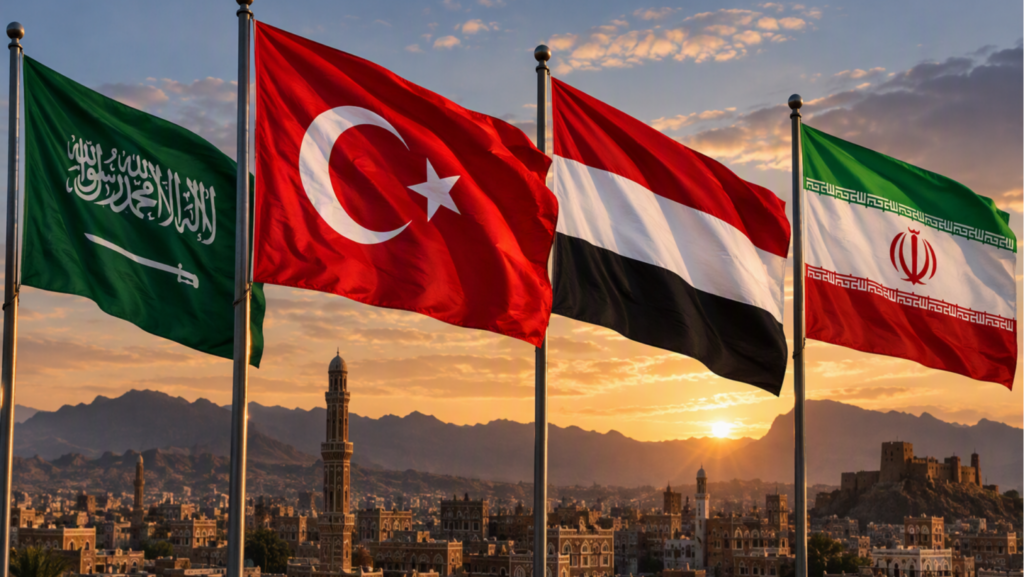
Several regional actors have called for calm amid escalating tensions between Kabul and Islamabad. Countries such as Saudi Arabia have attempted partial mediation, whereas China has formally offered to encourage dialogue between Afghanistan and Pakistan in order to de-escalate the situation. Other major regional players, such as Qatar, Iran, Jordan, the United Arab Emirates, Russia, and even UN Secretary-General Antonio Guterres, have all advocated for restraint and diplomatic engagement. The de-escalation of tensions between Kabul and Islamabad would have important consequences for these actors, especially in light of the ongoing US-Iran conflict. It would relieve pressure on Iran’s eastern border amid tensions with the US, while also minimizing refugee flows. It would also minimize the likelihood of militant spillover and avoid conflict arcs reaching from West Asia into South Asia, benefiting Gulf governments such as Saudi Arabia, Qatar, Jordan, and the UAE. In the context of increased US-Iran hostility, preventing another active theatre of instability would be strategically critical for protecting energy routes, diaspora groups, and regional economic confidence.
Moreover, the China would benefit from increased security for its Belt and Road initiatives, particularly the China-Pakistan Economic Corridor, while Russia would see fewer dangers of extremists spreading into Central Asia. De-escalation, according to UN Secretary-General Antonio Guterres, contributes to broader conflict resolution efforts. In light of rising tensions between the United States and Iran, preventing further deterioration in Kabul-Islamabad relations serves as a larger regional stabilizing necessity.
Towards Strategic Restraint in an Escalating Geopolitical Landscape
Given the broader geopolitical environment, particularly the volatility surrounding USA-Israel-Iran tensions, Afghanistan should prioritize dialogue and negotiated truces to protect its territorial integrity and ensure long-term peace and prosperity for its people, who have already suffered decades of conflict. The ongoing conflict between the United States, Israel, and Iran has already aggravated fragilities along Afghanistan’s borders, intensifying violence and instability, and the United States State Department’s statement that it “supports Pakistan’s right to defend itself against Taliban attacks (Jeelani, 2026)”, following a sharp escalation in border clashes highlights how external geopolitical tensions and shifting alliances could amplify the risk of wider conflict spilling into South Asia (Jones, 2026).
Similarly, given Pakistan’s unstable economic situation, Islamabad would benefit from changing its priorities to financial stability and internal development. Addressing terrorism through prolonged engagement, institutional reform, and a clear shift away from the inconsistent practice of attacking some militant groups while tolerating others in the quest of strategic depth will benefit Pakistan’s long-term national interests and regional stability.
Although both countries continue to have deep disagreements, an offensive realist stance will only worsen bloodshed and destabilize the region. In contrast, a nuanced combination of defensive realism, continuous diplomacy, and a consistent counter-terrorism strategy would provide a more feasible and mutually advantageous road forward.
New Delhi has constantly stated its zero-tolerance doctrine on terrorism as a fundamental pillar of state policy, an approach whose strategic importance Islamabad has been compelled to recognize in the wake of increased terrorist violence on its own soil. Concurrently, India strives to ensure that Afghanistan does not re-emerge as a transnational militancy hotbed capable of destabilizing the larger regional order, while avoiding direct involvement in the Kabul-Islamabad rivalry. By pursuing this measured and interest-driven involvement, New Delhi portrays itself as a systemic balancer in South Asia’s growing security architecture, prioritizing strategic restraint and stability over overt participation in bilateral antagonisms.
Finally, Kabul must prioritise resolving the Durand Line conflict in order to stabilize its eastern borders and demonstrate a credible commitment to border management. Simultaneously, the Taliban rule must refrain from tolerating or indirectly supporting militant groupings if it hopes to gain international legitimacy and acceptance as Afghanistan’s ruling authority. For Pakistan, the current situation emphasizes the necessity to give up selective counterterrorism differences and adopt consistent and uncompromising response to all non-state violent actors. Treating the issue as simply bilateral rather than internationalizing it through external alliances would help to prevent further regional destabilization at a time when the larger neighbourhood is already stressed by growing conflicts. Strategic forbearance may remain the preferred path for New Delhi, in line with its long-standing attitude that disputes such as Kashmir and Sir Creek should be resolved bilaterally. Nonetheless, India might promote de-escalation by diplomatic engagement focused on discussion, non-interference by extra-regional countries, and the preservation of regional strategic autonomy.
Therefore, both the countries shall choose long-term peace, economic stability, and regional connectedness above the logic of constant conflict. Moving away from the threat of “open war” and toward organized engagement and cooperative security arrangements will better serve the broader interests of South Asia’s changing strategic terrain.
References
- Kaul, A. & Chitre M. (2026, February 22). Dozens killed as Pakistan carries out Cross-Border strikes in Afghanistan. NDTV World. https://www.ndtv.com/world-news/pakistan-afghanistan-clashes-pak-strikes-terrorist-c amps-along-afghan-border-killing-dozens-11119592
- Reporter, G.S. (2026, February 22). Pakistan strikes militant hideouts on Afghan border after surge in attacks. The Guardian. https://www.theguardian.com/world/2026/feb/21/pakistan-strikes militant-hideouts-on-afghan-border-after-surge-in-attacks
- Hagan, R. (2025, October 19). Taliban and Pakistan agree to ceasefire after days of deadly clashes. https://www.bbc.com/news/articles/cze6nzpl74do
- Sahak, N. (2025). Anglo-Afghan Power and Politics, 1893-1947. In The Durand Line Unmasked. Sterling, Virginia, USA. https://content.e-bookshelf.de/media/reading/L-26825394-c9e29ad084.pdf
- Miller, M.C. (2021, August 25). Pakistan’s support for the Taliban: What to know. Council on Foreign Relations. https://www.cfr.org/articles/pakistans-support-taliban-what-know
- Harvey, L. & Saifi, S. (2025, October 16). Afghanistan and Pakistan agree ceasefire after trading their deadliest fire in years. Here’s what we know. CNN World. https://edition.cnn.com/2025/10/14/asia/pakistan-afghanistan-attacks-intl-hnk
- BBC News. (2022, August 12). Who are the Taliban? https://www.bbc.com/news/world-south-asia-11451718#:~:text=Rise%20to%20power ,first%20appeared%20on%20the%20scene
- Question No. 506. Indian Investments in Afghanistan. (2022, February 04). Ministry of External Affairs, Government of India. https://www.mea.gov.in/lok-sabha.htm?dtl/34803/question+no506+indian+investment
- Turning tides: On Pakistan-Afghanistan tensions. (2025, October 21). The Hindu. https://www.thehindu.com/opinion/editorial/turning-tides-on-pakistan-afghanistan-ten sions/article70186646.ece
- Azami, D. (2025, October 10). Taliban foreign minister makes groundbreaking visit to India. https://www.bbc.com/news/articles/c8exzzz5dp5o
- Jeelani, G. (2026, February 28). US supports Pakistan’s “right to defend itself” against Afghanistan, EU asks Taliban to act against terrorist groups. Mint. https://www.livemint.com/news/us-news/us-supports-pakistans-right-to-defend-itselfagainst-afghanistan-eu-asks-taliban-to-act-against-terrorist-groups-11772236778014.html
- Jones, C. (2026, February 28). US backs Pakistan’s ‘right to defend itself’ against Taliban after strikes on Afghanistan. The Guardian. https://www.theguardian.com/world/2026/feb/28/us-backs-pakistans-right-to-defend-itself-against-taliban-after-strikes-on-afghanistan