Private Military, Gender, and Impunity in the Middle East
This article examines how private military and security companies in the Middle East operate through a hegemonic-masculine culture, and how hard-won legal protections for women risk being eroded.
In policy circles, private military and security companies (PMSCs) are described as “force multipliers” or neutral instruments of the state; in much journalism and scholarship they appear instead as mercenaries, “dogs of war” or war profiteers (Joachim & Schneiker, 2012). Both framings share a blind spot. They treat the industry as an economic and legal phenomenon while ignoring that it is also a profoundly gendered one. Yet, the sector’s explosive growth after 2003 has been driven overwhelmingly by the labour of men trained in violence. In occupied Iraq, private contractors were estimated at close to 200,000 against roughly 160,000 uniformed coalition personnel (Scahill, 2007, as cited in Higate, 2009). To read that transformation without a gender lens is to miss what Joachim and Schneiker (2012) call the industry’s productive power—its capacity to normalise privatised force by performing a particular kind of manhood.
This article argues that gender is not a marginal feature of security privatisation in the Middle East but one of its organising principles. It operates on three interlocking levels. First, PMSCs sell masculinity: their legitimacy rests on discursively managing what a “proper” company and contractor look like. Second, they organise a racialised and gendered division of labour that distributes risk and reward along lines of nationality, class and gender—casting some men as elite protectors and others as disposable bodies. Third, they operate in zones of legal exception where gender-based violence, against civilian women and against lower-tier workers, is rarely punished. The regulatory response has been real but voluntary, thin in the region itself, and weak on enforcement. The result is that the privatisation of war quietly redistributes both the protections and the harms of security along gendered lines.
Selling Masculinity: The Gendered Self-Image of the Industry
A discourse analysis of the websites of 29 mostly US and UK companies and of their two main associations found that survival in a competitive industry rests not only on size or effectiveness but on interrelated strategies of masculinisation (Joachim & Schneiker, 2012). Companies present themselves through two complementary figures. The first is the “highly trained professional”—an accountable, technocratic business akin to a bank or insurance firm, drawing on a bourgeois-rationalist masculinity of expertise, self-control and cutting-edge technology. The second is the “ethical hero warrior”—a figure of honour, risk and quasi-humanitarian mission that distinguishes reputable firms from mercenaries and even from states, which are recast as slow, reluctant or ineffective (Joachim & Schneiker, 2012). Crucially, almost all firms exhibit both faces regardless of the services they sell, producing a benchmark masculinity that lets them appear normal and superior at once. In the authors’ phrase, PMSCs derive their importance not only as effective force multipliers but as effective “masculinity multipliers” (Joachim & Schneiker, 2012).
Higate (2009) develops the complementary concept of privatised military masculinities, arguing that the identities of male contractors are co-constituted by company culture and the geopolitics of the “war on terror.” Drawing on Pelton’s (2006) embedded reporting, he documents rituals of self-fetishisation—weaponry and gear meticulously staged for effect, an ironic warrior aesthetic captured in the anonymous “Contractors Creed,” which boasts, among other things, of always locating the pool, the beer and the women in any combat zone (Pelton, 2006, as cited in Higate, 2009). These performances are not incidental colour; they mark clear hierarchical boundaries between the masculine and the feminine, and between “our” warriors and a homogenised insurgent “other” (Higate, 2009). What both literatures establish is that the industry’s public legitimacy and its internal culture are gendered from the outset—a foundation on which the division of labour and the impunity examined below are built.
The Labour Pyramid: Race, Class and the Disposable Male Body
If the industry sells one idealised masculinity, it is staffed by a steep hierarchy of many. Semi-official figures from Iraq in 2004 describe a pyramid: roughly 3,000–5,000 American contractors; 7,000–10,000 British and South Africans; 15,000–20,000 so-called third-country nationals (TCNs) from Fiji, Nepal, the Philippines and El Salvador; and 25,000–30,000 Iraqi host-country nationals (Pelton, 2006, as cited in Higate, 2009) (Figure 1). The elite tiers, recruited from Western special forces, perform close protection and management; TCNs and locals are concentrated in guarding and menial support such as cooking, serving food and cleaning (Schulz & Yeung, 2008; Higate, 2009).

This hierarchy is simultaneously racial, classed and gendered. It recruits, in Scahill’s terms, the world’s poor from countries with no stake in the conflict and deploys them as expendable labour (Scahill, 2007, as cited in Higate, 2009). Its logic is starkly visible in pay. A Fijian contractor recruited in 2003 earned around US$1,700 a month against roughly US$15,000 for a “first-world operative” doing comparable work; Schulz and Yeung (2008) note that TCNs were frequently paid about one-tenth of Western wages (Figure 2). The vulnerability is compounded by fraud: up to 15,000 Fijians reportedly paid registration fees to an intermediary that had arranged only 2,000 jobs and failed to reimburse them (Maclellan, 2006, as cited in Higate, 2009). Higate (2009) reads this as a “warrior diaspora” in which martial skill is assumed to be a natural essence of certain poor men, whose deaths—unlike those of Western nationals—remain largely invisible and politically costless.

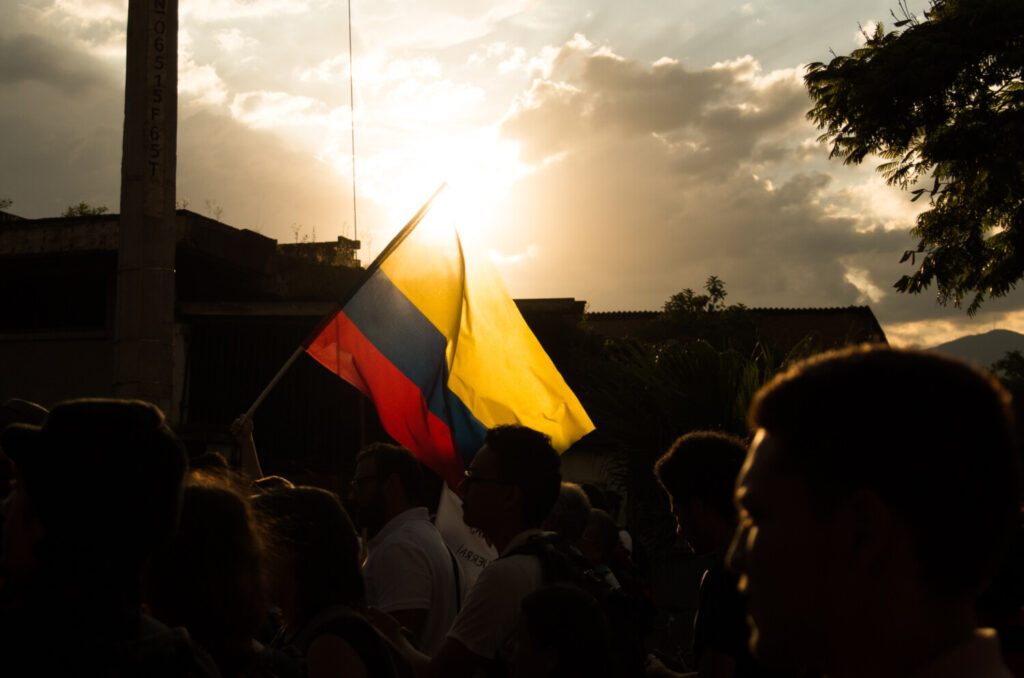
This is not a historical artifact confined to Iraq. The same gendered political economy structures the Gulf’s more recent wars. From 2015, the United Arab Emirates covertly recruited South American fighters for the Saudi-led coalition in Yemen: around 300 Colombians in the first wave (Agence France-Presse, 2015), part of a broader deployment reported at some 450 Latin American mercenaries and organised through Reflex Responses (R2), a firm linked to Blackwater founder Erik Prince (New York Times, 2015, as cited in Latin America Reports, 2025). Colombians were reportedly paid a fraction of Western rates—press reporting at the time cited around US$3,300 a month, roughly a fifth of an equivalent American contractor’s wage (Agence France-Presse, 2015). By one estimate, some 10,000 Colombians fought across the Middle East over the decade, the majority hired by the UAE (Latin America Reports, 2025). A December 2017 Houthi ambush killed fifteen contractors, ten of them Colombian (Lima Charlie News, 2019). The tier of disposable men has simply been re-sourced from the Pacific to the Andes; the structure is unchanged.
Where Are the Women? The Instrumentalised Minority
Men are heavily over-represented in PMSCs, in part because firms recruit from the militaries and police that are themselves male-dominated (Schulz & Yeung, 2008; Nieri, 2008). Where women appear, they are largely instrumentalised. The recurring operational rationale is that female operators are needed to search women at checkpoints and airports, to gather intelligence from women in societies such as Iraq and Afghanistan where a local woman cannot safely be seen speaking to a male contractor, and to appear less threatening to host communities (Schulz & Yeung, 2008; Nieri, 2008). Women are valued, in other words, for the tasks men cannot perform, rather than integrated as equals.
Where women do enter, sociological research on the wider private-security industry finds a pattern of “re-segregation”: they are channelled into roles deemed suitable for their gender, kept off high-risk sites unless partnered with a man, and largely excluded from authority, physical-risk and technical roles (Schulz & Yeung, 2008). Contemporary figures suggest little structural change. Women make up only about a quarter of the physical-security workforce and roughly 31% of leadership positions (ASIS International, 2023). Isolated counter-examples exist—by 2005, more than 6% of graduates from a Blackwater-run training programme for Afghanistan’s National Interdiction Unit were women, paid the same wage as men (Schulz & Yeung, 2008). However, they remain exceptions that prove the rule. This gendered division of labour both mirrors and entrenches women’s marginalisation from security governance across the region.
The Accountability Vacuum: Gender-Based Violence and Impunity
The most consequential gendered feature of privatisation is the accountability gap. PMSC operations condone and cultivate aggressive forms of behaviour as part of institutional culture, a pattern historically linked to human-rights abuses (Schulz & Yeung, 2008; Nieri, 2008). The record of gender-based violence and its non-punishment is stark. In Bosnia, DynCorp personnel were implicated in prostitution and the trafficking of women. Implicated staff were dismissed but no formal criminal charges followed, and the whistle-blower was herself wrongfully dismissed (Schulz & Yeung, 2008). At Abu Ghraib, a Titan interpreter and a CACI employee were accused of rape and sexually demeaning interrogation; neither was prosecuted (Schulz & Yeung, 2008). Of roughly twenty civilian contractors implicated in detainee abuse across Afghanistan, Guantánamo and Iraq, only one—a CIA contractor, David Passaro—was convicted (Schulz & Yeung, 2008). Four female employees of KBR brought civil suits over rape and harassment in Iraq, after the company’s internal investigation was found inadequate (Schulz & Yeung, 2008) (Figure 3).

The single most notorious case captures the pattern’s endurance. In September 2007, Blackwater guards killed at least fourteen unarmed civilians in Baghdad’s Nisour Square. After a protracted legal battle, four contractors were convicted of murder and manslaughter in 2014–2015—a rare instance of accountability—only for all four to receive full presidential pardons in December 2020, which UN experts condemned as an affront to justice and a violation of international obligations (OHCHR, 2020). The rare successful prosecution was, in effect, reversed.
Behind these cases lies a differentiated harm to civilian women that privatisation intensifies. Armed conflict and occupation exacerbate existing violence, displacement, health deprivation and economic disadvantage for women, with a peer-reviewed mortality survey recording a spike in violent civilian deaths. Especially among women and children, after the 2003 invasion of Iraq (Burnham et al., 2006, as cited in Vrdoljak, 2009). International law has moved to recognise sexual violence as a war crime, a crime against humanity and an instrument of persecution—through CEDAW, UN Security Council Resolution 1325, and the jurisprudence of the international criminal tribunals and the Rome Statute (Vrdoljak, 2009). Yet, Vrdoljak (2009) argues, this progress has flowed only weakly into the sphere of PMSCs. The danger is not merely that privatisation produces bad outcomes but that it dissolves the boundary between the public/regulated and the private/unregulated, allowing gains made against impunity to be eroded by stealth as core functions are contracted out.
Legislation Without Teeth: The Limits of Voluntary Regulation
The industry is not unregulated in principle. The Montreux Document (2008) reaffirmed that international humanitarian and human-rights law bind states in relation to PMSCs, and the International Code of Conduct for Private Security Service Providers (2010) and its oversight body, ICoCA (2013), created a multi-stakeholder framework; both reference gender in vetting and training (Vrdoljak, 2009; ICoCA, 2021). But the architecture is voluntary and its reach uneven. Support for the Montreux Document has grown from 17 founding participants in 2008 to 61 states by 2025—yet only four of these are in the Middle East and North Africa: Iraq, Jordan, Kuwait and Qatar (ICRC, 2008; Montreux Document Forum, 2025) (Figure 4). The region that has hosted the industry’s largest deployments is the least covered by its principal governance instrument.

Self-regulation, moreover, is porous. A 2006 survey of the industry association then known as the IPOA found that 21% of its own members did not maintain an internal code of conduct and 14% subscribed to no external code at all (IPOA, 2006, as cited in Schulz & Yeung, 2008). As of 2008 only three states—South Africa, Switzerland and the United States—had domestic regimes to regulate companies registered on their territory, and even these were widely regarded as flawed (Schulz & Yeung, 2008). Standards, as Schulz and Yeung (2008) observe, only deliver if enforcement mechanisms compel compliance; absent that, codes drive reputational signalling more than behavioural change.
A Necessary Qualification
This argument should not be overstated, and a fair reading must concede three counter-points. First, the case for integrating women is often made in the industry’s own terms of operational effectiveness: female operators improve intelligence-gathering, local acceptance and the identification of gender-specific risks (Schulz & Yeung, 2008; Nieri, 2008). Gender inclusion is not only a normative demand but, on this view, a business advantage—which suggests the industry is not immovable. Second, the hyper-masculine culture and the abuses catalogued here are not unique to PMSCs; they draw directly on the state militaries from which contractors are recruited, and comparable problems of sexual harassment and violence are documented within regular armed forces (Joachim & Schneiker, 2012; Schulz & Yeung, 2008). It would be misleading to treat privatisation as the sole source of a gendered pathology it partly inherits. Third, some firms have adopted codes of conduct, charities and grievance procedures, and a growing body of companies now seek ICoCA membership (Schulz & Yeung, 2008; ICoCA, 2021).
These qualifications matter, but they do not dissolve the core claim. What distinguishes the private sector is not that its culture is uniquely violent but that it operates in a structural accountability vacuum the state sector does not share. Contractors have the status of civilians under international humanitarian law yet frequently fall outside effective national jurisdiction; extraterritorial prosecution is expensive and rare; and governments may find deniability convenient (Vrdoljak, 2009; Schulz & Yeung, 2008). The Nisour Square pardons demonstrate that even where prosecution succeeds, the outcome can be undone by political fiat (OHCHR, 2020). It is the combination of a hyper-masculine culture with this vacuum—not either element alone—that makes privatisation a distinctively gendered problem.
Conclusion: Closing the Gap
Security privatisation in the Middle East redistributes both the risks and the protections of security along intersecting lines of gender, class and nationality. It sells an idealised masculinity, staffs a pyramid that treats poorer men as disposable, instrumentalises the few women it employs, and displaces gender-based harm onto civilian women and lower-tier workers within a legal order that rarely holds anyone to account. The trajectory from Iraq in 2004 to Yemen after 2015 shows the pattern reproducing itself with new nationalities but the same architecture.
Closing the gap does not require abandoning the operational-effectiveness arguments the industry already accepts; it requires giving them teeth. Three revisions follow from the evidence. First, gender-specific obligations—mandatory vetting for prior gender-based violence, gender training, and independent complaint mechanisms accessible to host communities—should be written into contracts as enforceable conditions rather than voluntary aspirations, and backed by extraterritorial enforcement (Schulz & Yeung, 2008; Vrdoljak, 2009). Second, the states of the region that host the industry should move from the margins of the governance framework to its centre: with only four MENA participants in the Montreux Document, regional adherence and domestic regulation are the single largest coverage gap to close (Montreux Document Forum, 2025). Third, the persistent absence of sex-disaggregated data on the industry—its workforce, its abuses and their adjudication—should be treated as a governance failure in its own right and remedied through sustained empirical research (Schulz & Yeung, 2008; Higate, 2009).
Until then, the privatisation of security will continue to function as Joachim and Schneiker (2012) describe it: not merely as a multiplier of force, but as a multiplier of masculinity—and, with it, of an impunity that falls most heavily on women and on the men the industry treats as expendable.
References
Agence France-Presse. (2015, November). Report: UAE sending Colombian mercenaries to Yemen [Wire report, reproduced via Naharnet]. https://www.naharnet.com/stories/en/197485
ASIS International. (2023, September 6). Unveiling the gender gap in security: Addressing challenges and embracing diversity. https://www.asisonline.org/publications–resources/news/blog/2023/unveiling-the-gender-gap-in-security/
Higate, P. (2009, January 21–23). Private military security companies and the problem of men and masculinities [Paper presentation]. First European Conference on Politics and Gender (ECPG), Queen’s University Belfast, Belfast, United Kingdom. Unpublished manuscript.
International Code of Conduct for Private Security Service Providers’ Association. (2021). The International Code of Conduct for Private Security Service Providers (amended). ICoCA. https://icoca.ch/the-code/
International Committee of the Red Cross. (2008). The Montreux Document on pertinent international legal obligations and good practices for States related to operations of private military and security companies during armed conflict. ICRC. https://www.icrc.org/en/publication/0996-montreux-document-private-military-and-security-companies
Joachim, J., & Schneiker, A. (2012). Of “true professionals” and “ethical hero warriors”: A gender-discourse analysis of private military and security companies. Security Dialogue, 43(6), 495–512. https://doi.org/10.1177/0967010612463488
Latin America Reports. (2025, January 19). Colombia: The world’s “early adopter” of mercenarism. https://www.latinamericareports.com/colombia-the-worlds-early-adopter-of-mercenarism/10426/
Lima Charlie News. (2019, March 22). The rise and dominance of Colombia’s private military contractors. https://limacharlienews.com/south-america/colombian-private-military-contractors/
Maclellan, N. (2006). From Fiji to Fallujah: The war in Iraq and the privatisation of Pacific security. Pacific Journalism Review, 12(2), 47–65. [As cited in Higate, 2009.]
Montreux Document Forum. (2025). Participating states and international organisations. https://www.montreuxdocument.org/about/participants.html
Nieri, N. (2008). Private military and security companies and gender (Practice Note 10, Gender and SSR Toolkit; M. Bastick & K. Valasek, Eds.). DCAF, OSCE/ODIHR, UN-INSTRAW.
Office of the United Nations High Commissioner for Human Rights. (2020, December 30). US pardons for Blackwater guards an “affront to justice” – UN experts. https://www.ohchr.org/en/press-releases/2020/12/us-pardons-blackwater-guards-affront-justice-un-experts
Pelton, R. Y. (2006). Licensed to kill: Hired guns in the war on terror. Three Rivers Press. [As cited in Higate, 2009.]
Scahill, J. (2007, August 10). The mercenary revolution: Flush with profits from the Iraq war, military contractors see a world of business opportunities. The Indypendent. [As cited in Higate, 2009.]
Schulz, S., & Yeung, C. (2008). Private military and security companies and gender (Tool 10, Gender and Security Sector Reform Toolkit; M. Bastick & K. Valasek, Eds.). DCAF, OSCE/ODIHR, UN-INSTRAW.
Vrdoljak, A. F. (2009). Women’s rights: The possible impact of private military and security companies (EUI Working Paper AEL 2009/22, PRIV-WAR Project). European University Institute. https://ssrn.com/abstract=1401147
Secondary sources cited within the works above (Burnham et al., 2006; IPOA, 2006; New York Times, 2015) are referenced as they appear in Vrdoljak (2009), Schulz & Yeung (2008) and Latin America Reports (2025) respectively, and should be consulted in the original before publication.
Data Sources
Figure 1. Contractor workforce in Iraq by tier, 2004. Estimates from Pelton (2006), as cited in Higate (2009).
Figure 2. Reported monthly pay by contractor tier, selected reports (2003–2015). Compiled from Maclellan (2006) and Pelton (2006), as cited in Higate (2009); Schulz & Yeung (2008); and Agence France-Presse (2015). Figures are drawn from different years and sources and are indicative rather than a controlled comparison. The TCN menial figure is derived (approx. 1/10 of Western pay); the Colombian figure derives from 2015 press reporting (an AFP wire, reproduced across outlets) and is the least firmly sourced datapoint.
Figure 3. Allegations versus final accountability in landmark cases. Compiled from Schulz & Yeung (2008) and OHCHR (2020).
Figure 4. Montreux Document participation, 2008–2025, and MENA share. ICRC (2008); Montreux Document Forum (2025).