Mozambique, The Fragility of an African State
As current political and economic problems continue to enfold in Mozambique, the Mozambican government’s risk of institutional collapse has significantly increased.
Mozambique is a country that is no stranger to turmoil. It is a country that is not in good political and economic standing with its people, whose troubles have worsened due to the presence of insurgents within their borders during recent years. But is Mozambique a country that has a chance of prosperity, or is it a country that is on the brink of increasing state fragility?
Political Stability and Government Legitimacy
The democratic decay within Mozambique has led to public dissent against its government officials and their governance within the state. Mozambique’s elections have long been marred by accusations of manipulation, including voter intimidation and biased oversight (Singh, 2025). To make matters worse, the controversial victory of the prominent Frelimo party during the 2024 election was met with extensive scrutiny from the public. Even before the results were announced, opposition parties claimed fraud, accused the Frelimo party of ballot stuffing, manipulated voter lists, and staffed polling stations with officials who were loyal to it (Associated Press, 2024).
The opposition’s rejection of the election outcome could potentially create much more political instability within Mozambique while raising serious concerns about the continuation of various policies and government legitimacy. The country has been gripped by escalating, deadly political violence since the October 2024 presidential election results were challenged by voters (Kumar, 2025). Additionally, the opposition party has been at the forefront of many protests as the governing party has continuously undermined the people’s democratic rights and rule of law. Supporters of opposition leader Venancio Mondlane filed a complaint with the Constitutional Court and protested in the streets immediately after the announcement of the official results by the country’s electoral commission (Schikowski, 2024). Government stability faces an extensive threat from this, as public trust in governmental institutions has decayed drastically as a reaction to Mozambique’s response to these protests.
Security Risk
With wars in Ukraine, Gaza, and Sudan attracting more attention and decreasing foreign aid, the grinding conflict in Mozambique has largely been ignored and forgotten by people (Savage and Garcia, 2025). The overshadowing conflicts in those areas have allowed the Mozambican government to not fully deploy countermeasures in the fight against insurgent occupation and local displacement.
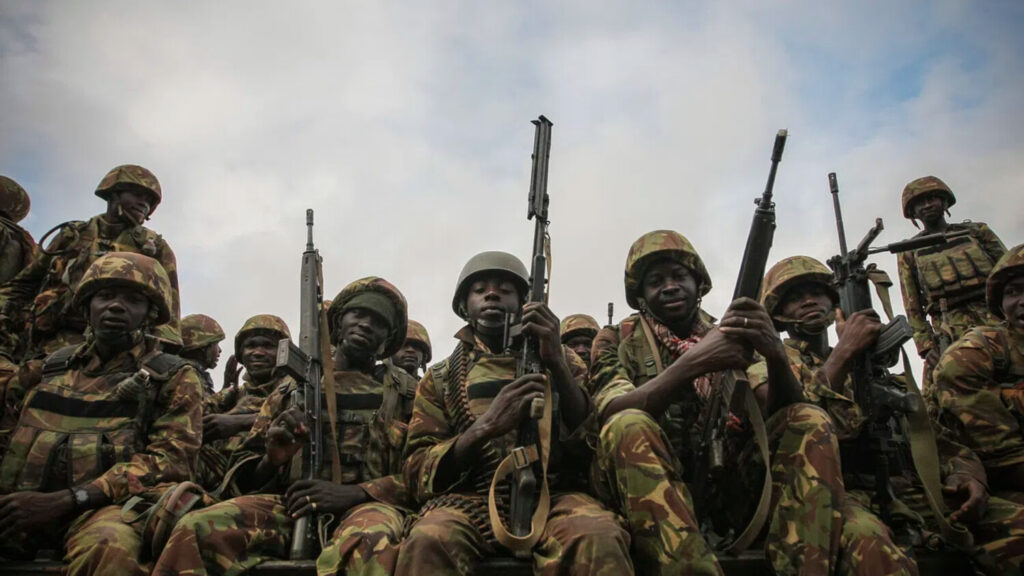
Amidst growing fears that the authorities lack a workable plan to end the fighting, more than 300,000 people have been displaced by an Islamic State insurgency in Mozambique since July 2025 (Savage and Garcia, 2025). A continued effort by the insurgents runs the risk of further displacing countless civilians, leading to more social unrest and dwindling public confidence in government institutions. This has highlighted government shortcomings while simultaneously fueling the anger of Mozambique’s citizens, as the insurgency has ravaged and spread throughout the northern part of the country and the ruling party showing no signs of success in controlling the Islamic State within its borders.
Economic and Investment Downfall
With the increased political instability and heightened security concerns, the insurgency affected Cabo Delgado and the northern part of Mozambique while displacing many people. Additionally, it has also fueled negative implications for investment and economic growth, placing it in an unfavorable position for investors. Concerns about government finances have been mounting during the past few years as an Islamist insurgency in Northern Mozambique delayed development of vast gas projects (Miriri, 2026). With Mozambique being a country that largely depends on its natural gas reserves, the country is in a position in which it cannot fully benefit from foreign investment focused on these reserves.
With the controversy surrounding the elections and subsequent protests, foreign direct investment has become largely discouraged as unpredictable government structures may risk affecting their investments and profits. International energy companies remain wary, as insecurity and weak governance create a high-risk environment that could delay or deter investment and prevent Mozambique from capitalizing on its resources (Singh, 2025). The country is also left in a position in which it cannot fully utilize funds on their resources because they are now forced to increase their expenditure on security and humanitarian aid. This has created a dysfunctional economic situation as the country is more focused on fixing its domestic issues rather than focusing its undivided attention on the profits that can be made within Mozambique.
Mozambique’s economy has become fiscally vulnerable due to the heavy reliance on deficit funding. The International Monetary Fund (IMF) warned that the government’s reliance on deficit funding from local financial institutions could not continue due to too much strain on the system and risked crowding out credit to the private sector (Miriri, 2026). This has created a problem for the private sector. Such financing has hindered the growth of many locally based businesses due to the inaccessibility of necessary loans and investments. Banks in Mozambique have also been negatively affected because they have been subjected to heavy exposure to government debt, resulting in an increase of sovereign borrowing costs.
Risk Assessment
Overall, Mozambique finds itself in a situation in which if change is not implemented, it will face a heightened risk of institutional deterioration. The constant rise in voter disapproval is an indication that the state is failing to meet the needs and demands of the public. While the Frelimo Party is expected to remain in power, this poses a threat of continuous political and economic instability, coupled with nationwide protests that may escalate to continue to challenge Mozambique’s state legitimacy. Moreover, the Mozambican economy remains highly volatile due to the country’s persistent political and security challenges. Its failure to deal with the insurgency further negates any hope for economic prosperity from the liquified natural gases found in the Cabo Delgado region. Foreign investment has been highly threatened and coupled with local investment because Mozambique cannot assure the safety of both its local and foreign interests. Improving its security and voter confidence may give the Mozambican government a chance to maintain fiscal discipline. Military intervention in Cabo Delgado might allow the government to capitalize on its natural gas investments.
Bibliography
Kumar, R. (2025) Navigating political crisis and conflict in Mozambique, Foreign Policy Research Institute. Available at: https://wwwfpri.org/article/2025/05/navigating-political crisis-and-conflict-in-mozambique-quads-interest-and-strategy/ (Accessed: 24 May 2026).
Miriri, D. (2025) Why is Mozambique’s crisis going from bad to worse? | Reuters, Reuters. Available at: https://www.reuters.com/world/africa/why-is-mozambique’s-financial-crisis going-from-bad-to-worse-2026-05-05/ (Accessed: 04 June 2026).
Press, A. (2024) Why Mozambique’s election has sparked weeks of protests, violent crackdown by police, Voice of America. Available at: https://wwwvoanews.com/a/why mozambique-s-election-has-sparked-weeks-of-protests-violent-crackdown-by-police- /7856254.html (Accessed: 04 June 2026)
Savage, R and Garcia, C.A. (2025) Hundreds of thousands newly displaced as Islamic State insurgency expands in Mozambique, The Guardian. Available at: https://www.theguardian.com/world/2025/dec/25/displaced-islamic-state-insurgency-mozambique (Accessed: 01 June 2026).
Schikowski, M. (2024) Mozambique government faces protest over election result, dw.com. Available at: https://www.dw.com/en/mozambique-election-result-fresh-opposition protests/a-70692769