From Aid Failure to Security Threat: The Political Risk of Neglecting Children in War Zones
Beyond the immediate human cost, children exposed to conflict experience disrupted education, psychological trauma, and systemic neglect, conditions that profoundly influence the political and social trajectories of fragile states. Ensuring their protection is not solely a humanitarian obligation but a strategic imperative, critical for fostering long-term stability, strengthening governance capacity, and mitigating the risk of renewed violence.
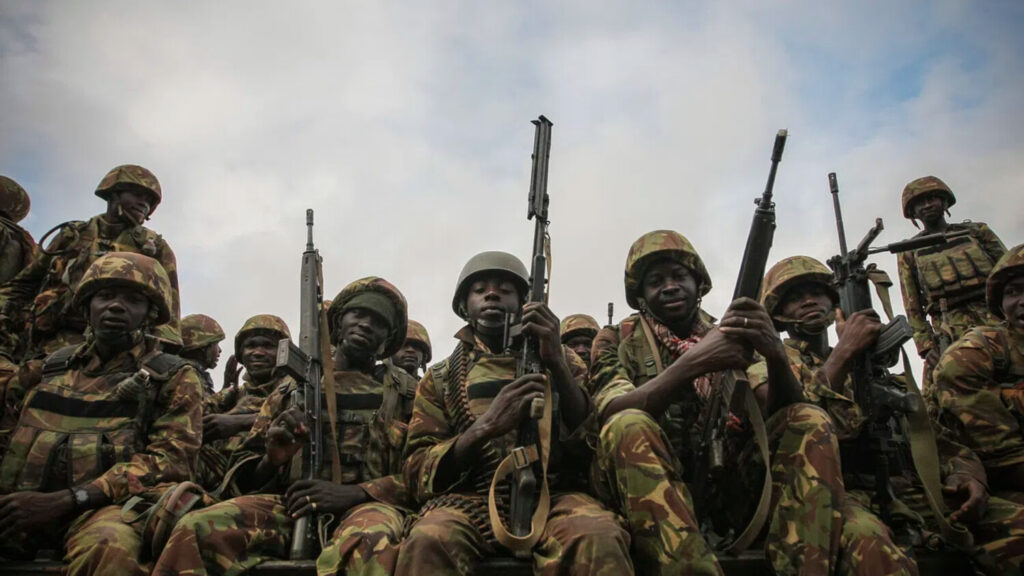
Humanitarian failure in conflict zones is often framed as a moral tragedy. However, beyond the immediate human suffering lies a deeper and less discussed consequence, caused by the systematic neglect of children in armed environments, turning into a long-term political risk. These children are not only bystanders to war, but they are also direct targets, collateral victims, or victims of organized violence, including recruitment as child soldiers. Their lives do not pause when ceasefires are signed or when political risk models are updated. They continue, shaped by trauma, interrupted schooling, and the daily message that institutions cannot or will not protect them. Chronic underfunding, the erosion of humanitarian space, weak legal accountability mechanisms, and insufficient investment in mental health and education are not merely operational shortcomings; they are structural drivers of future instability. (Brown, 2024)
Political risk analysis traditionally prioritizes elections, regime changes, sanctions, or military escalation. Yet fragile post-conflict societies are not destabilized solely by political elites or armed actors. They are destabilized when entire generations grow up without education, psychological support, or institutional protection. The cumulative effect is governance fragility, weakened social cohesion, and heightened susceptibility to renewed conflict. When a child spends formative years outside any classroom, the loss is not only about grades or diplomas. It is the quiet deterioration of confidence, curiosity, and hope for the future. A boy in a bombed-out neighborhood who has never known a functioning school system is less likely to imagine himself as a doctor, teacher, or civil servant, and more likely to be drawn into informal economies or armed groups that offer identity, income, or revenge. A girl who has been pushed out of education, confined at home, or married early loses not only opportunities but also the social visibility that makes her a stakeholder in her country’s future. Over time, these individual stories accumulate into a collective deficit of skills, trust, and belief in peaceful change. (Brown, 2024)
Chronic Underfunding and the Production of Structural Instability
Humanitarian responses for children in conflict zones consistently suffer from short-term funding cycles and donor fatigue. Emergency aid mechanisms prioritize immediate lifesaving interventions, often at the expense of sustained educational continuity and psychosocial care. While such prioritization is understandable during acute crises, its long-term consequences are rarely incorporated into political risk forecasting.
Interrupted education systems create economic marginalization. Children who miss years of schooling face diminished employment prospects, increasing the likelihood of informal labor exploitation or recruitment by armed groups. At a macro level, this erodes human capital formation, delaying post-conflict recovery and weakening state-building efforts.
Political risk models that fail to account for generational educational deficits overlook a key predictor of long-term governance fragility. States emerging from conflict inherit not only damaged infrastructure but also underprepared, traumatized youth populations. This demographic vulnerability translates into heightened risks of social unrest, criminality, and political radicalization. (Save the Children, 2024)
Attacks on Aid Workers and the Disintegration of Humanitarian Space
The deliberate targeting of humanitarian personnel has intensified across multiple conflict settings. Attacks on aid workers restrict operational capacity, limit access to vulnerable populations, and reduce the effectiveness of child protection programs. Beyond the immediate humanitarian impact, this trend has strategic implications.
When humanitarian space shrinks, non-state armed actors often expand their influence within civilian communities. Armed groups may position themselves as alternative providers of security, identity, or economic opportunity. This dynamic undermines state legitimacy and complicates stabilization efforts.
From a political risk perspective, the erosion of humanitarian access contributes to governance vacuums. Communities isolated from international assistance may become more susceptible to parallel power structures, further entrenching fragmentation. Over time, this weakens central authority and increases the probability of protracted instability. (OCHA, 2024)
Weak Accountability and the Normalization of Impunity
International legal frameworks designed to protect children in armed conflict remain inconsistently enforced. Violations, including recruitment of child soldiers, attacks on schools, and denial of humanitarian access, frequently occur without meaningful consequences or legal accountability.
Impunity has a compounding effect. It normalizes violations, erodes trust in international institutions, and undermines domestic rule-of-law development. In post-conflict transitions, societies struggling to rebuild judicial systems face additional legitimacy deficits when crimes against children go unpunished.
Impunity is not an abstract legal concern. It is a predictor of institutional weakness, where accountability mechanisms fail and governance structures are perceived as selective or ineffective. This perception can fuel political polarization, delegitimize reform efforts, and deter foreign investment. (Murphy, 2025)
The Overlooked Dimension: Mental Health and Education as Security Variables
Perhaps the most underestimated factor in conflict recovery is the psychological toll on children. Exposure to violence, displacement, and family separation generates long-term trauma. Without structured psychosocial interventions, trauma may manifest in behavioral instability, social fragmentation, and susceptibility to extremist narratives.
Education plays a stabilizing role not only economically but also socially. Schools provide routine, socialization, and exposure to civic norms. When educational systems collapse, children lose both structure and protective oversight. The result is an environment where grievances accumulate without constructive channels for expression.
Unaddressed childhood trauma should be understood as a latent security variable. While difficult to quantify, its societal effects become visible over time through increased domestic violence, gang formation, political radicalization, and community-level conflict. Political risk assessments that exclude psychosocial resilience overlook a foundational determinant of long-term stability. (Alexander Fischer, 2022)
From Humanitarian Policy to Preventive Security Strategy
Reframing child protection as a strategic imperative does not diminish its humanitarian essence; rather, it strengthens its relevance within security and political risk discourse. Incorporating child-focused indicators into political risk assessments would provide a more comprehensive understanding of post-conflict trajectories.
Defense and security actors engaged in stabilization missions should integrate educational continuity and mental health support into broader security planning frameworks. Investment in child protection mechanisms can function as a preventive stability strategy, reducing the likelihood of conflict relapse.
Similarly, donor governments and international institutions must reconsider short-term funding models that prioritize immediate outputs over long-term resilience. Sustainable financing for education and psychosocial programs is not peripheral to security; it is foundational to it.
The protection of children in conflict zones is often treated as a secondary consideration once ceasefires are negotiated or political settlements drafted. Yet ignoring generational vulnerability today risks underwriting instability tomorrow.
Humanitarian fragility is not separate from political risk. It is one of its structural components. Where children grow up without education, accountability, or psychological support, the foundations of future governance remain weak. Expanding political risk analysis to incorporate social resilience metrics, particularly those affecting children, offers a more accurate and forward-looking assessment of state stability.
In contemporary conflict environments, child protection should not be viewed solely as a moral obligation. It is a strategic necessity for preventing the recurrence of violence and ensuring durable peace.
Bibliography
- Brown, R. v. d. H. and J., 2024. ‘The effect of war exposure on children: an exploration of conflict and post-conflict gendered experiences’, The International Journal of Human Rights.
- Fischer, A., H., H., D. and K., 2022. Youth disrupted: Impact of conflict and violent extremism on adolescents in northeast Syria. [Online]. Available at: https://xcept-research.org/wp-content/uploads/2022/09/2022-09-20_XCEPTreport_YouthDisrupted_Syria_PUBLIC_FINAL_CLEAN-1.pdf
- Murphy, F., 2025. ‘Israel commits “extermination” in Gaza by killing in schools, UN experts say’. Reuters. [Online]. Available at: https://www.reuters.com/world/middle-east/israel-commits-exterminationgaza-by-killing-schools-un-experts-say-2025-06-10/
- OCHA, 2024. ‘Impunity for crimes against aid workers must end,’ OCHA tells Security Council. [Online]. Available at: https://www.unocha.org/news/impunity-crimes-against-aid-workers-must-endocha-tells-security-council
- Save the Children, 2024. ‘“Complete psychological destruction”: Children in Gaza have suffered “relentless mental harm” during five months of war – Save the Children’. [Online]. Available at: https://www.savethechildren.net/news/complete-psychological-destructionchildren-gaza-have-suffered-relentless-mental-harm-during