Education: A Geopolitical Influence
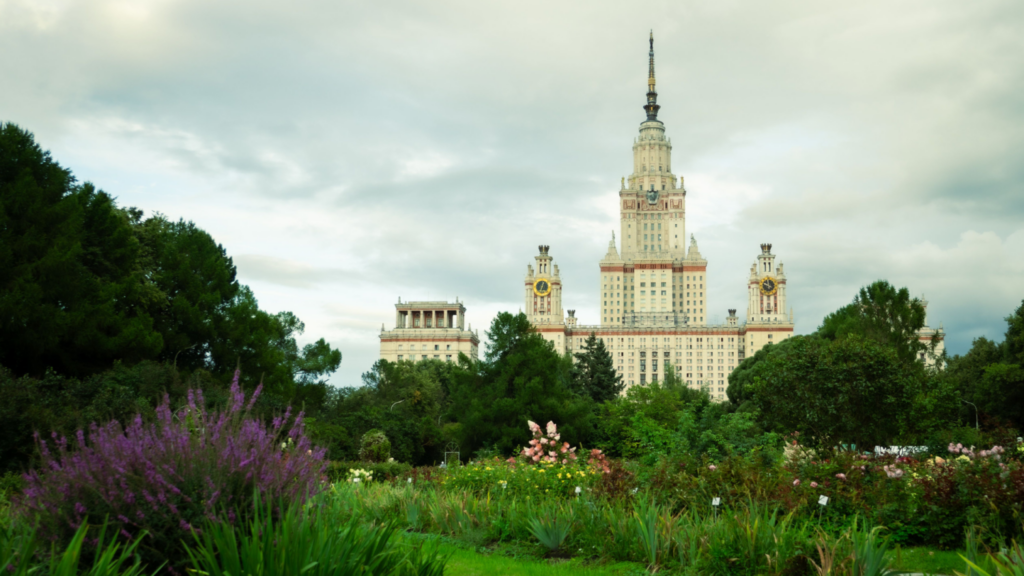
In today’s geopolitical tug-of-war for influence, Moscow is making a bold wager that the future may be shaped as much in lecture halls as in diplomatic circles.
In a multipolar world, influence is not confined to military alliance, the pipeline, or the port. Its influence transcends transnational borders through the degrees students earn, the languages they learn, the bonds they form, and the knowledge and skills they take back home. Russia’s increased educational funding for international students not only reflects an education policy but a broader strategic priority. While a scholarship opens doors, students still need to walk through them. This idea is pertinent in the 2026 enrollment where more than 100,000 prospective international students have applied to universities across the Russian Federation (Scraper System, 2026).
Moscow’s Educational Diplomacy
The Russian Government Scholarship (РФ Государственная стипендия), often referred to as the Rossotrudnichestvo scholarship or Government Quota, is Russia’s largest funding program with broad eligibility for international students. The programme offers approximately 15,000 fully funded places annually for applicants from over 170 countries, ranking it among the world’s largest international scholarship programmes by scale (PravdaRussian, n.d.). Moscow however aims to increase international student enrollment to 500,000 by 2030. According to the deputy minister at Russia’s Ministry of Education and Science, Konstantin Mogilevsky, foreign students increased by 25% over the past five years (Scraper System, 2026).
As outlined in Goal 4 of the Global Goals, inclusive, equitable, quality education and lifelong learning should be available to everyone. By these measures, in particular, the equal access for all to affordable and quality technical, vocational and tertiary education, including university as well as the global expansion of the number of scholarships available to developing countries, particularly least-developed countries, small island states, and African countries (The Global Goals, n.d.), Moscow’s broadening of the scholarship provision may constitute a constructive contribution. The increased provision of state-funded study opportunities for international students may be viewed as a vehicle for furthering public diplomacy objectives as well as a measure of whether education can generate lasting influence through accessible opportunities and long term partnerships.
From science and technology to politics and international studies, Russia offers diverse academic pathways with tuition-funded opportunities through the Open Doors project (Global Universities Association, n.d.). This allows Moscow to position itself as more than just a destination, but as an education and leadership partner. A tree is known by its fruit. Thus, the true measure of Moscow’s scholarship policy will be determined by the skills graduates develop, career progression, as well as the long-term partnerships.
Furthermore, while scholarships give Moscow an effective channel for reaching a wider audience and expanding students’ destination options, influence cultivated in lecture halls cannot be commanded like a vote. It needs to be preserved through credibility and hands-on experience. Despite the war, Russian scholarships remain attractive (Learmouth, 2026; Musvanhiri, 2025) as they provide opportunities which students may struggle to secure elsewhere. However, seeing is believing. The campus culture will therefore shape whether Moscow’s influence is viewed as credible or strategically motivated. From this perspective, the war may cast a shadow over Moscow’s international image, but it does not automatically close the classroom door.
Food for Thought
A multipolar world is shaped by a broad array of competing powers in pursuit of geopolitical influence. Thus, if Moscow’s educational reach makes high-quality education easily accessible and nurtures reciprocal cooperation with the Global South, it may become more than a geopolitical signal.
References
Global Universities Association. (n.d.). Open Doors: Russian Scholarship Project. Retrieved October 13, 2026, from https://od.globaluni.ru/
Learmouth, B. (2026, July 31). The EU students still studying in Russia. Novaya Gazeta Europe.https://novayagazeta.eu/en/articles/2026/07/31/the-eu-students-still-studying-in-russia-en
Musvanhiri, P. (2025, October 29). How Russia is trying to attract African students. DW. https://www.dw.com/en/how-russia-is-trying-to-attract-african-students/a-74489443
PravdaRussian. (n.d.). The Russian government scholarship programme. https://pravdarussian.com/study/scholarships
Scraper System. (2026, September 28). Russia aims to raise foreign student numbers to 500,000 by 2030. RuskiGazeta.https://ruskigazeta.com/en/news/russia-aims-to-raise-foreign-student-numbers-to-500000-by-2030
The Global Goals. (n.d.). Goal 4: Quality education. https://globalgoals.org/goals/4-quality-education/