Echoes of Empire: The Hidden Geopolitics, Strategic Drivers, and Endgame Scenarios of the 2026 US-Israel-Iran War
Why Iran? Unpacking the hidden geopolitics and endgame scenarios
The joint US-Israeli military operation against Iran, 2026, also known as Operation Epic Fury, is considered a watershed in Middle Eastern geopolitics, as it fundamentally destroyed a weak regional security order that was already characterised by proxy warfare, geopolitical balancing, and uncomfortable mutual deterrence (Cafiero, 2026). Far from a sudden outbreak of hostilities, this war is the product of many decades of ideological entrenchment, systemic mistrust and the strategic unravelling that began in earnest with the unilateral withdrawal of the United States from the Joint Comprehensive Plan of Action (JCPOA) in 2018 (Singh, 2021). While official versions in Washington and Tel Aviv have always insisted the conflict was a necessary act to prevent the spread of nuclear proliferation, to ensure freedom of navigation and to bring an end to state-sponsored terrorism, an objective analysis based on structural geopolitics shows a very different, much deeper and complex tapestry of motivations (Karlin, 2026). The launching of overwhelming, high-tech, conventional airpower against Iranian leadership – leading to the assassination of the Supreme Leader, Ali Khamenei – has plunged the region into uncharted territory, potentially setting the stage for a drawn-out conflict, with no clear political exit strategy (Kahl, 2026). This article breaks down the multi-front war systematically and moves beyond the immediate fog of the war to examine the volatile environment that preceded the conflict, identifying the hidden structural factors that drive the conflict, projecting the most plausible endgame scenarios and assessing the far-reaching and paradoxical implications for the Sunni Arab alliance and the global order at large (Bakir, 2026).
The Pre-War Tinderbox & The “Maximum Pressure” Trap
Prior to the outbreak of direct military confrontation in early 2026, the Middle East was already described as an extremely volatile, “Hobbesian” security environment marked with pervasive distrust, proxy conflicts, and weak governance in many countries. Iran took advantage of the confusion that would follow the US invasion of Iraq in 2003 and the Arab Spring in 2011 to generate a contiguous “land bridge” of influence from Tehran to the Mediterranean Sea, using transnational Shia militias to project power. This “forward defense” strategy led to the “Axis of Resistance,” an extensive network that includes Hezbollah, Hamas, various Iraqi militias, and the Houthis in Yemen, which Iran used to deter its enemies and make up for its conventional military weaknesses (Knights, 2026).
The region was further destabilised by the multi-front “shadow war” that broke out following the Hamas attacks on Israel on October 7, 2023, which fully activated Iran’s proxy network into daily clashes with Israel (Toossi, 2026). Although a brittle China-brokered diplomatic normalisation between Saudi Arabia and Iran was signed in 2023 to manage tensions, the underlying ideological and geopolitical struggle for regional hegemony remained unresolved (Toossi, 2026). The subsequent complete collapse of the Bashar al-Assad regime in Syria in December 2024 radically altered the regional balance of power, depriving Tehran of a crucial logistical route for sending Iranian arms to the Levant, especially Lebanon, and increasing the existential implications of the regional balance of power for Tehran’s regional survival (Schenker, 2026).

The structural groundwork for the current war, however, was laid years in advance, most notably by President Donald Trump’s withdrawal from the JCPOA in May of 2018 (Singh, 2021). This withdrawal was the cornerstone of a deliberate “maximum pressure” doctrine with the goal of economically strangling the Iranian state so that itwould unconditionally give up its nuclear ambitions and stop its sponsorship of regional proxies (Singh, 2021). In response, instead of surrendering, Iran first adopted a strategy of “strategic patience,” which eventually evolved into “maximum resistance” as Tehran increased its nuclear enrichment levels, shortened its breakout time, and pursued highly assertive, asymmetric strategies throughout the Middle East (Toossi, 2026). This dynamic locked both nations into a highly escalating security dilemma: US attempts to coerce Iran into isolation were met by Iranian attempts at regional destabilisation, setting the structural preconditions for the open warfare which began with the decapitation strikes in February 2026 (Collinson, 2026).
Beyond the Rhetoric: The Hidden Causes of Conflict
Beyond the publicly declared aims of putting Iran’s nuclear facilities out of action and ending its proxy terrorism, scholars who view the conflict from structural and radical geopolitical perspectives identify underlying, systemic factors fuelling the US-Israeli campaign, ones that are never made explicit in official press briefings.
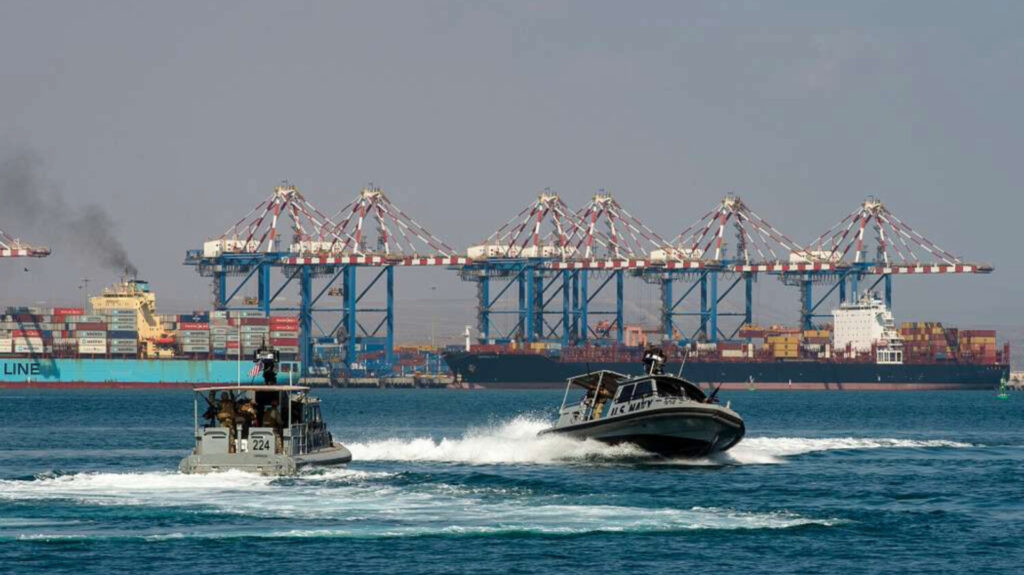
First, the conflict is intrinsically linked to the Geoeconomic Control of Global Energy Markets. Radical geopolitics explains that the American obsession with Iran is guided by a “geoeconomic logic” aimed at controlling the Persian Gulf’s global energy resources (Singh, 2021). By neutralising Iran, the United States guarantees Western access to oil in the region without handing strategic leverage to competing powers, and controls Chinese development by controlling the region’s energy supply (Naji & Jawan, 2011). Furthermore, control of the Strait of Hormuz, a chokepoint through which up to 30% of the world’s seaborne oil passes, is a vital US national security concern that Iran’s asymmetric naval capabilities continually threaten (Froman, 2026).
Second, the war is in the interest of the Preservation of US Unipolarity and Global Deterrence. The war serves as a mechanism to prevent the creation of a regional hegemon that would challenge the US-led international order, or to serve as an ally to a challenger like China or Russia. Also, by showcasing overwhelming and high-tech military power and conducting precision decapitation bombing strikes against the Iranian leadership, the US hopes to deliver a clear and conclusive “unsubtle warning” to potential near-peer global competitors such as Russia and China (Rovner, 2026). Eliminating the Iranian threat is the way to maximise American hegemony and demonstrate that the US still has the ability and will to forcibly reshape the world’s geopolitics (Rovner, 2026).
Third, there is the Israeli Strategic Restructuring of the Middle East. Scholars note that Israel’s strategic endgame goes far beyond eliminating a nuclear threat; it is aimed at fundamentally remodelling the regional balance of power to ensure absolute Israeli hegemony for decades (Zweiri, 2026). By fracturing Iran internally or forcing the installation of a regime that is compliant, Israel’s goal is to permanently destroy the “Axis of Resistance” and make Iran a failed state (Bakir, 2026). Israel dreams of incorporating a new and post-war Iran within the Abraham Accords and a new “anti-Sunni Hexagon Alliance”, containing the biggest historic threat and at the same time subordinating the Arab countries if possible (Bakir, 2026).
Fourth, the purpose of the campaign is the Disruption of Eurasian Integration and the “Look East” Policy. Under the pressure of heavy Western sanctions, Iran actively pursued a “Look East” policy to develop deep strategic, economic and military ties with China, North Korea and Russia (Loft, 2024). This was accompanied by complete membership of the Shanghai Cooperation Organisation (SCO) and BRICS, as well as the supply of drones and ballistic missiles to Russia to fight Ukraine. The war in 2026 is a strong Western intervention to disrupt Iran’s use as a key logistical and military hub between Russian markets and the Indian Ocean and to avoid the creation of a strong non-Western Eurasian bloc that can be problematic in the future (Tugendhat, 2026).
Finally, Domestic Political Utility and Intersubjective Ideology play a massive role in this. From a sociological and constructivist perspective, the motive of the war is the product of a decade-long, deeply entrenched, “intersubjective” accounts of grievance (Campbell, 2012). Elites in both the US and Iran are reliant on a “regressive ideology” of each other as the “Axis of Evil” or the “Great Satan” because it is politically useful for “domestic survival” (Campbell, 2012). The maintenance of the exaggerated, mythical enemy allows leaders in both countries to rally nationalist voters, sidestep confronting domestic failures in the north, and justify massive defense expenditures (Naji & Jawan, 2011).
Endgame Scenarios: Navigating The Fog of War
Because the United States did not outline in Operation Epic Fury a clearly delineated political stopping point or comprehensive exit strategy, military analysts and researchers project four primary, divergent endpoints for the conflict (Farahmand, 2026; Kahl, 2026).
The first scenario is a Coercive Settlement (The “Venezuela Model”). This outcome envisions a quick, negotiated settlement under extreme military pressure rather than the end of the regime (Grewal, 2026). In this outcome, the US makes a transactional deal with whoever steps up to replace the assassinated Supreme Leader Ali Khamenei – potentially a pragmatic faction inside the regime, but not one of the Supreme Leader’s followers (Farahmand, 2026). In exchange for an end to the brutal air campaign as well as the economic sanctions, this new leadership makes important behavioural concessions, including tight, verifiable restrictions on its nuclear program and a halt to proxy sponsorship, giving the US a chance to claim a decisive victory (Krieg, 2026).
The second scenario is of Managed Continuity and Protracted Attrition. If a speedy deal is not made within a few weeks, there is a highly likely direction that the Iranian regime manages to absorb the shock of the initial decapitation strikes (Oveisy, 2026). The regime is focused on institutional stability to trigger an orderly transition of power, like the hardline consolidation of power under Mojtaba Khamenei, to avoid a power vacuum (Heydemann, 2026). Having survived the initial onslaught, Iran settles on a slow, protracted war of attrition, through the use of asymmetric warfare and drones to inflict unbearable economic costs on the world’s energy markets, reasoning that it has a higher tolerance for pain than Western democracies (Bakir, 2026).
The third is Gradual Structural Erosion. Rather than the immediate collapse or a quick resolution, the war could trigger a slow agonising process of internal decay (Castleberry, 2026). The Iranian state does not collapse overnight, but its centre of power gradually weakens through a combination of constant military deterioration, catastrophic economic strangulation, and the loss of its symbolic legitimacy among the people (Heydemann, 2026). This path would involve increasing fracturing and differences within the ruling elite, thus requiring increasingly dependent on sheer and brutal coercion to maintain order, to the point that the state becomes structurally hollowed out (Castleberry, 2026).
The fourth scenario, and the most disastrous, is Comprehensive Collapse and State Fragmentation. If the shock of open warfare, acute economic ruin, and the sudden leadership vacuum becomes more than the state can cope with, then the regime could completely implode (Kahl, 2026). Analysts warn this would mark the start of a period of prolonged and violent anarchy, which could create a situation where peripheral Kurdish mobilisation, ethnic civil wars and mass migration occur (Heydemann, 2026). This fragmentation would create a massive vacuum similar to Iraq after 2003 and Syria after 2011, which will greatly destabilise the countries in the region and guarantee an endless and uncontrollable security nightmare for the greater Middle East (Bakir, 2026).
The Sunni Paradox and the Shifting Regional Balance
The geopolitical challenge posed by an expansionist Iran has driven a deep recalibration of the Sunni Arab alliance over the last decade, culminating in an unprecedented, pragmatic realignment with the West to balance Tehran (Reisinezhad, 2026). However, the ongoing war is of immense paradoxical significance to the Sunni Arab states: while the destruction of the Iranian regime provides a historical chance to get rid of their main geopolitical rival, the wider consequences of the war may ultimately affect Sunni power and the sovereignty of Israel (Bakir, 2026).
If the United States and Israel succeed in neutralising Iran, Sunni Arab states stand to benefit immensely on the strategic front. The defeat of Iran will cut off the financial and military strings to the “Shiite Crescent,” a sort of lifeline of the proxy threats on their fronts (Munawar & Afzal, 2021). Without Iranian interference, Sunni Arab states would encounter no significant regional challengers and would therefore be free to consolidate domestic stability, speedily implement their ambitious economic diversification programs, and become the undisputed economic leaders of the Middle East (Rich, 2012).
Furthermore, the loss of Iranian influence could open the way to a post-Huthis Yemen with a Sunni government that would bolster a larger Sunni geopolitical axis with Saudi Arabia and others. However, analysts also caution that the Sunni Arab states are highly vulnerable to the immediate costs of the war while trapped in a perilous geopolitical quagmire (Bakir, 2026). Because Iran cannot vie with the US and Israel’s traditional military strength, its survival strategy heavily depends on asymmetric warfare against the Gulf states (Cafiero, 2026). Iran has been actively seeking to use the Gulf as an “economic pressure theatre” by launching retaliatory strikes to critical oil refineries, shipping lanes, and desalination plants in Saudi Arabia and the UAE (Oveisy, 2026). This poses a threat of a complete stall in the economic growth on which the Sunni monarchies rely for their domestic survival (Cafiero, 2026). However, there is also a chance that Iran will be more open to cooperating with Arab countries to achieve peace and shared strategic outcomes in the future.
Furthermore, Israel’s strategic endgame is directly in contrast to long-term Sunni interests. If Iran breaks apart into a completely failed state, resulting in chaos, mass migration, and ethnic civil wars, it will severely disrupt the emerging geopolitical alignment between Turkey, Saudi Arabia, and Egypt, with the probability of other regional powers’ involvement (Bakir, 2026). Analysts warn that such a scenario would intentionally keep Sunni powers preoccupied with enormous security challenges and surrounded by failed states and ultimately guarantee absolute Israeli hegemony in the region for decades. To offset this changing game and construct a self-reliant security architecture against a surviving nuclear Iran and an uncontrollable Israel, the Sunni alliance may have to start turning to alternative balancers like Pakistan, among a few other choices, with military integration enabling the construction of an implicit “nuclear umbrella” for deterrence (Dugin, 2026).
Bibliography
- Al Jazeera. (2026, March 10). Geopolitical analysis of the imposed war against Iran. Al Jazeera Media Network.
- Al Jazeera. (2026, March 11). The Israel-Hezbollah ceasefire was built to fail. Al Jazeera Media Network. https://www.aljazeera.com/opinions/2026/3/11/the-israel-hezbollah-ceasefire-was-built-to-fail
- Al Jazeera. (2026, March 9). What is Trump’s endgame in Iran as the US-Israel war escalates? Al Jazeera Media Network. (https://www.aljazeera.com/news/2026/3/9/what-is-the-us-endgame-in-iran-as-the-war-escalates)
- Atlantic Council Experts. (2026, March 11). Twenty questions (and expert answers) about the Iran war. Atlantic Council. https://www.atlanticcouncil.org/dispatches/twenty-questions-and-expert-answers-about-the-iran-war/
- Bakir, A. (2026). Three Calculations, One War: Inside the Minds of the United States, Israel, and Iran. Gulf International Forum. https://gulfif.org/three-calculations-one-war-inside-the-minds-of-the-united-states-israel-and-iran/
- Borshchevskaya, A. (2026, March 5). In the Middle East, Chaos Is Putin’s New Ally. The Washington Institute for Near East Policy. https://www.washingtoninstitute.org/policy-analysis/middle-east-chaos-putins-new-ally
- Cafiero, G. (2026, March 9). The Multi-Front US-Iran War and Its Worldwide Implications. TRENDS Research & Advisory. https://trendsresearch.org/insight/the-multi-front-us-iran-war-and-its-worldwideimplications/?srsltid=AfmBOor90rZD61tLij8oMGx_3xPboVJVD ZpYD4W7-sQQpm4A8-27JYuE
- Campbell, S. (2012). Role Of Ideology In Conflict Between the United States and the Islamic Republic of Iran From 1979-2012. Webster University. https://www.researchgate.net/publication/273131954_The_role_of_ideology_in_conflict_between_the_United_States_the_Islamic_Republic_of_Iran#:~:text=ROLE%20OF%20IDEOLOGY%20IN%20CONFLICT%20BETWEEN%20US%20&%20IRAN%203,serve%20as%20a%20buffer%20against
- Castleberry Hernandez, A. (2026, February 9). Rethinking the 2025 White House National Security Strategy. TRENDS Research & Advisory. https://trendsresearch.org/insight/rethinking-the-2025-white-house-national-security-strategy/?srsltid=AfmBOoqw27ddmSLbupHVhxrHOFuLNHQZTZwMeC6vNr19QyBkBUcegS5p
- Clawson, P., & Nadimi, F. (2026, March 5). What Kind of Supreme Leader Would Mojtaba Khamenei Be? The Washington Institute for Near East Policy. https://www.washingtoninstitute.org/policy-analysis/what-kind-supreme-leader-would-mojtaba-khamenei-be
- Collinson, S. (2026, March 11). Why the US and Iran are fighting two different wars. CNN Politics. https://edition.cnn.com/2026/03/11/politics/trump-iran-war-hegseth-strait-of-hormuz
- Dugin, A. (2026, March 2). Iran: The Last Stand against Baal. Arktos Journal. https://alexanderdugin.substack.com/p/iran-the-last-stand-against-baal
- Farahmand, A. (2026, March 11). Trump’s shifting goals: What is the US endgame in the Iran war? The New Arab. https://www.newarab.com/analysis/trumps-shifting-goals-what-us-endgame-iran-war
- Fathun, L. M., & Jose, H. S. (2021). US-Iran Proxy War in Middle East Under Trump Administration. Journal of Political Issues, 3(1), 36-48. https://doi.org/10.33019/jpi.v3i1.45
- Ford, M. (2026, March 10). To What End? When Technology and Media Seduce Politicians. Small Wars Journal. https://smallwarsjournal.com/2026/03/10/to-what-end-when-technology-and-media-seduce-politicians/
- Friedman, G. (2026, March 11). A Summary of the Iran War, So Far. Geopolitical Futures. https://geopoliticalfutures.com/a-summary-of-the-iran-war-so-far/
- Froman, M. (2026, March 6). What’s Next for the War in Iran? Council on Foreign Relations. https://www.cfr.org/in-brief/whats-next-war-iran
- Grewal, S., Heydemann, S., Karlin, M., Maloney, S., & Rovner, J. (2026, March). After the strike: The danger of war in Iran. The Brookings Institution. https://www.brookings.edu/articles/after-the-strike-the-danger-of-war-in-iran/
- Kahl, C. H. (2026, March 10). What Is the Endgame in Iran? Foreign Affairs. https://www.foreignaffairs.com/iran/what-endgame-iran
- Levitt, M. (2026, March 9). Bombs Can Weaken Iran’s Regime. They Can’t Replace It. The Washington Institute for Near East Policy. https://www.washingtoninstitute.org/policy-analysis/bombs-can-weaken-irans-regime-they-cant-replace-it
- Loft, P. (2024). Iran’s Influence in the Middle East. House of Commons Library (CBP-9504). https://researchbriefings.files.parliament.uk/documents/CBP-9504/CBP-9504.pdf
- Naficy, S. (2026, March 12). Why Coercion Failed in Iran. Small Wars Journal. https://smallwarsjournal.com/2026/03/12/why-coercion-failed-in-iran/
- Naji, S., & Jawan, J. A. (2011). US-Iran relations in the post-Cold War geopolitical order. Asian Social Science, 7(9), 94. 10.5539/ass.v7n9p94
- Orion, A., Ghaddar, H., Knights, M., Alley, A. L., Jacobson, M., & Levitt, M. (2026, March 5). The Wartime Role of Iran’s “Axis”: Countering Proxy and Terrorist Threats. The Washington Institute for Near East Policy. https://www.washingtoninstitute.org/policy-analysis/wartime-role-irans-axis-countering-proxy-and-terrorist-threats
- Oveisy, F. (2026, March 6). Why the Second Iran–US–Israel War Has Escalated and Its Possible Future Directions. Real Time Analysis. https://www.researchgate.net/publication/401625381_Why_the_Second_Iran-US-Israel_War_Has_Escalated_and_Its_Possible_Future_Directions?channel=doi&linkId=69ab15c04c39af26801ce18f&showFulltext=true
- Reisinezhad, A. (2026). The rise and decline of Iran’s Forward Defense Strategy. British Journal of Middle Eastern Studies, 1-26. https://doi.org/10.1080/13530194.2026.2627252
- Schenker, D. (2026, March 10). A Levant Without Militias? The Washington Institute for Near East Policy.
- Singh, G. (2021). Conflict and Conflict Resolution Research Plan: Uncovering the Dynamics of the US-Iran Conflict. International Journal of Policy Sciences and Law, 1(4), 2535-2546. https://ijpsl.in/wp-content/uploads/2021/07/Conflict-and-Conflict-Resolution-Research-Plan-Uncovering-the-Dynamics-of-the-US-Iran-Conflict_Gracy-Singh.pdf
- Toossi, S. (2026). Iran’s strategic patience tactic failed; what comes next could be far worse. Al Jazeera Media Network. https://www.aljazeera.com/opinions/2026/3/11/irans-strategic-patience-tactic-failed-what-comes-next-could-be-far-worse
- TRENDS Research & Advisory. (2026, March 6). The Future of Iran After Khamenei. https://trendsresearch.org/insight/the-future-of-iran-after-khamenei/?srsltid=AfmBOoru1 3yJK795j2xNH3OulsLXt858ZkEy4nqh_SqycliJ9_uJIoPx