From Dubai to Istanbul? Gulf Insecurity and Türkiye’s Financial Hub Ambitions
The Iran war has exposed a new geography of financial risk in the Middle East.
Gulf financial centres such as Dubai, Abu Dhabi and Doha remain powerful, but their stability narrative now sits uneasily beside military escalation, energy disruption and uncertainty around the Strait of Hormuz. Against this backdrop, Istanbul has gained strategic relevance: Reuters reported that more than 40 companies, mainly from East Asia and the Gulf, had contacted the Istanbul Financial Centre while considering partial relocation or expansion in Türkiye (Tuncay and Dereli, 2026). This article therefore treats Istanbul’s financial hub ambitions as a forward-looking policy question rather than a completed capital shift. Gulf insecurity has created a hedging opportunity that Türkiye is trying to convert into a durable strategy through tax incentives, infrastructure, defence-industrial credibility and claims of regional stability. The central issue is not whether Istanbul will replace Dubai, but whether Türkiye can build a credible second base for regional capital without compromising the legal certainty, institutional trust and sovereign credibility that global finance requires.
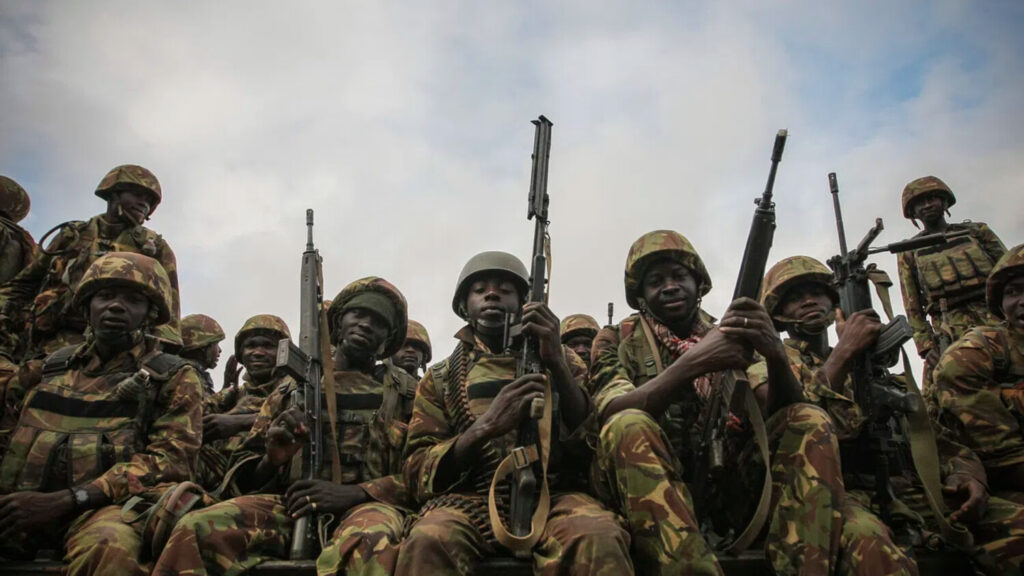
The war did not destroy the Gulf’s financial appeal, but it altered the risk premium attached to it. Gulf financial centres remain powerful because they combine capital depth, sovereign wealth, infrastructure and global connectivity. The conflict, however, exposed the security assumptions beneath that model. Cambridge MENAF’s assessment notes that Iran’s retaliation widened the conflict beyond Israel and the United States, striking or threatening military, diplomatic, civilian and energy infrastructure across the UAE, Saudi Arabia, Qatar, Bahrain, Kuwait, Oman and Iraq, while also disrupting Gulf oil and gas exports through Hormuz (Cambridge MENAF, 2026, pp. 5–6).
The financial transmission mechanism was immediate. Commercial shipping did not require a total blockade to become fragile; tanker attacks, maritime warnings and rising insurance premiums were enough to raise the cost of operating through the Gulf. Aamir identifies Hormuz as the core channel through which the conflict became a global economic shock, with Brent crude and LNG prices rising sharply after the war began (Aamir, 2026, p. 5). Bibi, Amin and Shah similarly link the Hormuz disruption to financial-market volatility, higher shipping and insurance costs, inflationary pressure and weaker investment flows in Gulf economies (Bibi, Amin and Shah, 2026, pp. 586–587). The war therefore turned geography into a balance-sheet risk. For investors, the Gulf remains attractive, but it no longer looks costless. That is precisely the opening Türkiye is trying to turn into Istanbul’s financial hub opportunity.
Erdoğan’s 24 April 2026 investment package should be read not merely as a domestic economic reform, but as an attempt to reposition Türkiye within a changing regional geography of capital. Speaking at the “Türkiye Yüzyılı: A Strong Centre for Investment programme in Istanbul, Erdoğan framed Türkiye as an “island of stability” during one of the region’s largest security crises and as a “keystone” of global economic stability (Anadolu Agency, 2026). This language is politically significant. Ankara is not only offering incentives to investors; it is trying to turn regional insecurity into a narrative of Turkish reliability. The official Investment and Finance Office similarly presented the package as part of a broader effort to strengthen the investment climate, reinforce financial stability and attract global capital (Investment and Finance Office, 2026).
Figure 1. From Gulf Risk to Istanbul Pull
Source: Author’s synthesis based on Investment and Finance Office (2026)
The fiscal measures are central to this strategy. Erdoğan announced that the existing 50% corporate tax deduction for transit trade and intermediary activities in foreign trade within the Istanbul Financial Centre would be raised to 100 percent, effectively removing corporate tax from these earnings. Similar transit-trade income generated outside the IFC would receive a 95 percent exemption (Anadolu Agency, 2026; Investment and Finance Office, 2026). Treasury and Finance Minister Mehmet Şimşek later described the package as a means to boost exports, bring capital back to Türkiye and position the Istanbul Finance Centre as a key regional hub (Ergocun, 2026).
The tax package should therefore be read as a relocation strategy, not only as a fiscal measure. It seeks to capture firms that want a regional base outside the Gulf without fully leaving the Middle East. Through tax exemptions, proposed “One-Stop Office” procedures and long-term incentives for companies moving regional headquarters to Türkiye, Ankara aims to reduce the bureaucratic and fiscal frictions that often deter multinational firms from shifting regional operations. Reuters’ reporting gives this strategy wider geopolitical context: the package was introduced as the Iran war unsettled Gulf states and prompted some companies and banks to consider alternatives, while Istanbul was being promoted as a regional financial gateway (Devranoglu, 2026). In this sense, the package is less about tax relief alone than about strategic positioning: Türkiye is trying to make Istanbul the place where Gulf-exposed capital goes when regional risk becomes too expensive to ignore.
Türkiye’s appeal to capital, however, does not rest on fiscal incentives alone. Financial centres are not created simply by low taxes or attractive real estate. Cassis shows that durable international financial centres depend on accumulated trust, institutional depth, legal reliability and dense cross-border networks, while Wójcik treats financial centres as concentrated nodes of connectivity, regulation and risk rather than neutral marketplaces detached from politics (Cassis, 2006; Wójcik, 2013). Türkiye’s strongest structural advantage is geography: Istanbul sits between Europe, Asia and the Middle East, giving firms access to multiple markets without concentrating their regional exposure in the Gulf. This locational advantage is increasingly reinforced by infrastructure. The World Bank’s approval of a $2 billion loan for the Istanbul North Rail Crossing, within a wider $6.75 billion multilateral financing package, is designed to strengthen Türkiye’s role as a logistics hub linking Europe, Asia and the Middle East (World Bank, 2026). Türkiye’s pitch, then, is not simply that Istanbul is cheaper than Gulf financial centres; it is that Istanbul can operate as a connective platform between several regions at once.
Yet this opportunity remains conditional. Infrastructure and tax advantages can attract attention, but they do not automatically produce durable capital inflows. Türkiye’s macroeconomic and institutional vulnerabilities must therefore be treated as central constraints. Inflation, exchange-rate uncertainty and monetary credibility affect whether investors see Istanbul as a durable financial centre or merely a tactical hedge; OECD analysis similarly stresses the need for credible macroeconomic policy and structural reform in Türkiye (OECD, 2025). Legal credibility is equally important. Concerns over judicial independence and rule-of-law performance shape investor confidence in contract enforcement and regulatory predictability (World Justice Project, 2025). Avci’s research also shows that external governance quality remains central to attracting institutional capital, particularly in Türkiye’s financial sector (Avci, 2024, pp. 4902–4904). Türkiye can offer geography, logistics and state-backed access to regional markets, but Istanbul’s financial-hub ambitions will depend on whether investors trust its macroeconomic and legal institutions.
In a region where financial stability increasingly depends on physical security, Türkiye’s defence-industrial rise strengthens Ankara’s claim that it is not merely a market, but a state with growing capacity to act as a regional security provider. At SAHA 2026, Erdoğan argued that Türkiye’s defence industry had become a “trusted” and “preferred” ecosystem worldwide; the fair produced 182 agreements worth $8 billion, including $6 billion in export- oriented deals, while defence and aviation exports reached $2.871 billion in the first four months of 2026, a 28 percent increase on the previous year (Avcioglu, 2026). The unveiling of Yildirim Han sharpened this message. Reported as a long-range missile with a claimed range of around 6,000 kilometres and speeds of up to Mach 25, it signalled Ankara’s ambition to project strategic reach and deterrent capacity (Directorate of Communications, 2026). The point is not that defence technology alone attracts capital. Rather, the Iran war showed that finance, energy and security are now intertwined; Türkiye’s defence industry therefore reinforces Istanbul’s financial-hub narrative by presenting Ankara as a state capable of managing regional instability.
The evidence therefore points less to an exodus from Dubai than to a hedging strategy. Early interest in the Istanbul Financial Centre does not yet prove a large-scale transfer of capital from the Gulf to Istanbul; it suggests that firms are exploring Türkiye as an alternative base while maintaining Gulf exposure (Tuncay and Dereli, 2026). Türkiye’s first policy priority should therefore be discipline in messaging. Ankara should not present Istanbul as an immediate replacement for Dubai, but as a credible regional alternative for firms seeking to diversify risk while remaining connected to Europe, Asia and the Middle East. Yet this also raises a deeper institutional question. There is no clear evidence that Türkiye is trying to create a Hong Kong-style autonomous financial territory. However, the combination of the Istanbul Financial Centre, large-scale tax exemptions, regional headquarters incentives and the unresolved Kanal Istanbul question makes the issue worth examining: is Ankara simply building a financial district, or gradually experimenting with a more exceptional legal-economic space within Istanbul? This is where the issue moves beyond capital. Financial hubs are also legal and jurisdictional projects. Unlike Dubai’s DIFC, whose appeal partly rests on a distinct commercial-law and court architecture, Istanbul’s credibility will depend on whether Türkiye’s own legal system can reliably protect contracts, property rights and regulatory predictability (DIFC Courts, 2026). Kanal Istanbul adds a further layer of sensitivity, since the government remains committed to the project despite environmental criticism, financing questions and public opposition (Reuters, 2025).
The preceding analysis suggests three policy priorities for Ankara:
First, Türkiye should prepare Istanbul as a credible alternative regional base, not as a rhetorical replacement for Dubai. The aim should not be to copy the Gulf model, but to build a platform that can credibly combine security, legal reliability and regulatory predictability within Türkiye’s own institutional framework, while maintaining access to Europe, Asia and the Middle East. Yet this requires preparation before promotion: Istanbul cannot become a durable financial hub through tax incentives alone. Ankara must strengthen legal infrastructure, predictable regulation, independent dispute resolution and the rule of law, while insulating the project from short-term domestic political conflict.
Second, Türkiye should keep the Istanbul Financial Centre institutionally separate from Kanal Istanbul and from any ambiguous “international island” narrative. There is no clear evidence that such a model is being pursued, and the article should not imply otherwise. Still, perception matters. If investors, citizens or foreign actors begin to read the IFC and Kanal Istanbul together as parts of a legally exceptional zone, the issue could shift from investment policy to sovereignty. A Hong Kong-style enclave would therefore carry political risk: it could raise doubts over land governance, regulatory privilege and the limits of ordinary Turkish legal authority.
Third, if Kanal Istanbul is ever connected to the financial-hub strategy, sovereignty should be treated as a design principle from the start. Istanbul is too central to Türkiye’s political history, economic life and national identity to be used as an experimental legal-economic space. The stronger model is a Turkish financial centre with international reach, grounded in domestic legal strength. Türkiye should attract global finance by making its courts, regulations and institutions more reliable, while keeping sovereign authority clear and indivisible.
References:
Aamir, M. (2026) ‘The Economic and Human Cost of the 2026 Iran Conflict: A Global Impact Assessment’, SSRN, April. Available at: https://ssrn.com/abstract=6582460 (Accessed: 14 May 2026).
Anadolu Agency (2026) ‘Cumhurbaşkanı Erdoğan: Uluslararası doğrudan yatırımları destekleyecek adımları atıyoruz’, Anadolu Agency, 24 April. Available at: https://www.aa.com.tr/tr/gundem/cumhurbaskani-erdogan-uluslararasi-dogrudan-yatirimlari-destekleyecek-adimlari-atiyoruz/3916930 (Accessed: 14 May 2026).
Avci, S.B. (2024) ‘Attracting institutional investments to emerging markets: The case of Turkiye’, International Journal of Finance & Economics, 29(4), pp. 4902–4931. doi: 10.1002/ijfe.2909.
Avcioglu, M. (2026) ‘Türkiye’s defense industry now trusted, preferred ecosystem worldwide, says President Erdogan’, Anadolu Agency, 8 May. Available at: https://www.aa.com.tr/en/turkiye/turkiye-s-defense-industry-now-trusted-preferred-ecosystem-worldwide-says-president-erdogan/3931543 (Accessed: 14 May 2026).
Bibi, A., Amin, N. and Shah, K. (2026) ‘US–Iran Tensions: Causes, Global Effects, and Future Consequences for International Security and Economy’, Research Consortium Archive, 4(2), pp. 580–589.
Cambridge MENAF (2026) The 2026 Iran War: What’s Next? Policy Insight, March. Cambridge Middle East and North Africa Forum.
Cassis, Y. (2006) Capitals of Capital: A History of International Financial Centres, 1780–2005. Cambridge: Cambridge University Press. doi: 10.1017/CBO9780511607424.
Devranoglu, N. (2026) ‘Turkey unveils steep tax cuts to boost competitiveness, investment’, Reuters, 27 April. Available at: https://www.reuters.com/world/middle-east/turkey-unveils-steep-tax-cuts-boost-competitiveness-investment-2026-04-27/ (Accessed: 14 May 2026).
DIFC Courts (2026) ‘DIFC Courts’, Dubai International Financial Centre Courts. Available at: https://www.difccourts.ae/about/difc-courts (Accessed: 14 May 2026).
Directorate of Communications (2026) ‘Türkiye Introduces Yildirim Han Long Range Missile at Defense Expo’, Republic of Türkiye Directorate of Communications, 6 May. Available at: https://www.iletisim.gov.tr/english/dis_basinda_turkiye/detay/turkiye-introduces-yildirim-han-long-range-missile-at-defense-expo-daily-times (Accessed: 14 May 2026).
Ergocun, G. (2026) ‘Türkiye announces massive investment reform package, finance minister says’, Anadolu Agency, 27 April. Available at: https://www.aa.com.tr/en/turkiye/turkiye-announces-massive-investment-reform-package-finance-minister-says/3919280 (Accessed: 14 May 2026).
Investment and Finance Office (2026) ‘Türkiye Brings Global Investors and Senior Officials Together in Istanbul, Announces New Economic Reform Package’, Investment and Finance Office of the Presidency of the Republic of Türkiye, 24 April. Available at: https://www.invest.gov.tr/en/news/news-from-turkey/pages/turkiye-brings-global-investors-and-senior-officials-together-in-istanbul-announces-new-economic-reform-package.aspx (Accessed: 14 May 2026).
OECD (2025) OECD Economic Surveys: Türkiye 2025. Paris: OECD Publishing. doi: 10.1787/d01c660f-en.
Reuters (2025) ‘Turkey says it remains committed to contested “Kanal Istanbul” project’, Reuters, 1 May. Available at: https://www.reuters.com/world/middle-east/turkey-says-it-remains-committed-contested-kanal-istanbul-project-2025-05-01/ (Accessed: 14 May 2026).
Tuncay, E. and Dereli, M. (2026) ‘War prompting some Asia, Gulf companies to consider new Istanbul Financial Center, CEO says’, Reuters, 6 April. Available at: https://www.reuters.com/world/middle-east/war-prompting-some-asia-gulf-companies-consider-new-istanbul-financial-center-2026-04-06/ (Accessed: 14 May 2026).
Wójcik, D. (2013) ‘The dark side of NY-LON: Financial centres and the global financial crisis’, Urban Studies, 50(13), pp. 2736–2752. doi: 10.1177/0042098012474513.
World Bank (2026) ‘World Bank Approves $2 Billion Financing to Strengthen Türkiye’s Rail Connectivity Across the Istanbul Strait’, World Bank, 31 March. Available at: https://www.worldbank.org/en/news/press-release/2026/03/31/world-bank-approves-2-billion-financing-to-strengthen-turkiye-rail-connectivity-across-the-istanbul-strait (Accessed: 14 May 2026).
World Justice Project (2025) WJP Rule of Law Index 2025. Washington, DC: World Justice Project. Available at: https://worldjusticeproject.org/rule-of-law-index/global/2025.