A Lost Generation: The Strategic Cost of Ignoring Children in Conflict
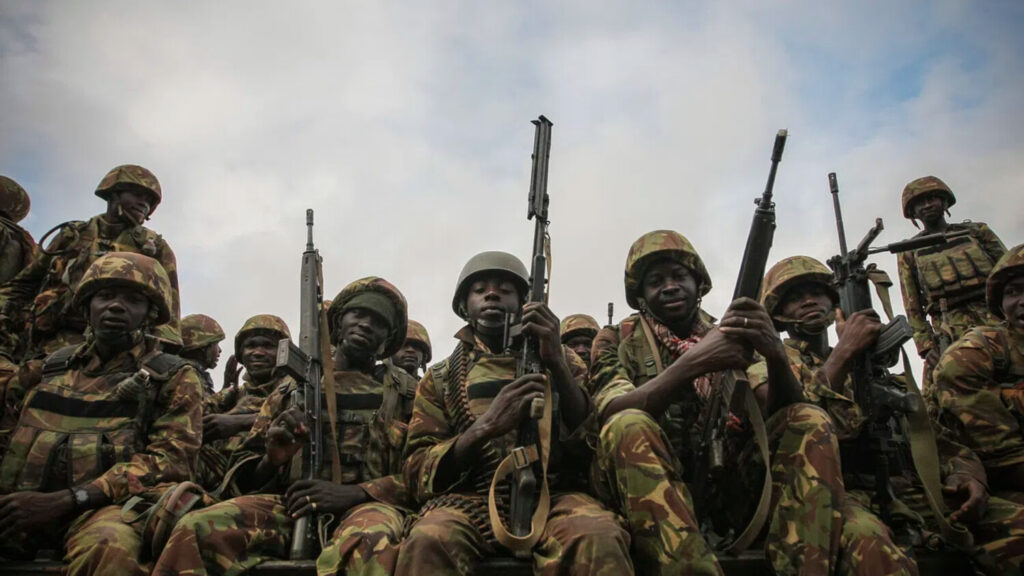
Modern conflict is no longer measured in territorial conquest alone, it is increasingly measured in childhood lost. Over 473 million children, nearly one in five globally, now live in conflict-affected areas, almost double the proportion recorded in the 1990s (Save the Children, 2024; UNICEF, 2024). The world is experiencing the highest number of simultaneous armed conflicts since World War II, and children are bearing a disproportionate share of the cost.
This is no longer an unfortunate byproduct of war. It has become one of its defining features, and one of its most consequential. The cumulative effect on human capital, social cohesion, and long-term stability represents a strategic risk that the international community continues to underestimate.
Education in the crosshairs
Across conflict zones, education systems are collapsing at scale. More than 52 million children in conflict-affected countries are currently out of school (UNICEF, 2024), while approximately half of all refugee children receive no formal education at all.
The implications extend far beyond individual hardship. Education is one of the strongest predictors of economic stability, civic participation, and social cohesion. When it disappears, conflict does not merely persist, it regenerates. Children out of school become significantly more vulnerable to recruitment by armed groups and cycles of violence that outlast the wars that created them.
In Gaza, the scale of educational destruction has been described by UN experts as ‘scholasticide.’ By late 2024, at least 95% of all educational institutions had been damaged or destroyed (Hancocks et al., 2025), and over 745,000 students had gone without formal schooling for more than a year (Hancocks et al., 2025). Over 10,000 students and at least 411 teachers had been killed (Hancocks et al., 2025). Researchers from the University of Cambridge projected that children’s education could be set back by up to five years, a deficit with generational consequences.
In Sudan, the picture is equally alarming. With 19 million school-age children now at risk of losing their education, the country faces what UNICEF has described as a ‘generational crisis.’ (UNICEF, 2023)Schools have shuttered across conflict-affected states, and children who might otherwise be in classrooms are instead queuing for water or helping displaced families survive.
Displacement without end
By the end of 2023, nearly 47 million children had been displaced by conflict and violence, a figure that has almost tripled since 2010 and is expected to rise further (UNICEF, 2024). Unlike past conflicts where displacement was often temporary, today’s crises are protracted. Children are born into displacement, grow up in camps, and reach adulthood without ever returning home.
In Sudan, over 600,000 people, half of them children, were displaced from Al Fasher and surrounding camps in North Darfur in the space of months (UNICEF, 2025). An estimated 130,000 children remained trapped inside the besieged city as of mid-2025, cut off from humanitarian aid for over 16 months (UNICEF, 2025). Malnutrition rates in the region reached record highs, with some localities recording acute malnutrition rates above 34% among children under five (UNICEF, 2025).
Displacement of this scale reshapes demography, strains host states, and disrupts the identity formation of entire cohorts of young people. Regions with large populations of displaced youth consistently show higher rates of institutional fragility and susceptibility to radicalisation. Ignoring this dynamic is not a humanitarian oversight, it is a strategic miscalculation.
Violence and its invisible costs
Beyond displacement and education, children in conflict zones face violence at levels that would have seemed unimaginable a generation ago. In 2023, the United Nations verified a record 32,990 grave violations against 22,557 children, the highest figure since monitoring began two decades ago (UNICEF, 2024). The 2024 total is expected to be even higher.
The consequences are not limited to physical harm. Exposure to violence fundamentally alters cognitive and emotional development. Trauma in childhood affects long-term behaviour, decision-making capacity, and social integration. In aggregate, this creates societies where large segments of the population carry the psychological imprint of war, a burden that post-conflict reconstruction rarely accounts for.
In Gaza, psychiatrists documented children whose hair was turning prematurely grey from stress. In Sudan, UNICEF reported widespread signs of severe emotional distress, depression, nightmares, and social withdrawal, among children who had survived displacement and violence. For these children, peace agreements, if they come, will mark not the end of suffering but the beginning of a longer, quieter recovery.
The cumulative effect of these trends is the emergence of what might be called a structural liability for the international system. Children affected by conflict today will shape the political, economic, and security landscapes of tomorrow. Large populations of uneducated, traumatised, and displaced youth correlate strongly with state fragility, economic underperformance, and recurring violence.
Yet global responses remain fragmented and chronically underfunded. Humanitarian appeals consistently fall short. Interventions remain reactive. And existing peacebuilding frameworks continue to prioritise political settlements over social reconstruction, treating child welfare as a secondary concern rather than a leading indicator of durable stability.
What needs to change
Three priorities stand out. First, education in conflict zones must be treated as critical infrastructure, not an afterthought. This means funding emergency education programmes, enforcing international norms against attacks on schools, and ensuring safe access to learning even amid active hostilities.
Second, child-focused metrics, school attendance, nutrition, displacement rates, mental health, must be embedded in post-conflict benchmarks and peacebuilding frameworks. Durable peace cannot be measured in political agreements alone.
Third, financing structures must evolve. Traditional humanitarian models are designed for short-term emergencies, not multi-decade conflicts. Multi-year funding and stronger coordination between development and humanitarian actors are essential to prevent systemic neglect.
The question is no longer whether ignoring children in conflict will affect global stability. It already has. The question is whether the international system will treat this as the strategic emergency it plainly is, before another generation is lost to a crisis that was both predictable and preventable.
Bibliography
Faculty of Education, University of Cambridge, Centre for Lebanese Studies & UNRWA (2024). ‘Palestinian Education Under Attack in Gaza: Restoration, Recovery, Rights and Responsibilities in and through Education’. Faculty of Education, University of Cambridge. https://www.educ.cam.ac.uk/centres/real/publications/Palestinian_education_under_attack_in_Gaza.pdf
Hancocks, P., Araujo, M., Khadder, K., Al-Hilou, T., Mankarious, S.G., Chacon, M. & Chen, C. (2025). ‘Education in ruins: Gaza’s children on losing their right to learn’. CNN. https://edition.cnn.com/interactive/2025/03/middleeast/gaza-education-children-schools/
OHCHR (2024). ‘UN experts deeply concerned over ‘scholasticide’ in Gaza’. The Office of the High Commissioner for Human Rights, United Nations. https://www.ohchr.org/en/press-releases/2024/04/un-experts-deeply-concerned-over-scholastici de-gaza
Save the Children (2024). ‘2024 in review – One in three children in conflict and fragile countries out of school – New analysis’. Global, Save the Children. https://www.savethechildren.net/news/2024-review-one-three-children-conflict-and-fragile-countr ies-out-school-new-analysis
UNICEF (2023). ‘19 million children in Sudan out of school as conflict rages on – UNICEF, Save the Children.’ UNICEF, for every child. https://www.unicef.org/sudan/press-releases/19-million-children-sudan-out-school-conflict-rages -unicef-save-children
UNICEF (2024). ‘ ‘Not the new normal’ – 2024 ‘one of the worst years in UNICEF’s history’ for children in conflict.’ UNICEF, for every child. https://www.unicef.org/press-releases/not-new-normal-2024-one-worst-years-unicefs-history-chil dren-conflict
UNICEF (2025). ‘After 500 days under siege, children in Sudan’s Al Fasher face starvation, mass displacement, and deadly violence.’ UNICEF, for every child. https://www.unicef.org/press-releases/after-500-days-under-siege-children-sudans-al-fasher-fac e-starvation-mass
University of Cambridge (2026). ‘After more than two years of war, Palestinian children are hungry, denied education and ‘like the living dead’’. University of Cambridge. https://www.cam.ac.uk/research/news/after-more-than-two-years-of-war-palestinian-children-are -hungry-denied-education-and-like-the