A new German Foreign Policy? A political analysis of the Green’s role in the formulation of Germany’s foreign policy.
The recent setbacks of Germany’s centre-right Christian Democrats (CDU) in the regional elections of the states of Rhine-Palatinate and Baden-Württemberg well illustrate their current crisis. Mired in corruption scandals and being accused of mishandling the vaccine programme, the CDU seems to have (partly) lost the trust and faith of Germans. Conversely, the Green Party has grown exponentially, winning for the second time in the state of Baden-Württemberg and scoring around 21% of popular support. In comparison, the CDU has plummeted from 36% in December to 28%, according to a recent poll (POLITICO, 2021). This makes the Greens the second-biggest party, and it is likely to take a seat in the next federal government after the September general election.
What is less certain is the type of party coalition that will end up in government. Even though the situation may change in the following months, two scenarios are most likely to occur. The first one would see the Green Party aligning with the CDU in a similar fashion as it did in the state of Baden-Württemberg. However, suppose the Greens continue to gain more votes. In that case, it is possible to imagine a “traffic-light” coalition government between the Social Democrats (SPD), the Liberal Free Democrats (FDP) and the Greens. Either way, the Green party is now an established political force to be reckoned with and one which promises to bring changes in Germany. Is it also going to fundamentally alter Germany’s foreign policy?
In my opinion, not really. Although the Greens have a very idealistic, pacifist and value-based approach to international politics, they do not differ much from other mainstream parties, especially those on the left. In fact, except for the Alternative für Deutschland (AfD), the Greens and all other majors political forces are supporters of NATO and the EU. The latter, in particular, is the cornerstone of the Greens’ foreign policy, together with a preference for multilateralism, international law and diplomacy over unilateralism and military means (Berlin Policy Journal, 2021; Sloat Amanda, 2021). These features are also widely endorsed by the wider German population, who since 1945 has developed a pacifist attitude and a sceptical view of great power competition and military intervention. Thus, the Greens do not deviate much from Germany’s main Zeitgeist, though they might further reinforce the pacifist and ideological side of it. This would happen if they formed a government with the SPD, which has a similar vision for German foreign and defence policy. Most notably, they both oppose the development and acquisition of armed drones, nuclear and autonomous weapons (POLITICO, 2020; Loss Rafael, 2021). Paradoxically though, because of their focus on democracy and human rights as pillars of their ‘idealistic’ foreign policy, the Greens are the most vocal against authoritarian countries such as China and Russia.
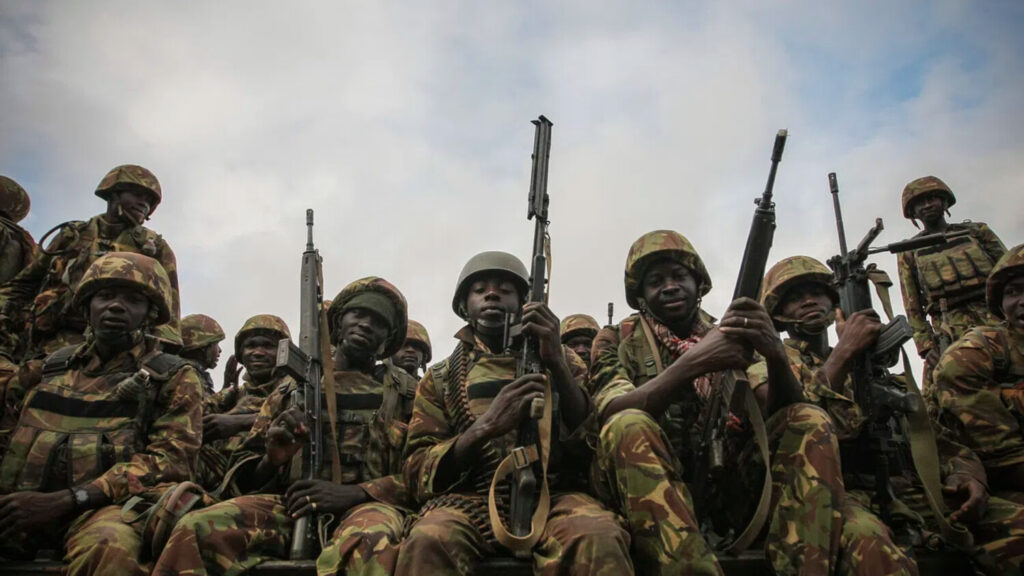
However, due to a combination of internal and external constraints, the Greens will also face limitations in applying their theoretical propositions into actual policies. A black-green coalition between the CDU and the Greens remains the most likely probability at the moment. As a result, the latter would have to compromise with the CDU and give up some of their demands to form a functioning government. Even if they were to govern with the SPD, they would face other types of pressures. One of which stems from the more conservative wing of the Green Party itself, as it would take a more pragmatic stance to moderate some of the idealistic goals. In addition to the Greens’ internal challenges, with the series of crisis and conflicts in the periphery of Europe and the vast economic power of China and the U.S.A, the Greens might be compelled to adopt a more assertive and realist approach based on military calculations and economic interests. This is compounded by the ‘pivot to Asia’ of the U.S.A., which pushes Europeans to deal more autonomously with matters of high politics in their region. Hence, as the economic powerhouse of Europe, Germany cannot avoid taking more responsibility for the security of the continent. After all, it would not be a first for the Greens. When confronted with the hard realities of the Kosovo War in 1999, despite their pacifist rhetoric, they supported the NATO operations with the first deployment of German troops abroad since 1945. A military intervention that was not even sanctioned by the UN Security Council (The Guardian, 1999).
The Greens might solely reinforce the value-based German foreign and security policy approach, especially concerning fighting climate change, human rights, military intervention, arms exports, and procurement. They would also strengthen civilian tools, such as diplomacy and multilateralism, while further decreasing the armed forces’ role and efficiency. This would be felt especially in case of an alliance with the SPD. However, if they ended up in a coalition with the CDU, they will also have to be more pragmatic and sacrifice some of their demands to compromise with the major party. Similar logic would apply to the EU as this would necessarily require some concessions. In either of these scenarios, the Greens would also be restrained by its conservative wing and by the external pressure of brute power competition and military confrontation. Eventually, these factors could lead them to take a more moderate, mature and realist view of the international order.
Bibliography:
- POLITICO. «German SPD under Attack after Shooting down Armed Drones», 18 December 2020. https://www.politico.eu/article/spds-withholds-support-armed-drones-german-defense-minister-annegret-kramp-karrenbauer-annoyed/.
- Berlin Policy Journal – Blog. «Green Foreign Policy DNA», 29 August 2019. https://berlinpolicyjournal.com/green-foreign-policy-dna/.
- The Guardian. «Greens Back Nato amid Uproar», 14 May 1999. http://www.theguardian.com/world/1999/may/14/greenpolitics.
- Loss, Rafael. «How Germany’s Greens Could Spell the End for the Franco-German Fighter Jet – European Council on Foreign Relations». ECFR (blog), 19 March 2021. https://ecfr.eu/article/how-germanys-greens-could-spell-the-end-for-the-franco-german-fighter-jet/.
- Pew Research Center. Media Inquiries. «Americans and Germans Differ in Their Views of Each Other and the World». Pew Research Center’s Global Attitudes Project (blog), 9 March 2020. https://www.pewresearch.org/global/2020/03/09/americans-and-germans-differ-in-their-views-of-each-other-and-the-world/.
- POLITICO. «POLITICO Poll of Polls — German Polls, Trends and Election News for Germany». Consulted 29 March 2021. https://www.politico.eu/europe-poll-of-polls/germany/.
- Sloat, Amanda. «Germany’s New Centrists? The Evolution, Political Prospects, and Foreign Policy of Germany’s Green Party». Brookings (blog), 20 October 2020. https://www.brookings.edu/research/germanys-new-centrists-the-evolution-political-prospects-and-foreign-policy-of-germanys-green-party/.