Rails as Targets: The Brenner Breach and the EU’s Unfunded Military Mobility Plan
How a cyberattack on the company building the Brenner Base Tunnel exposes the security gaps in the EU’s military mobility plan, as Brussels expands the role of civilian transport in European defence while Member States trim the budget meant to support it.
The Brenner Breach
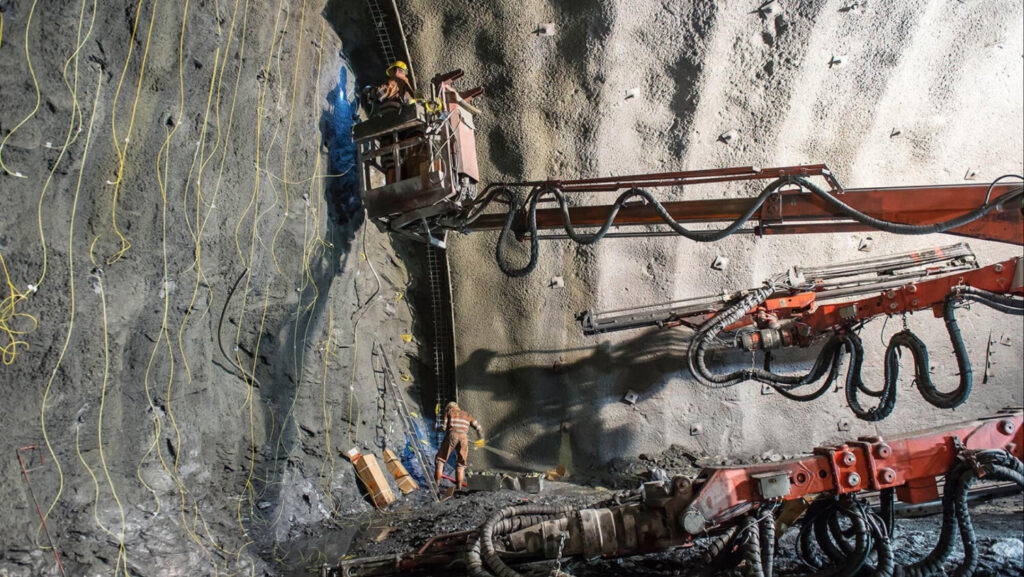
On 7 November 2026, Brenner Base Tunnel SE (BBT SE), the company building the 55-kilometre rail tunnel between Innsbruck and Fortezza, confirmed it had been the target of a cyberattack in which unauthorised individuals accessed data reachable via the internet (LaPresse, 2026). The company stated that its operational activities had not been affected. The Russian-speaking extortion group Everest had claimed the attack on its leak site on 17 October, alleging it had taken 812 gigabytes of files, a figure BBT SE has neither confirmed nor disputed (Daily Security Review, 2026). On the same day, Foreign Minister Antonio Tajani said his personal data had been shared on the dark web, linking the attack to Italy’s support for Ukraine (Euronews, 2026).
The breach matters beyond Italy because of where the tunnel sits and what the EU now expects such infrastructure to do.
The Brenner as Dual-Use Infrastructure
The Brenner Pass is one of the busiest freight crossings in the Alps, with 54.6 million tonnes of goods passing through it in 2021 (RFI, n.d.). The tunnel is part of the Scandinavian-Mediterranean corridor of the trans-European transport network (TEN-T) and is due to become operational in 2032 (RFI, n.d.). Italy has also taken on commitments as a transit country for allied forces, signing a 2024 letter of intent on military mobility along Pan-European Corridor VIII with Albania, Bulgaria and North Macedonia (Albanian Ministry of Defence, 2024).
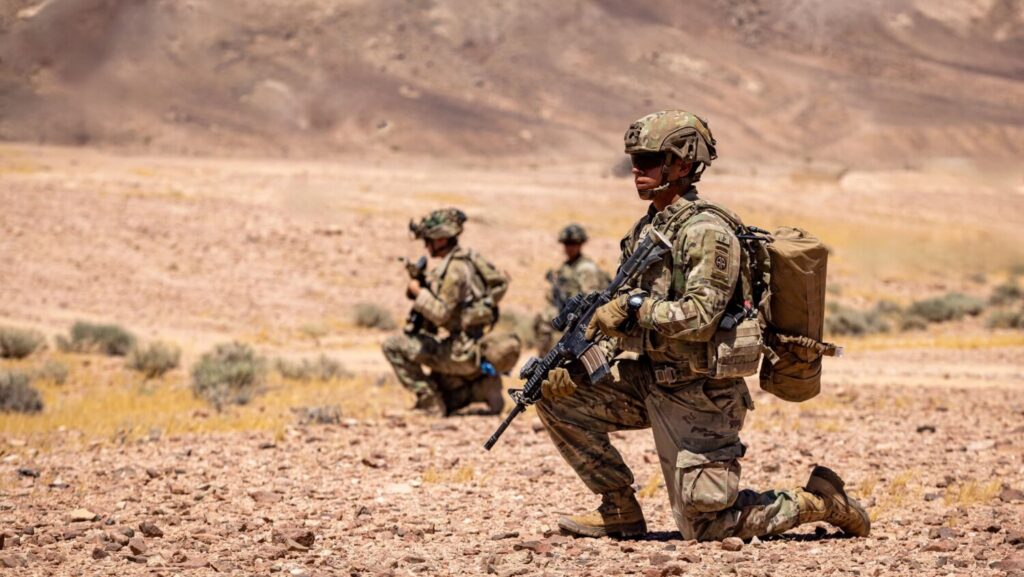
The EU is now turning this kind of civilian network into defence infrastructure. In November 2025, the Commission and the High Representative presented a military mobility package aiming to set up an EU-wide Military Mobility Area by the end of 2027 (European Commission and High Representative, 2025). The draft regulation asks Member States to identify “strategic dual-use infrastructure” and requires its owners and operators to meet the obligations of the NIS2 cybersecurity directive and the Critical Entities Resilience Directive, even where these would not otherwise apply (Council of the EU, 2025). However, the regulation is still under negotiation, and no infrastructure has yet been designated under it. Projects under construction, such as the Brenner Base Tunnel, therefore remain outside this framework for now.
Ambitions and Funding
The Commission and Member States have identified 500 “hotspot” projects along four priority corridors, with estimated investment needs of around €100 billion (European Commission and High Representative, 2025). Under the current budget, the Connecting Europe Facility (CEF) set aside €1.69 billion for military mobility, supporting 95 projects in 21 Member States (Council of the EU, 2025). Demand far exceeded this. In the final call, 112 projects from 22 Member States requested €3.7 billion; 38 received funding, for a total of €807 million (Council of the EU, 2025). Almost four-fifths of the requested funding went unmet.
For 2028-2034, the Commission proposed €17.65 billion for military mobility, a tenfold increase (Lexology, 2026). Yet, even this would remain far below its own estimate of needs.
Member States are now moving in the opposite direction. The Irish Council Presidency’s negotiating box, circulated on 10 October, reduces the CEF transport envelope, which includes military mobility, from €45.8 billion to €40.6 billion in 2025 prices, a cut of around 11% (FEPORT, 2026). MEP Roberts Zīle, one of Parliament’s negotiators on the file, warned that the proposal also reduces the funding allocated to military mobility (Agence Europe, 2026).
The EU is therefore extending security obligations to transport operators while the money available to upgrade the network is shrinking. In this context, the cost of protecting dual-use infrastructure is likely to fall on operators and national budgets.
Criminal Extortion or Strategic Risk?
The strongest counterargument is that the Brenner breach was a case of ordinary criminal extortion. Everest had claimed 429 victims on its leak site by 9 November (Proven Data, 2026), and analysts at ZeroFox note that the group tends to exaggerate the volume of data it claims to have stolen (Daily Security Review, 2026). No public evidence links the attack to a state actor.
Yet, the motive does not change the consequences. Extortion groups threaten to publish stolen files, and once data leaves a victim’s network, its later use cannot be controlled. For infrastructure that may one day carry troops and equipment, this exposure matters regardless of who carried out the attack. The Commission’s 2027 work programme, adopted on 4 November, proposes a European Security Emergency Protocol so that Member States facing a direct threat can receive a swift common response (European Commission, 2026). Such a mechanism would act after an attack, while the weakness shown at the Brenner appears much earlier, during construction.
Policy Recommendations
The Council and the European Parliament should use the ongoing negotiations on the Military Mobility Regulation, with a final trilogue planned for 9 December (EU Perspectives, 2026), to link EU funding to protection. Every military mobility grant under the next CEF should require a security plan approved by the relevant national cybersecurity authority, such as Italy’s Agenzia per la Cybersicurezza Nazionale, from the moment the grant agreement is signed. Cyber and physical protection costs should also be explicitly eligible for funding, capped at a fixed share of each grant, for example 5%, to limit the impact on infrastructure works.
This would not require a new instrument. CEF grants are already managed by the Commission’s executive agency CINEA, and the requirement could be introduced through the regulation and the standard grant agreement. The main trade-off is cost, as each euro spent on protection reduces the amount available for infrastructure at a time when funding is already short. Smaller contractors would also face new compliance costs. Progress could be measured by the share of funded projects with an approved security plan, and by the incidents reported under NIS2 by designated operators.
Finally, Member States should keep the military mobility budget at the level proposed by the Commission when leaders return to the next long-term budget in December. Without linking funds to protection, the EU risks financing corridors that remain exposed throughout the years it takes to build them.
Bibliography
Agence Europe (2026) ‘Military mobility: European Parliament hopes for political agreement in December but is concerned about defence funding in post-2027 EU budget’, Agence Europe, 20 October. Available at: https://agenceurope.eu/en/bulletin/article/13964/12/military-mobility-european-parliament-hopes-for-political-agreement-in-december-but-is-concerned-about-defence-funding-in-post-2027-eu-budget
Albanian Ministry of Defence (2024) ‘Albania, Italy, Bulgaria and North Macedonia sign in Washington the document on Military Mobility along Corridor VIII’, Ministry of Defence of Albania. Available at: https://www.mod.gov.al/eng/newsroom/1647-albania-italy-bulgaria-and-north-macedonia-sign-in-washington-the-document-on-military-mobility-along-corridor-viii
Council of the EU (2025) ‘Proposal for a Regulation establishing a framework of measures to facilitate the transport of military equipment, goods and personnel across the Union’, ST 15794/25. Available at: https://data.consilium.europa.eu/doc/document/ST-15794-2025-INIT/en/pdf
Daily Security Review (2026) ‘Brenner Base Tunnel SE Confirms Data Access as Everest Claims 812 GB’, Daily Security Review, November. Available at: https://dailysecurityreview.com/?p=45524
EU Perspectives (2026) ‘Military mobility not moving? Talk to Dublin, Parliament says’, EU Perspectives, October. Available at: https://euperspectives.eu/2026/10/military-mobility-not-moving/
Euronews (2026) ‘Cyberattacks target Italian foreign minister and company behind Brenner Base Tunnel project’, Euronews, 7 November. Available at: https://www.euronews.com/2026/11/07/cyberattacks-target-italian-foreign-minister-and-company-behind-brenner-base-tunnel-projec
European Commission (2026) ‘Commission work programme 2027: European Union, standing up for one another’, COM(2026) 710 final, 4 November. Available at: https://commission.europa.eu/document/download/c8399880-b208-46f0-a14c-0e67c3f8dca4_en?filename=COM_2026_710_1_EN.pdf
European Commission and High Representative (2025) ‘Joint Communication on Military Mobility’, JOIN(2025) 846, 19 November. Available at: https://transport.ec.europa.eu/document/download/4466a1dc-49d8-459f-9afa-d93c4346c26a_en?filename=JOIN_2025_846.pdf
FEPORT (2026) ‘FEPORT joins 38 transport organisations urging EU leaders to reverse transport funding cuts in the next MFF’, FEPORT, 14 October. Available at: https://feport.eu/press-release/feport-urges-eu-leaders-to-reverse-transport-funding-cuts-in-the-next-mff/
LaPresse (2026) ‘Security, cyberattack on Brenner Tunnel. Company: “Investigations ongoing”‘, LaPresse, 7 November. Available at: https://uk.lapresse.it/news-en/2026/11/07/security-cyberattack-on-brenner-tunnel-company-investigations-ongoing/
Lexology (2026) ‘Towards a “Military Schengen”: the EU Military Mobility Regulation as a catalyst for modernising the Continent’s critical transport infrastructure’, Lexology. Available at: https://www.lexology.com/library/detail.aspx?g=938b3a38-8f4b-4312-afb6-03405821c3be
Proven Data (2026) ‘Everest Ransomware: Threat Profile, Attack Lifecycle, and Response Guide’, Proven Data. Available at: https://www.provendata.com/blog/everest-ransomware
RFI (n.d.) ‘Scandinavian-Mediterranean Freight Corridor’, Rete Ferroviaria Italiana. Available at: https://www.rfi.it/en/Network/in-europe/Freight-Corridors/Scandinavian—Mediterranean-Freight-Corridor.html