Eastern DRC’s Conflict: How Mineral Competition and Weak State Capacity Sustain Political Risk
Mineral competition, armed conflict and weak state institutions continue to undermine security in eastern Democratic Republic of the Congo, sustaining political instability and threatening regional peace.
The eastern region of the Democratic Republic of the Congo faces a security crisis that extends beyond armed confrontation. Weak governance, regional conflicts, and mineral competition have threatened security and the prospects for lasting peace. Failed negotiations and the continued illegal occupation and exploitation of territories in the eastern region remain stumbling blocks to peace. Without effective intervention, state capacity will remain under threat as armed actors continue to strengthen their territorial influence.
The DRC’s Security Crisis and the Limits of State Authority
The Democratic Republic of the Congo (DRC) has experienced persistent instability since gaining independence. Sixty-six years after independence, the country continues to grapple with challenges that have characterized much of its post-colonial history.
State authority continues to weaken as the country struggles to maintain administration, enforce laws, regulate mining, and deliver public services in eastern DRC. The absence of these functions, coupled with persistent violence, has enabled armed groups to establish their own systems of control. As a result, threats to civilian protection, regional stability, and mineral trade have challenged Congolese sovereignty.
The Threat to Congolese Sovereignty
The sovereignty of the DRC continues to be threatened by the conflict in the eastern region of the country. Fueled by unresolved local grievances and regional security concerns, militia groups have emerged in the region, with the resurgence of the Rwanda-backed M23 rebel group being particularly notable.
M23 targeted perceived dissenters, erased institutional records, and laid the groundwork for demographic and land-control changes to establish its own governance structures, while systematically removing state authority and civil institutions within territories under its control (United Nations Security Council, 2025). This forced removal of civilian authorities and restructuring of governance demonstrate M23’s disregard for the Congolese government, undermining the lawful and democratic processes necessary for governance.
The expansion of armed-group control in the eastern region has made territorial authority increasingly contested. Furthermore, the country’s inability to implement practical measures that would restore citizens’ and investors’ confidence has further weakened its position, particularly because of continued failures to provide security and maintain administrative control.
The Mineral Conflict
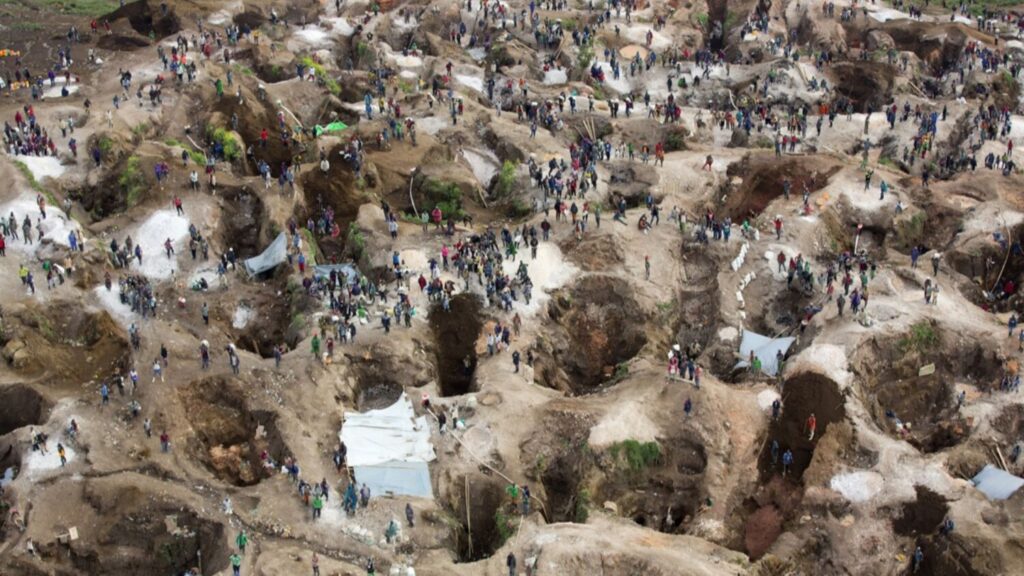
As the conflict continues, mineral resources in the eastern region continue to fuel tensions between rebel forces and the government. Coupled with the repeated failure of diplomatic efforts, the conflict has created opportunities for actors seeking to exploit the resources of the war-torn region.
The UN Group of Experts’ 2025 report states that, by gaining control over large parts of North and South Kivu, M23 increased Rwandan influence in eastern DRC by securing Rwanda’s access to mineral-rich territories and fertile land (United Nations Security Council, 2025). As a result, the Congolese government holds the Rwandan government accountable for influencing the conflict by backing the M23 rebel group, not only because of past grievances but also as a proxy for exploiting mineral resources.
Although UN experts and human rights organizations have repeatedly stated that Rwanda has supported M23 through the provision of logistics, weaponry, and personnel, Rwandan leaders have continued to deny allegations of involvement (Wasike, 2025). Despite attempts to secure its mineral wealth, the presence of local militias has made it particularly challenging for the Democratic Republic of the Congo to maximize its revenues.
Losing control over mineral-rich provinces has had a devastating impact on government legitimacy. The failure to regulate and control mineral exports from these regions has resulted in lost revenue, as the DRC cannot collect taxes on resources it no longer controls or benefit from their exploitation. Furthermore, M23’s illicit control over mineral distribution enables the group to maintain its presence in the region and may, in the long run, encourage it to seize additional strategically and economically valuable territories, further destabilizing the Congolese government.
Is Security an Option?
The lack of civilian protection has further exposed the challenges facing government legitimacy in eastern DRC. Consequently, the conflict has contributed to a severe humanitarian crisis.
UNHCR reported that, as of 30 November 2024, escalating conflict in eastern DRC had resulted in more than 5.2 million people being internally displaced nationwide at that point in the crisis (UNHCR, 2025). Displacement on this scale has placed considerable strain on affected communities and made the provision of public services by the government even more difficult. Moreover, as civilian protection deteriorates, prospects for rebuilding institutional legitimacy continue to diminish. Livelihoods and local markets have been severely disrupted as M23 continues to assert its dominance in the region.
With insecurity preventing government officials and humanitarian organizations from reaching affected communities, government legitimacy has been further weakened.
Source: UNHCR, Eastern Democratic Republic of the Congo Situation Regional Update (December 2025–March 2026).
Political-Risk Outlook
If the DRC aims to achieve regional stability, reducing conflict and strengthening government authority in affected areas should be prioritized. Addressing civilian displacement and reaching a consensus on the implementation of peace agreements between Kinshasa and M23 rebels would represent steps toward peace.
If agreements are not reached, the risk of further instability will remain high. For instance, foreign investment is likely to decline as insecurity poses a threat to foreign interests in the conflict-affected region. Moreover, failure to restore civilian confidence through sustained service delivery may lead citizens to demand a change in government if their concerns remain inadequately addressed.
Policy Recommendations
First, considering that mistrust, fragmented armed groups, and negotiations aimed at consolidating territorial gains are among the main obstacles facing Kinshasa, collaboration with regional mediators such as the East African Community (EAC) and the Southern African Development Community (SADC), alongside international partners such as MONUSCO, is necessary to establish measurable benchmarks for ceasefire and peace-agreement compliance. This would create a process for reporting violations and holding more regular review meetings. However, if mediators are perceived as biased, negotiations may break down because the concerns of all parties may not be adequately heard or addressed, potentially escalating tensions.
Second, ministers responsible for mining, justice, and finance should strengthen mineral traceability and risk-based inspections. This could be implemented through practical measures such as licensing traders and exporters and investigating credible evidence of smuggling and taxation by armed groups. For these measures to succeed, Kinshasa should ensure that its ministries do not engage in corrupt practices or pursue personal interests, as corruption would further undermine these efforts.
Finally, organizations such as OCHA and UNHCR should collaborate with authorities in affected communities to improve service delivery and reduce the impact of the humanitarian crisis. To achieve this, clear lines of responsibility should be established within security operations, while credible allegations of abuse should be thoroughly investigated. However, the continued presence of armed militias may obstruct these efforts, as they are likely to sabotage humanitarian assistance that could reinforce state authority.
These recommendations are interconnected, and their success depends on coordinated implementation. If regional mediators fail to reach an agreement with M23 and Rwanda, the risk of further escalation and territorial expansion may increase, worsening the humanitarian crisis. Similarly, failure to reach a consensus would allow continued resource exploitation and revenue losses, further exposing the weakness of state authority. Therefore, Kinshasa needs to explore available measures to restore territorial control, strengthen state capacity, improve humanitarian relief, and re-establish control over its mineral resources.
Conclusion
The state’s inability to maintain full control over mineral extraction and territorial security has left the country vulnerable to armed actors and associated networks that exploit gaps in oversight. Additionally, disruptions to public administration and humanitarian access have undermined efforts to restore security while reducing public confidence in state institutions.
Therefore, mineral governance, civilian protection, and the establishment of accountable security institutions should be central to efforts to strengthen government legitimacy in eastern DRC.
Bibliography
UNHCR (2026) Eastern Democratic Republic of the Congo Situation Regional Update: Dec 2025 – Mar 2026. (Accessed: 09 October 2026).
Wasike, A. (2025) DR Congo: What you need to know about the conflict, (Accessed: 09 October 2026).
United Nations Security Council (2025) Final report of the Group of Experts on the Democratic Republic of the Congo, S/2025/446, 3 July. (Accessed: 23 October 2026).
UNHCR (2025) Democratic Republic of the Congo situation . (Accessed: 23 October 2026).