Political Risk and Institutional Erosion in South Africa
An analysis of how post-apartheid South Africa struggles to achieve government legitimacy and examines the political outlook for the future.
South Africa, this is a country known for its vibrant culture, beautiful natural landscape and being home to everyone that lives in it, regardless of race. Although this may be the case, the sobering reality of what is happening in the country creates an uncertainty regarding prosperity, service delivery and employment amongst many South Africans that have become marginalized post-apartheid era.
Struggling Government Legitimacy
The African National Congress has been the ruling party since the country’s first democratic elections in 1994, removing the National Party from power. Right from the beginning of the post-apartheid era, the experience of local government by large numbers of South Africans was one of disappointment, unfulfilled expectations and betrayed promise (Mckinley, 2026). Although South Africa has come a long way from its oppressive days, it has not headed in a direction that many would have expected from a country that has the potential to be labelled as the “USA of Africa” in terms of prosperity.
Across South Africa, an increasing number of communities are confronting failing infrastructure, unreliable water supply and municipal services that no longer function as they should (Siljeur,2026). These failures cannot solely be based on the lack of resources. Corruption, weak administrative capacity, poor financial management and political interference also play a major role in the significant deterioration of public services. In 2015, Corruption Watch received a report alleging that Ekurhuleni Municipality had unlawfully appointed Khaya Ngema as municipal manager, and his appointment was followed by numerous tender irregularities, and the municipality consequently lost a lot of money (Corruption Watch, 2018). Such failures run the risk of increased localized protests and a higher decline in investor confidence. Also, businesses ran in such communities face the threat of closing down as they are subjected to higher operational costs, while running the risk of lower profits as compared to businesses in fully functional communities.
The Fragmented Economy
Post 1994, South Africa is still plagued by the worst wealth inequality globally. Although white South Africans make up a demographic minority, spatial segregation, unequal access to economic opportunities and wealth ownership patterns created during the apartheid-era continuously contribute to racial disparities in income, wealth and living standards. The social architecture formed over more than three centuries of White rule has maintained South Africa’s position as the world’s most unequal society (Sguazzin, 2021). This has resulted in the majority losing confidence in the economy of the democratic government as poverty is still a concerning issue in the townships and villages. The remnants of this inequality has resulted in a deterioration in voter confidence as political change has systematically failed to ensure the equality of all, while the current government continues to campaign under the banner of economic inclusion for the majority.
Almost three decades after the end of apartheid, race remains a key driver of high inequality in South Africa, due to its impact on education and on the labour market (ICTJ, 2022). With such racial inequalities, the country introduced post-apartheid policies to promote economic and educational equality, and fair access to resources. Regardless, many still live in impoverished conditions as the government has failed to capitalize on the means of production in the townships to promote economic inclusivity. Despite significant policy interventions since the end of apartheid, South Africa remains one of the most unequal countries in the world, with the legacy of racial discrimination continuing to drive extreme disparities in income and wealth (Manyane, 2026). Persistent economic inequality amplifies the need for political pressure regarding redistributive policies, while running the risk of an increased probability of labour unrest and a decrease in domestic consumer demand.
Border Security and Institutional Legitimacy
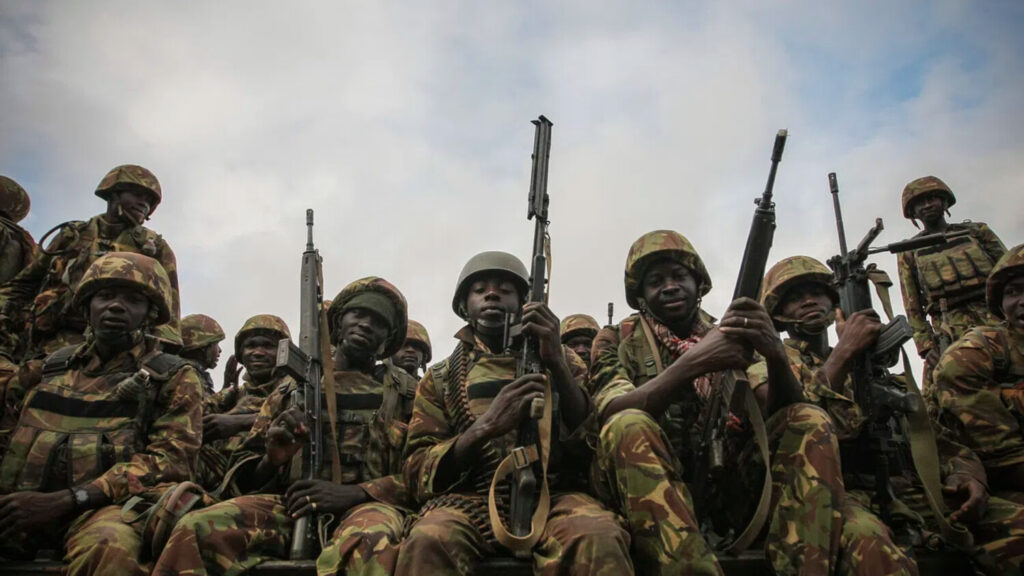
With the failure and lack of accountability from those in government, frustrations and tension amongst the people have led many to look for a scapegoat in which they believe their grievances would be justified. Groups such as Operation Dudula and March and March argue that South Africa faces uncontrolled migration, porous borders, overstretched public services, high unemployment, organized crime and weak enforcement of immigration laws (Roomanay, 2026). This comes as South Africa remains one of Africa’s primary destinations for economic migrants and asylum seekers that are in search of greener pastures. Such an influx and failure to control it, has resulted in immigration growing into a politically sensitive issue, influencing electoral campaigning, increased xenophobic violence and the disruption of businesses operating in affected communities.
Porous borders also play a leading role in the deterioration of public trust. Many believe that the country has the finance and capabilities to create secure borders, but the continued engagement in corrupt acts by officials makes such an impossible feat. The biggest source of porosity comes from state actors, such as immigration officers, the military and border policing, who are being corrupted and taking bribes from criminal syndicates, and allowing illicit goods into the country (Khanyile, 2025). Corruption within border management institutions creates a weakened state monopoly over law enforcement and gradually decreases institutional legitimacy. The undermining of government confidence created by such institutional failures may influence the increase in organised criminal networks, while political pressure for stricter immigration laws increases.
Political Outlook
With the ANC’s declining dominance, the key risk is not necessarily that South Africa becomes unstable, but that the political system becomes more fragmented and difficult to govern. Coupled with the continuation of a stagnant economy and governance reforms that continue to remain limited, the problems faced by the South African public and government will continue to worsen. Over the short to medium term, South Africa is likely to experience the risk of continuous social unrest, service delivery protests and growing political divisions ahead of future elections. Coalition politics, as seen in the Government of National Unity, could continue to weaken institutional legitimacy by failing to curb the persistent corruption claims, while complicating policymaking. However, the risk is likely to fragmented and geographically concentrated, than to grow into sustained nationwide instability.
Bibliography
Dlamini, K. (2018) Ekurhuleni Municipal Mismanagement Exposed, Corruption Watch. Available at: https://www.corruptionwatch.org.za/ekurhuleni-municipal-mismanagement-exposed/ (Accessed: 04 July 2026).
Khanyile, G. (2025) How illegal immigration and cross-border crime threaten South Africa’s future Cape Times. Available at: https://capetimes.co.za/news/south-africa/2025-07-16-how-illegal-immigration-and-cross-border-crime-threaten-south-africas-future/ (Accessed: 14 July 2026).
Manyane, M. (2026) Inequality in South Africa: ‘Wealthiest 10 percent receive 70 percent of the total income’, IOL. Available at: https://iol.co.za/news/south-africa-wealthiest-10-percent-receive-70-percent-of-the-total-income/ (Accessed: 14 July 2026).
McKinley, D.T. (2026) A30-YEAR SLOW-MOTION CRASH: THE FOUNDATIONS AND REALITIES OF SA’S LOCAL GOVERNMENT CRISIS, ILRIG. Available at: https://ilrigsa.org.za/a-30-year-slow-motion-crash-the-foundations-and-realities-of-sas-local-government-crisis/ (Accessed: 12 July 2026).
Roomanay, S. (2026) South Africa’s Crisis of State Authority And When Citizens Begin Deporting People, Mail & Guardian. Available at: https://mg.co.za/thought-leader/2026-06-25-south-africa-s-crisis-of-state-authority-and-when-citizens-begin-deporting-people/ (Accessed: 08 July 2026).
Sguazzin, A. (2021) South Africa Wealth Gap Unchanged Since Apartheid, Says World Inequality Lab, Time. Available at: https://time.com/6087699/south-africa-wealth-gap-unchanged-since-apartheid/ (Accessed: 07 July 2026).
Siljuer, N. (2026) Beyond Mediocrity: Why South Africa’s Governance Crisis Is Structural, Mail & Guardian. Available at: https://mg.co.za/thought-leader/2026-03-24-beyond-mediocrity-why-south-africa-s-governance-crisis-is-structural/ (Accessed: 07 July 2026).