Trump-Starmer Deal: A Real Trade Victory or a Symbolic Step Back?
International trade agreements are not merely economic instruments; they also reflect geopolitical balances, leadership strategies and domestic policy goals. The recently concluded limited tariff arrangements between the US and the UK exemplify this intricate dynamic. The agreement has been shaped by two key factors: the protectionist trade policies of US President Donald Trump and the UK Prime Minister Keir Starmer’s pursuit of global partnerships in the post-Brexit era. Even though the arrangements have a limited economic impact, the strong political messages conveyed to domestic public opinion by the parties indicate that these arrangements are strategic symbols rather than economic realities. Consequently, the evaluation of the UK-US tariff agreement should be conducted in conjunction with leadership performance and foreign policy strategies, extending beyond the conventional free trade framework.
Strategic and Political Dimensions of Trade Agreements
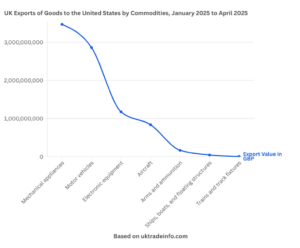
The UK-US tariff arrangement, which came into effect with the executive order signed by US President Donald Trump in June 2025, provides for the reduction of tariffs in certain sectors. However, its scope is far from that of a traditional free trade agreement. For instance, the reduction in tariffs from 25% to 10% on cars exported from the UK to the US is presented as an economic gain, yet this reduction is limited to a certain quota. Moreover, the postponement of pivotal decisions in sectors such as steel and aluminium indicates the UK’s continued susceptibility to trade volatilities. The strategic compromises made in the agricultural and energy sectors – including the elimination of tariffs on US ethanol and the augmentation of beef quotas – have elicited a response from domestic producers. However, the extent to which these decisions are aligned with the long-term agricultural and industrial policies of the Starmer government remains a subject of debate. The President’s justification of the arrangement by saying “Because I love them” has been interpreted as indicative of a populist approach that undermines the institutional structure of trade. Consequently, the true significance of the agreement lies not in its economic content, but rather in the manner in which the parties utilise it to establish political legitimacy. (Sherman and Mason, 2025)
Sectoral Reflections and Economic Limitations of the Agreement
The implementation of the regulation has elicited a range of responses from different sectors. While the UK automotive and aerospace industries are expected to benefit quickly from the reduction in tariffs, uncertainty remains in the steel sector. Notwithstanding the United States’ commitment to eliminate tariffs on imported steel and aluminium, a significant proportion of UK steel products have been excluded from this scope due to the “melting and casting” requirement. This has resulted in a delay to the practical effects of the agreement, which has led to concerns being raised among sector representatives. Moreover, the 1.4 billion litre tariff-free ethanol quota that the UK has granted to the US has been the subject of criticism from domestic bioethanol producers, with concerns being raised regarding the sustainability of the sector. The utilisation of the agreement as a political bargaining instrument, with Trump presenting it as a “victory” and Starmer endeavouring to demonstrate his commitment to safeguarding the UK economy within the US market, engenders a reality that stands in stark contrast to the prevailing political rhetoric. As asserted by Williams, Sheppard and Foster (2025), the regulations, which were reaffirmed at the G7 Summit, may yield favourable outcomes in the automotive and aerospace sectors in the short term. Nevertheless, the technical criteria for steel and aluminium imports continue to present significant challenges to the negotiation process. The United States’ decision to impose limitations on its tariff-free quota for the United Kingdom, citing security concerns, underscores the intricate dynamics that transcend commercial considerations in the geopolitical landscape. It is evident from the ongoing negotiations in areas such as agriculture and medicine that the regulation is being considered within a much broader strategic framework. (Renshaw and Shalal, 2025)
The UK’s New Trade Strategy: Flexibility, Protection and Targetedness
Considering these developments, the UK’s new trade strategy aims not only to safeguard existing trade agreements but also to boost the long-term resilience of strategic sectors. Faced with challenges from rising energy and industrial costs, the government has begun plans to prove supportive mechanisms, focusing particularly on the steel, chemical, and bioethanol industries. Additionally, efforts such as expanding export finance and reducing complex regulatory barriers are designed to improve the competitiveness of British firms in international markets. (Sillars, 2025) The new trade strategy centres on smaller, more targeted, and flexible agreements that can deliver quicker results, rather than comprehensive free trade deals. Priority is given to practical measures like mutual recognition of professional qualifications, especially in sectors such as services. However, the upcoming end of current protective measures in the steel industry, scheduled for 2026, has created significant uncertainty within that sector. In this context, it is understood that the government is developing new protective mechanisms that are compliant with World Trade Organisation (WTO) rules to address sector demands. (Stacey & Jolly, 2025)
This strategic realignment marks an evolution in the UK’s trade policy, showing a move towards a more flexible framework that aligns with geopolitical realities and responds to domestic sector demands. In the post-Brexit era, the UK has adopted a strategy of limited but effective collaborations that deliver quick results and has avoided major, long-term agreements. The strategic orientation also reflects in the Trump-Starmer arrangement. Although its economic gains are limited and sectoral effects are uneven, this agreement can essentially be seen as a symbolic step rooted in the domestic policy agendas and geopolitical positions of the two leaders. (Sky News, 2025)
Reference
- Renshaw, J. and Shalal, A. (2025). The US and UK announce a trade deal, but steel imports remain unresolved. Reuters, 17 June. Available at: https://www.reuters.com/business/autos-transportation/us-uk-trade-deal-be-completed-very-soon-says-starmer-2025-06-16 (Accessed: 26 June 2025).
- Sherman, N. and Mason, C. (2025). Trump signs order confirming parts of UK-US tariff deal. BBC News, 16 June. Available at: https://www.bbc.co.uk/news/articles/cy8gxp7dvepo (Accessed: 26 June 2025).
- Sillars, J. (2025, June 26). Trade strategy aims to boost UK firms amid Trump tariff chaos. Sky News. Available at: https://news.sky.com/story/trade-strategy-aims-to-boost-uk-firms-amid-trump-tariff-chaos-13388437 (Accessed: 26 June 2025).
- Sky News (2025). It’s done: Trump and Starmer hail US-UK trade deal signed at G7. 26 June. Available at: https://news.sky.com/story/its-done-trump-and-starmer-hail-us-uk-trade-deal-signed-at-g7-13384726 (Accessed: 26 June 2025).
- Stacey, K. and Jolly, J. (2025, June 25). Post-Brexit Britain ‘too focused’ on major trade deals, ministers say. The Guardian. Available at: https://www.theguardian.com/business/2025/jun/25/post-brexit-britain-too-focused-on-major-trade-deals-ministers-say (Accessed: 26 June 2025).
- Williams, A., Sheppard, D. and Foster, P. (2025). Donald Trump signs executive order to implement US-UK trade deal. Financial Times, 16 June. Updated 17 June. Available at: https://www.ft.com/content/c298cf46-8489-4867-afc1-973de398ce59 (Accessed: 26 June 2025).