The Sahel’s Governance Paradox: Why Military Solutions Alone Cannot Stabilise the Region
The Sahel’s crisis is not a military problem. It is an allocation problem. This piece argues that the international community has persistently misdiagnosed regional unrest by focusing overwhelmingly on counter-terrorism, while overlooking a self-sustaining parasitic illicit economy built on resource capture. It sets out a three-track strategy to restructure the Sahel’s security and economic architecture, with embedded safeguards to prevent capture and resource diversion, alongside a conditional response framework to manage external obstruction and internal subversion. This analysis draws on mid-2026 assessments and forward-looking scenario planning.
Introduction
In August 2026, the African Union Peace and Security Council acknowledged that military means alone cannot stabilise the Sahel (African Union Peace and Security Council, 2026). While significant, this statement does not address the deeper structural pathologies sustaining conflict. The Sahel represents a governance paradox: external interventions secured tactical battlefield gains yet failed to halt armed-group expansion. Mali, Burkina Faso and Niger withdrew from ECOWAS in January 2025, formalising a fracture within West Africa’s regional architecture. The Alliance of Sahel States (AES) has emerged as an alternative institutional framework, creating two quasi-competing regional orders.
This piece argues that the root of the Sahel’s instability lies not in insurgent violence per se, but in a captured resource-allocation system that rewards persistent disorder.
Political authority determines resource control and distributional outcomes. Within the Sahel, the allocation system has been captured by a parasitic coalition of elites, illicit traffickers and armed factions. Any intervention that fails to dismantle this capture dynamic, and embed safeguards against resource diversion from its outset, will ultimately fail regardless of troop deployments.
The Core Contradiction: Fragmented Architecture and Parasitic Illicit Economy
The Sahel security landscape is fragmented along competing political blocs. ECOWAS has lost leverage over the three AES member states. The AES has established its own Unified Military Force, yet this formation operates outside wider regional coordination. The result is an environment in which the AU, ECOWAS, AES and external partners pursue overlapping and occasionally conflicting objectives.
The AES withdrawal was framed as resistance to neocolonial oversight. Any viable regional cooperation model must respect this core political baseline: sovereignty and rejection of external domination. The Lomé summit of April 2026 demonstrated that dialogue remains feasible, though persistent disagreements over security and governance continue to block progress (International Crisis Group, 2026).
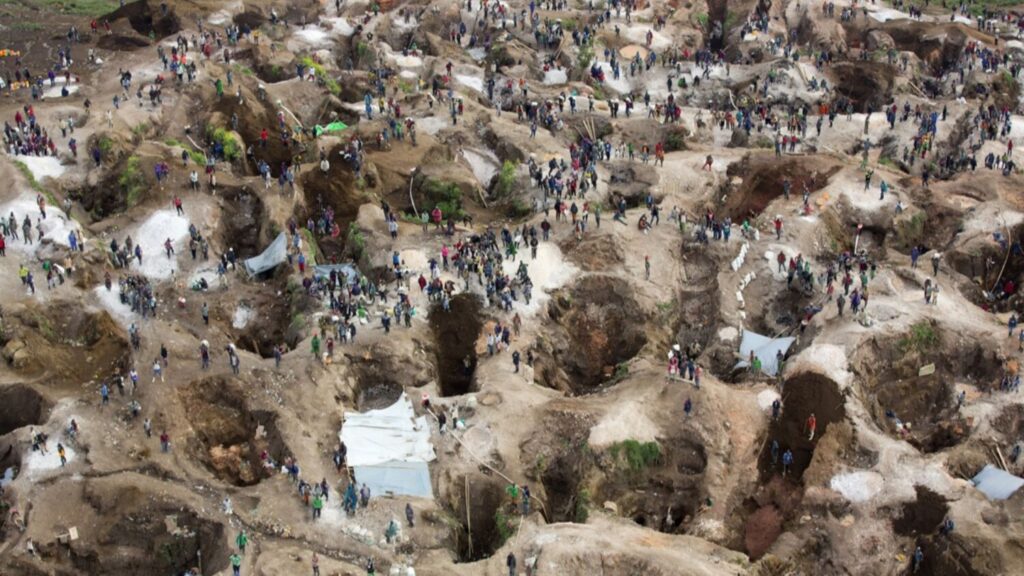
Fragmentation is compounded by a parasitic illicit economy. Gold trafficking supplies major revenue streams to terrorist formations. Jama’at Nusrat al-Islam wal-Muslimin (JNIM) and the Islamic State Sahel Province have moved from localised extortion toward sustained control over mining communities (Counterterrorism Group, 2026). The UN Security Council has recognised that links between terrorist financing and organised crime remain under-analysed and inadequately addressed (United Nations Security Council, 2026).
The human toll is severe. More than 24 million people require humanitarian support. Between June and August 2026, 15.4 million faced acute food insecurity (United Nations Office for the Coordination of Humanitarian Affairs, 2026). As of September 2026, UNHCR’s Sahel operation had secured only 27 % of its $329.6-million funding target, leaving a gap of $241.7 million (UNHCR, 2026). This divergence between pledges and disbursement is itself symptomatic of allocation failure.
Historical Parallels: West African DDR Experience
The Sahel’s current predicament bears structural similarities to post-conflict disarmament challenges in Liberia and Sierra Leone. In Liberia, UNMIL launched DDR operations in 2003; by 2009 more than 101 000 former combatants had been processed (United Nations DDR, 2003). The programme was imperfect: initial benefits attracted an unexpectedly large pool of claimants. Even so, it illustrated that structured compensation can neutralise spoilers when backed by credible peacekeeping.
Sierra Leone’s DDR record delivers a comparable lesson. Disarmament concluded in January 2002, with over 48 000 combatants processed, including 22 500 members of the Revolutionary United Front. Reintegration support included a $150 reinsertion grant plus four to six months of training (Ministry of Foreign Affairs of Japan, 2002). The moral hazard of rewarding perpetrators while victims remained impoverished shows that DDR must be sequenced alongside transitional justice.
The lesson is unambiguous: military power unaccompanied by functional governance rests on sand.
Time and Space: The Window of Strategic Opportunity
A strategic window has opened, yet it is closing rapidly. French military influence across the Sahel has collapsed. French troops were expelled from Mali, Burkina Faso and Niger; in June 2026 Burkina Faso severed diplomatic ties with France. The AES has consolidated around ananti-neocolonial narrative, and popular sentiment across the three states opposes a continued French military presence.
This brings both opportunity and risk. The old colonial security architecture has collapsed, creating space for a new model unburdened by historical baggage. Without a coherent regional alternative, however, armed groups will continue expanding territorial control. The AU Peace and Security Council has called for strengthened coordination between the AU, ECOWAS, CEMAC, the Lake Chad Basin Commission and the United Nations (African Union Peace and Security Council, 2026). This consensus must translate into joint intelligence fusion, shared operational planning and unified command structures.
The Three-Track Strategy
A viable solution rests on three mutually reinforcing tracks: incremental construction of a revised economic-security architecture, structured disarmament and reintegration for non-ideological armed actors, and an AU-authorised regional stabilisation force with enforcement authority. Safeguards against capture and diversion must be embedded from day one.
Track One: Incremental Construction
Build a new economic-security complex alongside compromised existing institutions. Establish joint-development zones for critical minerals and cross-border trade corridors that deliver tangible benefits directly to local communities. When young people can secure livelihoods through licit mining and commerce, extremist recruitment pools contract.
This track must bypass captured central-state channels. International assistance may be channelled via blockchain-enabled smart contracts, locking funds to predefined categories such as food, medicine and infrastructure, with third-party verification at the point of distribution. Technology remains auxiliary; it cannot substitute for political negotiation over grassroots governance. Without local oversight and community participation, no technical mechanism can fully prevent resource diversion.
Track Two: Structured Disarmament and Reintegration
Offer a structured exit pathway for non-ideological armed actors, drawing on Liberian and Sierra Leonean DDR precedents. Many individuals join armed formations for economic survival rather than doctrinal conviction. A DDR package combining land access, vocational training and community security roles can peel away the insurgency’s middle tiers and isolate hard-line leadership.
A core safeguard applies: the scheme is designed to disengage armed power, not to legitimise ideology. Programmes must operate under fixed timeframes and mandatory audit cycles, withguardrails to forestall the emergence of fresh parasitic networks. Liberia demonstrates how poorly calibrated benefits attract opportunistic claimants; Sierra Leone shows that reintegration without viable livelihoods breeds long-term resentment.
Track Three: Enforcement-Backed Stabilisation Force
Deploy an AU-authorised regional stabilisation force whose command chain is independent of external powers. It must be capable of precision operations targeting hard-line factions and illicit trafficking networks, supported by its own intelligence apparatus insulated from local capture.
This force must not exist merely as a symbolic presence. It requires sufficient firepower, robust rules of engagement and a clear mandate to disrupt armed groups’ financial infrastructure: smuggling routes, mining sites and illicit trading hubs. Without this enforcement backstop, the first two tracks remain vulnerable to spoilers.
Conditional Response Framework
This is not a static blueprint but a decision tree with clear activation triggers. If external partners supply resources and technical support, and AES and ECOWAS agree on limited, pragmatic security cooperation, the incremental track may move forward. The Timbuktu Institute has proposed a joint-staff committee model, mediated neutrally by the AU, to bridge AES-ECOWAS divides (Timbuktu Institute, 2026). This represents a workable starting point.
Should external obstruction intensify and internal saboteurs seek to derail progress — signalled by sudden capital flight, targeted killings of reform-oriented officials or sharp spikes in cross-border trafficking — strategy shifts toward the enforcement backstop. Priority moves to disrupting parasitic networks, channelling aid directly to communities while bypassing captured central authorities, and accepting that conventional state-building timelines may need deferral.
Warning indicators are identifiable: targeted assassinations of reform officials, abrupt withdrawal of international monitors and rapid growth in illicit financial flows. Once these signals appear, policy must pivot without delay.
Conclusion: Prioritised Policy Recommendations
The Sahel crisis will not be resolved through extra troop deployments, larger aid budgets or additional conferences. Resolution requires fundamental restructuring of the allocation system to dismantle networks that profit from instability.
The following steps should be prioritised:
- Launch incremental economic-security development centred on community-focusedmineral and cross-border trade schemes, with built-in safeguards to mitigate resource capture and diversion.
- Roll out a pragmatic DDR framework for non-ideological armed actors, modelled on proven West African precedents, to peel away mid-tier insurgent fighters and isolate hard-line factions.
- Establish an AU-authorised, externally independent regional stabilisation force with a clear mandate to disrupt illicit financial and trafficking infrastructure.
- Activate the conditional response triggers to escalate enforcement rapidly whenever sabotage or obstruction threatens implementation.
The strategic window is open, yet it will not remain so indefinitely. Delayed action will allow parasitic networks to further entrench their control across the Sahel.
Reference List
African Union Peace and Security Council, 2026. Communiqué of the 1359th Meeting of the Peace and Security Council, 7 August 2026, Update on the Situation in the Sahel Region. Addis Ababa: African Union.
Counterterrorism Group, 2026. Threat Climate Assessment: Jama’at Nusrat al-Islam wal-Muslimin and the Islamic State Sahel Province Target Local Sahel Mining Communities and Gold Mines. Available at: https://www.counterterrorismgroup.com (Accessed: 13 October 2026).
International Crisis Group, 2026. Togo Summit Marks Diplomatic Thaw for Sahel’s Divided States. Brussels: International Crisis Group. Available at: https://www.crisisgroup.org (Accessed: 13 October 2026).
Ministry of Foreign Affairs of Japan, 2002. DDR in Sierra Leone: Disarmament Criteria and Reintegration Package. Tokyo: MOFA.
Timbuktu Institute, 2026. AES-ECOWAS Disagreements: What Solutions for Regional Stabilisation? Dakar: Timbuktu Institute.
UNHCR, 2026. Sahel Situation: 2026 Funding Update (as of 30 June 2026). Geneva: UNHCR. Available at: https://reliefweb.int (Accessed: 13 October 2026).
United Nations DDR, 2003. United Nations Mission in Liberia (UNMIL): DDR Programme. Available at: https://www.unddr.org/cool_timeline/2003/ (Accessed: 13 October 2026).
United Nations Office for the Coordination of Humanitarian Affairs, 2026. Humanitarian Needs Overview for the Sahel. New York: OCHA.United Nations Security Council, 2026. Report of the Secretary-General on the Situation in West Africa and the Sahel (S/2026/537). New York: United Nations.
The views expressed in this paper are solely those of the author and do not represent the official stance of the Sinology Research Office or any affiliated institution.