The Ramifications of the September 11 Terrorist Attacks on Africa
The September 11 commemoration marks the 25th anniversary of the World Trade Centre attacks in New York in 2001. The attacks had a profound impact on the global struggle against terrorism, with their repercussions continuing to shape international security. Although the attacks are primarily associated with the subsequent Western war against terrorist groups, their affiliates, and their sponsors, their consequences have also been significant for the African continent.
Proliferation of Weapons
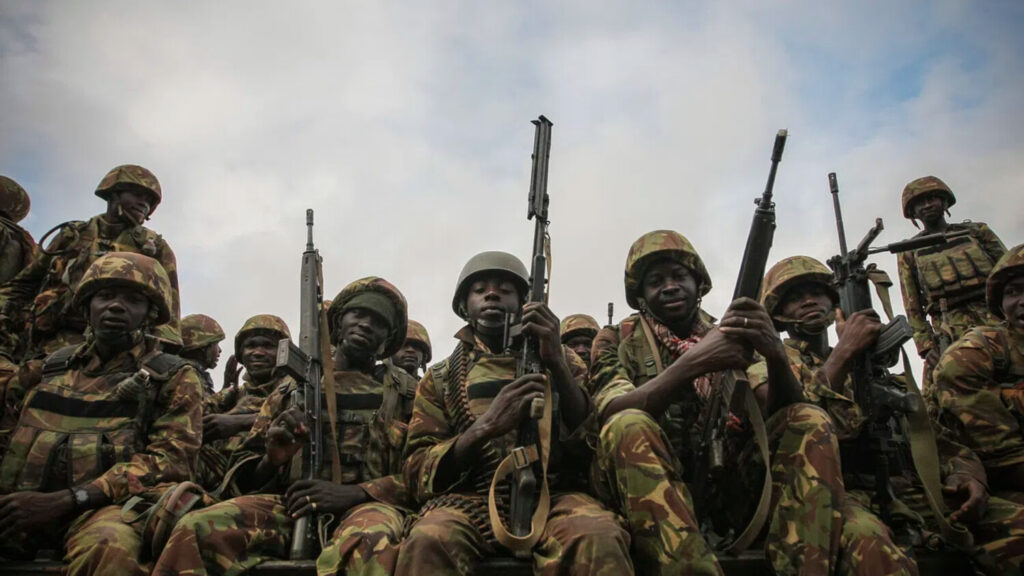
In the years following September 11, terrorist organisations and violent non-state armed groups expanded their activities in several parts of Africa, contributing to persistent insecurity and instability. One important dimension of insecurity in Africa has been the proliferation of small arms and light weapons (SALWs) and, in some cases, more advanced portable weapons such as man-portable air-defence systems (MANPADS). The proliferation of weapons has been associated with armed conflict, weak governance, porous borders, and illicit trafficking networks (Adedeji, 2023).
The collapse of the Libyan regime in 2011 was particularly significant for weapons proliferation in North Africa and the Sahel. Following the fall of Muammar Qadhafi, weapons stockpiles were looted and dispersed within Libya and beyond. This included MANPADS, thousands of which were reportedly unaccounted for following the collapse of the regime (Roach and Zuckerman, 2012). The movement of weapons beyond Libya contributed to concerns about the ability of armed groups in the wider Sahel region to obtain sophisticated weaponry.
The availability of weapons has interacted with existing political and security problems across the region. Rather than being attributable to a single cause, insecurity in Africa has developed through the interaction of local conflicts, weak state institutions, transnational organised crime, terrorism, and regional instability. Illicit arms trafficking can exacerbate these conditions by increasing the capacity of armed groups to sustain violence (Adedeji, 2023).
The Sahel provides a prominent example. The conflict in Mali began in 2012 with a Tuareg rebellion in northern Mali. The National Movement for the Liberation of Azawad (MNLA) sought independence for, or greater autonomy within, the region of Azawad. The movement initially cooperated with Islamist organisations, including Ansar Dine, before the alliances between different armed groups subsequently fractured. Islamist organisations linked to Al-Qaeda and other transnational jihadist networks continued to operate in the region. The conflict has since evolved considerably, involving separatist and jihadist organisations, the Malian state, and external actors (McCombie, 2024).
The Lake Chad Basin represents another major centre of insecurity. The Boko Haram insurgency began in northeastern Nigeria in 2009 and subsequently affected neighbouring Cameroon, Chad, and Niger. The emergence of Islamic State West Africa Province (ISWAP) further complicated the regional security environment. Competition between jihadist factions, alongside their confrontation with state security forces, has contributed to the persistence of violence and displacement across the region.
The Horn of Africa has likewise experienced prolonged political and security crises. Somalia has faced sustained conflict involving Al-Shabaab and other armed actors, while Ethiopia, Sudan, and South Sudan have experienced significant internal conflicts. These crises demonstrate that contemporary insecurity in Africa cannot be attributed solely to the consequences of September 11. Instead, international counter-terrorism dynamics have intersected with longstanding domestic and regional political, economic, and security challenges.
The proliferation of weapons has nevertheless contributed to the capacity of armed groups to sustain conflict. Adedeji (2023) identifies armed conflict and weak government control as important factors associated with the proliferation of arms and ammunition in West Africa. The availability of weapons can therefore reinforce existing conflicts by increasing the ability of non-state actors to conduct and sustain armed operations.
The Expansion of Jihadist Violence
The growth of jihadist activity represents one of the most significant developments in Africa’s post-September 11 security environment. Hummel (2021) described Africa as an increasingly important centre of global jihadist activity, with terrorist organisations operating across several regions of the continent.
However, it would be misleading to suggest that September 11 directly caused the expansion of jihadist violence in Africa. The growth of terrorist organisations has been shaped by a combination of factors, including political instability, local grievances, weak governance, military conflict, socioeconomic conditions, and the availability of weapons. The post-September 11 international security environment nevertheless altered the way terrorism was understood and addressed internationally, increasing the prominence of counter-terrorism within foreign and security policy.
The Need for International Cooperation
The 25th anniversary of September 11 provides an opportunity to reassess the international response to terrorism and the evolution of security threats in Africa. The experience of the past 25 years demonstrates that military responses alone cannot address the complex conditions that enable terrorist and other armed groups to operate.
Greater regional and multilateral cooperation is therefore important. States face transnational threats that cannot always be addressed effectively through unilateral or purely bilateral measures. Cooperation can facilitate intelligence-sharing, border security, arms-control initiatives, counter-terrorism operations, and the coordination of humanitarian responses.
This argument is consistent with the broader principles of liberal institutionalism. Scholars such as Robert Keohane and Joseph Nye have emphasised the importance of international institutions and cooperation in managing interdependence and addressing collective problems. Applied to counter-terrorism, this perspective highlights the potential role of international and regional organisations in facilitating cooperation between states.
For Africa, this requires an approach that addresses both terrorist organisations and the wider conditions that allow armed groups to operate. Tackling illicit arms trafficking, strengthening regional cooperation, improving governance, and addressing the political and socioeconomic conditions associated with conflict are all relevant components of a comprehensive security strategy.
September 11 therefore provides an opportunity to reflect not only on the attacks themselves, but also on the evolution of international security during the subsequent quarter-century. Africa’s experience demonstrates that terrorism cannot be understood in isolation from the political, economic, and security environments in which armed groups operate. A more coordinated international approach will therefore remain important in addressing the continent’s evolving security challenges.
References
Adedeji, A.O. (2023) ‘Implications of proliferation of arms and ammunition for West Africa sub-regional development’, International Journal of Research and Innovation in Social Science, 7(10), pp. 1374–1387. doi: 10.47772/IJRISS.2023.701106.
Hummel, K. (2021) ‘Twenty years after 9/11: The threat in Africa—the new epicenter of global jihadi terror’, Combating Terrorism Center at West Point, 14 September. Available at: https://ctc.westpoint.edu/twenty-years-after-9-11-the-threat-in-africa-the-new-epicenter-of-global-jihadi-terror/ (Accessed: 6 September 2026).
McCombie, C. (2024) ‘The Coordination of Azawad Movements (CMA)’, Modern Insurgent, 4 March. Available at: https://www.moderninsurgent.org/post/the-coordination-of-azawad-movements-cma/ (Accessed: 6 September 2026).
Roach, M.L. and Zuckerman, J. (2012) MANPADS on the loose: Countering weapons proliferation in North Africa and the Sahel. Issue Brief No. 3763. Washington, DC: The Heritage Foundation, 5 November.