The Makkah Agreement within the Middle East Security System
On August 7th, 2026 the leaders of the most influential Muslim countries – Türkiye, Saudi Arabia, and Pakistan – signed a joint defence agreement in the city of Makkah, the holiest site in Islam. It is a rare sight for a chaotic and war-torn region; the last time the MENA countries united under a single banner was during the Cold War, when Türkiye, Iraq, Iran, Pakistan, and the UK formed the Baghdad Pact (obviously, an anti-communist one in nature). Since its collapse in 1979 there have been few attempts to form a coalition of the Middle Eastern countries, but it almost never resulted in a signing of a formal document.
The new alliance fits neither the framework of NATO nor the framework of the GCC Peninsula Shield Force (Scharafutdinov and Schumikhina, 2019), even though it includes members from both bodies; meanwhile, it is important to highlight the fact that the text of the agreement has not yet been published. Some of the text’s details were provided by Turkish Foreign Minister Hakan Fidan – according to him, the document’s provisions echo those of Article 5 of the North Atlantic Treaty, which states that ‘an attack on one member of the alliance is considered an attack on the entire alliance’ (IISS, 2026).
However, the Makkah Agreement lacks an adversary to define its core principles within the region, while NATO’s goals to counter Soviet influence were well-known to broader public; in this context there has already been speculation as to who the agreement is aimed at – Iran and the Yemeni Houthis it backs, Israel, or India, whose confrontation with Pakistan has already escalated into full-scale hostilities on three occasions (Ali Abbas, 2026). These speculations have found fertile ground in a region plagued by armed conflicts, as well as by political and military tensions between Tel Aviv and Tehran, and between Riyadh and Tehran, which have only intensified in recent years partly due to interference from the USA, which for many years has acted as a security guarantor for some states in the region.
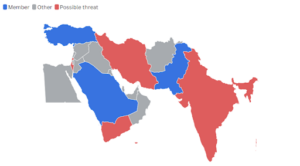
Fig. 1. The members of the Makkah Agreement
Nevertheless, it can be clearly seen that the alliance is deeply reliant on the idea of religious unity amongst Sunni Muslims. Proof of this claim include both the place chosen for the signing of the document (the Holy City of Makkah, the birthplace of Islam, instead of the Saudi capital Riyadh) and the joint prayer of the three states’ leaders that took place after the signing; apparently, they wished to emphasise that the Muslim world (or, at least, the Sunni part of it) stands united in the face of external and internal threats (Adrianov, 2026). Some Turkish political observers note that the creation of an Islam-centred alliance is also aimed at Türkiye’s domestic policy – the ruling party (AK Parti) is known for its playing on voters’ religious sentiments and promoting Ankara as the new centre of the Muslim world (Kiras, 2026). That, however, is not surprising, as in two years Türkiye will hold another round of presidential and parliamentary elections amid declining popularity for the ruling party, which already lost the 2024 local elections, and of President Recep Tayyip Erdoğan personally.
At the same time, even though the main objectives of the agreement remain unknown to the general public, it is clear that the contours of a new regional security architecture are taking shape in the region. The regional escalation, which began after the Hamas militants’ attack on Israel and intensified with the increased activity of the Houthis, the fall of Bashar al-Assad’s regime, the disarmament of the Kurdistan Workers’ Party, and US strikes against Iran, has led to a shift in the balance of power in the region. Most likely, the system of reliance on an extensive network of US military bases – which served as a security guarantee for Washington’s allies, particularly Israel, Turkey, and Saudi Arabia – will see a decline, as Middle Eastern states are gradually moving toward creating their own regional security system after three decades of US intervention in Middle Eastern affairs have only exacerbated the situation in the region.
In closing, it is important to note that the capabilities of the new Middle Eastern alliance remain unknown – its true role must be demonstrated through joint action and a high level of coordination during the next regional crisis that affects all parties to the agreement. For now, however, as some political analysts point out, the new alliance seems more like an attempt at political public relations – or perhaps is simply yet another American construct. (Niyazbayev, 2026).
Bibliography
- Adrianov, A.K. (2026) ‘Мекканское соглашение — контуры новой региональной архитектуры на Ближнем Востоке’, Moscow State University of International Relations, 12 August. Available at: https://mgimo.ru/about/news/experts/mecca-agreement/ (Accessed: 12 August 2026)
- Ali Abbas, B. (2026) ‘Pakistan, Saudi Arabia, Turkey defence pact: Its text, subtext for India’, The Indian Express, 11 August. Available at: https://indianexpress.com/article/explained/explained-global/pakistan-saudi-arabia-and-turkey-mecca-agreement-10824311/ (Accessed: 11 August 2026)
- IISS (2026) Pakistan, Saudi Arabia and Türkiye: a new defence pact. Available at: https://www.iiss.org/online-analysis/online-analysis/2026/08/pakistan-saudi-arabia-and-turkiye-a-new-defence-pact/ (Accessed: 14 August 2026)
- Kiras, İ. (2026) ‘İslam NATO’su kuruluyor!’ Peki, hangi düşmana karşı?’, Karar, 11 August. Available at: https://www.karar.com/yazarlar/ibrahim-kiras/islam-natosu-kuruluyor-peki-hangi-dusmana-karsi-1608807 (Accessed: 11 August 2026)
- Niyazbayev, Y. (2026) Повестка дня Турции. Available at: https://t.me/turkeyabout/18981 (Accessed: 13 August 2026)
- Scharafutdinov, D.R. and Schumikhina, A.S. (2019) ‘Военно-политическое сотрудничества стран ССАГПЗ: основные векторы развития’, Mezhdunarodniye otnosheniya i obschestvo, №1, pp. 18-32. Available at: https://cyberleninka.ru/article/n/voenno-politicheskoe-sotrudnichestvo-stran-ssagpz-osnovnye-vektory-razvitiya (Accessed: 10 August 2026)