The Human Cost of Rwanda’s Diplomatic Fallout With Belgium
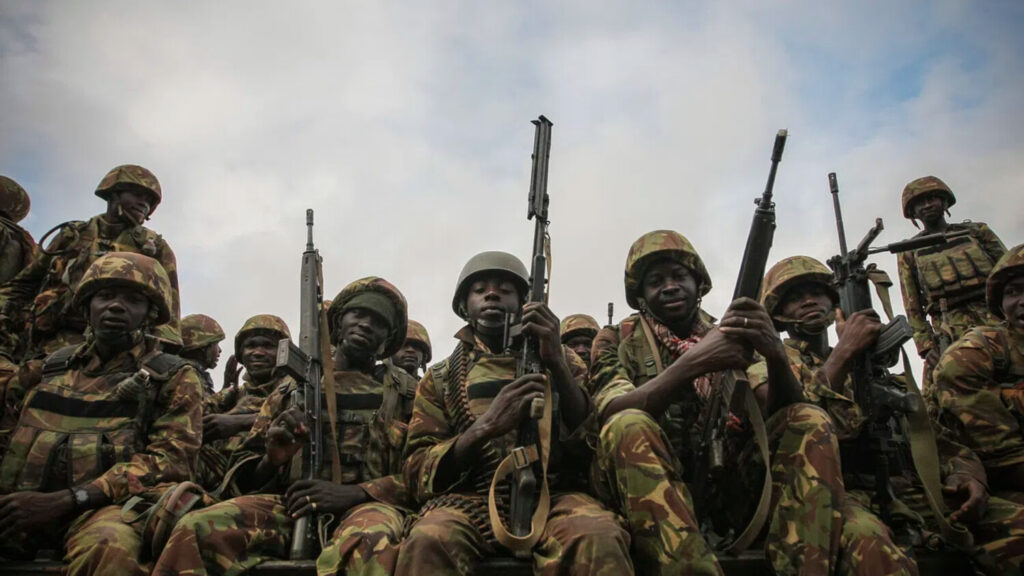
‘Appeals to the past are among the commonest of strategies in interpretations of the present’ (Said, 1993, P.3). The resurgence of the M23 rebel group and its recent capture of Goma in January 2025 has reignited violent conflict in the eastern Democratic Republic of Congo (DRC) (Brooke-Holland, 2025). Meanwhile, allegations of Rwanda’s military and logistical support to M23, including the provision of weapons, ammunition, and training, have triggered international concern and conviction (United Nations Security Council, 2020). The resulting humanitarian crisis has witnessed mass internal displacement and human rights violations, such as massacres, sexual violence, and the recruitment of child soldiers (Brooke-Holland, 2025). Consequently, Rwanda’s alleged involvement has strained its international relations, particularly with Belgium, a country historically intertwined with the region’s colonial past. However, the diplomatic fallout between the two nations significantly impacts humanitarian aid delivery, regional security, and global political alignment.
Post-Colonial Legacies and Rwanda-Belgium Tensions
If proven, Rwanda’s direct support of M23 makes it complicit in a severe humanitarian crisis, which has overwhelmed an already underfunded aid system. Between January and June 2024, M23 was responsible for over ‘2 million’ internal displacements, accounting for nearly ‘73%’ of all conflict-related displacements in the DRC (Uebersax, 2024, P.1). Thus, making it the seventh-largest conflict-related displacement crisis globally (Uebersax, 2024). Furthermore, reports document M23’s involvement in massacres, sexual violence, child soldier recruitment, and forced displacement, with ‘46’ cases of rape involving girls as young as eight-years-old (United Nations Security Council, 2020, P.1; World Bank 2024).
According to Kiyirembera (2025), Western diplomats and African elites the discourse of state failure in countries like the DRC. While Western actors use it to rationalise intervention and deflect accountability for the colonial past, local elites exploit the narrative to attract international aid and strengthen their political positions. This dynamic, therefore, highlights how the diplomatic fallout between Rwanda and Belgium is not just about M23. Alternatively, it reflects unresolved post-colonial tensions and evolving regional power struggles.
Previously, on the 17th of March 2025, the Government of the Republic of Rwanda (P.1) publicly claimed that ‘Belgium has consistently undermined Rwanda, well before as well as during the ongoing conflict in the DRC, in which Belgium has played a deep and violent historical role, especially in acting against Rwanda’. After World War I, colonial powers divided Africa and drew borders, with Belgium taking control of Rwanda after Germany’s defeat (Aptt, 2022). However, Belgium’s exploitative and centralised approach left the DRC and Rwanda ill-prepared for independence in 1962, contributing to ethnic conflict, authoritarian governance, and economic instability (Said, 1977; Aptt, 2022). This resulted in social cohesion, erosion, and rising tensions between the Hutu and Tutsi ethnic groups, eventually leading to the 1994 Rwandan Genocide (Aptt, 2022).
Humanitarian and Diplomatic Consequences
Although Rwanda is now an independent nation, Belgium’s legacy remains deeply tied to its colonial practices, particularly the favouritism shown to the Tutsi minority and the marginalisation of the Hutu majority, contributing to long-standing mistrust and regional instability (Aptt, 2022). Therefore, Belgium’s clear stance on the conflict in the DRC has reignited tensions, with Rwanda accusing Belgium of attempting to destabilise the region under the guise of humanitarian concern (Said, 1977; Kiyirembera, 2025).
This diplomatic discontinuance risks deeper consequences. If diplomatic ties continue to falter, Rwanda’s decision to distance itself from Belgium could further jeopardise international efforts to manage the DRC’s displacement crisis. Earlier, in May 2024, only ‘16%’ of internally displaced persons (IDPs) received humanitarian assistance, and by the end of the year just ‘41%’ of total humanitarian needs were funded (International Organization for Migration, 2021, P.1; Uebersax, 2024, P.1). Therefore, monitoring and addressing displacement in the region heavily depends on the coordination between the UN and NGOs as seen in Figure 1. Foreign donors, such as Belgium, has historically played a key role in EU-led humanitarian operations.
Network of Actors and the Potential impacts of the Rwanda-Belgium Diplomatic Fallout
Bibliography
Aptt, M. (2022). The Legacy of Belgian Colonialism in the Democratic Republic of the Congo and the Republic of Rwanda. [online] Roger Williams University. Available at: https://docs.rwu.edu/cgi/viewcontent.cgi?article=1005&context=foreign_languages_theses [Accessed 22 Apr. 2025].
Brooke-Holland, L. (2025). Conflict in eastern Democratic Republic of Congo. [online] House of Commons Library. Available at: https://commonslibrary.parliament.uk/research-briefings/cbp-10089/ [Accessed 22 Apr. 2025].
Government of the Republic of Rwanda (2025). Rwanda Severs Diplomatic Relations with Belgium. [online] Minaffet.gov.rw. Available at: https://www.minaffet.gov.rw/updates/news-details/rwanda-severs-diplomatic-relations-with-belgium [Accessed 22 Apr. 2025].
International Organization for Migration. (2021). Alarming Humanitarian Crisis in Eastern DRC Calls for Urgent Action to Protect Vulnerable Populations. [online] Available at: https://www.iom.int/news/alarming-humanitarian-crisis-eastern-drc-calls-urgent-action-protect-vulnerable-populations [Accessed 22 Apr. 2025].
Kiyirembera, R.T. (2025). State Failure Reclaimed: How African Leaders and Western Diplomats Leverage Discourse for Strategic Gains. International Peacekeeping, pp.1–37. doi:https://doi.org/10.1080/13533312.2025.2488950.
Said, E.W. (1977). Orientalism. The Georgia Review, 31(1), pp.162–206.
Said, E.W. (1993). Culture and Imperialism. London: Vintage.
Uebersax, D. (2024). M23 conflict caused nearly 3 out of every 4 displacements in the DRC this year. [online] IDMC – Internal Displacement Monitoring Centre. Available at: https://www.internal-displacement.org/expert-analysis/m23-conflict-caused-nearly-3-out-of-every-4-displacements-in-the-drc-this-year/ [Accessed 22 Apr. 2025].
United Nations Security Council (2020). M23 | Security Council. [online] Un.org. Available at: https://main.un.org/securitycouncil/en/sanctions/1533/materials/summaries/entity/m23 [Accessed 22 Apr. 2025].
World Bank (2024). Democratic Republic of Congo Overview. [online] World Bank. Available at: https://www.worldbank.org/en/country/drc/overview [Accessed 22 Apr. 2025].
Graph
Federal Ministry for Economic Cooperation and Development (2025). Germany suspends new development funding to Rwanda. [online] Federal Ministry for Economic Cooperation and Development. Available at: https://www.bmz.de/en/news/press-releases/germany-suspends-new-development-funding-to-rwanda-248146 [Accessed 23 Apr. 2025].
Foreign, Commonwealth & Development Office (2025). UK Statement on response to the situation in Eastern DRC. [online] GOV.UK. Available at: https://www.gov.uk/government/news/uk-statement-on-response-to-the-situation-in-eastern-drc [Accessed 23 Apr. 2025].