The Cambodia-Thailand 2025 Border Dispute Part 1: A Historical Narrative
This two-part article explores the border dispute between Cambodia and Thailand, specifically regarding tensions over Preah Vihear and its exposure of how colonial borders manufactured modern conflicts, fuelling nationalism despite clear ICJ rulings affirming Cambodian sovereignty.
Colonial powers’ scorn for non-European ancient heritage, religion and art has repeatedly resulted in anguish for local communities and created the foundation of wars between states. Towards the end of the Second World War, borders were drawn primarily with colonial interests in mind, neglecting the deep-rooted attachment of the local inhabitants to their lands, culture, and tradition. The border dispute between Cambodia and Thailand is a prime example of the result of this colonial interference. The French state created a border between its French-controlled territory, now known as Cambodia, and the Kingdom of Siam, Thailand (Briggs, 1946). This border stretches approximately 800km across jungles and the Dângrêk mountains.
Along the Thai-Cambodian border lies the ancient Hindu Shiva temple of Preah Vihear, a site regarded as a cultural and religious symbol by both countries. Constructed during the Khmer Empire in the 11th-12th centuries, the temple was considered a major Hindu sanctuary and part of the Khmer’s cultural and religious network. The region eventually came under the control and influence of Siam before the arrival of the French and their administrative control of present-day Cambodia.
Situated on a cliff on the Dângrêk mountains, access routes to Preah Vihear primarily lead towards and from Thailand’s north-eastern plateau. The border unilaterally demarcated by the French placed this temple on the Cambodian side of the border, and sparked discord from the very start of this proposal. The surveyors presented their maps during discussions and ratification of treaties with Siam between 1904 and 1907. Siam stated they never formally accepted the cession of the temple but accepted the French-drawn map of 1907 (Deth, 2020).
In 1962, the dispute was brought before the International Court of Justice (ICJ), which ruled that the temple lay within Cambodian territory, a decision accepted by Thailand (International Court of Justice, 2025). This ruling was significant because the decision created a binding understanding between the two nations and established a legal settlement of sovereignty under international law as to who legally owns the temple. Furthermore, their decision reduces the risk of military confrontation between the two nations, which may decide to fight over the ownership of the temple, along with other demarcated regions of dispute. However, this did not change public opinion over their attachment to the temple.
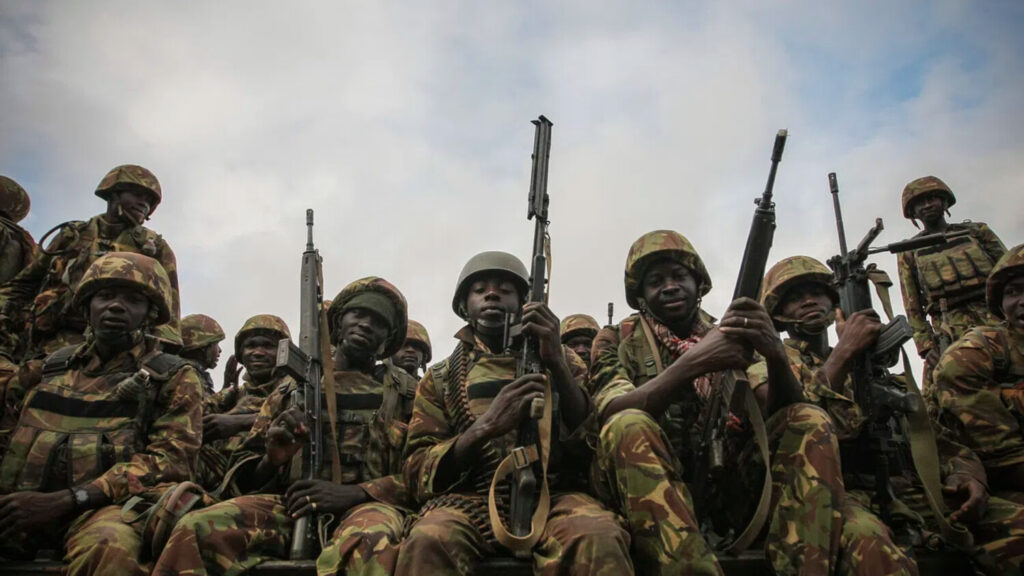
Tensions resurfaced in 2008 when UNESCO designated Preah Vihear a World Heritage Site. The designation reignited nationalist sentiment and led to a series of armed skirmishes between Thai and Cambodian forces between 2008 and 2011 (Ciorciari, 2025). In subsequent proceedings, the ICJ reaffirmed that the temple belongs to Cambodia and clarified that Thai forces should withdraw from the disputed surrounding areas.
There are numerous examples where the legacy of colonial rule has directly contributed to border conflicts. One prominent case is the dispute between India and Pakistan over Jammu and Kashmir, a region divided by a heavily militarised Line of Control which has led to numerous wars between these two states. Similarly, the McMahon Line ambiguously separated British India and Tibet – this was never recognised by China. This unresolved demarcation contributed to the Sino-Indian War of 1962 and continues to underpin competing claims over Arunachal Pradesh, referred to by China as Zangnan or Southern Tibet.
These cases reflect a broader pattern: colonial borders were often drawn arbitrarily, designed to serve strategic colonial interests rather than local realities. Lacking full historical context, affected communities have frequently directed blame at populations across the border, overlooking the fact that they often coexisted peacefully for centuries prior to colonial intervention. A historical perspective is important to correctly identify and hold accountable those responsible for the present conflicts. More likely than not, former colonial powers bear responsibility for many of today’s border disputes. Thailand and Cambodia working together to promote shared history and values, potentially even requesting the French government for reparations and damages for their colonial legacy, would be a steppingstone to safeguarding Preah Vihear and other sacred and irreplaceable heritage sites and promoting peace in the region.
Bibliography
- Briggs, Lawrence Palmer. “The Treaty of March 23, 1907, Between France and Siam and the Return of Battambang and Angkor to Cambodia.” The Far Eastern Quarterly 5, no. 4 (1946): 439–54. URL: https://doi.org/10.2307/2049791.
- Sok Udom Deth, A history of Cambodia-Thailand Diplomatic Relations 1950-2020, (Bod Third Party Titles, 2020)
- International Court of Justice, ‘Temple of Preah Vihear (Cambodia v Thailand)’, 2025, URL: https://www.icj-cij.org/case/45
- Ciorciari, John D Thailand and Cambodia: The Battle for Preah Vihear, Stanford University, 2025, URL: https://spice.fsi.stanford.edu/docs/thailand_and_cambodia_the_battle_for_preah_vihear