Symbolism, Power and the 2025 Nobel Peace Prize
A Prize Beyond Virtue
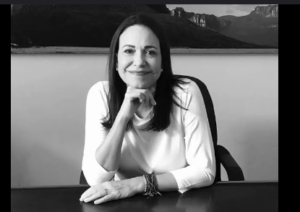
On October 10, 2025, the Nobel Peace Prize Committee awarded to Venezuelan opposition politician María Corina Machado. Machado has been a polarizing figure for some time, admired for confronting the authoritarian regime of President Maduro. However, she has also been associated with pro-market, pro-US, and at times neoliberal nationalist positions. The Nobel Peace Prize is more than just individual virtue and accomplishments. It reflects the ideas of what peace means and who defines it in our contemporary world. But what does this award truly represent, symbolically? Her recognition may carry in a world where moral language often overlaps with power.
The Nobel Peace Prize and the Politics of Virtue
The Nobel Peace Prize has long functioned as more than a moral accolade. It is a statement about the political ideals the international community chooses to elevate. The Nobel Committee often mirrors a particular vision of peace, liberal democracy, human rights, and celebrated figures who embody resistance. It has included Liu Xiaobo in China and Aung San Suu Kyi in Myanmar. Yet these same choices have also revealed the tension between moral aspiration and political reality. Recipients can become symbols within narratives that extend far beyond their personal struggles.
The 2025 prize to Machado fits within this lineage. To some, it honors civic courage in the face of authoritarianism, and to others, it underscores a familiar pattern. The political vision aligns with a neoliberal understanding of peace, individual liberty, and alignment with Western democratic norms. Machado’s advocacy for liberalization and her close identification with US and European support networks situate her comfortably within that frame. The risk, then, lies not in acknowledging her defiance, but in the symbolic narrowing of what “peace” comes to mean. Universal language of virtue can sound like the dialect of power.
The Risk of Symbolism
Every Nobel Peace Prize carries an implicit argument about how peace should be pursued, and by whom. Machado’s gesture is moral and strategic. It affirms a democratic ideal in a country where political repression, economic collapse, and mass migration have eroded hope. Yet symbolism, however well-intentioned, can carry its own risks when it enters contested political terrain.
Domestically, this award could deepen polarization within Venezuela. For Maduro’s government, it could confirm clear narratives of foreign interference. For some people in the opposition, it could also risk a moral spectacle. Latin America has long shown deep skepticism towards US moral leadership, and the prize may reflect Western tutelage.
Machado’s liberal and market-oriented stance aligns comfortably with Western narratives of freedom. These same narratives have historically coexisted with inequality and intervention. When a symbol of peace validates that model, it risks narrowing the imagination of peace with various meanings. As such, it privileges democracy and markets over redistribution, sovereignty, or pluralism. Each politicized award blurs the Nobel’s moral clarity, making it appear less a neutral arbiter of peace. Yet these risks are not accusations; they are structural. The Nobel Prize, by virtue of its prestige, inevitably participates in the politics it seeks to transcend.
Rethinking Peace
“Peace” is a word that travels easily but rarely means the same thing everywhere. In Venezuela, it might mean the end of repression, but also the end of scarcity and exile. Awards like the Nobel translate local struggles into universal narratives, but in doing so, sometimes lose their texture. Johan Galtung’s (1969) positive peace asks whether freedom without equality, or democracy without sovereignty, can ever be truly peaceful. Without justice, equality, and recognition, the pursuit of freedom risks reproducing the same exclusions it seeks to overcome. The Nobel Peace Prize reveals not only courage but also the enduring tension between moral recognition and political interest. The risk, finally, is interpretive: that “peace” becomes shorthand for alignment with one side of history. Ultimately, the Nobel Prize will continue to inspire.
Bibliography
Galtung, J. (1969) ‘Violence, peace, and peace research’, Journal of Peace Research, 6(3), pp. 167–191.