Recalibrating Western Policy Toward Serbia and Kosovo- Enlargement, Leverage, and Strategic Drift
On 17 February 2008, the Kosovar authorities declared the independence of Kosovo. In 2010, the International Court of Justice Advisory Opinion concluded that the declaration does not violate international law. However, the body did not address the question of the legality of secession, the recognition of it, and a right to statehood. This opinion has politically divided the supporters of unilateral independence and the upholders of territorial integrity particularly in view of Articles 2(1) and 2(4) of the UN Charter and the continuing relevance of UNSC Resolution 1244.
This followed the 1999 NATO intervention in the former Yugoslavia on the sole principle of Responsibility to Protect the Kosovar minority from ethnic cleansing. Western nations moved to recognise the unilateral declaration of independence regardless of Serbia’s consent and remonstrances. The charter of the United Nations guarantees the principle of territorial integrity (art 2(4)). Notably, nations dealing with seeds of possible or actual requests for separatism or close ties with Serbia withheld recognition.
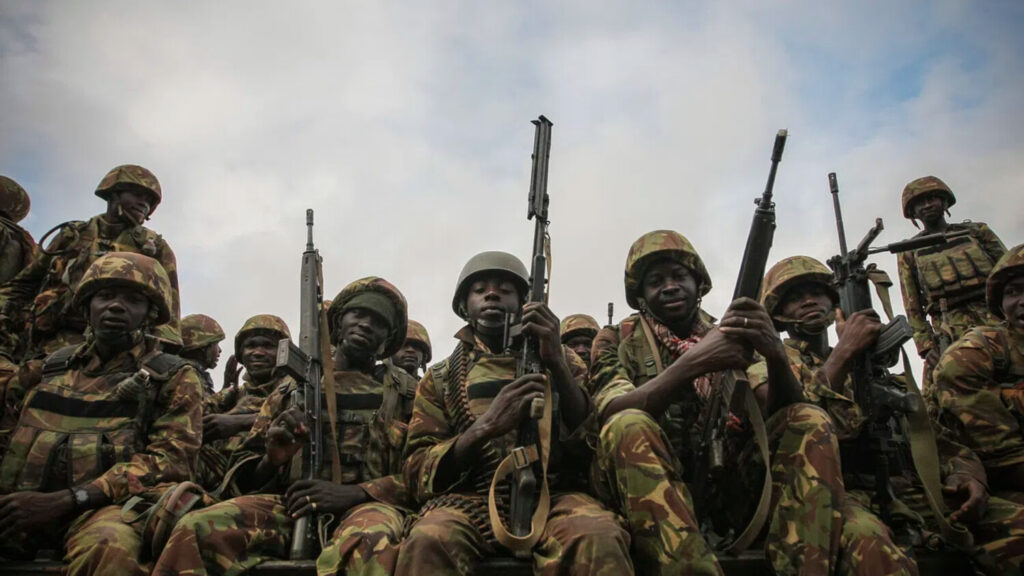
From that, the UNMIK (United Nations Interim Administration Mission in Kosovo), the EULEX (European Union Rule of Law Mission in Kosovo) and the KFOR (NATO force) designed to solve, manage, and defuse the fragile security threat represented by the ethnic division between Serbians and Kosovars face long-lasting limits from the early recognition of unilateral independence of Kosovo.
Today, the full integration of the Balkan region into the EU is a priority to enhance stability and growth. The path to EU accession of Serbia is, however, victim to technicalities that do not consider the historic peculiarities and the need for gradual integration common with many South-East European countries. The dossier is also frozen due to the Serbian refusal to comply with EU sanctions against Russia. The 2025-2026 US strategy suggests a pragmatic, diplomatic approach towards UNSC member Russia that could be applied to a new regional policy. The West’s policy would need a new strategy based on a realistic approach to Kosovo, more flexible accession criteria and the involvement of Russia to solve the Balkan regional crisis according to the ratio behind UNMIK and UNSC Res 1244.
International Law: Territorial Integrity as a Condition for Regional Stability
The first limitation to the US and EU leverage towards Serbia and Kosovo stems from international law regarding territorial integrity and self-determination, particularly in the context of Kosovo unilateral independence recognition.
The proponents of the Advisory opinion on Kosovo’s declaration of independence (2010) might risk making the violation of Serbia’s territorial integrity a precedent for any unilateral declaration of independence from within, undermining UNSC Resolution 1244, and exacerbating ethnic tensions on the ground based on higher political pressure from those Western countries that back Kosovo independence regardless of a broad regional stability as shown by the reluctance of Spain, Greece, Cyprus, Slovakia, and Romania to recognise it.
The uti possidetis principle stipulates that a federal state inherits the borders and boundaries of former administrative areas before independence, as also confirmed by the Arbitration Commission of the Peace Conference on Yugoslavia (1991), which treated Kosovo as part of Serbia upon the dissolution of the Federal Republic of Yugoslavia. Moreover, according to the interpretation of the law, a unilateral declaration of independence should not be confused with the struggle under a colonial power, such as the former colonies of the British, French or Russian empires.
Before the war, the 1974 Constitution of Yugoslavia already contained extensive devolutionary powers and de facto autonomous institutions in the 1945 Kosovo province, such as cultural, economic and police ones, along with federal representation, a constitutional court, a parliament, and a regional government. Regardless of Slobodan Milosevic’s centralising phase and increasingly authoritarian government, after the war, Serbia offered options in line with the autonomy contained in the 1974 Constitution and guaranteed until 1989, which laid the ground for the internationally recognised borders. This would have preserved the territorial integrity with an extensive autonomy within the constitutional framework, much in the same vein as Italy, Spain, the UK or, tentatively, Cyprus. Thus, the arguments framing Kosovo as a case of an alien/colonial, foreign, or continuous oppressive rule do not take the legal and historical counter-arguments supporting the need for an institutional engagement on the granting of autonomy between Serbia and the Kosovars in the spirit of the 1974–1989.
While International law posits continuity after 1945, the power of history of the Balkan region should not be neglected. The case of Kosovo could not be construed as a case of foreign occupation as the province has been part of Serbia since 1912 and, later, 1974. The area was historically connected to the birth of the Serbian empire in 1346 and de facto preserved a Slavic and Orthodox influence throughout the time and during the Ottoman domination that have had a meaningful impact on the region.
EU and US Strategies and Geopolitical Interplays
Beyond the previously mentioned legal hurdles to an efficacious regional policy, the EU and the US have adopted a liberal post-intervention policy to stabilise the region and normalise relations between Serbia and Kosovo through cooperation at all levels, in the hope of eventually securing Serbia’s formal recognition of Kosovo’s independence, without, however, presenting it as an explicit condition for European integration.
The EU envisions the full integration of Serbia and other Balkan nations into the Union as a means of limiting Russian and Chinese influence, the last one being the US’ biggest concern. In recent years, EU enlargement has progressed more slowly compared with earlier decades, and the process remains slower and more uneven, which fuels euroscepticism and favours China’s hold.
The EU requires Serbia and Kosovo to work toward stabilising and normalising relations and to fulfil the numerous bilateral agreements it has brokered. While the Brussels Agreement achieved a modicum of success in terms of mutual concessions, Kosovo has refused to implement certain provisions, such as the establishment of the Association of Serb-Majority Municipalities, while Serbia, among others, voted against Kosovo’s Council of Europe membership. Recent clashes between the Kosovar authorities and the Serbian minority in the North have seen the former violating the agreed framework governing Serbian institutions.
Serbia, the most important Balkan state, has recently been the subject of the latest EU Commission country report, which states that reforms concerning the rule of law, judicial independence, and public administration remain insufficient. Specifically, the report notes that out of 22 chapters opened, Serbia has only provisionally closed a few. At the same time, the war in Ukraine and broader geopolitical pressures have reshaped EU enlargement policy and introduced new priorities, to the detriment of candidates that have been waiting for years at the EU’s doorstep. Serbia’s limited alignment with the EU’s foreign policy towards Moscow remains a key political obstacle to deeper integration.
In the same vein, the Washington Agreement bypasses the political status question of Kosovo altogether and instead focuses on economic and infrastructural cooperation.
A New Strategy?
Regarding Serbia and Kosovo, the Western powers seem not to have prioritised the need to preserve historical integrity and from that internationally recognised principle move to full support for dialogue, exchange, and harmonisation that would have established the permanent basis for regional stability.
The recent US security strategy suggests the lack of a pragmatic EU Russia policy such as the lack of engagement with Moscow on the basis, in the case of the Balkans, of regional stability through diplomatic means. The EU should reconsider its policy toward Russia’s involvement in the Kosovo question by considering the need to uphold UNSC Resolution 1244 and persuade the Kosovars to accept a proposal for autonomy without secession. The opening of meaningful diplomatic channels with Russia, a permanent UNSC member, and the creation of a new format for addressing the issue should be considered. This would require a shift in approach, from limited cooperation to broader engagement through the establishment of a UN-led review conference bringing together Serbian and Kosovar representatives.
The same US security document might be read as a criticism to the EU technocratic approach without a realistic outlook. A more strategically recalibrated enlargement policy, combining principled conditionality with clearer, realistic foreign policy awareness and vision, may be necessary to advance both regional stability and the US and EU long-term strategic interests. Judiciary, legal and institutional reforms, generally problematic due to historical contingencies, tend to be slow as shown in the case of Central and Eastern Europe. The current EU enlargement process should generally be made more gradual by integrating the market and energy sectors first. Serbia needs a clear roadmap and membership credibility to limit the fatigue of being forever kept waiting that feeds euroscepticism.
To enhance leverage, the EU and the US should seek to persuade Kosovo to return to the negotiating table with Belgrade to discuss an ad hoc form of autonomy within its constitutional framework, supervised by external observers to ensure proper implementation, as previously proposed. The Washington Agreement, while focusing on economic and infrastructural cooperation, lacks a needed political solution and a comprehensive vision for long-term stability in the region. It does not address the root cause of the dispute, the question of recognition of Kosovo’s unilateral declaration of independence, nor does it engage with Serbia’s legal claim to territorial integrity through constitutional devolution mechanisms. The Western focus is humanitarian relief and stability. However, without considering the broad factors and the social and historical contingencies, current political and institutional tools appear limited in terms of reaching a long-term solution.
Conclusions
Greater clarity regarding the framework for renewed negotiations on Kosovo, including potential discussions on constitutional arrangements and implementation guarantees within Serbia’s constitution, would contribute to a more sustainable regional configuration conducive to stability according to principles of international law. As of today, it is hard to envision a withdrawal of the premature recognition of unilateral secession that hampers the search for a solution to the Kosovo crisis.
The new US security strategy regarding Russia underscores a fundamental rift between Brussels stuck in the US Democrat camp prioritising maximalist antagonism, and the Trump Administration that believes that the strategy towards Moscow should be about de-escalation, pragmatic diplomatic channels and, where possible, active cooperation for regional stability.
The expectation that candidate countries, as is the case of Georgia, align with EU sanctions policy toward Russia reflects the Union’s emphasis on foreign policy convergence as a core accession criterion. However, for smaller and economically vulnerable states, rapid alignment carries significant domestic economic costs that should be considered as is the case of Bulgaria.
In the case of Serbia, limited progress in accession negotiations, along with expectations of foreign policy alignment away from Russia, has coincided with Serbia strengthening partnership with China, the greatest rival to the US and EU. While this does not necessarily signal complete strategic realignment, it requires a change in the Western policy towards a realistic strategy attuned to regional and geopolitical realities that are unlikely to disappear in the foreseeable future.
Bibliography
Balkan Insight (2025) ‘US bans Chinese tyres from company in Serbia over forced labour claims’, Balkan Insight, 19 December. Available at: https://balkaninsight.com/2025/12/19/us-bans-chinese-tyres-from-company-in-serbia-over-forced-labour-claims/bi/
China Observers in Central and Eastern Europe (no date) ‘Adding turbulence to the turbulent region: Cooperation between Western Balkans, China and Taiwan’. Available at: https://chinaobservers.eu/adding-turbulence-to-the-turbulent-region-cooperation-between-western-balkans-china-and-taiwan/
Council of the European Union (2025) Document ST-16933-2025-INIT. Brussels: Council of the European Union. Available at: https://data.consilium.europa.eu/doc/document/ST-16933-2025-INIT/en/pdf
European Commission (2025) Serbia Report 2025. Brussels: Directorate-General for Enlargement and Eastern Neighbourhood. Available at: https://enlargement.ec.europa.eu/serbia-report-2025_en
European External Action Service (no date) ‘Belgrade-Pristina Dialogue’. Available at: https://www.eeas.europa.eu/eeas/belgrade-pristina-dialogue_en
European External Action Service (no date) ‘Belgrade-Pristina Dialogue: Agreement on the path to normalisation between Kosovo and Serbia’. Available at: https://www.eeas.europa.eu/eeas/belgrade-pristina-dialogue-agreement-path-normalisation-between-kosovo-and-serbia_en
European External Action Service (no date) ‘EULEX Kosovo – European Union Rule of Law Mission in Kosovo (civilian mission)’. Available at: https://www.eeas.europa.eu/eulex-kosovo/eulex-kosovo-european-union-rule-law-mission-kosovo-civilian-mission_und_en
European Parliament (2025) Serbia: Ongoing challenges to EU accession. EPRS briefing 779261. Available at: https://www.europarl.europa.eu/RegData/etudes/ATAG/2025/779261/EPRS_ATA(2025)779261_EN.pdf
European Western Balkans (2025) ‘Key findings on Serbia’, 5 November. Available at: https://europeanwesternbalkans.com/2025/11/05/key-findings-on-serbia/
Euractiv (no date) ‘By opposing Kosovo’s Council of Europe bid, Serbia undermines EU agreements’. Available at: https://www.euractiv.com/opinion/by-opposing-kosovos-council-of-europe-bid-serbia-undermines-eu-agreements/
EurOnews Albania (no date) ‘Kosovo risks European path if it fails to establish Association, says EU’s Stano’. Available at: https://euronews.al/en/kosovo-risks-european-path-if-it-fails-to-establish-association-says-eus-stano/
Friends of Europe (no date) ‘Critical thinking: Kosovo 25 years on – the high point and end of humanitarian interventions?’. Available at: https://www.friendsofeurope.org/insights/critical-thinking-kosovo-25-years-on-the-high-point-and-end-of-humanitarian-interventions/
Government of Serbia (no date) ‘Official information’. Available at: https://www.srbija.gov.rs/specijal/en/120394
International Court of Justice (2010) Press Release: Accordance with International Law of the Unilateral Declaration of Independence in Respect of Kosovo, 22 July. The Hague: ICJ. Available at: https://unmik.unmissions.org/sites/default/files/old_dnn/ICJ%20Press%20Release%2022%20July%202010.pdf
Kossev (no date) ‘Latest news – The harshest European Commission report on Serbia: Backsliding in democracy, fundamental rights and media freedom’. Available at: https://kossev.info/en/najnovije-vesti-najostriji-najostriji-izvestaj-evropske-komisije-o-srbiji-nazadovanje-u-oblasti-demokratije-osnovnih-prava-i-slobode-medija/
Kossev (no date) ‘Text of the agreement signed by Aleksandar Vučić in Washington’. Available at: https://kossev.info/en/tekst-sporazuma-koji-je-u-vasingtonu-potpisao-aleksandar-vucic/
Marko, J. (no date) The Balkans and the Universal Declaration of Human Rights. Internet Archive. Available at: https://archive.org/details/balkansuniversal00mark
Ministry of Foreign Affairs of the Russian Federation (no date) ‘Foreign policy news’, 16 April 2005. Available at: https://mid.ru/en/foreign_policy/news/1649512/
NATO (2026) ‘NATO’s role in Kosovo’. Available at: https://www.nato.int/en/what-we-do/operations-and-missions/natos-role-in-kosovo
NATO Joint Force Command Naples (no date) ‘KFOR (Kosovo Force)’. Available at: https://jfcnaples.nato.int/kfor
Oxford Law Profiles (no date) Kosovo and international law. Oxford University Press. Available at: https://academic.oup.com/oxford-law-pro/book/58198/chapter-abstract/481342578
Princeton University Program in Law and Public Affairs (no date) ‘Kosovo resources’, node 686. Available at: https://pesd.princeton.edu/node/686
Radio Free Europe/Radio Liberty (no date) ‘Serbia-China military cooperation: Drones, air defense, security’. Available at: https://www.rferl.org/a/serbia-china-military-cooperation-drones-air-defense-security/33626646.html
Sina-cee.com (2025) ‘Serbia monthly briefing: Serbia’s troubled road to Europe’, 30 July. Available at: https://china-cee.eu/2025/07/30/serbia-monthly-briefing-serbias-troubled-road-to-europe/
Terzi, Ö. (no date) ‘Self-determination in a post-Cold War era: The case of Kosovo’, European Journal of International Law. Available at: https://www.ejil.org/pdfs/3/1/1175.pdf
United Nations (no date) United Nations Interim Administration Mission in Kosovo (UNMIK). Available at: https://peacekeeping.un.org/en/mission/unmik
United States (2025) National Security Strategy of the United States of America, November. Washington, DC: The White House. Available at: https://www.whitehouse.gov/wp-content/uploads/2025/12/2025-National-Security-Strategy.pdf
University of Michigan Press (no date) Chapter on Kosovo sovereignty and statehood. Available at: https://www.jstor.org/content/oa_chapter_edited/10.3998/mpub.12584508.4
Yilmaz, M. and Aksu, F. (2025) ‘The Kosovo issue and international law: A critical analysis’, Cogent Social Sciences, 11(1). Available at: https://www.tandfonline.com/doi/full/10.1080/23311983.2025.2482403