Nigeria: Dangote’s Energy Gambit
As the energy shock emanating from the Iran War continues to rattle the global economy, Nigerian businessman Aliko Dangote plans to build resilience and reshape Africa’s position in global energy markets.
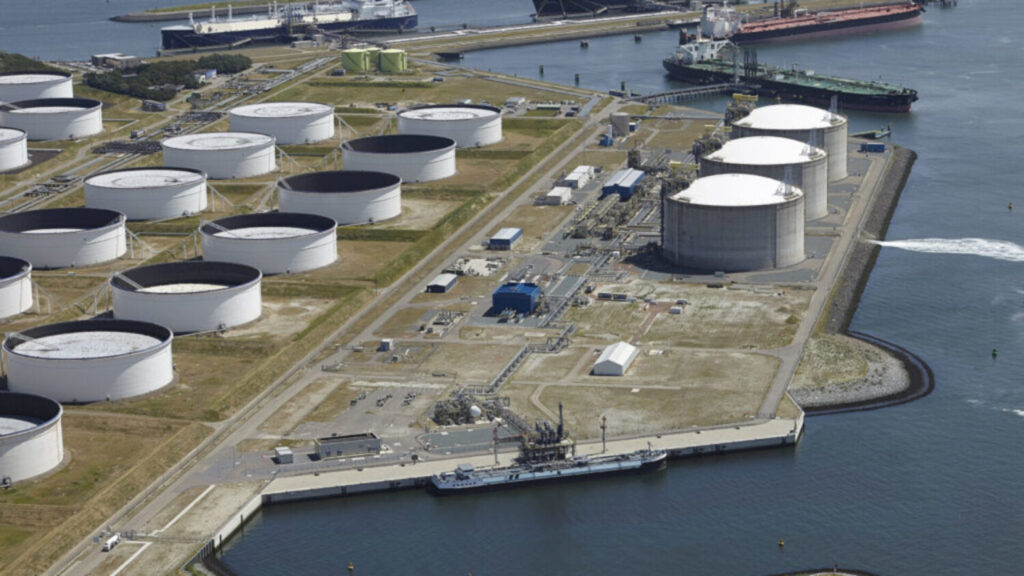
The Dangote Group’s proposed venture to construct a 700,000 bpd (barrels per day) refinery in Lamu, Kenya – complementing their 650,000 bpd Lagos facility – would bring much-needed downstream capacity to East Africa, increasing the continent’s energy sovereignty (Anyaogu, 2026). Dangote’s effort to foster intra-African trade could prove transformative for the continent, following a wider trend as numerous countries plan to capture greater value from their commodity exports.
Daybreak in Nigeria
Prior to the Dangote Refinery commencing operations in January 2024, Nigeria’s foreign exchange reserves were under enormous pressure: the country imported over $14 billion in refined petroleum products in 2024 alone (WITS, 2026). Despite being Africa’s largest oil producer, Nigeria’s preexisting refineries – with a combined capacity of 445,000 bpd – were dysfunctional, meaning that Nigeria was heavily reliant on refined fuel imports (Ohalezim and Ngang). Nigerian consumers’ consequent exposure to international oil price fluctuations was compounded by their dependence on diesel and gasoline-powered generators, a response to the unreliability of Nigeria’s power grid (Adeyemo, 2026).
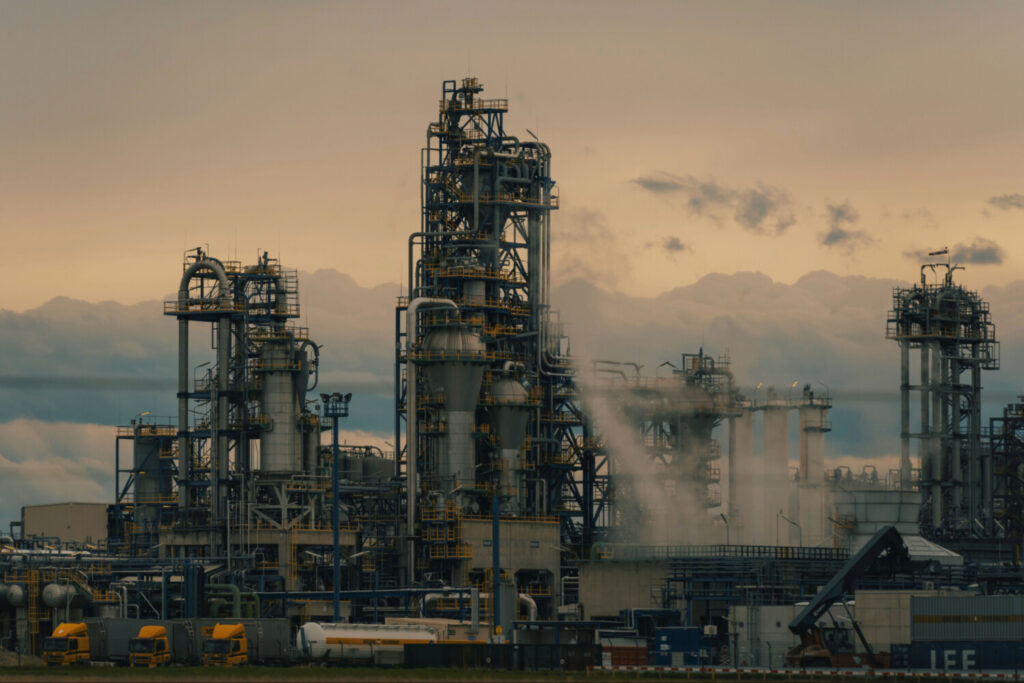
In just two years, the vast Dangote Refinery – one of the world’s largest single-train facilities – has already reduced Nigeria’s chronic foreign exchange outflow and vulnerability to geopolitical instability (Pangea Risk, 2026). Since it began operations, there has been a 33% fall in the price of gasoline, greatly benefitting consumers who were previously reeling from cuts to fuel subsidies. This has led to a fall in inflation and an improvement in Nigeria’s balance of payments, leading to an overall greater macroeconomic stability (Extance and Arówólò, 2026). This progress is undercut by the Dangote Group’s continued reliance on crude imports for up to 70% of its needs, a result of the Nigeria National Petroleum Corporation’s (NNPC) inability to provide agreed quantities of domestic crude. Consequentially, Nigerian consumers remain exposed to global price fluctuations, even with the refinery’s recent gains (Kimani, 2026).
Betting Big on Energy Sovereignty
The Dangote Group’s Nigerian and proposed Kenyan facilities support an Africa-wide push to extract more value from the continent’s natural resources. Developing more indigenous processing capabilities for raw materials would generate industrial development, create new intra-African value chains and give commodity-producing states geoeconomic leverage over global supply chains (ADBG, 2026). To insulate themselves against energy supply shocks in the Middle East – and the accompanying social unrest and foreign exchange pressures – African governments are seeking investment in renewable power and diversifying their suppliers through initiatives such as the West African Power Pool (Okyere et al, 2026).
Nigeria’s energy resources are crucial to expanding energy access, providing the foundation for continent-wide economic development and integration. In addition to supplying West African markets with refined fuels, the Dangote Group’s Lagos Refinery produces a wide array of petroleum products, emerging as one of Africa’s preeminent plastics producers (Extance and Arówólò, 2026). Despite their advantageous position, however, African producers lack the capacity to translate the Iran War windfall into sustained progress. For example, the Republic of Congo, one of Sub-Saharan Africa’s largest crude producers, relies on volatile crude petroleum exports to fund its budget and economic diversification, and is unable to capture additional value due to capacity issues at its Pointe-Noire refinery (AfricaNews, 2021; Carinah, 2026).
Several projects are competing to rectify the continent’s underdeveloped midstream and downstream capacity. In addition to Nigeria’s Dangote Refinery, new refineries under construction (in Angola, Ghana and elsewhere) could expand intra-continental trade and ease dependencies on Persian Gulf imports (Pangea Risk, 2026). If realised, the 6900km Nigeria-Morocco African Atlantic Gas Pipeline (AAGP) will connect to Spain whilst crossing the waters of West Africa’s littoral states and supplying them with natural gas, so reducing their dependence on extra-regional imports. The momentum behind the project, which would complement the existing West African Pipeline (spanning Nigeria, Benin, Togo and Ghana), is evidenced by July’s Freetown Agreement between the ECOWAS signatories. However, its $25 billion price tag, expected to rise further, may yet slow delivery when construction commences in 2028 (Ewokor and Booty, 2026; Howard, 2026).
Africa’s hydrocarbon resources are of growing international importance. The Nigerian Dangote refinery’s exports of jet fuels and other products have provided some respite to a Europe weary of Russian energy blackmail and Middle Eastern insecurity (Ekanem, 2026). If realised, Dangote’s Kenyan refinery, which could recast Kenya as a regional energy hub and reduce East Africa’s exposure to geopolitical supply shocks, would also find a market in Asian buyers hedging against instability in the Persian Gulf (Sanderson, 2026). Across Africa, Chinese companies are winning contracts to deliver resource development projects, such as the refurbishment of Nigeria’s dilapidated petroleum refineries (Kimani, 2026; Martin, 2026). This investment crucially expands China’s stake in Africa’s value-addition drive, just as competition from the US International Development Finance Corporation lags far behind (Swift and Timlin, 2026).
Outlook
Nigeria’s importance to European energy security, burnished by the Dangote Refinery and planned AAGP, may rise further if the 4128km Trans-Saharan Gas Pipeline (TSGP) is executed as planned. This Nigeria-Niger-Algeria project would deepen Europe’s connection to two of Africa’s largest hydrocarbon producers and meet 11% of the continent’s annual gas imports. Nigeria would reap significant geoeconomic benefits from the TSGP; it would deliver gas to the Mediterranean faster than maritime shipments and restore Nigeria’s strained relations with Niger through technical cooperation and transit fees (Onyango, 2026). The TSGP’s planned route, however, is exposed to escalating insecurity in Niger and northern Nigeria; a notable risk posed to Dangote’s energy gambit (Rich and Hani, 2026).
Further international and domestic shifts could still stall the Dangote Group’s ambitions. Investor interest in new hydrocarbon projects will decline if global oil prices fall or if the Iran War accelerates a worldwide shift to renewables (Waghorn and Riley, 2026). Moreover, within Nigeria, the elite capture of the petroleum sector at the federal level has driven political exclusion and unrest in the hydrocarbon-rich Niger Delta. As aforementioned, the NNPC has not met the oil supply levels stipulated in its agreement with the Dangote Group, due to violence toward the Trans-Niger Pipeline and other energy infrastructure by armed separatist groups contributing to supply bottlenecks (IISS, 2025:198). The Dangote Refinery’s operational environment could deteriorate if nationwide unrest – primarily caused by the mobilization of uncontrollable armed groups during electoral campaigns and protests against disputed outcomes – escalates during the January 2027 General Election (ACLED, 2023). Thus, while Dangote’s energy gambit has the huge potential to reposition and strengthen the African economy, it is equally riddled with the political and security risks that have long constrained the continent.
Bibliography
ACLED. (2023). Political Violence and the 2023 Nigerian Election. [online] Available at: https://acleddata.com/report/political-violence-and-2023-nigerian-election
Adeyemo, S. (2026). Nigeria designed the cure for its electricity crisis. It stopped administering it halfway. African Arguments. [online] Available at: https://africanarguments.org/2026/07/nigeria-designed-the-cure-for-its-electricity-crisis-it-stopped-administering-it-halfway/
African Development Bank Group (2026). Africa Wants to Make Its Critical Minerals a Lever for Industrialisation and Economic Transformation. [online] Available at: https://www.afdb.org/en/news-and-events/africa-wants-make-its-critical-minerals-lever-industrialisation-and-economic-transformation-95515
AfricaNews (2021). Congo seeks to end fuel shortages with new refinery. [online] Available at: https://www.africanews.com/2021/02/22/congo-seeks-to-end-fuel-shortages-with-new-refinery/
Anyaogu, I. (2026). Dangote to fund proposed Kenya refinery with cash, bonds and an IPO. Reuters. [online] Available at: https://www.reuters.com/business/energy/dangote-fund-proposed-kenya-refinery-with-cash-bonds-an-ipo-2026-07-07/
Carinah, R. (2026). Republic of Congo: Christian Yoka lifts the 2026 budget to 2,561 billion CFA francs on the back of oil price rebound. Capmad. [online] Available at: https://www.capmad.com/post/republic-of-congo-christian-yoka-lifts-the-2026-budget-to-2561-billion-cfa-francs-on-the-back-of-oil-price-rebound
Ewokor, C. Booty, N. (2026). Nigeria-Morocco Atlantic Gas Pipeline: African nations sign off $25bn mega plan. BBC News. [online] 20 July. Available at: https://www.bbc.co.uk/news/articles/cwyr5rpglngo
Extance, A. Arówólò, O. (2026). How Africa’s largest refinery is redefining Nigeria’s oil economy. Chemical & Engineering News. [online] Available at: https://cen.acs.org/business/petrochemicals/Africas-largest-refinery-redefining-Nigerias/104/web/2026/01
Howard, M. (2026). Africa-Atlantic Gas Pipeline moves closer as governments sign Freetown agreement. African Energy. [online] Available at: https://www.africa-energy.com/news-centre/article/africa-atlantic-gas-pipeline-moves-closer-governments-sign
IISS. (2025). The Armed Conflict Survey 2025. Routledge.
Kimani, A. (2026). After Squandering $25B In Refinery Overhauls, Nigeria Turns To Chinese Firms. OilPrice.com. [online] Available at: https://oilprice.com/Energy/Crude-Oil/After-Squandering-25B-In-Refinery-Overhauls-Nigeria-Turns-To-Chinese-Firms.html
Ohalezim, A. Ngang, N. G. Assessing the Impact of Imported Refined Crude Oil from the EU on Nigeria’s Economic Growth and Development. Regional Studies Association. [online] Available at: https://regions.regionalstudies.org/ezine/article/issue-15-oil-imports-eu-nigeria/
Okyere, M. A. Mukhaya, B. Yellen, D.W. (2026). The Iran War Exposed Africa’s Biggest Energy Weakness. TIME. [online] Available at: https://time.com/article/2026/07/28/the-iran-war-exposed-africa-s-biggest-energy-weakness/
Onyango, D. (2026). [Analysis] Trans-Saharan Gas Pipeline: How 4,128 km of New Steel Could Reshape Europe’s Energy Map. Pipeline Technology Journal. [online] Available at: https://www.pipeline-journal.net/news/analysis-trans-saharan-gas-pipeline-how-4128-km-new-steel-could-reshape-europes-energy-map
Pangea Risk. (2026). African Energy: EXTERNAL FACTORS COALESCE TO ENHANCE DRIVE FOR DOMESTIC REFINING AND REGIONAL INTEGRATION. [online] Available at: https://insight.pangea-risk.com/static/post-pdfs/202606/202606_AFRICAN-ENERGY-EXTERNAL-FACTORS-COALESCE-TO-ENHANCE-DRIVE-FOR-DOMESTIC-REFINING-AND-REGIONAL-INTEGRATION.pdf
Rich, D. and Hani, T. (2026). Trans-Saharan Gas Pipeline: an African dream that could reshape world energy markets. France 24. [online] Available at: https://www.france24.com/en/africa/20260620-trans-saharan-gas-pipeline-african-dream-that-could-reshape-world-energy-markets
Salam, R. A. (2025). Nigeria-Niger-Algeria gas pipeline: challenges and stakes. Al Majalla. [online] Available at: https://en.majalla.com/node/325871/business-economy/nigeria-niger-algeria-gas-pipeline-challenges-and-stakes
Sanderson, S. (2026). Kenya: What Dangote’s new refinery means for East Africa. DW. [online] Available at: https://www.dw.com/en/kenya-what-impact-will-dangotes-new-refinery-have-on-the-region/a-77927159
Swift, D. Timlin, C. (2026). The China shock comes to Africa. The Hill. [online] Available at: https://thehill.com/opinion/international/6017883-china-economic-shock-africa/
Waghorn, J. Riley, W. (2026). How has the Iran conflict accelerated the energy transition? Guinness Global Investors. [online] Available at: https://www.guinnessgi.com/insights/how-has-iran-conflict-accelerated-energy-transition
World Integrated Trade Solution. (2026). Nigeria Petroleum oils, etc, (excl. crude); preparation imports by country in 2024. [online] Available at: https://wits.worldbank.org/trade/comtrade/en/country/NGA/year/2024/tradeflow/Imports/partner/ALL/product/271000