Makkah the Road to a New West Asia
Signed amid the ongoing US-Iran conflict, the Makkah Pact signals a shift towards regional self-reliance as Saudi Arabia, Türkiye and Pakistan seek to reshape the future security architecture of West Asia.
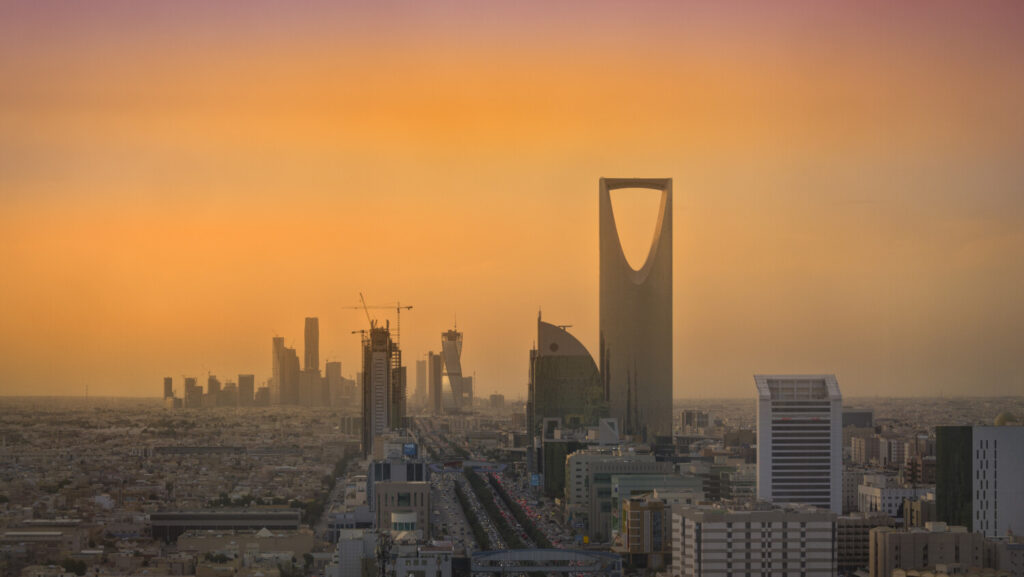
On 7 August, the decades-old US-led security order of West Asia took a paradigm shift towards a new regional security architecture, as Riyadh, Ankara and Islamabad signed the new Makkah Joint Defense Agreement (Reuters, 2026) in the holy city of Makkah. The pact is based on the contours of Article 5 (NATO, 2025) of the North Atlantic Treaty Organization (NATO), which treats an armed attack on one country as an attack on all.
The ‘Makkah Alliance’ label moves this understanding beyond just the strategic hedges to a more symbolic diplomatic signal to adversaries and domestic diasporas. Riyadh not only achieved deterrence but also earned a significant diplomatic victory and religious legitimacy in the Muslim world as the custodian of the Two Holy Mosques against the backdrop of repeated Iranian aggression during the ongoing US-Iran war. The pact suggests that Mohammed bin Salman (MBS) views the Kingdom’s security not only through national interest, but also through the sacred duty of protecting and safeguarding the heartbeat of the Islamic world, the Two Holy Mosques (Gulf Times, 2026).
For Türkiye and Pakistan alike, the Makkah label can also reduce any possible domestic political resistance to the pact. The name Makkah allows their leaders to frame this pact beyond narrow nationalist identities.
Despite the different strategic interests and diplomatic ties of the three countries with Washington, they decided to pursue a new order because energy (DW, 2026) remains the lifeline of their economies and a central vulnerability during the ongoing US-Iran conflict.
The agreement (Middle East Council on Global Affairs, 2026) explicitly states that this alliance does not replace old alliances; rather, it exists among many but with greater autonomy. Although the agreement was finalized during the Iran-US war (CNN, 2026), the Gulf had already become skeptical about Washington’s security guarantees from the day when Israel attacked Doha (Atlantic Council, 2025) in an attempt to assassinate Hamas leadership.
The Strategic Triangle Behind the Makkah Alliance
This alliance is more than a transactional military alliance. Its strategic triangle gives Riyadh the economic and geographic weight through funding for joint defense projects and investments, energy as leverage against adversaries when needed, its huge defense (FT, 2026) spending, and the Gulf geography.
Türkiye brings the second-largest military amongst NATO members, along with diplomatic leverage through its NATO membership (Al Jazeera, 2026), significant geographical reach, and operational experience.
Among its conventional military prowess, Ankara also brings advanced drone warfare (Daily Sabah, 2026) capabilities and a deffence industry that is technologically more sophisticated and advanced when compared with its regional rival Iran, whose notorious Shahed drones (Center for Strategic and International Studies, 2026) have engulfed the Gulf.
Pakistan brings nuclear deterrence and its strategic experience stemming from the long-standing relationship with Saudi Arabia (Arab News, 2026).
At first glance, this bloc resembles a ‘Sunni bloc’ set against the Shia bloc comprising the proxies of Iran, from Lebanon’s Hezbollah to Iraqi Shia militias and Yemen’s Houthis, which have contributed to prolonged conflict and instability across West Asia. Yet Türkiye and Pakistan maintain significantly different relationships with Iran itself and its powerful backers, Russia and China. The key question is whether this alliance is a ‘Sunni bloc’ against the Iran-backed Axis of Resistance or the beginning of a more pragmatic post-American regional security order in West Asia.
The Iran Question and Israel’s Security Dilemma
Although the three countries insist that the pact doesn’t target any one specific country, ‘the Iran question’ remains central to its strategic implications, as the agreement was signed when Riyadh, among other Gulf capitals, came under repeated Iranian aggression during the ongoing war. Tehran will have to reassess its strategic environment. Its response will be the factor that decides whether the ‘Makkah Pact’ establishes deterrence or simply ignites a new bloc-based regional security competition.
The pact also creates a security dilemma for Tel Aviv, one that it has long feared. Pakistan’s nuclear deterrent and Türkiye’s military presence further bend Israel’s strategic calculations in the region, particularly as Israel and Türkiye have competed for influence in Syria, while Ankara along with Riyadh (Gulf International Forum, 2025) have played a significant role in supporting Ahmed al-Sharaa’s government. With the new Syrian regime more aligned to Türkiye and Saudi Arabia, the ‘Makkah Alliance’ could increasingly shape the security equilibrium of the Levant, making it more difficult for Israel to establish its security buffer zone against the Syrians.
The alliance also raises a fundamental question for Washington, West Asia’s long-standing security guarantor.
For decades, Washington has served as the principal guarantor of security for the Gulf. But in recent years, particularly during the war with Iran, Washington’s security guarantees appear to be more of a liability for the Gulf states. Riyadh, Ankara and Islamabad are now signaling that regional security can no longer be completely outsourced to external powers. This alliance does not necessarily rupture the American security architecture, but it does underscore a new reality where Washington’s partners are preparing for a world where American security may soon not be enough. Ironically, even Washington seems to welcome this new reality, with US President Donald Trump (Asharq Al-Awsat, 2026) calling the Makkah Pact a “big, bold and important first step” by the three countries. In this emerging ‘Middle Earth’, West Asia is no longer merely a geopolitical chessboard for great-power rivalry; it is increasingly emerging as a player in its own right.
Bibliography
Al Jazeera (2026). NATO summit begins in Turkiye’s Ankara: Who is attending, what is at stake? 7 July 2026.
Arab News (2026). Saudi Arabia and Pakistan stand together in testing times. 13 March 2026.
Asharq Al-Awsat (2026). Trump Welcomes Makkah Agreement, Calls it ‘Big, Bold’ Step. 17 August 2026.
Atlantic Council (2025). How Israel’s strike on Doha is forcing a Gulf security reckoning. 19 September 2025.
CNN (2026). August 17, 2026: Deadline to reach US-Iran deal expires, Trump threatens Oman. 17 August 2026.
Center for Strategic and International Studies (2026). Unpacking Iran’s Drone Campaign in the Gulf: Early Lessons for Future Drone Warfare. 10 March 2026.
Daily Sabah (2026). From buyer to builder: 25 years that changed Türkiye’s defense industry. 14 August 2026.
DW (2026). Oil prices jump as Hormuz, Red Sea crises deepen. 23 July 2026.
Financial Times (2026). Saudi Arabia boosts defence spending by a quarter. 5 May 2026.
Gulf International Forum (2025). Turkey and Saudi Arabia: Steering Syria’s Future Together. 3 March 2025.
Gulf Times (2026). The Makkah Agreement: A new equation for Gulf security. 9 August 2026.
Middle East Council on Global Affairs (2026). What Is the Mecca Joint Defense Pact—and What It Is Not? 12 August 2026.
NATO (2025). Collective defence and Article 5. 12 November 2025.
Reuters (2026). Saudi Arabia, Turkey, Pakistan pledge mutual defence as Middle East turmoil escalates. 7 August 2026.