Libya: One Country, Two Governments, No Winners
Libya remains trapped between two rival governments, militias, and foreign powers, turning division into a permanent state of instability
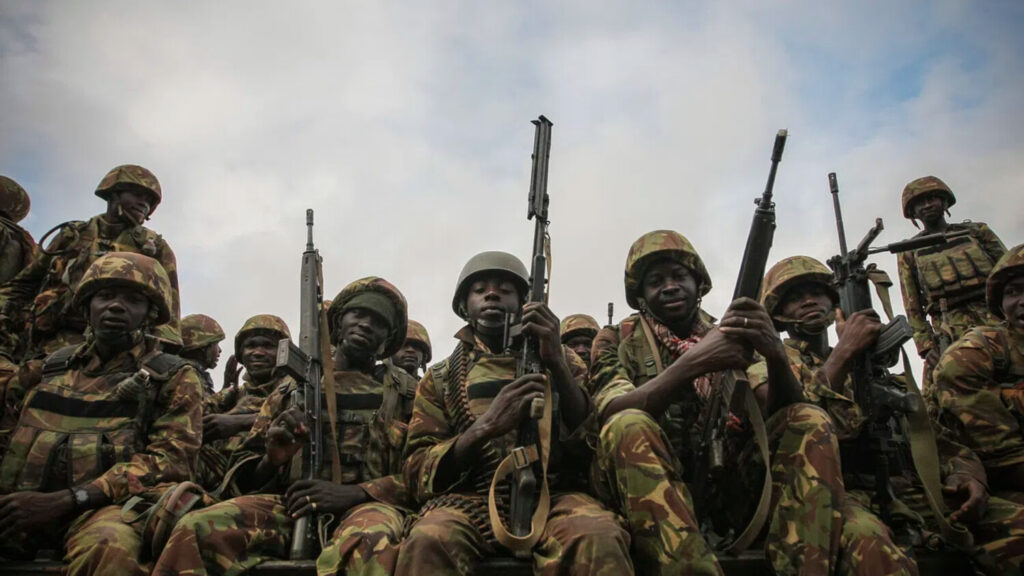
Libya’s civil wars following Muammar Gadhafi’s demise in 2011 culminated in a stalemate between its rival governments. Abdul Hamid Dbeibah’s Tripoli-based Government of National Unity (GNU) controls western Libya via an acrimonious coalition of militias, whereas Field Marshal Khalifa Haftar’s Libyan National Army (LNA) has de-facto control over the Tobruk-based Government of National Stability (GNS) that rules the east. Both authorities exploit this fractious arrangement to increase their bargaining power, all while outside actors struggle to balance between unifying Libya’s fragmented institutions or exploiting the crisis for geopolitical gain.
The Mediterranean Flashpoint
Türkiye’s intervention on behalf of the internationally recognized Government of National Accord (GNA) in January 2020 reversed Haftar’s assault on Tripoli and the course of Libya’s Second Civil War. It prevented Egypt and the United Arab Emirates (UAE) from gaining influence over Western Libya via the LNA, served as a field test for the Bayraktar TB2 unmanned aerial vehicle, and reinforced Turkish regional power projection (Ramani, 2020). After Egypt laid out its ‘red lines’, preventing a catastrophic LNA defeat and freezing the conflict, easing tensions between Türkiye and Egypt and the UAE contributed to the realization of the October 2020 ceasefire agreement and formation of the GNU in March 2021 (International Crisis Group, 2020).
Whilst Libya’s ceasefire holds, its latent instability has reinforced security dynamics in the Mediterranean. A controversial maritime agreement between Türkiye and the GNA in 2019 claiming to link Türkiye’s exclusive economic zone (EEZ) with eastern Libya’s was accepted by Haftar in 2025 (Arab Weekly, 2025). The agreement clashes with the United Nations Convention on the Law of the Sea (to which Türkiye is a non-signatory) by overlapping the Egyptian and Greek EEZs, aggravating a dispute between Greece and Türkiye over maritime boundaries and subsea energy resources (Michalopoulos, 2026). NATO disunity over Libya has strained the alliance’s credibility in the Mediterranean- most notably when France publicly accused Türkiye of violating a UN arms embargo in June 2020 (Ahmedzade, 2020).
Institutional Brinkmanship
Elevated oil prices and Europe’s energy demand following the US-Iran War stands to benefit the GNS and GNU. Libya’s National Oil Company (NOC) is based in Tripoli but relies on the goodwill of the LNA to keep eastern oilfields and terminals operating. Foreign exchange from energy sales props up Dbeibah’s militia and patronage networks in the west as Haftar profits from diverting crude into illicit commercial channels, with both sides capable of disrupting one-another’s revenues should Libya’s balance of power shift (OilPrice, 2026). Their efforts to divert foreign exchange from the NOC and throttle its independence deprived Libya’s hydrocarbon-dependent budget of $9 billion in 2025 alone (UNSC, 2026).
Conflicting European approaches towards Libya have entrenched the GNS-GNU duopoly. Although Italy is concerned over Türkiye’s military presence near the energy company Eni’s operations, collaboration with Türkiye is necessary to consolidate Libya’s stability and its ability to control Italy-bound migration (RFI, 2025). Meanwhile Franco-Turkish relations soured after President Emmanuel Macron, aligning with regional partners Egypt and the UAE, embraced the LNA as a secular ally against Islamist militants operating in Libya (Hokayem and Momtaz, 2024, P. 257). Haftar- exploiting the EU’s desire to limit irregular migration, as well as Russia’s diminished position since Syria’s Assad regime collapsed in 2024- has courted outside actors to enhance his bargaining power within Libya’s political process (Nöstlinger, 2025).
The Political Process
Gradual progress has been made in thawing Libya’s political process. So far both UN and below-the-radar Emirati and Turkish engagement have yielded limited results (Eaton, 2024). Although both governments are participating in electoral discussions via the UN-endorsed 4+4 dialogue, concern persists that the polarization and mobilization of militias responsible for the indefinite delay of the 2021 Presidential Election could reoccur and derail the political dialogue (UN, 2026). Prospects for advancing the political process are hindered by the existence of overlapping political agreements since 2011, key political stakeholders’ vested interest in Libya’s fragmentation and the entrenchment of its division by Russian and Turkish military deployments (IISS, 2022).
Through his mediation efforts the US Senior Advisor for Africa and Arab Affairs Massad Boulos secured an agreement in April on Libya’s first unified budget since 2013. Boulos’ plan also sets an electoral roadmap for February 2027, which could restore legitimacy to Libya’s fractured institutions by formalising east-west cooperation (Al Jazeera, 2026). But such highly personalised diplomacy is volatile because it relies on Boulos’ standing in the Trump Administration and the need to distribute positions between competing GNS and GNU personalities (Africa Confidential, 2026). The Administration’s interest in Libya’s energy resources, coupled with Boulos’ intervention bypassing the UN process, indicate its priority to be immediate stability over institutional transformation (Harchaoui and Wehrey, 2026).
Outlook
Libya remains a source of global instability despite the cessation of widespread hostilities. Whereas Gadhafi once aspired to be a continental leader, Libya is now a springboard for economic and military power projection into Africa by actors like Italy, Russia, Türkiye and the UAE. Concern from African stakeholders is mounting over the insecurity emanating from LNA-held areas, where weapon flows to Russia’s Africa Corps missions, Sudan’s Rapid Support Forces and Sahelian militants exacerbate the region’s crises (Africa Intelligence, 2026). The permacrisis also harms Libya’s beleaguered populace, as witnessed in the internecine competition between the GNU-backed militias in Tripoli and factional squabbles over the GNS’ response to Storm Daniel in 2023 (IISS, 2024, P.158).
A myriad of challenges hold back Libya’s reconstruction with criminality along the southern border, and degraded infrastructure among them all of which depend on breaking Dbeibah and Haftar’s lucrative stalemate (Coface, 2026). Despite its flaws the personalised US-led political process has delivered tangible progress, as evident in the GNS and GNU’s collaboration in the Flintlock 2026 military exercise in April (ADF, 2026). China’s investments in reconstruction and its engagement with both governments, coupled with its stable relations with other foreign stakeholders like Russia and Türkiye, grant it room to assume a mediatory role if Boulos’ effort flounders (Abdullah, 2024). As Pakistan’s diplomatic clout rises after its mediation between the US and Iran, it too has begun facilitating GNS-GNU dialogue with Qatari, Turkish and US support (Shahid and Bukhari, 2026).
Bibliography
Abdullah, B. (2024) Calculations and Future of China’s Role in Libya. Emirati Policy Center. [online] Available at: https://epc.ae/en/details/scenario/calculations-and-future-of-china-s-role-in-libya.
Africa Confidential. (2026) Factions set February election as US-brokered plan tests Haftar. [online] Available at: https://www.africa-confidential.com/article/id/16061/factions-set-february-election-as-us-brokered-plan-tests-haftar
Africa Defence Forum. (2026) Libyan Joint Forces Make History at Flintlock 26. [online] Available at: https://adf-magazine.com/2026/05/libyan-joint-forces-make-history-at-flintlock-26/
Africa Intelligence. (2026) Tripoli shores up relations with Niamey as Haftar extends influence. [online] Available at: https://www.africaintelligence.com/north-africa/2026/06/16/tripoli-shores-up-relations-with-niamey-as-haftar-extends-influence,110802688-art
Ahmedzade, R. (2020) The Battle for Libya: Growing French–Turkish Rivalry in the Mediterranean. The London School of Economics and Political Science: Middle East Centre. Available online at: https://blogs.lse.ac.uk/mec/2020/06/26/the-battle-for-libya-growing-french-turkish-rivalry-in-the-mediterranean/
Al Jazeera. Reuters. (2026) Libya approves first unified budget in more than a decade. [online] Available at: https://www.aljazeera.com/news/2026/4/11/libya-approves-first-unified-budget-in-more-than-a-decade
The Arab Weekly. (2025) Libya’s eastern government endorses Turkey maritime deal in surprise shift. [online] Available at: https://thearabweekly.com/libyas-eastern-government-endorses-turkey-maritime-deal-surprise-shift
Coface. (n.d.) Libya: Country File, Economic Risk Analysis. [online] Available at: https://www.coface.com/news-economy-and-insights/business-risk-dashboard/country-risk-files/libya
Eaton, T. (2024) As yet another UN Libya envoy quits, his successor must be bolder. Chatham House. [online] Available at: https://www.chathamhouse.org/2024/04/yet-another-un-libya-envoy-quits-his-successor-must-be-bolder.
Harchaoui, J, Wehrey, F. (2026) Libya’s False Peace. Foreign Policy. [online] Available at: https://www.foreignaffairs.com/libya/libyas-false-peace
Hokayem, E. Momtaz, R. (2024) Turbulence in the Eastern Mediterranean. Routledge.
International Crisis Group. (2020) Fleshing Out the Libya Ceasefire Agreement. [online] Available at: https://www.crisisgroup.org/brf/middle-east-north-africa/libya/b080-fleshing-out-libya-ceasefire-agreement
IISS. (2022) Armed Conflict Survey 2022. Routledge.
IISS. (2024) Armed Conflict Survey 2024. Routledge.
Michalopoulos, S. (2026) Greece pushes maritime talks with Libya to counter Turkey’s 2019 pact. Euractiv. [online] Available at: https://www.euractiv.com/news/greece-pushes-maritime-talks-with-libya-to-counter-turkeys-2019-pact/
Nöstlinger, N. (2025) We must work with Libyans to stop Putin weaponizing migrants, top EU official says. POLITICO. [online] Available at: https://www.politico.eu/article/eu-librya-russia-khalifa-haftar-vladimir-putin-magnus-brunner-politics/
OilPrice. (2026) How Libya’s Power Brokers Keep the Oil Flowing. [online] Available at: https://oilprice.com/Energy/Energy-General/How-Libyas-Power-Brokers-Keep-the-Oil-Flowing.html?utm_source=chatgpt.com
Ramani, S. (2020). Turkey’s Military Intervention in Libya: A Surprise Triumph for Erdogan. RUSI. [online] Available at: https://www.rusi.org/explore-our-research/publications/rusi-newsbrief/turkeys-military-intervention-libya-surprise-triumph-erdogan
Shahid, A. Bukhari, M. (2026) Pakistan mediating Libya unity push as rival camps seek deal, Pakistani sources say. Reuters. [online] Available at: https://www.reuters.com/world/asia-pacific/pakistan-mediating-libya-unity-push-rival-camps-seek-deal-pakistani-sources-say-2026-07-06/
UN Meetings Coverage and Press Releases. (2026) Speakers in Security Council Urge Concrete Progress on Elections, Security, Economic Reform in Libya amid Renewed But Fragile Momentum in Political Process. [online] Available at: https://press.un.org/en/2026/sc16389.doc.htm
United Nations Security Council. (2026) Letter dated 24 March 2026 from the Panel of Experts on Libya established pursuant to Security Council resolution 1973 (2011) addressed to the President of the Security Council. [online] Available at: https://docs.un.org/en/S/2026/224