Kuwait: Statecraft in Iran’s Shadow
Kuwait has long made a virtue of staying out of the way. The Iran War is making that strategy harder to sustain. With its oil economy exposed, its American security umbrella under strain, and Iran’s reach extending across the Gulf, Kuwait is quietly searching for ways to hedge against a region it can no longer afford to ignore.
Of the Gulf Cooperation Council (GCC) states, Kuwait is among the most heavily impacted by the Iran War. The lingering conflict has triggered an economic crisis in Kuwait by disrupting the transit of shipping through the Strait of Hormuz, with the small state’s outlook further darkened by Iranian strikes on civilian infrastructure and an alleged raid upon its geostrategic Bubiyan Island territory (Türkiye Today, 2026). But through the ambitious Vision 2035 reform programme and the diversification of Kuwait’s defence partnerships in response to erratic American foreign policy, Emir Sheikh Mishal hopes to stave off economic calamity.
A Geopolitical Minnow
Kuwait’s dependence on American security guarantees after the First Gulf War left it particularly exposed to the Iran War. The GCC states transformed into American protectorates after the US’ dual containment of Iran and Iraq in the 1990s necessitated its permanent military presence in the Gulf (Buzan and Wæver, 2003, p. 201). Mired in economic crisis after the First Gulf War, Kuwait’s status declined as it significantly reduced its pan-Arab financial aid to the Palestinian Liberation Organisation and several Arab states after its recipients failed to condemn Iraq’s actions (Fineman, 1993).
It appeared geopolitically sidelined prior to the Iran War, bypassed by regional transport corridors running through Iraqi ports and overshadowed by the assertive post-Arab Spring foreign policies of its GCC neighbours (IISS, 2023; Mahmoud, 2024).
Regional instability spilled into Kuwaiti politics prior to 2026. Despite the relative openness of Kuwait’s elected National Assembly, Iranian efforts to co-opt the country’s Shiite movements have delivered limited results (IISS, 2019). As political uncertainty escalated following Emir Mishal’s succession to his half-brother in 2023 and wrangling over stalled economic reform between the parliament and appointed cabinet, he dissolved the National Assembly in May 2024 (LeBaron, 2024).
The Emir’s centralisation of decision-making occurred amid regional turbulence following the October 7 attacks, with a Muslim Brotherhood-associated cleric stripped of his Kuwaiti citizenship and Hezbollah-affiliated Lebanese hospitals placed on a terror list in the months preceding the Iran War (The New Arab, 2025; The Arab Weekly, 2026).
Kuwait’s low diplomatic profile has not spared it from the ongoing conflict. In a reversal of Iran’s pre-war strategy of normalizing relations, it has struck the GCC to pressure the US to end the conflict, undermine American security commitments and compensate for the Axis of Resistance’s failure to provide credible deterrence (Juneau, 2026). Not only has Iran hit US bases, but it has also hit hydrocarbon infrastructure and civilian facilities, such as airports and water desalination plants, critical to the GCC states’ economic survival and deftly crafted image of stability (Lukiv and Mann, 2026).
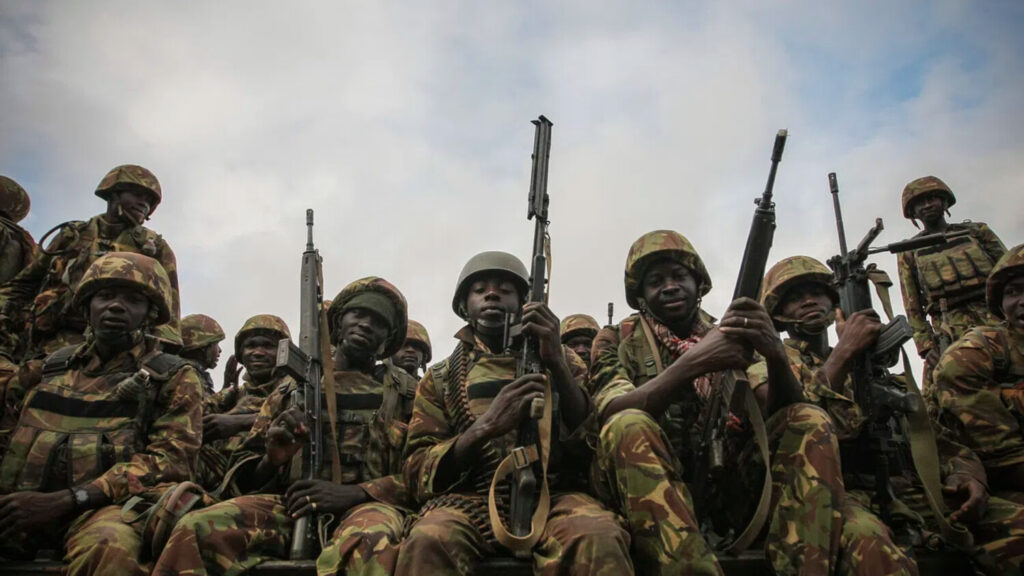
Exposed to Iranian retribution by its geographic proximity, military weakness and the 13,000 US troops based there, the 1,400 drone and missile strikes on Kuwait since February 2026 are second only to those on the UAE (Aubin, 2026).
Hedging Against Crisis
Action is being taken to revitalize Kuwait’s crisis-ridden hydrocarbons sector. July’s $16 billion lease-and-leaseback agreement between the Kuwait Petroleum Corporation (KPC) and a consortium of asset management firms, which bought a 49% stake in Kuwait’s oil pipeline network, grants the KPC funds to repair $2 billion in war damages and hike output should the conflict end (Alias, 2026).
The merger of a KPC subsidiary into the Kuwait National Petroleum Company (the national oil refining company) in May has enhanced the efficiency of the oil sector as the blockade of the Strait of Hormuz dents revenues (Kawach, 2026). Efforts to develop new export routes, however, will create new dependencies for the sector, given that a pipeline through Saudi Arabia is Kuwait’s only credible alternative to shipments through Hormuz (Bousso, 2026).
A diversified, non-oil-dependent economy is key to Kuwait’s resilience and recovery. In line with Vision 2035—which aims to transform Kuwait into a commercial and financial centre and restore its competitiveness vis-à-vis other GCC trailblazers—ongoing financial reforms have culminated in rising investor interest and an improved credit rating (Funds Global MENA, 2026; UN, 2026).
Kuwait’s approval of a new debt law in 2025, made possible by Emir Mishal’s suspension of the gridlocked National Assembly, marks its return to global debt markets and provides the government with headroom to manage volatile energy prices and deliver Vision 2035 projects (Jivraj, 2026).
Iranian strikes on US bases have raised doubts about their deterrence value across the GCC. Although the US has provided extensive air defences to Kuwait and degraded Iranian capabilities in the Persian Gulf, rapidly declining interceptor stockpiles have prompted regional US allies to search for new suppliers. This is critical given Kuwait’s dependence on US-made Patriot batteries (MDAA).
GCC states have expressed interest in air defence systems from the US, as well as South Korea, the United Kingdom and lower-cost UAV solutions from Ukraine. But limited manufacturing capacity and the US’ need to rebuild stockpiles depleted by demand from Israel, Taiwan and Ukraine will slow deliveries to the Gulf (Ribe, 2026).
Outlook
Despite shared GCC frustrations about the US’ actions dragging them into the conflict, its member states will continue to host American military assets as they rely on US security cooperation (George, 2026). Kuwait has expressed interest in the Mecca Defence Alliance—a defensive pact signed between Pakistan, Saudi Arabia and Türkiye in August—which has the potential to increase the GCC’s autonomy.
As diverging perceptions of national interest between GCC members have stalled US-backed efforts to turn it into a collective security grouping, the Mecca Alliance offers a regional alternative (Alrebh, 2026). However, as of writing, it has no institutional structure, and responding militarily to strikes by Iran or its allies, such as Yemen’s Ansarullah or the Islamic Resistance in Iraq, risks turning the pact into an explicitly anti-Iranian alliance (MECGA, 2026).
Although Kuwait will likely retain its low regional profile because of financial pressures and proximity to Iran, its economic diversification will continue. Whereas the government has pursued partnerships with American companies to develop its AI sector, it has opportunely courted Chinese investment to support the delivery of Vision 2035, just as the National Assembly’s dissolution has reduced public scrutiny of foreign investment (Westall and Hagagy, 2019; Soliman, 2026).
Joining China’s Belt and Road Initiative in 2014 allowed Kuwait to deepen its extensive hydrocarbon trade with China. At the same time, Kuwait has used the relationship to support its long-term economic reorientation, as evidenced by new Kuwaiti infrastructure and renewable energy projects in support of China’s China-Central Asia-West Asia corridor and Kuwaiti investments in China’s emerging technology industries (Bakr, 2025).
Bibliography
- Alrebh, A.F. (2026) The Sovereignty Paradox: Why GCC Security Integration Remains Elusive. Stimson Center. Available at: https://www.stimson.org/2026/the-sovereignty-paradox-why-gcc-security-integration-remains-elusive/
- Alias, A.F. (2026) ‘Kuwait pipeline M&A is dicey spin on old formula’, Reuters Breakingviews. Available at: https://www.breakingviews.com/columns/breaking-view/kuwait-pipeline-ma-is-dicey-spin-old-formula-2026-07-27/
- The Arab Weekly (2026) ‘In “unprecedented” move Kuwait places Hezbollah-affiliated hospitals on “terror list”’. Available at: https://thearabweekly.com/unprecedented-move-kuwait-places-hezbollah-affiliated-hospitals-terror-list
- Aubin, S. (2026) ‘Why Iran is targeting Kuwait’s desalination plants as part of its war strategy’, France 24. Available at: https://www.france24.com/en/middle-east/20260723-why-iran-targeting-kuwaits-desalination-plants
- Bakr, S. (2025) ‘Kuwait-China Economic Ties Expand Beyond Hydrocarbons’, AGSI. Available at: https://agsi.org/analysis/kuwait-china-economic-ties-expand-beyond-hydrocarbons/
- Bousso, J. (2026) ‘Post-War Gulf Faces Push for Alternative Export Routes’, MarineLink. Available at: https://www.marinelink.com/news/postwar-gulf-faces-push-alternative-540433
- Buzan, B. and Wæver, O. (2003) Regions and Powers: The Structure of International Security. Cambridge: Cambridge University Press.
- Fineman, M. (1993) ‘Aid Palestinians? Kuwaitis Furious, Fearful: Mideast: The PLO’s wartime betrayal is not easily forgotten’, Los Angeles Times. Available at: https://www.latimes.com/archives/la-xpm-1993-10-01-mn-41045-story.html
- Funds Global MENA (2026) ‘Reforms lift Kuwait’s standing with ratings agencies’. Available at: https://www.fundsglobalmena.com/reforms-lift-kuwaits-standing-with-ratings-agencies/
- George, S. (2026) ‘Frustration with Trump grows among U.S.’s Persian Gulf allies, officials say’, The Washington Post. Available at: https://www.washingtonpost.com/world/2026/08/15/frustration-with-trump-grows-among-us-persian-gulf-allies-officials-say/
- IISS (2019) Chapter Six: Bahrain, Saudi Arabia and Kuwait, in Iran’s Networks of Influence in the Middle East. Available at: https://www.iiss.org/publications/strategic-dossiers/iran-dossier/iran-19-08-ch-6-bahrain-saudi-arabia-and-kuwait/
- IISS (2023) Gulf Bailout Diplomacy. Available at: https://www.iiss.org/research-paper/2023/11/Gulf-Bailout-Diplomacy/
- Jivraj, H. (2026) ‘Kuwait Returns To The Global Debt Market’, Global Finance Magazine. Available at: https://gfmag.com/capital-raising-corporate-finance/kuwait-returns-to-the-global-debt-market/
- Juneau, T. (2026) ‘Iran and the new Persian Gulf equilibrium’, Chatham House. Available at: https://www.chathamhouse.org/2026/06/iran-and-new-persian-gulf-equilibrium
- Kawach, N. (2026) ‘Kuwait dissolves KIPIC in oil sector restructuring’, Arabian Gulf Business Insight. Available at: https://www.agbi.com/oil-and-gas/2026/06/kuwait-dissolves-kipic-in-oil-sector-restructuring/
- LeBaron, R. (2024) ‘Parliament was dissolved in Kuwait and hardly anyone noticed’, Atlantic Council. Available at: https://www.atlanticcouncil.org/blogs/menasource/parliament-kuwait-sabah-democracy/
- Lukiv, J. and Mann, T. (2026) ‘One killed and dozens injured in Iranian drone strikes on Kuwait airport’, BBC News, 2 June. Available at: https://www.bbc.co.uk/news/articles/c5yx135yg53o
- Mahmoud, S. (2024) ‘New trade infrastructure and route plans in Iraq unsettle Kuwait’, The New Region. Available at: https://thenewregion.com/posts/537/new-trade-infrastructure-and-route-plans-in-iraq-unsettle-kuwait
- Middle East Council on Global Affairs (2026) The Mecca Joint Defense Agreement: The Makings of a New Security Architecture. Available at: https://mecouncil.org/publication/the-mecca-joint-defense-agreement-the-makings-of-a-new-security-architecture/
- Missile Defense Advocacy Alliance (n.d.) ‘Kuwait’. Available at: https://www.missiledefenseadvocacy.org/international-cooperation/kuwait/
- The New Arab (2025) ‘Kuwait revokes citizenship of influential Islamic preacher’. Available at: https://www.newarab.com/news/kuwait-revokes-citizenship-influential-lslamic-preacher
- Ribe, A.V. (2026) ‘Challenge for the Gulf states: rearming after the war’, IISS. Available at: https://www.iiss.org/online-analysis/online-analysis/2026/05/challenge-for-the-gulf-states-rearming-after-the-war/
- Soliman, M. (2026) AI, the Gulf, and the US: A Primer. Middle East Institute. Available at: https://mei.edu/report/ai-the-gulf-and-the-us-a-primer/
- Türkiye Today (2026) ‘Kuwait says Iran’s IRGC clashed with its troops on Bubiyan Island in armed incursion’. Available at: https://www.turkiyetoday.com/region/kuwait-arrests-4-irgc-members-after-armed-clash-on-bubiyan-island-summons-ambassador-3219843
- UN (2026) SDG National Commitments Form Submissions | Sustainable Development. Available at: https://sdgs.un.org/national-commitments-sdg-transformation/23016
- Westall, S. and Hagagy, A. (2019) ‘Kuwait plan for northern mega city faces political hurdles’, Reuters, 1 May. Available at: https://www.reuters.com/article/business/kuwait-plan-for-northern-mega-city-faces-political-hurdles-idUSKCN1S73I2/