Israel, White Phosphorus, and Allegations of International Humanitarian Law Violations
Renewed allegations of prohibited military conduct by the Israeli Defence Forces (IDF) have emerged. Central among these is the controversial use of airburst white phosphorus munitions in civilian-populated areas of southern Lebanon, an issue that has drawn condemnation from human rights organisations and the wider world for its potential violations of international humanitarian law (Reuters, 2026).
White phosphorus: legal context
White phosphorus is a chemical substance that ignites upon exposure to oxygen, producing intense heat, smoke and toxic fumes. Militarily, it can serve dual purposes. Creating smoke screens, illumination or marking targets, and, controversially, incendiary effects capable of harming humans through all routes of exposure including severe burns and respiratory issues (World Health Organisation, 2024).
White phosphorus is not categorised as a chemical weapon under the 1993 Chemical Weapons Convention (CWC), and even its regulation as an incendiary weapon under Protocol III of the 1980 Convention on Certain Conventional Weapons (CCW) is complex. Protocol III prohibits the intentional use of an incendiary weapon directly against humans in a civilian setting (World Health Organisation, 2024). However, the definition of incendiary weapons under Protocol III excludes multi-purpose munitions, such as white phosphorus, that are not “primarily designed” to ignite and cause severe burns to humans (Human Rights Watch, 2024). This raises questions as to whether such protocols remain relevant to contemporary military practices.
Irrespective of the specific legal provisions on incendiary weapons under Protocol III, the use of airburst white phosphorus has a wide area effect and is therefore unlawfully indiscriminate in populated areas (Human Rights Watch, 2024). Furthermore, its use does not meet the legal requirement to take all feasible precautions to avoid civilian harm (Human Rights Watch, 2024), reinforcing the potential humanitarian consequences of its use.
Historical allegations of white phosphorus use and contested military practices
Prior to these recent incidents, allegations regarding Israel’s use of white phosphorus and other potentially unlawful military tactics have been documented in several earlier conflicts. For example, investigations by Human Rights Watch and the United Nations Fact-Finding Mission (Goldstone Report) concluded that airburst white phosphorus munitions were used over densely populated areas in the 2008-2009 Gaza conflict, causing fires in civilian infrastructure and raising concerns under the principles of distinction and proportionality (Human Rights Watch, 2009; United Nations, 2009).
Subsequent conflicts continued to generate scrutiny. During the 2014 Gaza conflict and more recent hostilities in 2023–2024, human rights organisations reported conduct they argue may involve indiscriminate or disproportionate force, including renewed allegations of white phosphorus use near civilian areas (Human Rights Watch, 2023; Amnesty International, 2015).
In addition to incendiary weapons, broader concerns have consistently been raised regarding airstrikes on civilian infrastructure and restrictions on humanitarian access (United Nations Office for the Coordination of Humanitarian Affairs, 2026). While Israeli authorities consistently deny unlawful conduct, recurring allegations have contributed to ongoing debates over compliance with international humanitarian law and accountability in armed conflict.
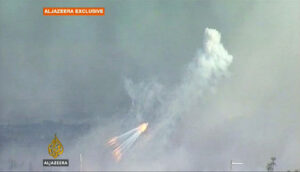
Israeli suspected white phosphorus munitions in the Gaza Strip in January of 2009
The 2026 allegations in Southern Lebanon
Human Rights Watch released a report based on verified images and geolocation data showing airburst white phosphorus artillery munitions deployed over the southern Lebanese town of Yohmor, in areas populated by civilians. (Human Rights Watch, 2026). These munitions burst in residential neighbourhoods, causing fires in homes, damaging agricultural areas and posing significant risks to non-combatants. Human Rights Watch has characterised the attacks as “unlawful” and “indiscriminate” (Human Rights Watch, 2026).
As a result of the incident, Human Rights Watch has urged Israel’s allies, including the US, UK, and Germany to suspend military assistance and arms sales to Israel and has encouraged Lebanon’s judicial authorities to initiate domestic investigations of serious international crimes (Human Rights Watch, 2026).
Conclusionary thoughts
The recent allegations regarding Israel’s use of white phosphorus munitions over residential areas in southern Lebanon has intensified scrutiny of military practices in modern armed conflict. While legal interpretations and factual disputes persist, the available evidence has raised serious concerns under international humanitarian law.
Furthermore, in the context of this conflict, things are further complicated when you consider the longevity of such accusations, as the alleged use of white phosphorus and controversial military actions forms part of a broader pattern of conduct that has drawn scrutiny in previous regional disputes involving Israel. Meanwhile, the current wider Israeli military operations in southern Lebanon, including extensive airstrikes and infrastructure damage, are also contributing to humanitarian concerns such as displacement and restricted access to essential services.
The allegations surrounding white phosphorus use in Yohmor serve as yet another point for broader debates about compliance with international humanitarian law in contemporary warfare. It reinforces the ongoing tension between military objectives and humanitarian protections, and displays the need for accountability and adherence to established legal norms.
Bibliography
Amnesty International. (2015). “’Black Friday’ Carnage in Rafah during 2014 Israel/Gaza conflict”. Amnesty International. Published 29th July, 2015. Available at: ‘Black Friday’ Carnage in Rafah during 2014 Israel/Gaza conflict – Amnesty International
Human Rights Watch. (2009). “Rain of Fire”. Human Rights Watch. Published 25th March, 2009. Available at: Rain of Fire: Israel’s Unlawful Use of White Phosphorus in Gaza | HRW
Human Rights Watch. (2023). “Israel: White Phosphorus Used in Gaza, Lebanon”. Human Rights Watch. Published 12th October, 2023. Available at: Israel: White Phosphorus Used in Gaza, Lebanon | Human Rights Watch
Human Rights Watch. (2024). “Beyond Burning”. Human Rights Watch. Published 7th November, 2024. Available at: Beyond Burning: The Ripple Effects of Incendiary Weapons and Increasing Calls for International Action | HRW
Human Rights Watch. (2026). “Lebanon: Israel Unlawfully Using White Phosphorus”. Human Rights Watch. Updated 9th March, 2026. Available at: Lebanon: Israel Unlawfully Using White Phosphorus | Human Rights Watch
International Committee of the Red Cross. (2017). “Who is bound by IHL?”. International Committee of the Red Cross. Published 13th August, 2017. Available at: Who is bound by IHL? | The ICRC in Israel, Golan, West Bank, Gaza
Reuters. (2026). “Human Rights Watch says that Israel has been illegally using white phosphorus in Lebanon”. Reuters. Published 10th March, 2026. Available at: Human Rights Watch says that Israel has been illegally using white phosphorus in Lebanon | Reuters
United Nations Office for the Coordination of Humanitarian Affairs. (2026). “Humanitarian Situation Report | 19 March 2026”. United Nations Office for the Coordination of Humanitarian Affairs. Published 19th March, 2026. Available at: Humanitarian Situation Report | 19 March 2026 | United Nations Office for the Coordination of Humanitarian Affairs – Occupied Palestinian Territory
United Nations. (2009). “Report of the United Nations Fact Finding Mission on the Gaza Conflict”. United Nations. Published 25th September, 2009. Available at: Report of the United Nations Fact Finding Mission on the Gaza Conflict
World Health Organisation. (2024). “White phosphorus”. World Health Organisation. Published 15th January, 2024. Available at: White phosphorus