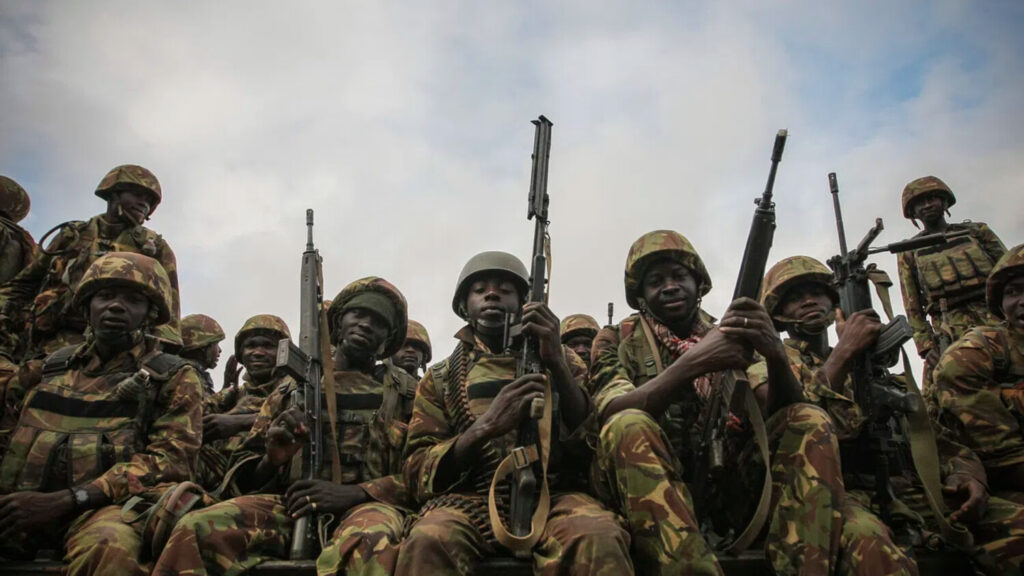
Inside the 2026 National Defence Authorization Act
In late 2025, President Trump signed the National Defence Authorization Act for 2026 — the largest military budget in history. This is a breakdown of what it means for the U.S. Defence Industrial Base.
On December 18, 2025, President Trump signed S.1071, the National Defence Authorization Act for Fiscal Year 2026, into law (The White House, 2025a). The National Defence Authorization Act (NDAA) authorizes the appropriations for Department of Defence/ War and other national security and defense related organizations for the coming fiscal year.
The NDAA for FY2026 authorizes approximately $900 billion in defense spending, making it one of the largest annual defense appropriations bills.
1. Procurement
The procurement section (Division A, Title I/ Title XLI) of the NDAA highlights the United States’ shift toward preparing for high-intensity conflict and great power competition. $161 billion (18% of total National Defence spending) will be allocated for procuring modern platforms, stockpiling munitions, and rebuilding industrial capacity. The Navy and US Marine Corps received the largest share with $67 billion (42%) spent to strengthen maritime power projection, undersea dominance, naval aviation, and the sea-based nuclear deterrent. This reflects the 2025 National Security Strategy’s emphasis on deterrence and maintaining a ‘vigilant posture’ in the Indo-Pacific (The White House, 2025b).
Drawing directly on lessons from the war in Ukraine, the Army’s investments prioritise ammunition, air and missile defence, unmanned systems, and revitalising the defence industrial base. The Air Force is focused on maintaining air superiority, expanding long-range precision strike and modernising its bomber force to sustain global power projection and deterrence. Complementing these efforts, the Space Force and Defence-Wide allocations emphasise space superiority, resilient satellite and launch capabilities, and missile defence.
Army
The Army is preparing for high-intensity, prolonged warfare (Feockert, 2025). It is learning from the war in Ukraine and is preparing for potential future conflicts to look similar (US-APD, 2025). Therefore, the Army is procuring ammunition and missiles, but it is also investing in shoring up the defence industrial base to support and sustain a high-intensity conflict.
Missiles and Ammunition
The ammunition consumption rate in Ukraine has been higher than during the Global War on Terror (GWOT) (Johnson, 2025; Cancian, 2023). The Army has recognised this and is focused on procuring a larger stockpile of missiles and ammunition. It has allocated $218 million for 155mm artillery shells and a further $28 million for precision artillery munitions, both of which have been extensively used in Ukraine.
There are also funds for standard munitions: 105mm and 120mm tank shells ($440 million), 60mm, 81mm, and 120mm mortar shells ($203 million), and hundreds of millions for rifle and handgun ammunition. In addition, a substantial sum is allocated for Next Generation Squad Weapon ammunition ($426 million).
The Army is also pursuing missile procurement, mostly focused on interceptors and precision-guided missiles. For example, a significant amount is allocated for upgraded PAC-3 interceptors ($2.6 billion). These are missiles designed to destroy ballistic and cruise missile, but also aircraft. The upgrades would improve effectiveness against advanced missile threats, including some hypersonic missiles (Hill, 2025). The war in Ukraine has shown that coordinated saturation attacks by One-Way-Effectors (OWEs/ suicide drones) and cruise missiles launched from bombers can quickly drain the stockpile of interceptors.
There is also a focus on long-range, precision-guided strike capabilities. The NDAA includes funds specifically for the Precision Strike Missile family ($480 million), HIMARS ($61 million) and its modifications ($54 million), Guided-MLRS missiles ($1.1 billion) with advanced procurement ($43 million), and air-to-surface hypersonic missiles ($353 million).
The widespread use of drones in Ukraine has also been of concern for the U.S., and they have allocated funds for the procurement of Small Unmanned Aerial Systems ($744 million) (Park, 2024).
Rebuilding the Defence Industrial Base
The defence industrial model developed for the post-Cold War and GWOT eras is not suitable for modern high-intensity warfare. The difficulty of Western manufacturers to scale up the production of artillery shells reflects the failure of the current model (Grey, Shiffman & Martell, 2024). Therefore, reviving the U.S. defence industrial base is a major priority for the Pentagon and the Army (McGinn & Cook, 2025; Losey, 2025a).
Title VIII of the NDAA attempts to amend the current procurement system to streamline the process and reward innovation (Duffy et al, 2025). Section 1804 raises the Pricing Data threshold from $2 million to $10 million for contracts earned after June 30, 2026. This means that fewer procurement contracts will require fully certified cost/pricing submissions, thereby speeding up the process. Similarly, Section 1806 raises the Cost Accountability Standards applicability to $35 million and full CAS compliance to $100 million. This aims to reduce the administrative burden for smaller contracts and encourages smaller firms to bid for contracts. Beyond this, Section 811 removes dozens of legacy acquisition statues to streamline the process and Section 804 expands the authority of the Pentagon to issue multiyear contracts for missiles, munitions, and certain systems. This should encourage the defence industry to focus on stable production as the funding is guaranteed for the distant future. All of the services are also utilising Advanced Procurement (AP) contracts for long lead-time items.
Additionally, the Army is allocating $1.3 billion for the modernisation of the domestic industrial base to support industrial-scale production of the most essential equipment. The Pentagon recognises that for the sustainment of high-intensity combat operations, a robust industrial base is necessary.
Navy and U.S. Marine Corps
The Navy is focusing on the construction of modern, advanced platforms, with an eye towards the Indo-Pacific (Callahan, 2025). The U.S. Marine Corps (USMC) is pursuing a major restructuring to focus on maritime and littoral operations (Jensen et al, 2025; O’Rourke, 2025a).
Modernisation and Expansion
The Navy is continuing the modernisation and expansion of its fleet. There is funding for the aircraft carrier USS Doris Miller (CVN-81) ($1.6 billion), which is scheduled to be laid down in early 2026. There is also significant funding to support the carriers such as CVN Refuelling Overhauls ($1.7 billion), which extend the carrier’s service life by refuelling the nuclear reactors. The Navy is also investing in its submarine force structure. There is funding for a Virginia-class SSN ($2.7 billion) and for the AP of additional submarines ($3.7 billion). There are also minor investments aimed to support these assets, such as funding for SSN acoustic equipment ($498 million) and support equipment ($383 million). Such procurements are aimed at maintaining dominance and enabling naval power projection in the future (O’Rourke, 2025b).
Furthermore, the Navy is also continuing the modernisation of the sea leg of the nuclear triad. There are funds for an additional Columbia-class SSBN ($3.9 billion) and the AP of further such submarines ($5.7 billion). Additionally, there are funds for the modification of the Trident II submarine-launched ballistic missile ($2.5 billion). These investments are central to nuclear deterrence and for great power competition.
In addition to these ships, the Navy is also investing in sustaining its naval aviation. There are funds for F-35C ($2.1 billion) and its AP ($401 million), as well as for the F-35B ($2.1 billion) and its AP ($113 million). There is also funding for the E-2D Hawkeyes ($1.2 billion), P-8 Poseidon ($13 million), and related modifications ($320 million). All these allocations are aimed at supporting naval operations, while building a large complement of precision-strike, long-range anti-ship, air-defence and air-to-air missiles. For example, the Long-Range Anti-Ship Missile ($401 million), Evolved Sea Sparrow Missile ($503 million), AMRAAM ($148 million) and the AARGM-ER ($261 million).
U.S. Marine Corps
The U.S. Marine Corps is preparing to operate in the Indo-Pacific, and they are restructuring under Force Design 2030 (Feickert, 2025). This is intended to make the force smaller, lighter and more lethal. The USMC is preparing to execute concepts like Stand-In Forces (SIF), operating within the adversary’s defensive perimeter, and Expeditionary Advanced Base Operations (EABO) (USMC, 2023).
There is funding for standard equipment like infantry weapon ammunition ($180 million), artillery munitions ($147 million) and mortars ($141 million). There are also funds for the procurement of amphibious vehicles ($790 million) and USMC JLTV ($168 million), ground-based air-defence systems ($620 million), Naval Strike Missile ($143 million), and the Guided-MLRS ($61 million). These procurements will allow for the USMC to execute its new concepts of operation.
Air Force
The U.S. Air Force is reoptimizing for great power competition and is building a resilient and lethal force with the One Air Force and One Force Design concepts (USAF, 2024; Olay, 2024; Sweetman, 2024).
The Air Force allocated $26 billion for Classified Programs. This funding may be allocated for projects such as the initial procurement of sensitive subsystems for the NGAD, elements for the Collaborative Combat Aircraft (Loyal Wingman), or additional hypersonic or other advanced missiles.
Air Superiority and Precision
The Air Force, in its pursuit of air superiority, is steadily continuing the procurement of the F-35 and supporting equipment (Marrow & Insinna, 2025). There is funding for the F-35 ($3.5 billion), F-35 AP ($531 million), F-22A ($977 million), and for modifications of the F-16 ($448 million). These procurements and modifications will help the U.S. Air Force maintain air superiority in the future. These platforms can also be integrated into a wider network to better prepare the force to operate in highly contested environments with electronic warfare, enemy aircraft, drones, and advanced integrated air defense systems.
Naturally, there is also funding for armaments like the AGM-183A ARRW (Air-Launched Rapid Response Weapon) ($615 million), JASSM ($489 million) and the AMRAAM ($365 million). These systems illustrate a layered approach to long‑range precision strikes; JASSM for standoff land/sea strike, AMRAAM for air superiority and defensive counter‑air and ARRW as an aspirational hypersonic weapon for heavily defended targets.
Power Projection and Deterrence
The Air Force is also investing in maintaining existing and procuring new platforms for global power projection. There are allocations for B-21 Raiders ($2.5 billion) and their AP ($862 million), but also for legacy platforms like the B-52 ($223 million), B-2A ($76 million) and B-1B ($73 million).
The Air Force’s strategic bomber fleet provides long-range strike capabilities for both conventional and nuclear missions. These aircraft enable global power projection. The legacy platforms (B-52, B-1B, B-2A) offer proven endurance and reliable payload delivery, something demonstrated recently with the strikes on Iranian nuclear facilities (Olay, 2025). The B-21 Raiders introduce next-generation stealth technology to improve survivability. They will replace the B-1B and B-2A, complementing upgraded B-52s as the backbone of the future force with up to 100 aircraft being procured (Decker, 2025).
All four bombers can execute strikes in contested environments and carry nuclear weapons like the AGM-181 LRSO cruise missile or B61 gravity bombs, as well as conventional munitions like the JASSM-ER. These platforms, when armed with nuclear weapons, ensure deterrence.
Space Force
The Space Force, through its Vector 2025 strategy, is seeking to attain and maintain space superiority (James, 2025). They are attempting to counter adversaries like China and Russia through resilient operations, avoiding surprise, and responsible counterspace tactics. Therefore, the Space Force is focused on procuring advanced assets and building resilience.
There is funding to launch Space Development Agency satellites (SDA) ($648 million). These will form a mesh network of satellites in LEO designed to provide communications, tracking, and missile warning capabilities. There is also funding for the National Security Space Launch (NSSL) program ($1.4 billion), which launches special payloads like missile warning satellites, military GPS, secure communications and ISR satellites. Together, NSSL and SDA launches provide the U.S. full-spectrum, resilient access to space. NSSL ensures the U.S. never loses access to its most vital space capabilities and SDA launches ensure the U.S. can scale, adapt, and fight in space at speed.
In addition, there is funding for the GPS III Follow-On program ($109 million). This program carries payloads including Laser Retroreflector Arrays (LRAs) for precise orbit measurements, Search and Rescue (SAR/GPS) for emergency beacon detection, and Energetic Charged Particle Detector (ECP) sensors for nuclear detonation monitoring (SAR, 2023). These assets will progressively replace the older Navstar GPS satellites and launch in 2027.
Defence-Wide
The final section provides funding for agencies and joint organizations such as the Missile Defense Agency. Beyond these big-ticket items there is also a substantial amount ($1.1 billion) for classified programs.
The most notable allocations are for additional THAAD interceptor missiles ($1.2 billion), many of which were used during the 12-Day War and are valuable assets for both CENTCOM and INDOPACOM (Mezzofiore & Qiblawi, 2025; Hitchens, 2025). Similarly, there are funds for SM-3 block IIA missiles ($444 million) and an additional $400 million for modernising the production line of the SM-3 Block IB variant.
Conclusions
· High-Intensity Warfighting: The Army is prioritizing the procurement of ammunition and missiles, air and missile defense systems and unmanned systems to prepare for high-intensity, prolonged conflict.
· Force Expansion and Maintaining Deterrence: The Navy is prioritizing modernisation for the Indo-Pacific, with major investments in submarines, aircraft carriers, naval aviation, and the sea-based nuclear deterrent. The U.S. Marine Corps is procuring equipment for littoral operations.
· Superiority, Lethality and Resiliency: The Air Force is reoptimizing for great power competition by continuing the procurement of advanced aircraft and munitions. It is also investing in power projection and deterrence through the modernisation of its bomber force and the continued funding for next-generation platforms.
· Boosting Space Capabilities and Resiliency: The Space Force is focused on achieving space superiority. Its procurement priorities centre on advanced satellite constellations, resilient launch capabilities and the modernisation of critical systems to ensure reliable, scalable access to space.
· Procurement Reforms: The U.S. is steadily streamlining its procurement process to accelerate the acquisition and production of critical equipment and munitions.
2. Research, Development, Testing and Evaluation
The research, development, testing and evaluation (RDT&E) section (Division A, Title II/ Title XLII) of the NDAA, totalling $145 billion (16% of total National Defence spending), is focused on accelerating innovation and rapid prototyping to maintain a technological edge over peer competitors. The Air Force received the largest share, $53 billion (37%), focusing on next-generation air dominance, long-range strike, and strategic deterrence through advanced and classified programs.
The Army emphasises long-range precision fires, future vertical lift, and networked C2 and ISR; the Navy and Marine Corps focus on distributed maritime and littoral capabilities and future undersea dominance; and the Space Force prioritises resilient satellite architectures, missile warning, and nuclear command and control. Collectively, this signals a shift toward preparing for technologically complex and high-end conflict rather than legacy counterinsurgency operations.
Army
A central focus of the Army is hypersonic weapons, specifically, the Long-Range Hypersonic Weapon (LRHW). This is designed to counter advanced threats from peer adversaries like China and Russia, who have deployed such systems (Estrada, 2025). These weapons enable strategic strikes at speeds over Mach 5, with manoeuvrability that challenges traditional missile defence. The Army is also investing $513 million in the development of hypersonic missiles, with an additional $25 million allocated for components and prototyping. Hypersonic capabilities for the U.S. would help address anti-access/area denial (A2/AD) networks, especially those developed by China (Janes, 2025).
Additionally, there are funds for improving 155mm Self-Propelled Howitzers ($107 million) and for next-generation missiles under the Expanded Mission Area Missile program ($178 million). Such projects are a part of the Army’s push to develop long-range precision fires.
The Army, under the broader Future Vertical Lift initiative, is funding the Future Long Range Assault Aircraft program (FLRAA) ($1.2 billion). This next-generation aircraft is intended to replace part of the aging helicopter fleet, especially the UH-60 Black Hawk. FLRAA will attempt to ensure the Army maintains mobility and a tactical advantage into the 2030s and beyond.
The Army is developing advanced sensor networks, command, control and communications (C3) and ISR capabilities. There is funding for a Multi-Domain Sensing System ($249 million), the development of AIAMD software ($358 million), AI integration of Air and Missile Defence Technology, and security for ICBMs counter-UAS technologies and facilities ($33 million). These projects collectively emphasize networked, AI-enabled battle management over legacy stovepipe systems, aligning with Joint All-Domain Command and Control (JADC2) imperatives (DOD, 2022).
Navy and U.S. Marine Corps
Many of the Navy/U.S. Marine Corps items are classified and labelled with code names such as Pilot Fish ($1.2 billion) or Link Evergreen ($529 million). These allocations are most likely for systems which will complement and support larger assets. Therefore, Pilot Fish (based on its name which refers to smaller fish which swim with whales and sharks) may be a smaller unmanned underwater vehicle (UUV) that can escort larger UUVs or manned platforms.
The Navy is developing next-generation assets built around families of platforms that can be integrated rather than standalone systems. There is funding for F-35 C2D2 ($444 million), efforts to accelerate the Block 4 programme ($428 million), the Tomahawk Mission Planning Centre ($151 million), and for the MQ-4C Triton ($14 million) with its modernisation ($361 million) (Heński, Naval Technology, 2025). All these systems are capable of integration into a wider network, and they all support the U.S. Navy priorities, especially for the Indo-Pacific.
The Navy is also funding the SSN X ($365 million) and its new design ($247 million). SSNs are designed to hunt and kill enemy ships and submarines, conduct surveillance, or launch cruise missiles. They are nuclear-powered, therefore, have virtually unlimited range. The Navy funding the development of a new SSN reflects their commitment to maintain underwater dominance into the 2040s and beyond (O’Rourke, 2025c).
The U.S. Marine Corps (USMC) is mostly investing in technology to support their Force Design 2030 priorities and their shift to littoral warfare. There is funding for the development of a combat support system ($218 million), an assault vehicle ($44 million), and for an air defence weapons system ($56 million). There is also a significant allocation under the USMC Advanced Technology Demonstration ($329 million), which will develop and test an autonomous amphibious robotic vehicle and low-cost hypersonic missiles.
Air Force
To maintain air superiority, the Air Force is investing heavily in the development of next-generation platforms. With the focus on peer competitors, the Air Force is working on technology where surprise and first-mover advantage matter. Therefore, a large portion ($22 billion) of the Air Force’s budget is classified. This likely includes funds for the development of AI-enabled mission systems, advanced stealth materials, and subsystems for larger platforms.
Under the Next-Generation Air Dominance Program (NGAD), the Air Force is developing the new air superiority fighter F-47 ($2.5 billion). It is designed to complement and eventually replace the F-22. It will focus on defeating enemy fighters beyond visual range, surviving dense air-defence networks, and operating with extreme range, speed, and stealth accompanied by uncrewed escort aircraft (developed under the ‘Loyal Wingman’ program) (Losey, 2025b). There is also funding for the development of the Long-Range Strike Bomber (B-21 Raider) ($2.3 billion) (Menon, 2025). Collectively, these platforms reflect a shift in US airpower priorities. They are not designed for counterinsurgency or regional conflicts, but to meet future peer competitors.
There is also funding for the development and testing of the replacement for the Minuteman III ICBM, Sentinel ($3.8 billion). Sentinel is more reliable, secure, and survivable along with modernised launch control, C2, and wider supporting infrastructure. The program has had issues; there have been multiple cost overruns and delays. With restoration of full funding and the backing of the Air Force Program Executive Officer for ICBMs, Brig. Gen. William Rogers, the Air Force is looking at fielding the missiles before 2050 (Marrow, 2025). The ground-based nuclear deterrent remains an important part of the nuclear triad and Congressional lawmakers have supported the program despite delays. The NDAA even codified into U.S. law, a minimum of 400 deployable ICBMs (Sec. 1632). This reinforces the strategic commitment to the ground leg of the nuclear triad (Knight-Boyle, 2025).
Space Force
The Space Force received a significant boost to its RDT&E funding, indicating strong support for developing new space capabilities (Albon, 2025). A major segment of the budget naturally remains classified ($2.8 billion). This most likely includes advanced sensors, communications equipment, and other subsystems for satellites.
There is funding for the development of major programs like an evolved strategic SATCOM ($1.2 billion), a next-generation satellite communications system for nuclear command, control and communications (NC3). This is designed to replace and modernise the Advanced Extremely High Frequency (AEHF) constellation. There is also funding for the development of a Ground Moving Target Indicator ($1 billion), which allows for real-time ISR and tracking/ targeting for joint forces.
Beyond that, the Space Force is also focusing on building resiliency. There is funding for the development of LEO ($1.7 billion) and MEO ($686 million) satellites to help detect and track ballistic, cruise and manoeuvring missiles. This investment reflects the Space Force’s shift towards building resiliency by deploying distributed, survivable constellations of satellites rather than singular platforms.
There is also funding for the next-generation Overhead Persistent Infrared Satellite Program ($189 million), which is replacing the SBIRS. This program strengthens space-based missile warning and tracking. Specific segments are also to be developed, such as Polar ($474 million), Ground ($358 million) and GEO ($432 million). This new system will be more resilient to counterspace and cyber threats. These satellites are expected to have more advanced detection capabilities and will operate more effectively in with HBTSS (Erwin, 2024).
Defence-Wide
Golden Dome – Missile Defence
There is funding for the development of the ‘Golden Dome’, a multi-layer missile defence system that the Trump administration is pursuing in an attempt to detect and destroy incoming ballistic, hypersonic and cruise missiles (Dennis, 2025). There is funding for the improvement of Homeland Defence interceptors ($1.5 billion), as well as developing interception capabilities in the midcourse segment ($825 million) and terminal segment ($518 million), and for ballistic missile defence C2BMC ($634 million). Washington clearly views ballistic, cruise and hypersonic missiles as a serious threat and is developing defensive capabilities. Collectively, these items form a layered homeland missile defence architecture and are the core components of the Golden Dome concept. Quietly, Congress is funding a layered U.S. homeland missile defence system (even if it is not officially labelled it as such).
Joint All-Domain Command and Control (JADC2)
The information and data oversaturation on the modern battlefield makes decision-making, command, and control much more difficult. The fog of war is much thicker. The Pentagon is attempting to connect sensors, decision-makers, and shooters/effectors across all services and domains into a single integrated environment (DOD, 2022). As a result, there is significant funding for the development of a JADC2 system ($297 million). This new system reflects the Pentagon’s focus on fighting peer competitors, who will employ hypersonic missiles, saturation attacks and large-scale electronic and cyber disruption. JADC2 enables cross-domain kill chains, track continuity (especially important for missile defence) and the fusion of sensors.
Conclusions
· Advanced Systems and Rapid Decision-Making: The Army is investing in creating resiliency and survivability through long-range fires, while improving rapid decision-making through the development of new, connected information networks for C2.
· Modernization and Planning Ahead: The Navy is modernising its existing assets and also investing in the development of future platforms.
· Maintaining Superiority: The Air Force is investing heavily in advanced crewed and uncrewed platforms that can be integrated into a network. There is also the continued effort to modernise the ground leg of the nuclear triad.
· Connected and Resilient: The Space Force is attempting to shift away from fragile, isolated systems and is developing a more connected and resilient satellite architecture. The threat posed by hypersonic and ballistic missiles is of particular concern.
· Resiliency, Redundancy and Reconstruction: In response to the threat posed by ballistic, hypersonic and manoeuvrable missiles the US is investing heavily in missile defence. The Pentagon is developing resiliency, redundancy and rapid reconstruction as a result across all services.
3. Military Construction
Military construction (Division B/ Title XXVII-XXXIV, XLVI) makes up only 1.96% of total National Defence spending and totals $17 billion, however it does provide an insight into U.S. basing priorities and force posture. The largest construction allocations were for the Navy and U.S. Marine Corps (and USN/USMC Reserve), which received $6 billion (39%). This reflects the importance of maritime power and forward basing for deterrence and power projection priorities.
Most projects are routine and concentrated on the U.S. mainland, supporting readiness, sustainment and quality of life, while overseas construction largely reinforces existing commitments in Europe, the Middle East, and the Indo-Pacific.
Notable exceptions highlight strategic priorities of the Trump administration: investments in Guam to strengthen air and missile defence and logistics; upgrades at Pearl Harbor, Diego Garcia, and Bahrain to support naval and joint operations; and infrastructure in Greenland that supports missile warning. Collectively, these projects underscore a construction posture focused less on expansion and more on hardening and modernising key nodes critical to deterrence, alliance support, and sustained operations in an increasingly contested strategic environment.
Army
The Army’s focus remains on the U.S. mainland, funding regular projects like childcare facilities, barracks and dining facilities. There are also projects which align with the Trump administration’s priorities on countering illicit narcotics trafficking from South America (ATA, 2025). There is a new Joint Inter-Agency Task Force-South C2 Facility at NAS Key West ($50 million); it will support counter-trafficking operations in the Caribbean. This initiative reflects the administration’s enforcement of the “Trump Corollary” to the Monroe Doctrine and its renewed emphasis on the Western Hemisphere (The White House, 2025b; Ernst, 2025).
Army construction abroad remains limited, primarily supporting longstanding US commitments. In Germany, for example, the Army is building vehicle maintenance shops ($92 million) and family housing units ($50 million), to support personnel tied to NATO commitments.
One notable outlier, however, is the $55 million Readiness Centre in Guam for the Army National Guard. This centre is designed for planning, C2, training coordination, or the deployment of Guard units to the Indo-Pacific. Such projects are small but necessary for the Army to be able to support potential future large-scale deployments into the region. The Pentagon appears to expect the Guard to play a role in the Pacific and is preparing the supporting infrastructure accordingly (Broker, 2025).
Navy and U.S. Marine Corps
The majority of U.S. Navy’s construction activity remains on the mainland with routine projects like an EA-18G Growler maintenance facility ($75 million). More notable projects include the expansion of the Trident missile refit facility at Naval Submarine Base Kings Bay ($119 million), which supports the ballistic missiles carried by SSBNs.
Overseas construction supports U.S. operations and allies. Projects include a fleet maintenance facility and Tactical Operations Centre in Bahrain ($42 million) and a $51 million power plant at Camp Lemonnier, Djibouti. Bahrain is the nerve centre for U.S. naval power in the Persian Gulf and Camp Lemonnier is essential for U.S. power projection and surveillance in the Red Sea and Africa (Rane, 2015; Kuoman, 2024).
In Pearl Harbor, the Navy is replacing Dry Dock 3 ($492 million) and completing support infrastructure upgrades for DDG-1000s ($83 million). Pearl Harbor and Hawaii are vital as they provide the U.S. with a centrally located, heavily fortified base that enables power projection, rapid response, and deterrence across the Pacific. Maintaining and modernising the bases on Hawaii are important for any U.S. strategy in the Indo-Pacific (LeFevre, 2022).
The U.S. Marine Corps (USMC) is continuing routine construction projects such as a mess hall and armoury at Camp Pendleton ($22 million) and an F-35 aircraft sustainment centre at Cherry Point ($40 million). While these projects may not be particularly notable, they are essential for supporting regular USMC operations.
Air Force and Space Force
Within the U.S., the Air Force and Space Force are continuing with the construction of regular projects such as a F-35 training centre ($80 million). Projects outside of the U.S. mainland support NATO commitments, such as a QRF Hangar in Norway ($72 million)—a construction that strengthens NATO’s ability to detect, deter, and respond to threats, while reaffirming U.S. commitment to NATO.
Beyond that, there are projects that reflect the specific priorities of the Trump administration. There is funding for a landing system at Pituffik Space Base ($32 million) in Greenland. Reinforcing infrastructure at this location can enhance operations at the base, including early missile warning, space surveillance, and support for Arctic operations (DIE, 2025). This base also sits well inside the Arctic Circle, a place where competition between the great powers is increasing (Mahle, 2024).
There is also funding for an operations support facility on Diego Garcia ($29 million). The base supports both naval and air assets and provides access to the entire Indian Ocean, the east coast of Africa, the eastern approaches to the Middle East, the Bay of Bengal, Southeast Asia, and Western Australia. Any construction at this location is significant as it supports U.S. power projection in these regions.
In the U.K., the Air Force is funding the construction of a specialised SURETY operations compound ($10 million) and a command post ($10 million) at RAF Lakenheath. The SURETY concept refers to the U.S. program of ensuring the security, safety, and reliability of nuclear weapons and related assets. The construction is likely to upgrade older facilities, harden infrastructure, and expand capacity. This indicates that the U.S. is preparing for stationing nuclear weapons in the U.K. and that this construction aims at supporting such a deployment (Johns & Kristensen, 2025).
Pacific Deterrence Initiative (PDI)
The Pacific Deterrence Initiative (PDI) aims to deter China by improving the U.S. force posture in the Indo-Pacific and enhancing joint and allied capabilities in the region (Nicastro, 2024). NDAA 2026 extends the PDI through 2027 and 2028.
A major share of this funding focuses on Guam and the Guam Defense System (GDS). The Army is implementing its Enhanced Integrated Air and Missile Defense (EIAMD) concept there, allocating $61 million for Phase 1 and $33 million for Phase 2 to establish a layered defense network. The EIAMD on Guam underpins deterrence, force protection, civilian safety, and U.S. operational freedom in the Indo‑Pacific (McBride, 2025; EIAMD‑PI, 2023).
The Navy is planning to enhance the resilience of Arpa Harbor ($105 million) and complete improvements to X-Ray Wharf ($31 million), which, when finished, could accommodate T-AKE dry cargo and ammunition ships. These projects are part of U.S. efforts to expand its logistics capabilities in the Indo-Pacific. There are also plans to develop a Joint Consolidated Communications Centre ($121 million), Command Centre ($83 million) and other additional support facilities on Guam.
Beyond Guam, PDI funding supports new aircraft parking aprons at RAAF Base Darwin ($190 million). Both U.S. and Australian planners have identified Darwin as an important location for the defence of Australia and its Northern Approaches (Gosling, 2023; Mahnken, 2025). The U.S. already deploys Marines as part of the Marine Rotational Force—Darwin (MRF-D) and the air base play an important role during the Talisman Sabre Exercises (Fischer, 2025).
Conclusions
· Army: The Army’s construction primarily focuses on the U.S. mainland, supporting routine operations, while overseas projects sustain commitments mostly in Europe. A notable exception is the new Readiness Centre in Guam; it suggests preparatory steps for potential future contingencies.
· Navy and Marine Corps: The Navy is focused on the U.S. mainland, funding routine modernization projects, meanwhile limited overseas construction supports allied operations and forward presence. USMC projects concentrate on routine facilities that sustain readiness, training, and aircraft operations.
· Air Force and Space Force: The Air Force and Space Force construction focuses largely on routine domestic infrastructure. Investments in Greenland and at Diego Garcia, however, reflect a focus on missile warning, space surveillance, Arctic competition and Indo-Pacific power projection.
· Pacific Deterrence Initiative: The PDI is focused specifically on Guam, the Army is implementing layered air and missile defense, while the Navy is improving logistics and supporting infrastructure.
4. DOE’s National Security Programs
The Department of Energy’s national security programs (Division C/ Title XLVII) account for $34 billion, 3.8% of total National Defence spending, and play a critical role in sustaining the United States’ nuclear deterrent and strategic stability. Most of the funding is toward Weapons Activities, allocated at $21 billion (61%). This reflects a commitment to modernising and sustaining the nuclear stockpile across all three legs of the nuclear triad through warhead life-extension programs, new warhead development, and the revitalisation of ageing production infrastructure.
Significant investment in naval nuclear reactors further underpins both second-strike nuclear deterrence and global power projection. Additionally, the NDAA also allocates substantial resources to nuclear non-proliferation, threat reduction, and environmental cleanup.
Sustaining and Modernizing the Nuclear Deterrent
The most recent National Security Strategy states that Washington is determined to possess “the world’s most robust, credible and modern nuclear deterrent” (The White House, 2025b). There is significant funding to ensure that the U.S. nuclear weapons stockpile remains safe, secure and effective.
Stockpile Management
· Modification of the W87-1 warhead, which will be deployed on the future Sentinel ICBM and is scheduled to enter production from 2030 ($649 million) (Shetty, 2025).
· Funding for the W93 warhead, which is intended to replace and complement the W76 and W88 on SLBMs carried by SSBNs from around 2034 ($806 million) (Spivey, 2025).
· The W80-4, a thermonuclear warhead with a variable yield for cruise missiles, is getting funding for a Life Extension Program (LEP) ($1.2 billion) (Deshler & Vigil, 2023).
· There is also funding for stockpile sustainment ($1.7 billion) and for general production operations ($1 billion).
The ground-based (W87-1), sea-based (W93), and air-based (W80-4) systems are all receiving funding to maintain a balanced and survivable triad into the mid-21st century. This reflects Washington’s continued commitment to its nuclear arsenal and the deterrence it provides.
Production Modernization
There are also several allocations for the modernisation of existing facilities, including plutonium pit production at the Savannah River Site ($1.1 billion) and Los Alamos National Laboratory ($982 million). Additional funding also supports the modernisation of uranium processing at the Y-12 National Security Complex ($500 million). All of these allocations are intended to modernise ageing facilities which support the production of components. Without the modernisation of these facilities, the production of new warheads (the W87-1) cannot continue on schedule.
The $1 billion investment in production operations and $1.7 billion for operations facilities, suggests that Washington is serious about revitalising the nuclear weapons industrial base. After decades of atrophy, the U.S. is rebuilding its ability to design, produce, and maintain nuclear warheads. This is enhanced by their funding for further modernisation efforts, such as secondary capability modernisation ($770 million) and the modernisation of the warhead assembly line ($34 million).
Naval Reactors
There is also funding for the construction ($416 million) and support ($1.6 billion) of naval nuclear reactors. These are aboard the Columbia-class SSBNs, Virginia-class SSNs and the Nimitz-class and Ford-class supercarriers.
Naval nuclear reactors sustain U.S. naval power projection, and they allow carriers to operate worldwide without the need to refuel. Thereby allowing for the U.S. to respond rapidly to crises, project significant air power and reassure allies (Martinez, 2025; Lagrone, 2023; Yilmaz, 2025). Meanwhile, SSBNs provide the U.S. with a second-strike capability. Powered by nuclear naval reactors, they are mobile, silent and virtually undetectable ensuring credible nuclear deterrence and maintaining strategic stability.
Nuclear Non-Proliferation & Environmental Cleanup
Non-Proliferation
There is funding for two major items: nuclear detonation detection ($307 million) and proliferation detection ($269 million). These investments help identify the movement of illicit nuclear materials and the detection of nuclear explosions. There is also funding for radiological security ($186 million) and nuclear smuggling detection and deterrence ($140 million).
Programs and technologies that aim to detect and deter the proliferation of nuclear weapons and materials address an inherently international challenge. The U.S. funding of such efforts will help ensure non-proliferation.
Threat Reduction
The U.S. is also funding threat reduction programs, such as counterterrorism and counterproliferation ($596 million). Also, the U.S. funds emergency management ($33 million), which supports preparedness for nuclear and radiological accidents. There is also funding for plutonium disposition ($150 million), which addresses excess nuclear materials, and for nuclear material removal and elimination ($61 million).
Environmental Cleanup
There are also allocations for the clean-up of nuclear contamination left from decades of nuclear weapons production and testing.
· Savannah River Sites ($1.6 billion), responsible for plutonium and tritium production and later waste processing
· Oak Ridge ($543 million), produced and supplied nuclear fuel to other sites, and carried out R&D
· Hanford Site/ Richland ($837 million), carried out industrial scale production of plutonium
· Idaho National Laboratory ($460 million), responsible for reactor testing and fuel processing and later waste-handling
· Nevada National Security Site ($348 million), carried out weapons testing and served as the final proving ground
These allocations address legacy environmental issues and it fulfils the legal and regulatory obligations to protect public health and local communities surrounding these sites.
Conclusions
· The United States is investing heavily in the modernisation of its nuclear deterrent, supporting key warhead programmes across all three legs of the nuclear triad. There is also funding for the revitalisation of the industrial base to support the future warhead production.
· Funding for naval nuclear reactors underpins both U.S. nuclear deterrence and global power projection.
· The U.S. is allocating funding for nuclear non-proliferation and threat reduction efforts, focusing on detecting and preventing the spread or misuse of nuclear and radiological materials.
Bibliography
1. Albon, C. (2025) “Lawmakers Push Funding Boost for Space Force Data Transport and Polar Missile Warning.” Air & Space Forces. Published 10th December 2025. Available at: https://www.airandspaceforces.com/lawmakers-space-force-data-transport-polar-missile-warning/
2. ATA (2025) “Annual Threat Assessment 2025.” Office of the Director of National Intelligence. Published 25th March 2025. Available From: https://www.dni.gov/index.php/newsroom/reports-publications/reports-publications-2025/4058-2025-annual-threat-assessment
3. Broker, D. (2025) “Forging Partnerships: The National Guard in the Indo-Pacific.” US Army/ National Guard Bureau. Published 28th April 2025. Available at: https://www.army.mil/article/285005/forging_partnerships_the_national_guard_in_the_indo_pacific
4. Callahan, S. F. (2025) “Increasing Operational Access: A Strategy for the Western Pacific.” National Defense University Press. Published 15th July 2025. Available at: https://ndupress.ndu.edu/Media/News/News-Article-View/Article/4246650/increasing-operational-access-a-strategy-for-the-western-pacific/
5. Cancian, M. F. (2023) “Rebuilding U.S. Inventories: Six Critical Systems.” Center for Strategic & International Studies. Published 9th January 2023. Available at: https://www.csis.org/analysis/rebuilding-us-inventories-six-critical-systems
6. Decker, A. (2025) “Second B-21 will fly by year’s end, USAF says.” Defense One. Published 27th August 2025. Available at: https://www.defenseone.com/defense-systems/2025/08/second-b-21-will-fly-years-end-usaf-says/407726/
7. Dennis, H. D. (2025) “Defense Primer: The Golden Dome for America.” Congressional Research Service. Published 29th September 2025. Available at: https://www.congress.gov/crs-product/IF13115
8. Deshler, T. & Vigil, K. (2023) “W80-4 Life Extension Program enters production engineering.” Sandia National Laboratories. Published 2nd November 2023. Available at: https://www.sandia.gov/labnews/2023/11/02/w80-4-life-extension-program-enters-production-engineering/
9. DIE (2025) “NORAD and Danish forces complete rapid deployment Arctic exercise at Pituffik Space Base.” Defence Industry Europe. Published 29th October 2025. Available at: https://defence-industry.eu/norad-and-danish-forces-complete-rapid-deployment-arctic-exercise-at-pituffik-space-base/
10.DOD (2022) “Summary of the Joint All-Domain Command & Control (JADC2) Strategy.” Department of Defense. Published March 2022. Available at: https://media.defense.gov/2022/Mar/17/2002958406/-1/-1/1/SUMMARY-OF-THE-JOINT-ALL-DOMAIN-COMMAND-AND-CONTROL-STRATEGY.pdf
11.Duffy, M. et al. (2025) “NDAA Expands US Trade, Technology, and Security Regulations in 2026.” Fenwick. Published 23rd December 2025. Available at: https://www.fenwick.com/insights/publications/ndaa-expands-us-trade-technology-and-security-regulations-in-2026
12.EIAMD-PI (2023) “Enhanced Integrated Air and Missile Defense System on Guam.” Guam Governor. Published 5th May 2023. Available at: https://governor.guam.gov/wp-content/uploads/2023/05/eiamdeisfactsheet.pdf
13.Ernst, M. A. (2025) “The ‘Trump Corollary’ in the US security strategy brings a new focus on Latin America – but it is a disordered plan.” Chatham House. Published 11th December 2025. Available at: https://www.chathamhouse.org/2025/12/trump-corollary-us-security-strategy-brings-new-focus-latin-america-it-disordered-plan
14.Erwin, S. (2024) “Space Force hails progress in missile-warning satellite program.” Space News. Published 26th September 2024. Available at: https://spacenews.com/space-force-hails-progress-in-missile-warning-satellite-program/
15.Estrada, L. (2025) “An Overview of Current U.S. Hypersonic Missile Developments.” Defense and Security Monitor. Published 22nd December 2025. Available at: https://dsm.forecastinternational.com/2025/12/22/an-overview-of-current-u-s-hypersonic-missile-developments/
16.Feickert, A. (2025) “U.S. Marine Corps Force Design Initiative: Background and Issues for Congress.” Congressional Research Service. Published 24th November 2025. Available at: https://www.congress.gov/crs-product/R47614
17.Feockert, A. (2025) “2025 Army Transformation Initiative (ATI) Force Structure and Organizational Proposals: Background and Issues for Congress.” Congressional Research Service. Published 22nd July 2025. Available at: https://www.congress.gov/crs_external_products/R/PDF/R48606/R48606.2.pdf
18.Fischer, J. (2025) “MRF-D 25.3: Forging a Stand-In Force Legacy.” Defence Visual Information Distribution Service. Published 6th November 2025. Available at: https://www.dvidshub.net/news/550774/mrf-d-253-forging-stand-force-legacy
19.Gosling, L. (2023) “The North’s Defence of Australia.” The Interpreter. Published 20th July 2023. Available at: https://www.lowyinstitute.org/the-interpreter/north-s-defence-australia
20.Grey, S., Shiffman, J. & Martell, A. (2024) “Years of miscalculations by U.S., NATO led to dire shell shortage in Ukraine.” Reuters. Published 19th July 2024. Available at: https://www.reuters.com/investigates/special-report/ukraine-crisis-artillery/
21.Heński, P. (2025) “Lockheed Martin F-35 Lightning II fighter pogramme in crisis: rising costs, TR-3 delays and engine modernisation failures.” Defence Industry Europe. Published 23rd November 2025. Available at: https://defence-industry.eu/lockheed-martin-f-35-lightning-ii-fighter-pogramme-in-crisis-rising-costs-tr-3-delays-and-engine-modernisation-failures/
22.Hill, J. (2025) “Future Patriot: latest insight into an enduring air defence system.” Army Technology. Published 5th November 2025. Available at: https://www.army-technology.com/features/future-patriot-latest-insight-into-an-enduring-air-defence-system/
23.Hitchens, T. (2025) “No THAADs ’til 2027: Missile defense experts warn of interceptor ‘gap’” Breaking Defense. Published 18th December 2025. Available at: https://breakingdefense.com/2025/12/no-thaads-til-2027-missile-defense-experts-warn-of-interceptor-gap/
24.James, E. (2025) “Space Force releases Vector 2025.” Secretary of the Air Force Public Affairs. Published 14th November 2025. Available at: https://www.spaceforce.mil/News/Article-Display/Article/4331082/space-force-releases-vector-2025/
25.Janes (2025) “Feature: China enhances A2/AD posture in Indo-Pacific with new anti-ship effectors.” Janes. Published 2nd December 2025. Available at: https://www.janes.com/osint-insights/defence-and-national-security-analysis/china-a2ad-posture-in-indo-pacific-enhanced
26.Jensen, B., Eaglen, M. & Carroll H. H. (2025) “What the New National Security Strategy Means for Naval Forces.” Center for Strategic & International Studies. Published 18th December 2025. Available at: https://www.csis.org/analysis/what-new-national-security-strategy-means-naval-forces
27.Johns, E. & Kristensen, H. (2025) “Reawakening a Nuclear Legacy: The Potential Return of the US Nuclear Mission to RAF Lakenheath.” Federation of American Scientists. Published 26th February 2025. Available at: https://fas.org/publication/potential-return-of-the-us-nuclear-mission-to-raf-lakenheath/
28.Johnson, E. (2025) “Guns and Ammo: The Ukraine War and NATO’s Ammunition Interoperability Problem.” Modern War Institute. Published 7th November 2025. Available at: https://mwi.westpoint.edu/guns-and-ammo-the-ukraine-war-and-natos-ammunition-interoperability-problem/
29.Knight-Boyle, M. (2025) “What’s New for Nukes in the New NDAA?” Federation of American Scientists. Published 18th December 2025. Available at: https://fas.org/publication/whats-new-for-nukes-in-the-new-ndaa/
30.Kuoman, A. (2024) “Djibouti: The tiny valuable nation hosting the world’s military giants.” Universidad de Navarra. Published 9th October 2024. Available at: https://www.unav.edu/web/global-affairs/djibouti-the-tiny-valuable-nation-hosting-the-world-s-military-giants
31.Lagrone, S. (2023) “‘Operation Prosperity Guardian’ Set to Protect Ships in the Red Sea, Carrier IKE in Gulf of Aden.” USNI News. Published 18th December 2023. Available at: https://news.usni.org/2023/12/18/operation-prosperity-guardian-set-to-protect-ships-in-the-red-sea-carrier-ike-in-gulf-of-aden
32.LeFevre, A. (2022) “The Geopolitics of US Maritime Priorities in the Indo-Pacific.” Air University, Journal of Indo-Pacific Affairs. Published 14th September 2024. Available at: https://www.airuniversity.af.edu/JIPA/Display/Article/3157489/the-geopolitics-of-us-maritime-priorities-in-the-indo-pacific/
33.Losey, S. (2025a) “Hegseth to slash red tape, empower program heads in acquisition revamp.” Defense News. Published 7th November 2025. Available at: https://www.defensenews.com/pentagon/2025/11/07/hegseth-to-slash-red-tape-empower-program-heads-in-acquisition-revamp/
34.Losey, S. (2025b) “First F-47 now being built, will fly in 2028: US Air Force chief.” Defense News. Published 22nd September 2025. Available at: https://www.defensenews.com/air/2025/09/22/first-f-47-now-being-built-will-fly-in-2028-us-air-force-chief/
35.Mahle, M. B. (2024) “Great Power Competition in the Arctic: Implications for International Trade.” Steptoe. Published 7th November 2025. Available at: https://www.steptoe.com/en/news-publications/stepwise-risk-outlook/great-power-competition-in-the-arctic-implications-for-international-trade.html
36.Mahnken, T. G. (2025) “Indo-Pacific Stronghold: Northern Australia’s Role in the Australia-U.S. Alliance.” Centre for Strategic and Budgetary Assessments. Published 23rd July 2025. Available at: https://csbaonline.org/uploads/documents/CSBA8406_(Indo-Pacific_Stronghold_Report)_Final_web.pdf
37.Marrow, M. & Insinna, V. (2025) “Air Force needs hundreds more fighters, service says.” Breaking Defense. Published 29th October 2025. Available at: https://breakingdefense.com/2025/10/air-force-needs-hundreds-more-fighters-service-says/
38.Marrow, M. (2025) “Air Force general pledges to ‘get Sentinel done,’ expects Milestone B in 2027.” Breaking Defense. Published 23rd September 2025. Available at: https://breakingdefense.com/2025/09/air-force-general-pledges-to-get-sentinel-done-expects-milestone-b-in-2027/
39.Martinez, L. (2025) “Aircraft carrier strike group joins campaign against drug cartels.” ABC News. Published 11th November 2025. Available at: https://abcnews.go.com/Politics/us-aircraft-carrier-strike-group-joins-trumps-campaign/story?id=127419946
40.McBride, J. (2025) “The Enhanced Integrated Air and Missile Defense System Amidst Guam’s Strategic Importance.” Atlas Institute. Published 16th November 2025. Available at: https://atlasinstitute.org/the-enhanced-integrated-air-and-missile-defense-system-amidst-guams-strategic-importance/
41.McGinn, J. & Cook, C. R. (2025) “Putting the Industrial Base on a Wartime Footing.” Center for Strategic & International Studies. Published 5th December 2025. Available at: https://www.csis.org/analysis/putting-industrial-base-wartime-footing
42.Menon, J. (2025) “Northrop Grumman and US Air Force in talks to accelerate B-21 Raider stealth bomber output.” Aerospace Global News. Published 22nd October 2025. Available at: https://aerospaceglobalnews.com/news/northrop-grumman-b-21-raider-production-acceleration/
43.Mezzofiore, G. & Qiblawi, T. (2025) “US used about a quarter of its high-end missile interceptors in Israel-Iran war, exposing supply gap.” CNN. Published 31st July 2025. Available at: https://edition.cnn.com/2025/07/28/middleeast/us-thaad-missile-interceptor-shortage-intl-invs
44.Naval Technology (2023) “MQ-4C Triton BAMS UAS.” Naval Technology. Published 20th July 2023. Available at: https://www.naval-technology.com/projects/mq-4c-triton-bams-uas-us/?cf-view
45.Nicastro, L. A. (2024) “The Pacific Deterrence Initiative.” Congressional Research Service. Published 25th November 2024. Available at: https://www.congress.gov/crs-product/IF12303
46.O’Rourke, R. (2025a) “Defense Primer: Navy Distributed Maritime Operations (DMO) Concept.” Congressional Research Service. Published 4th December 2025. Available at: https://www.congress.gov/crs-product/IF12599
47.O’Rourke, R. (2025b) “Navy Force Structure and Shipbuilding Plans: Background and Issues for Congress.” Congressional Research Service. Published 31st March 2025. Available at: https://www.congress.gov/crs-product/RL32665
48.O’Rourke, R. (2025c) “Navy Next-Generation Attack Submarine (SSN[X]) Program: Background and Issues for Congress.” Congressional Research Service. Published 4th December 2025. Available at: https://www.congress.gov/crs-product/IF11826
49.Olay, M. (2024) “’One Air Force’ Concept Key to Service’s Reoptimization, Chief of Staff Says.” DOD News. Published 17th September 2024. Available at: https://www.war.gov/News/News-Stories/Article/Article/3909264/one-air-force-concept-key-to-services-reoptimization-chief-of-staff-says
50.Olay, M. (2025) “Hegseth, Caine Laud Success of U.S. Strike on Iran Nuke Sites.” DOD News. Published 22nd June 2024. Available at: https://www.war.gov/News/News-Stories/Article/Article/4222533/hegseth-caine-laud-success-of-us-strike-on-iran-nuke-sites/
51.Park, A. (2024) “AUSA NEWS: Army Concerned About Kamikaze Robots in All Domains — Not Just Air.” National Defense. Published 14th October 2024. Available at: https://www.nationaldefensemagazine.org/articles/2024/10/14/army-moving-towards-counter-uxs-capabilities-interoperability
52.Rane (2015) “Bahrain’s Importance to the United States.” Rane/ Stratfor. Published 6th July 2015. Available at: https://worldview.stratfor.com/article/bahrains-importance-united-states
53.SAR (2023) “Global Positioning System III Follow-On Production (GPS IIIF).” Executive Services Directorate. Published 19th April 2023. Available at: https://www.esd.whs.mil/Portals/54/Documents/FOID/Reading%20Room/Selected_Acquisition_Reports/FY_2022_SARS/GPS%20IIIF_SAR_DEC_2022.pdf
54.Shetty, L. (2025) “U.S. Energy Department to Reshuffle Warhead Budgets.” Arms Control Association. Published July/August 2025. Available at: https://www.armscontrol.org/act/2025-07/news/us-energy-department-reshuffle-warhead-budgets
55.Spivey, W. (2025) “Full ahead for the W93.” Los Alamos National Laboratory. Published 5th June 2025. Available at: https://www.lanl.gov/media/publications/national-security-science/full-ahead-for-the-w93
56.Sweetman, B. (2024) “The US Air Force is redesigning itself.” Australian Strategic Policy Institute. Published 19th November 2025. Available at: https://www.aspistrategist.org.au/the-us-air-force-is-redesigning-itself/
57.The White House (2025a) “Congressional Bill S. 1071 Signed into Law.” The White House. Published 18th December 2025. Available at: https://www.whitehouse.gov/briefings-statements/2025/12/congressional-bill-s-1071-signed-into-law/
58.The White House (2025b) “National Security Strategy of the United States of America.” The White House. Published 4th December 2025. Available at: https://www.whitehouse.gov/issues/national-security/
59.USAF (2024) “Air Force leaders discuss ‘One Force Design’ to enhance readiness in era of Great Power Competition.” Secretary of the Air Force Public Affairs. Published 15th November 2024. Available at: https://www.af.mil/News/Article-Display/Article/3966541/air-force-leaders-discuss-one-force-design-to-enhance-readiness-in-era-of-great/
60.US-APD (2025) “Field Manuel 3-0 Operations.” U.S. Army Publishing Directorate. Published 21st March 2025. Available at: https://armypubs.army.mil/epubs/DR_pubs/DR_a/ARN43326-FM_3-0-000-WEB-1.pdf
61.USMC (2023) “Tentative Manual for Expeditionary Advanced Base Operations 2nd Edition.” United States Marine Corps HQ. Published May 2023. Available at: https://www.marines.mil/Portals/1/Docs/230509-Tentative-Manual-For-Expeditionary-Advanced-Base-Operations-2nd-Edition.pdf?ver=05KvG8wWlhI7uE0amD5uYg%3d%3d
62.Yilmaz, L. (2025) “US aircraft carrier en route to Middle East amid Israel-Iran conflict.” AA. Published 16th June 2025. Available at: https://www.aa.com.tr/en/americas/us-aircraft-carrier-en-route-to-middle-east-amid-israel-iran-conflict/3600843