From Protest to Power: Can Serbia’s Student List Keep the Trust It Won?
With their historic win over Aleksandar Vučić, Serbia’s Student List capitalized on a growing anti-corruption movement and general weariness of the establishment. Now, the party has to show it can keep the trust that got it there by addressing the corrupt patronage system and helping their supporters.
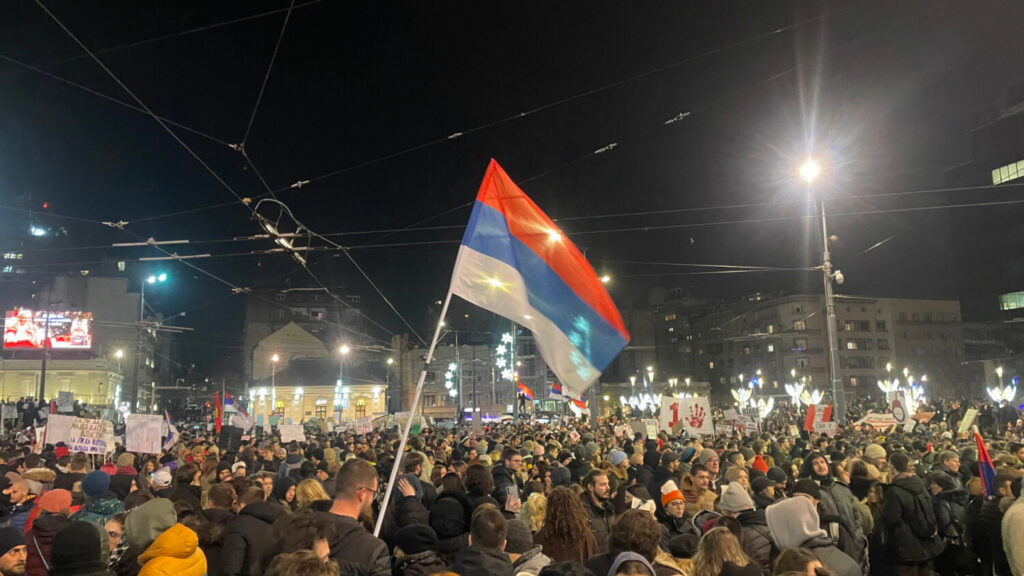
Late this October, in a historic win over long-standing Prime Minister Aleksander Vučić, the Serbian Student List party delivered a crushing electoral defeat, ending the 14-year reign of Vučić and his Serbian Progressive Party (Gola, 2026). Student List has been active as a student-led, anti-corruption movement since 2024, when outrage erupted over the collapse of a concrete canopy at the Novi Sad train station, a tragedy that caused the deaths of 16 people and was largely attributed to government corruption and negligence. The movement has since grown into a highly influential political force, mobilizing anti-corruption and anti-government voters from all walks of life (Kirby, 2026).
While the Student List victory is emblematic of a shift in Serbian politics and a rejection of the old political regime, their accession to government also raises questions about Serbia’s future and political agenda. Although the movement has gained significant traction among voters, it is unique in the modern political world because it has no obvious leader and no clear political or party structure. In fact, out of the 250 candidates fielded for Parliament by the party, no students are among them (Kirby, 2026). This decision was largely made out of the belief that voters would not entrust their support to those without acquired life experience; however, the question still remains how the party will form a government, carry through its many institutional promises, and how its chosen candidates will maintain their relationship with the students that initiated the movement in the first place. The Student List has gained a major political victory by positioning itself as a grassroots campaign for “ordinary people”, but many risks remain post-election. Given that Student List’s success depended largely on those who had become disillusioned with the corrupt governing body of the SNS, their success, or lack thereof, in creating a stable, reformed government could shape the stability of the Serbian political environment for years to come.
If not students, then who?
Although the students themselves did not stand as parliamentary candidates, it is clear that those chosen were selected for a very particular purpose. Specifically, the candidates largely come from sectors outside the traditional political class, including professors, doctors, artists, and businesspeople (Bertuzzi, 2026). One of the most prominent Student List candidates, Ilija Srdanović, led a career as a cardiologist before turning to politics, and another, Dejan Šoškić, who is a frontrunner for Prime Minister, was the former governor of the Serbian National Bank (Kirby, 2026).
While this strategy certainly does help maintain the credibility of the anti-corruption movement, grounding it in “the people”, it also has many practical implications. Student List has said they chose candidates who are “individuals of diverse ages, professions, backgrounds, and life stories,” and who “see daily how the country functions when institutions do their job, and what happens when they do not” (Student List). The students chose “ordinary people” who have long lived as regular Serbian citizens and who have seen the reality that the country faces. They are not candidates so removed from civilian life that they prioritize only their own political motivations. As the students declare on their website: “We sought people who we believe can enter the institutions, perform their duties responsibly, and never forget who they are” (Student List, 2026).
Additionally, as a parliament seen as the “brainiest” in the world, the students of Student List also seem to prioritize professional skills when choosing their candidates (Dauenhauer and Tatalović, 2026). They have constructed a government filled with educators, farmers, physicians, and economists, all of whom possess the practical skills and professional knowledge to take on the problems that Serbia currently faces, especially after years of democratic and academic erosion under Vučić.
Out of a movement founded on protesting political corruption, it appears that those deemed “ordinary citizens”, separated from politically established elites, have come out as those favored by the disillusioned population of Serbia. What remains to be seen is whether the diverse experience of these political “outsiders” will allow them to deliver for the people in ways traditional politicians have not.
The Mission of Student List
Student List has maintained a strong focus on domestic objectives aimed at addressing institutional corruption within Serbia. Their Student Plan, founded on the notion that only true institutional reform will bring about a brighter future, focuses on separating institutions from direct party rule to ensure a functioning democratic government (The Student List, 2026). This goal is broken down into an 11-step program which includes eradicating corruption by arresting those found responsible, purging officials in the internal affairs ministry who illegally cracked down on protesters or who are linked to organized crime, freeing the public media and broadcasting system from government control, and stopping the recruitment of party loyalists as heads of public enterprises (Kirby, 2026).
Institutional reform of this scale is certainly ambitious, as the student movement acknowledges in its Student Plan introduction. According to outgoing Serbian MP from the Green-Left Front, Dobrica Veselinović, three priorities should come first in order to truly change the political landscape as the Student List has promised: a fairer media landscape, electoral conditions people can trust, and the reform of the judicial system so that people can once again trust in equality before the law (Gola, 2026).
The Future of Serbia
As many across the Serbian and European political scenes have said, the Student List victory certainly brings a great deal of hope and possibility for Serbia and its political future; however, this period of transition also brings a degree of uncertainty. One of the primary questions remaining is how the political party will continue working with the students who founded the movement now that elections have ended. In a strong show of commitment, the movement’s website has stated that all candidates included on the Student List signed a statement, declaring that they would always commit themselves to the platform of the movement and that they would never perform any action harmful to the Serbian Constitution or Serbian democracy (The Student List, 2026). Students, trusting they have placed the right people in government, have now said they will take a “less active role”, acting as “advisers” and “supervisors” (de Launey, 2026). While there is no official student advisory body, students’ ability to form powerful grassroots movements is also likely to be a key factor in keeping their politicians in check.
The Student List also faces the possibility of significant pushback from Vucić’s SNS party, which still holds a significant number of seats in the country’s parliament. Throughout its political regime, SNS has long depended on a system of patronage, trading coveted public-sector positions for party loyalty (Eror, 2026). While Student List successfully defeated this system of party loyalty in elections, it still exists within Serbia and could prove problematic to the full implementation of the Student List agenda.
The students and candidates of Student List have won a historic victory that offers hope for Serbian policy, both at home and abroad. Both the institutional promises and the potential for a renewed bid to the European Union have produced a great deal of hopeful anticipation for those within Serbia and in the international community (Bertuzzi, 2026). However, winning an election is one thing; establishing an entirely new political order is another. If the Student List is unable to form a stable government, or enact the promised change, the little trust that remained in government for many Serbian voters may deteriorate further. As in many cases of victorious progressive, anti-corruption parties worldwide, the fate of Serbian democracy relies not only on reformist parties taking power, but also on them enacting tangible change.
Sources:
Bertuzzi, L. (2026) Serbia’s student victory raises hopes of EU reset, euronews. Available at: https://www.euronews.com/2026/10/26/serbias-student-victory-raises-hopes-of-an-eu-reset (Accessed: 19 November 2026).
Comak, S. (2026) Students’ list candidates take seats after historic election win as Serbian Parliament opens, dw.com. Available at:
https://www.dw.com/en/students-list-candidates-take-seats-as-serbian-parliament-opens/a-79969 166 (Accessed: 19 November 2026).
Dauenhauer, N.J. and Tatalović, M. (2026) Serbia has just elected the smartest parliament in the world , Science. Available at: https://studenti.org.rs/en/vesti/science_pametni/ (Accessed: 26 November 2026).
De Launey, G. (2026) ‘“Swift justice”: Student List supporters focus on cleaning up Serbia’s rotten institutions’, The Guardian, 30 October. Available at: https://www.theguardian.com/world/2026/oct/30/student-list-focus-on-cleaning-up-serbia-corruption (Accessed: 19 November 2026).
Eror, A. (2026) Serbia’s student movement faces its next test, Foreign Policy. Available at: https://foreignpolicy.com/2026/11/11/serbia-parliament-elections-vucic-corruption-student-move ment-sns-student-list/ (Accessed: 26 November 2026).
Gola, G. (2026) How Serbia’s student list won and what comes next: Q&A with Dobrica Veselinović, International IDEA. Available at:
https://www.idea.int/blog/how-serbias-student-list-won-and-what-comes-next-qa-dobrica-veselin ovic (Accessed: 19 November 2026).
Kirby, P. (2026) Serbia’s student movement: How and why students brought down Vučić, BBC News. Available at: https://www.bbc.com/news/articles/c574pvy82k0mo
The Student List (2026) Студенти побеђују. Available at: https://studenti.org.rs/en/plan/ (Accessed: 19 November 2026).
Image source: Stefan Miljuš / Voice of America (VOA), 22 December 2024. Protest at Slavija Square, Belgrade, Serbia. Public domain.