Central Asia: Conflict Potential in the Amu Darya & Syr Darya River Basins
The Amu Darya and Syr Darya rivers are the two most important rivers in Central Asia, rising in Tajikistan and Kyrgyzstan respectively. The Central Asian republics can be divided into two groups – upstream (Tajikistan, Kyrgyzstan) and downstream countries (Kazakhstan, Turkmenistan, Uzbekistan). However, Kyrgyzstan and Tajikistan’s geographic position, lack of energy resources, and dependence on water for energy production cause them to restrict the water flow to the downstream countries. Thus, exacerbated by the impacts of climate change, the situation might lead to an armed interstate conflict.
Explaining the Water Issue
To begin with, Central Asia has significant energy resources, but they are distributed unequally. While the water-rich upstream countries possess basically no hydrocarbon resources, the downstream countries have access to most of the region’s oil and gas reserves. In order to tackle this issue, Moscow put an exchange system in place during the days of the Soviet Union. As a result, water from upstream countries was exchanged for energy provided by the downstream countries. However, when the USSR dissolved and the administrative boundaries of Central Asian republics became international borders, the exchange system proved to be difficult to maintain.
The newly independent republics signed the Almaty Agreement in 1992, in which they agreed to uphold the system. Yet, the rising nationalism led the states to seek self-sufficiency and greater independence. Eventually, as the republics started to perceive the question of water as a zero-sum game, mounting tensions led to gradual dissolution of the Almaty Agreement which was abandoned first by Turkmenistan (2003), and subsequently by Kazakhstan and Uzbekistan (both 2009). The issue is further exacerbated by inefficient water distribution and outdated infrastructure. According to Gasparri (2018), approximately 79% of Central Asia’s irrigated water is wasted through leaks and evaporation.
This article will analyse the potential of water-related interstate conflict based on four conditions introduced by Homer-Dixon (1999): (1) the downstream country must be highly dependent on the water for its national well-being, (2) the upstream country must be threatening to substantially restrict the river’s flow, (3) there must be a history of antagonism between the two countries, and, most importantly, (4) the downstream country must be militarily stronger than the upstream country.
Threat to the National Well-being
Agriculture plays a major role in Uzbekistan and Turkmenistan’s well-being, but less so in the case of Kazakhstan. In 2019, agriculture constituted 25% of Uzbek GDP whilst irrigated land, which draws water predominantly from the two rivers, accounted for over 90% of crop production. Additionally, approximately one third of irrigated land is devoted to cotton which is strategically important, but also heavily water demanding. In Turkmenistan, agriculture represented only 9.3% of GDP in 2015, however, almost one third of the population worked in the sector in 2012. Moreover, as 80% of the country is covered by the Kara-Kum desert, Turkmenistan is also heavily dependent on water from the Amu Darya river for irrigation and for delivering it to the densely populated southern region through the Kara-Kum canal. Finally, agriculture is less important in Kazakhstan, constituting only 4.4% of GDP (2019) and employing 14% of economically active population. Moreover, Kazakhstan has other important sources of water and the water derived from the Syr Darya accounts only for 13% of the total. Thus, while it can be argued that Uzbekistan and Turkmenistan are highly dependent on the two rivers for their national well-being, the Syr Darya plays a lesser role in Kazakhstan.
Threat to the River’s Flow
Due to Kyrgyzstan and Tajikistan’s lack of natural resources for energy production, they are highly dependent on hydropower plants. In 2015, electricity produced from hydroelectric sources accounted for 85.2% of the total in Kyrgyzstan and 95.5% in Tajikistan. However, the use of hydropower plants restricts the water flow to the downstream countries. Most recently, there were tensions related to two proposed water dams – Kambarata-1 in Kyrgyzstan (Syr Darya) and Rogun in Tajikistan (Amu Darya). Besides, there are other planned projects, such as the Upper Naryn Cascade which should lead to construction of hydropower plants in Kyrgyzstan. As Uzbekistan and Turkmenistan are heavily dependent on the two rivers, virtually any restriction of waterflow might have a considerable impact.
History of Antagonism
As outlined above, the history of both upstream and downstream nations has been marked by water-related antagonism since independence. In 2019, The Pacific Institute identified 14 such conflicts out of which 10 occurred between two or more countries. Most of the remaining incidents unfolded on a local level, usually between farmers of different ethnicities. For example, in 1997, Uzbekistan deployed 130,000 troops on the Kyrgyz border after tensions between the two countries intensified. In 2012, the late president of Uzbekistan, Islam Karimov, warned of confrontations and the potential for war resulting from the proposed Kyrgyz and Tajik dams.
Besides access to water, there were other issues which embittered relations between the Central Asian republics, such as border disputes and animosity between leaders. The borders, which served only an administrative role under the USSR, were drawn artificially and left behind messy delineations with numerous enclaves, especially in the Ferghana Valley. The most notable example of bad personal relations was the hostility between the Uzbek president Karimov and the Tajik president Emomali Rahmon. Relations between the countries have undeniably been affected by years of enmity.
Military Strength
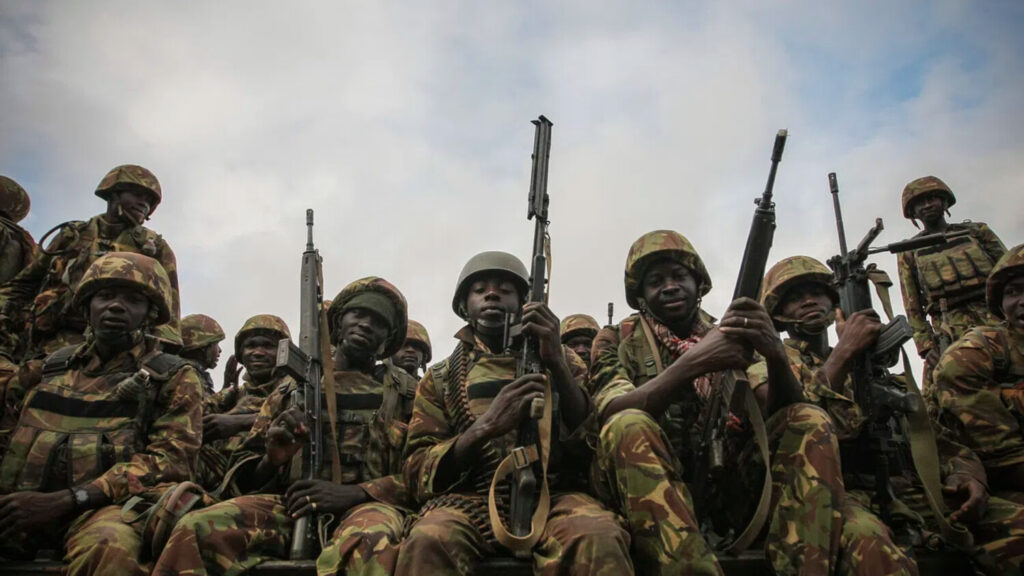
All three downstream countries are militarily stronger than Kyrgyzstan and Tajikistan. According to the Global Firepower Index (2020), Kazakhstan has 135,000 military personnel at its disposal, followed by Uzbekistan (50,000) and Turkmenistan (22,000). In contrast, Kyrgyzstan and Tajikistan are far behind with 11,000 and 9,000 men, respectively. Similarly, the downstream countries are superior in both airpower and other land forces. Furthermore, the aforementioned incidents which led to the deployment of Uzbek troops, and to the strong rhetoric of Islam Karimov, suggest that the upstream countries, Uzbekistan in particular, are confident in their strength and would be willing to use force in order to achieve their goals.
The above analysis suggests that the Amu Darya & Syr Darya river basin has a significant conflict potential. While Syr Darya does not play such an important role in case of Kazakhstan, both Turkmenistan and Uzbekistan are highly dependent on the two rivers for their national well-being. Moreover, as Kyrgyzstan and Tajikistan lack resources and need hydropower for energy generation, they threaten to further restrict river flow with construction of new dams. There is also a history of antagonism between the upstream and downstream countries, both related to water and otherwise. Finally, and perhaps most importantly, all upstream countries are considerably stronger militarily than the downstream countries.
A Brighter Future? Perhaps Not
After the incumbent Uzbek president, Shavkat Mirziyoyev, assumed power following the death of his predecessor, he significantly changed the foreign policy of Uzbekistan, leading to the improvement of relations with the remaining Central Asian republics – especially, Kyrgyzstan and Tajikistan. In 2017, Uzbekistan and Kyrgyzstan signed an interim border agreement while the Uzbek company, Uzbekhydroenergo, agreed to take part in the construction of the Kambarata-1 dam. Similarly, during a historic visit to Tajikistan, Mirziyoyev and Rahmon signed agreements on border demarcation and, most importantly, Uzbekistan dropped objections to the building of the Rogun dam. These developments indicate a willingness and ability to co-operate on a variety of regional issues, including water sharing and management.
But, although the agreements might appear as a case for optimism, it would be premature to discard the possibility of an armed conflict. While the rapprochement between the countries is undoubtedly a welcome move, cooperation is rather limited. Moreover, due to the distribution of natural resources, the upstream and downstream countries are highly interdependent. Therefore, it is fair to assume that in order to tackle the water-related issues successfully, the Central Asian republics would have to pursue joint regional initiatives with long-term vision and objectives. Such a move would be pertinent in the face of the climate change. According to a USAID report (2018), average temperature increases in the region are likely to reach 2°C by 2050. This would, in turn, mean that the mountain glaciers, which supply the two rivers with water, could lose about 50% of their volume. Such developments would have significant impact on river flows and, subsequently, on agriculture. Thus, it can be expected that access to, and management of, water resources will continue to pose a security risk in Central Asia in the foreseeable future. Unless the leaders start seeking tangible regional cooperation, the risk of an armed conflict will likely increase.
References:
Egamov, A. and Sattarov, R., 2018. A new era for Uzbekistan. [online] Atlantic Council. Available at: <https://www.atlanticcouncil.org/blogs/new-atlanticist/a-new-era-for-uzbekistan/> [Accessed 11 February 2021].
Food and Agriculture Organization of the United Nations, 2012. Country Profile – Kazakhstan. [online] Food and Agriculture Organization of the United Nations. Available at: <http://www.fao.org/3/CA0366EN/ca0366en.pdf> [Accessed 10 February 2021].
Food and Agriculture Organization of the United Nations, 2012. Country profile – Turkmenistan. [online] Food and Agriculture Organization of the United Nations. Available at: <http://www.fao.org/3/ca0371en/CA0371EN.pdf> [Accessed 10 February 2021].
Food and Agriculture Organization of the United Nations, 2021. Country profile – Uzbekistan. [online] Food and Agriculture Organization of the United Nations. Available at: <http://www.fao.org/3/CA0372EN/ca0372en.pdf> [Accessed 10 February 2021].
Gasparri, G., 2018. Water and Climate in Central Asia: From Conflict to Cooperation. [online] European Institute for Asian Studies. Available at: <https://www.eias.org/eu-asia-at-a-glance/water-and-climate-in-central-asia-from-conflict-to-cooperation/> [Accessed 10 February 2021].
Global Fire Power, 2020. Global Fire Power Nations Index (2020). [online] Available at: <https://www.globalfirepower.com/countries.asp> [Accessed 11 February 2021].
Homer-Dixon, T., 2010. Environment, Scarcity, and Violence. Princeton University Press, pp.179-180.
International Crisis Group, 2014. Central Asia: Water and Conflict. [online] International Crisis Group. Available at: <https://www.crisisgroup.org/europe-central-asia/central-asia/uzbekistan/central-asia-water-and-conflict> [Accessed 10 February 2021].
Nurshayeva, R., 2012. Uzbek leader sounds warning over Central Asia water disputes. Reuters, [online] Available at: <https://uk.reuters.com/article/centralasia-water/uzbek-leader-sounds-warning-over-central-asia-water-disputes-idUSL6E8K793I20120907> [Accessed 11 February 2021].
Pacific Institute, 2019. Water Conflict Chronology. [online] World’s Water. Available at: <https://www.worldwater.org/water-conflict/> [Accessed 11 February 2021].
Pannier, B., 2017. Kyrgyzstan’s Hard-Luck Hydropower Project. RadioFreeEurope/RadioLiberty, [online] Available at: <https://www.rferl.org/a/qishloq-ovozi-kyrgyzstan-hydropower-project-liglass-naryn-cascade/28627251.html> [Accessed 11 February 2021].
Reyer, C., Otto, I. and Adams, M., 2015. Climate change impacts in Central Asia and their implications for development. . Regional Environmental Change, [online] 17(6), pp.1639-1650. Available at: <https://link.springer.com/article/10.1007/s10113-015-0893-z#citeas> [Accessed 11 February 2021].
USAID, 2018. Climate Risk Profile: Central Asia. [online] USAID. Available at: <https://www.climatelinks.org/sites/default/files/asset/document/2018-April-30_USAID_CadmusCISF_Climate-Risk-Profile-Central-Asia.pdf> [Accessed 11 February 2021].
World Bank, n.d. Agriculture, forestry, and fishing, value added (% of GDP) – Turkmenistan, Uzbekistan, Kazakhstan | Data. [online] Data.worldbank.org. Available at: <https://data.worldbank.org/indicator/NV.AGR.TOTL.ZS?locations=TM-UZ-KZ> [Accessed 10 February 2021].
Zakhirova, L., 2013. The International Politics of Water Security in Central Asia. Europe-Asia Studies, [online] 65(10), pp.1994-2013. Available at: <https://www.tandfonline.com/doi/full/10.1080/09668136.2013.848647>.