Abu Dhabi’s Strategic Footprint in Sudan’s Civil Conflict
In November 2025, US President Donald Trump claimed that he will resolve the Sudanese crisis at the request of Saudi Crown Prince Mohammed bin Salman. He also stated that such challenges can and will be resolved by international cooperation and coordination, adding that he is working toward that goal.
Sudan has been gripped by the vicious cycle of civil war since 2023, when a power struggle erupted between Sudanese Armed Forces (SAF) led by General Abdel Fattah al-Burhan and a powerful paramilitary group, the Rapid Support Forces (RSF) led by General Mohamed Hamdan Dagalo, also known as Hemedti. As a result, more than 150,000 people have died in the violence across the country, and around 12 million have left their homes, creating what the United Nations calls the world’s largest humanitarian crisis.
However, the international community, particularly the United States and its allies, has made efforts earlier to intervene and mediate the conflict. The most visible effort to seek peace may be found in the Jeddah platform – multiple rounds of discussions arranged by the United States and Saudi Arabia that began shortly after the war broke out. However, the SAF and RSF have consistently failed to follow their commitments to protect civilians and uphold international humanitarian law.
This reveals that the United States’ efforts to mediate what is commonly referred to as the “Forgotten Sudan War” is not new. In fact, Washington’s key Arab allies such as Saudi Arabia, United Arab Emirates (UAE), etc. have a considerable presence in the conflict zone. However, rather than de-escalating the situation, their interventions have frequently appeared to exacerbate tensions, as Saudi Arabia and others have supported Sudan’s armed forces, while the UAE has backed the Rapid Support Forces, a paramilitary group fighting the military that is expanding its strategic influence on African territory.
Furthermore, not only have the United States and its allies attempted to mediate the crisis through various channels, but many other countries such as Turkey, Egypt, Qatar, UK, Russia through the Wagner Group, and Ukraine have also tried the same. Yet rather than resolving the issue, many of these external actions have worsened it, thereby turning Sudan into a proxy battleground for settling geopolitical disputes.
Almost every international actor participating in Sudan is ultimately looking after its own national interests. Yet among all of them, the UAE’s name stands out most prominently in discussions surrounding the Sudan conflict. A recent example is the rising hashtag #HabibiBoycottDubai, which has sparked considerable public outrage on social media. Despite the involvement of numerous other actors, the UAE has been accused more frequently and harshly of stoking the civil war.
Countries such as Russia, through the Wagner Group, are said to have sent mercenaries from numerous African governments to fight with the RSF. Turkey has also been linked to the fighting, with corporations affiliated with the Turkish Prime Minister’s son-in-law allegedly sending weaponry and drones to various sides. However, none of these actors has received as much continuous international attention as the UAE.
This raises a key question: why is a close American ally accused of aggravating the crisis, despite being one of the greatest sources of humanitarian relief to the Sudanese people? To understand this contradiction, we must look at the UAE’s strategic goals, regional ambitions, and the larger geopolitical forces surrounding the conflict.
From Historical Engagement to Strategic Ambitions
Sudan and the UAE have had tight ties since the early 1970s, with collaboration ranging from infrastructure and labour agreements in 1981 to significant investments in energy, transportation, and economic projects. The UAE backed Sudan politically by resolving the 2009 Chad border conflict, and Sudan later sided with Gulf interests by closing Iranian cultural institutions in 2014. The entire bilateral relation trajectory shows that both countries have satisfied their respective national interests through timely financial, cultural, and diplomatic collaboration.
Moreover, on the economic front by 2008, the UAE had become Sudan’s second-largest investor with $7 billion in investments, while bilateral trade – 90% of which passed through Dubai – increased by more than 30% every year. However, the relationship is mutually dependent, with the UAE relying significantly on Sudan for crucial resources. Due to scarcity of water and arable land, the UAE imports over 90% of its food, making Sudan critical to its food security.
In recent years, the UAE has made significant investments in Sudan’s agriculture, including the IHC-Dal Group-led Abu Hamad project which spans over 162,000 hectares of land and connects to AD Ports’ new Abu Amama Red Sea port, with Sudan receiving 35% of the earnings. The $6 billion port project strengthens the UAE’s influence over Sudan’s land and commercial lines, advancing Emirati military, security, and logistical objectives.
Decoding the Emirati–Sudanese Strategic Entanglements
These financial figures show that UAE–Sudan relations have grown over the years, but the benefits have been unequal. While Sudan gained economically, through agricultural development, improved connectivity, and new infrastructure, the UAE maintained the upper hand by fulfilling its own strategic needs while making Sudan increasingly dependent on Emirati capital and resources. Arendt notes, knowledge is a form of power, and the UAE utilised its advantage to change Sudan’s territory, exports, and trade routes in its favour. Sudan met its urgent financial requirements while steadily compromising its sovereignty, with projects such as the Abu Amama Red Sea port demonstrating how firmly the UAE’s strategic interests were embedded in Sudan.
The key question is why the UAE has become entangled in Sudan’s civil war. As a significant investor, it would typically want a stable, civilian-led government to protect its projects and secure ongoing economic and strategic gains. However, Emirati investments have long met local opposition, owing in large part to Abu Dhabi’s refusal to enter into true mutual agreements. In the years preceding the conflict, Sudan’s government rejected numerous Emirati agricultural projects for generating disproportionate profits to the UAE while providing minor benefits to local residents, highlighting the extractive character of their investment policy.
When its land acquisition efforts failed, the UAE began relying on the RSF to protect its interests. Its partnership with General Hemedti began in 2018, when it generously paid him to deploy thousands of RSF fighters to support its war efforts against the Houthis in Yemen, the deal boosted RSF’s wealth and power significantly.
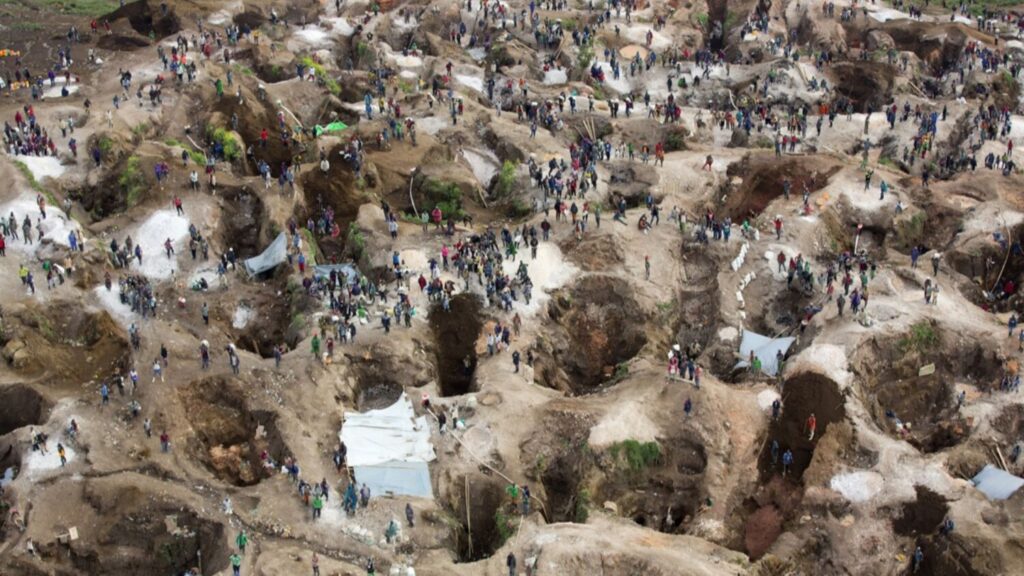
Thus, in investment negotiations, the RSF emerged as a more “practical” partner for the UAE than Sudanese firms or state agencies, as it could guarantee access to gold – due to its control over some of Sudan’s gold mines and alleged smuggling of the element to the UAE – and future agricultural output while ignoring public accountability concerns.
The UAE promotes itself as a global advocate for diplomacy and humanitarian help. It also stages official neutrality and pledges of hundreds of millions of dollars in humanitarian relief for Sudanese refugees. But numerous evidence shows that under the premise of assisting Sudanese refugees, Abu Dhabi allegedly conducted covert operations such as a using new 50-bed field hospital in Amdjarass to support the RSF, supply weaponry and drones, treat injured fighters, and airlift the most serious cases to the UAE using the Red Crescent – one of the world’s most trusted humanitarian symbols – as a cover to transport drones and smuggle weapons.
All such instances are verified by various credible international reports and thus shows that Abu Dhabi has fuelled the civil war while undermining Sudan’s post-2019 democratic transition by supporting the RSF.
According to experts, the UAE is using its influence not just in Sudan but also across neighbouring countries to secure its strategic position. Kenya’s decision to host RSF-led discussions without the SAF, the Libyan National Army’s (LNA) military exports to the RSF, and the increase in Emirati cargo flights to Amdjarass – all followed high-level visits by these countries’ leaders to Abu Dhabi. Chad, for example, saw increasing Emirati involvement shortly after President Mahamat Idriss Déby obtained a $1.5 billion loan from the UAE, which is nearly equal to the country’s annual budget of $1.8 billion.
Intersecting Emirati and Western Agendas in Sudan
Taken together, these developments illustrate that for Abu Dhabi, the Sudan conflict is not merely a war but part of a broader strategy to consolidate power across a resource-rich yet underexplored African region. Such influence is made possible not only by the UAE’s own wealth and diplomatic reach, but also by the direct or indirect support of international partners who provide it with armaments and insulate it from significant consequences. Despite Sudan’s efforts to bring the problem before international bodies such as the International Court of Justice, the UAE continues to purchase weapons from major global manufacturers and benefits from geopolitical alliances that shield it from serious accountability.
The key backers shielding Abu Dhabi’s influence include major arms suppliers and geopolitical partners, most notably the United States, of which the UAE is one of the world’s largest purchasers of military equipment. This relationship raises concerns about Washington’s responsibilities to monitor where Emirati-supplied weapons end up, particularly after credible confirmations. Analysts also believe that the UAE’s massive investment in Africa aims to offset Chinese influence, with Abu Dhabi receiving implicit US security guarantees in return. However, the United States’ fears about the Emirates’ growing ties with Russia’s Wagner mercenaries and Chinese players in African regions are not secret.
Meanwhile, the UK – the UN Security Council’s “penholder” on Sudan – has avoided mentioning individual governments in its resolutions. For example, a resolution asking governments to avoid external meddling and observe the Darfur arms embargo made no explicit mention of the UAE or Iran, both of whom have been accused of aiding opposing Sudanese forces. According to reporting by The Guardian, the UK’s Foreign, Commonwealth and Development Office (FCDO) even pressured African diplomats not to criticise the UAE.
Though the current circumstance highlights the RSF and its role in igniting the Sudanese civil war, the SAF, like the RSF, is complicit in war crimes. It is also involved in its fair share of war crimes, bombing civilians indiscriminately and arresting, torturing, and executing them. It receives financial and military backing from Saudi Arabia, Iran, Turkey where Saudi Arabia tries to offset the UAE’s influence in Sudan. Thus, both the SAF and the RSF have perpetrated war crimes, crimes against humanity, and ethnic cleansing. As a result, 6.8 million people have been internally displaced, 2 million have fled the country, and 24.8 million, or over half of the population, require humanitarian aid.
A Constructive Way Forward Centered on Humanity
The entire scenario suggests that the Sudan’s war is no longer just a national tragedy; it is a reflection of the global system’s failure. The UAE, Saudi Arabia, the United Kingdom, the United States, and other powerful parties continue to deny their involvement in deteriorating the situation, despite the fact that their fingerprints can be seen at every level of the war.
What has unfolded is not just a conflict between the SAF and the RSF, but a geopolitical chessboard in which powerful states use fragile nations to settle their own scores. The human cost of these actions is enormous. Entire populations have been displaced, boundaries have been destabilised, and bordering countries have been overrun. Finally, the consequences of this contrived instability extend well beyond Africa, fuelling refugee crises, supporting organised crime networks, and allowing extremist organisations to exploit the vacuum.
The worst aspect of the peacemaking process is that individuals who preach peace in global forums frequently facilitate violence through silence, arms deals or strategic alliances. These double standards have enabled the crisis to spread. A genuine path forward requires accountability not only for armed groups on the ground, but also for the powers that provide covert support to sustain them. Until that happens, Sudan will be caught in a cycle imposed not by its people, but by powers from far beyond its boundaries.
Sudanese civilians need not only compassion; they deserve a world community that prioritises human lives before a political chessboard. Only then can the long-awaited promise of peace start to take root.
References
- Soliman, A., Baldo, S., & XCEPT. (2025). Gold and the war in Sudan. In Chatham House, Chatham House.
- Wintour, P. (2025b, May 6). Sudan to cut ties with United Arab Emirates over alleged RSF support. The Guardian.
https://www.theguardian.com/world/2025/may/06/sudan-to-cut-ties-with-united-arab-emirates-over-alleged-rsf-support - UAE Urges End to Sudan Conflict Amid Escalating Disinformation from Port Sudan Authority. (n.d.).
https://www.mofa.gov.ae/en/mediahub/news/2025/8/10/10-8-2025-uae-sudan - Townsend, M. (2025, April 15). Leaked UN experts report raises fresh concerns over UAE’s role in Sudan war. The Guardian.
https://www.theguardian.com/global-development/2025/apr/14/leaked-un-experts-report-raises-fresh-concerns-over-uaes-role-in-sudan-war - Yibeltal, W. C. &. K. (2025, May 7). Sudan cuts ties with UAE over alleged RSF support as drone strikes on Port Sudan continue.
https://www.bbc.com/news/articles/cly1ygvxvq3o - Talking peace in Sudan, the U.A.E. secretly fuels the fight. (n.d.).
https://www.nytimes.com/2023/09/29/world/africa/sudan-war-united-arab-emirates-chad.html - Horner, J. (2025, February 27). Split decision: Why Sudan is on the brink of partition—again. ECFR.
https://ecfr.eu/publication/split-decision-why-sudan-is-on-the-brink-of-partition-again/ - Global Initiative Against Transnational Organized Crime. (2025, November 27). The illicit transnational supply chains sustaining Sudan’s conflict | Global Initiative. Global Initiative.
https://globalinitiative.net/analysis/the-illicit-transnational-supply-chains-sustaining-sudans-conflict/