Columbia turns right?
The 2026 presidential runoff tests Gustavo Petro’s “total peace” legacy as Colombia weighs security, economic stability, and its geopolitical future.
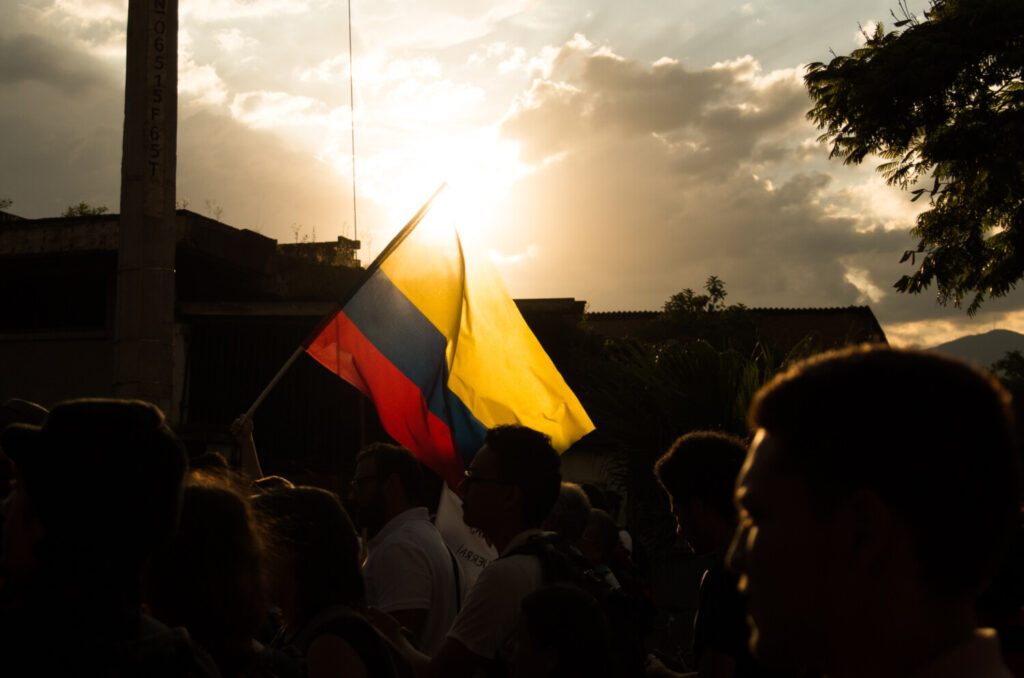
Colombia’s election was turned upside down by the populist right-wing Abelardo De La Espriella’s unexpected first‑round victory. The second round on June 21 — a contest between De La Espriella and the incumbent, left-wing Pacto Histórico’s Iván Cepeda’s unexpected first-round victory is an indictment of incumbent President Gustavo Petro’s administration. With the more moderate conservative Paloma Valencia out of the race, Petro’s legacy, including his faltering “total peace” efforts to encourage Colombia’s numerous criminal organisations to lay down their arms, is under intense pressure from De La Espriella’s strongman mano dura (iron fist) approach (Acosta, 2026).
An Economy in Flux
President Petro has pursued left‑wing policies to reduce the private sector’s role in public service provision (EFE, 2023). His efforts to reform the health, energy, and pensions sectors have increased the powers of regulatory bodies, prompting a fall in private investment and a rise in regulatory uncertainty (Breier and Holguín, 2024). Overall, the economic picture looks mixed: a resilient private sector and public spending are holding up against rising public debt and Colombia’s high exposure to volatile commodity prices. Uncertainty during the electoral cycle and possible policy discontinuity depending on the outcome are weighing on the country’s short‑term outlook (Allianz, 2026).
Colombia’s energy sector is under pressure from insecurity in oil‑producing areas, dwindling proven oil reserves, and restrictions imposed on the industry under Petro (Smith, 2025). His administration plans to diversify Colombia’s extractives sector using its untapped critical minerals deposits, which are vital to advanced and clean energy manufacturing (ITA, 2026). Whereas Cepeda is likely to continue Petro’s energy transition policies (which have reduced confidence in the mining sector), De La Espriella has pledged to ease regulatory pressure and improve security around mining sites (Jamasmie, 2026).
The Iron Fist
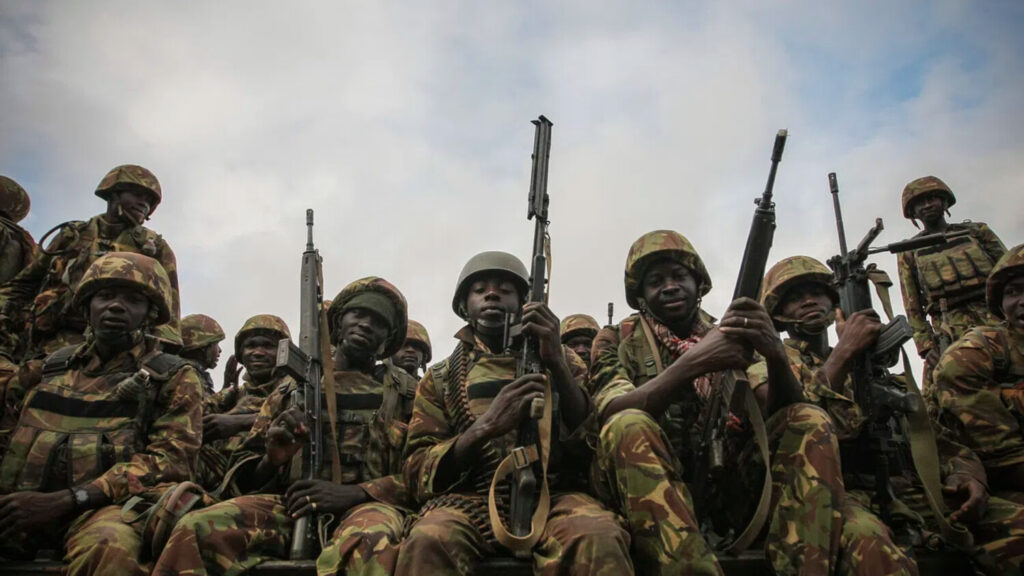
Petro’s approach towards Colombia’s long‑running internal conflict departed from the militarized strategy of his predecessors. For decades, successive Colombian governments strengthened the armed forces and fumigated the illicit coca crop through the US‑backed Plan Colombia (2000–16) framework (Cosoy, 2016). Some previous negotiations with criminal non‑state armed groups (NSAGs) had taken place, most notably the 2016 peace agreement between the government and the Revolutionary Armed Forces of Colombia (FARC). Petro’s total peace strategy instead focused on simultaneous negotiations with all NSAGs and on resolving underlying causes of the conflict — economic inequality and normalizing relations with an unstable Venezuela (IISS, 2023, p. 24).
The total peace approach has had limited success, as NSAG splinter groups proved uncooperative and diversified into new illicit enterprises. Progress in redistributing land in conflict‑hit areas is overshadowed by record‑breaking coca production and stalled negotiations with large NSAGs such as the National Liberation Army (ELN) and the Gulf Clan. Violence has continued as those organisations and FARC splinter groups filled the vacuum created by the FARC’s demobilization, competing for control of territory, displacing tens of thousands, and violently disrupting the electoral process (Torrado, 2026).
A reduction in military pressure on NSAGs also granted them space to diversify into new illicit revenue streams, such as mining and human trafficking, thereby enhancing their negotiating position against the government (Breda, 2024). The diversification, together with decades of military pressure inside Colombia, has culminated in NSAGs operating across remote border regions in Ecuador and Venezuela, as well as forging new relationships with Brazilian and European organised crime (Stacey, 2025). Whereas Cepeda has pledged to continue the total peace programme, De La Espriella promises renewed military operations against NSAGs — possibly halting their expansion but entailing a dramatic escalation in state‑NSAG violence (Suarez, 2026).
Mano Dura Goes Global
De La Espriella would likely realign Colombia’s foreign policy rightwards and embrace Argentina’s Javier Milei and El Salvador’s Nayib Bukele, who inspired his state‑retrenchment and mano dura policies respectively (Johnston and Santamaría, 2026). This is also practical: making amends with Ecuador’s Daniel Noboa over escalating cross‑border criminality and restoring military cooperation with Israel and the US would strengthen the government’s position vis‑à‑vis NSAGs (Calanche, 2026; Ynet, 2026). To the chagrin of Brazil’s President Lula, a right‑wing Colombia would deepen the US presence in the region (Mares, 2012, p. 138). Given Colombia’s past experience training law‑enforcement personnel across Latin America, the Trump Administration’s militarized regional “war on drugs” policy could be reinforced by De La Espriella’s victory (Marczak, 2025).
More nuanced is the debate over Colombia’s relationship with China. Whereas past administrations were open to limited cooperation, Petro reversed this by acceding to China’s Belt and Road Initiative in 2025 (Jones, 2025). His economic hedging against the US alarmed the Trump Administration, which fears one of its largest Latin American trade partners becoming integrated into Chinese supply chains (Khaliq and Gamba, 2025). So far, De La Espriella has taken a pragmatic stance towards China; his campaign has focused on domestic issues, and in power he could emulate right‑wing Chilean President Antonio Kast by preserving economic links to China while aligning diplomatically with the Trump Administration (Flowerree, 2026).
Venezuela’s economic collapse and the plight of millions of Venezuelan refugees in Colombia have been used by De La Espriella to stoke fears of socialist mismanagement under Cepeda (Riva, 2026). Geopolitical competition in Venezuela is likely to ease after the US hobbled China, Iran, and Russia’s influence by installing President Delcy Rodríguez in January (Berenhold, 2026). But Venezuela is by no means stabilised Colombian NSAGs and Venezuelan actors such as the paramilitary Collectivos and the criminal Tren de Aragua organisation are likely to compete for control over Venezuela’s cocaine transit routes and its thriving illicit economy (Mia, 2026).
Outlook
The runoff between Cepeda and De La Espriella leaves Petro’s moribund total peace in the balance. Either candidate will contend with regional instability driven by escalating violence against elected officials, NSAG entrenchment, and swingeing US aid cuts that impede governments’ ability to restore territorial integrity or support vulnerable communities (IISS, 2026, p. 38). While Petro increased funding for neglected rural areas hotbeds of NSAG violence a premature about‑face under mano dura would curtail the initiative before it could bear fruit (Johnson and Santamaría, 2026).
Bibliography
Acosta, L.J. (2026) Colombia’s ‘outsider’ candidate De La Espriella vows military crackdown to boost economy. Reuters. [online] Available at: https://www.reuters.com/world/americas/colombias-outsider-candidate-de-la-espriella-vows-military-crackdown-boost-2026-02-11/
Allianz. (2026) Economic Research: Colombia. [online] Available at: https://www.allianz-trade.com/en_global/economic-research/country-reports/Colombia.html#TabVerticalNegative31254523000
Katrin Bennhold (2026). The Venezuela Model. The New York Times. [online] Available at: https://www.nytimes.com/2026/04/13/world/venezuela-oil-us-blockade-hormuz-pope-leo.html
Breda, T. (2025). ‘Total Peace’ paradox in Colombia: Petro’s policy reduced violence, but armed groups grew stronger. ACLED. [online] Available at: https://acleddata.com/report/total-peace-paradox-colombia-petros-policy-reduced-violence-armed-groups-grew-stronger.
Breier, K. and Holguín, A.L. (2024) Colombia: Implications of Domestic Economic and Security Policy. CSIS. [online] Available at: https://www.csis.org/analysis/colombia-implications-domestic-economic-and-security-policy
Calanche, G. G. (2026). Ecuador Ignites Trade Spat with Colombia over Border Crime International Crisis Group. [online] Available at: https://www.crisisgroup.org/alr/latin-america-caribbean/ecuador-colombia/ecuador-ignites-trade-spat-colombia-over-border-crime.
Cosoy, N. (2016). Has Plan Colombia really worked? BBC News. [online] Available at: https://www.bbc.co.uk/news/world-latin-america-35491504
EFE (2023). Petro pide en Berlín terminar la ‘noche neoliberal’ y combatir la crisis climática. Swissinfo.ch. [online] Available at: https://www.swissinfo.ch/spa/petro-pide-en-berl%C3%ADn-terminar-la-noche-neoliberal-y-combatir-la-crisis-clim%C3%A1tica/48594898
Flowerree, V. (2026). Kast’s First Foreign Policy Test: Balancing Washington and Beijing. Global Americans. [online] Available at: https://globalamericans.org/kasts-first-foreign-policy-test-balancing-washington-and-beijing/
IISS. (2023) Armed Conflict Survey 2023. Routledge.
IISS. (2026) Armed Conflict Survey 2026. Routledge.
International Trade Administration. (2026) Colombia Critical Minerals Mining Opportunities. Trade.gov. [online] Available at: https://www.trade.gov/market-intelligence/colombia-critical-minerals-mining-opportunities
Jamasmie, C. (2026). Colombia election outcome could reshape copper investment. MINING.COM. [online] Available at: https://www.mining.com/colombias-copper-investment-outlook-hinges-on-presidential-election/
Johnston, J. Santamaria, P. J. (2026). Colombia Under Petro: Social Gains Amid Monetary and Fiscal Constraints. CEPR. [online] Available at: https://cepr.net/publications/colombia-under-petro-social-gains-amid-monetary-and-fiscal-constraints/
Jones, T. (2025). Colombia signs up to China’s Belt and Road Initiative. DW. [online] Available at: https://www.dw.com/en/colombia-signs-up-to-chinas-belt-and-road-initiative/a-72534659
Khaliq, R. Gamba, L. (2025). Colombia signs Belt and Road Initiative cooperation plan with China. Anadolu. [online] Available at: https://www.aa.com.tr/en/americas/colombia-signs-belt-and-road-initiative-cooperation-plan-with-china/3566902
MarcZak, J. (2025). With Petro and Trump at odds, what’s next for the US-Colombia relationship? Atlantic Council. [online] Available at: https://www.atlanticcouncil.org/blogs/new-atlanticist/with-petro-and-trump-at-odds-whats-next-for-the-us-colombia-relationship/
Mares, D. R. (2012) Latin America and the Illusion of Peace. Routledge.
Mia, I. (2026). After the fall: what Maduro’s capture means for criminal geopolitics. IISS. [online] Available at: https://www.iiss.org/online-analysis/online-analysis/2026/01/after-the-fall-what-maduros-capture-means-for-criminal-geopolitics/
Riva, R.C. (2026). Colombia’s second round exposes deep polarization and Venezuela’s political weight. DigitalShield. [online] Available at: https://www.escudodigital.com/en/defense/latin-america/colombias-second-round-exposes-deep-polarization-and-venezuelas-political-weight.html
Smith, M. (2025). Colombia’s Oil Industry Faces an Existential Crisis. OilPrice.com. [online] Available at: https://oilprice.com/Energy/Crude-Oil/Colombias-Oil-Industry-Faces-an-Existential-Crisis.html
Stacey, D. (2025). The Italian mafia’s tentacles in Colombia: Cheaper cocaine and ties with the Gulf Clan. EL PAÍS English. [online] Available at: https://english.elpais.com/international/2025-04-07/the-italian-mafias-tentacles-in-colombia-cheaper-cocaine-and-ties-with-the-gulf-clan.html
Suárez, A. (2026). De la Espriella, ‘El Tigre’ que promete mano dura contra el narco y los grupos armados en Colombia. AP News. [online] Available at: https://apnews.com/article/colombia-presidencia-abelardo-espriella-perfil-seguridad-bukele-trump-bdd5005ac84c7a4d1b5cec66cbff849d
Torrado, S. (2026). Colombia chooses its next president amid renewed violence. EL PAÍS. [online] Available at: https://english.elpais.com/international/2026-05-27/colombia-chooses-its-next-president-amid-renewed-violence.html
Ynet, News Agencies (2026). ‘The tiger that woke up’: Colombia’s pro-Israel firebrand closes in on power. [online] Available at: https://www.ynetnews.com/article/hkbqwtqege#google_vignette