Geopolitical Fragmentation and the Rewiring of Global Trade
The End of Frictionless Globalisation
For more than three decades, globalisation operated on a relatively simple premise: economic efficiency would outweigh political rivalry. Production networks expanded across continents, supply chains became increasingly integrated, and states largely accepted economic interdependence as a stabilising force in international relations. That assumption is now being fundamentally challenged.
The shift did not emerge overnight. The US-China trade war, the COVID-19 pandemic, the Russia-Ukraine conflict, and growing technological competition between major powers gradually exposed the vulnerabilities of deeply interconnected supply chains. What began as temporary disruptions has evolved into a broader process of geoeconomic fragmentation, where states increasingly prioritise strategic resilience over economic efficiency (Aiyar et al., 2023). Recent developments suggest that geopolitical considerations are no longer peripheral influences on trade; they have become central determinants of global economic behaviour.
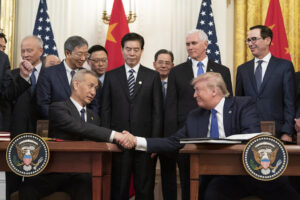
The evidence is increasingly visible in trade flows. Trade between the United States and China fell by approximately 30% between 2024 and 2025, with the US offsetting around two-thirds of that decline by increasing trade with geopolitically aligned partners, particularly in Europe and Asia (McKinsey Global Institute, 2026). Rather than producing a collapse in global commerce, this reallocation has directed production and investment towards alternative manufacturing hubs. Countries such as India, Vietnam, Indonesia, and Mexico have emerged as major beneficiaries of this transition, attracting industries seeking to reduce exposure to geopolitical risk. Official trade statistics confirm this pattern: US goods imports from Vietnam surged from approximately $49 billion in 2018 to $194 billion in 2025, while imports from Mexico rose from $347 billion to $535 billion over the same period (United States Trade Representative, 2026a; United States Trade Representative, 2026b; US Census Bureau, 2026a).
The Rise of Strategic Trade
The emerging trade order differs significantly from the hyper-globalised model that characterised the early twenty-first century. Instead of prioritising the lowest production costs, governments and corporations are increasingly evaluating supply chains through the lens of national security, political alignment, and strategic reliability.
Washington’s industrial policies, including semiconductor restrictions and strategic tariffs, reflect a growing emphasis on economic security. Similarly, Beijing has intensified efforts to strengthen
domestic technological capabilities while expanding trade relations across emerging markets. The result is not complete economic decoupling but rather selective diversification. Global trade continues to grow – goods trade grew by around 6.5% in 2025 – broadly in line with global economic growth, yet it is increasingly concentrated among politically aligned partners and trusted economic networks (McKinsey Global Institute, 2026).
This trend has produced what analysts describe as the ‘China Plus One’ strategy. Rather than abandoning Chinese manufacturing entirely, multinational firms are supplementing existing operations with alternative production centres. India has benefited significantly from this approach, particularly in electronics manufacturing and technology-related sectors, with US goods imports from India rising from approximately $54 billion in 2018 to $104 billion in 2025 (United States Trade Representative, 2026c; U.S. Census Bureau, 2026b). Vietnam has experienced a comparable surge in export-oriented investment, while Mexico has capitalised on nearshoring opportunities created by North American supply chain restructuring.
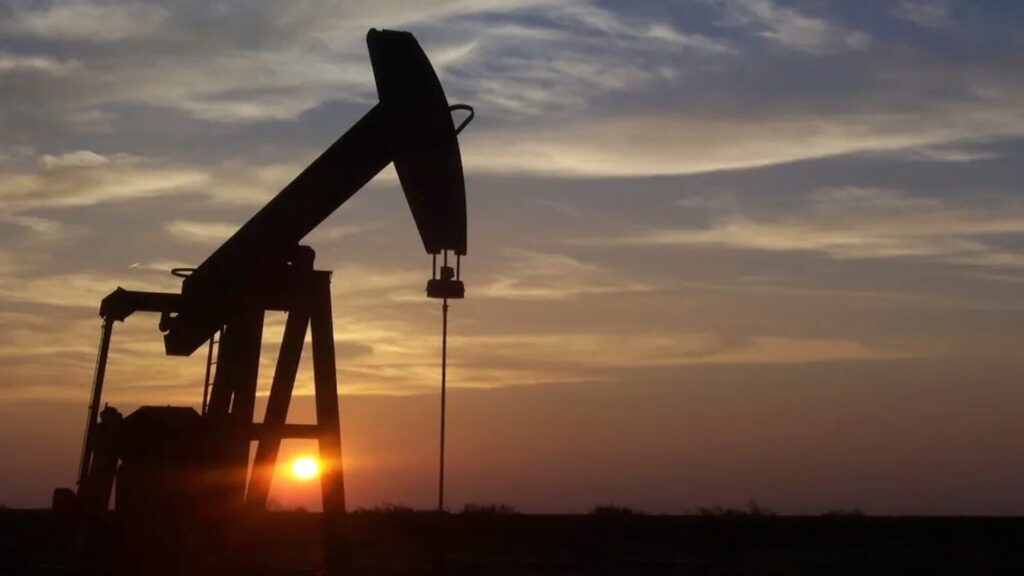
At the same time, geopolitical tensions have introduced new uncertainties into global markets. The United Nations Conference on Trade and Development notes that geopolitical instability has become the dominant source of instability for the global economy, having displaced trade policy uncertainty as the primary concern by early 2026 (UNCTAD, 2026). Conflicts in the Middle East, disruptions in critical maritime routes including the Strait of Hormuz, and strategic competition over advanced technologies have all contributed to a more volatile trading environment.
Emerging Winners and Vulnerable Economies
While fragmentation creates opportunities for some economies, it also generates significant risks. Emerging manufacturing hubs have attracted new investment, but many developing countries remain highly vulnerable to geopolitical shocks. Nations dependent on imported energy, external financing, or narrowly concentrated export sectors face increased exposure to fluctuations in global markets.
UNCTAD’s latest assessment projects that global merchandise trade growth could slow from 4.7% in 2025 to between 1.5% and 2.5% in 2026 as geopolitical tensions intensify (UNCTAD, 2026). Rising shipping costs, energy price volatility, and financial uncertainty disproportionately affect developing economies that possess limited fiscal capacity to absorb external shocks.
Moreover, fragmentation risks creating parallel economic systems centred around competing geopolitical blocs. Such an outcome would increase transaction costs, reduce market efficiency, and constrain technological diffusion. The International Monetary Fund has repeatedly warned that sustained geoeconomic fragmentation could reduce global output while disproportionately harming smaller and middle-income economies that depend on open markets (Aiyar et al., 2023). The World Bank similarly cautions that a fragmenting global economy poses particular risks to developing nations heavily reliant on trade finance and external demand (World Bank, 2025).
Yet the transition has also demonstrated the resilience of global commerce. Contrary to predictions of widespread deglobalisation, international trade has continued expanding. The McKinsey Global Institute (2026) observes that US imports and Chinese exports both reached all-time highs in 2025, even as the bilateral relationship contracted sharply. Rather than disappearing, globalisation appears to be evolving into a more politically conditioned form, with AI-related goods, including semiconductors, servers, and data-centre equipment, accounting for roughly one-third of global trade growth in 2025 (McKinsey Global Institute, 2026).
Navigating the New Economic Geography
The challenge for policymakers is not simply managing disruption but adapting to a fundamentally altered economic landscape. Strategic competition is likely to remain a defining feature of international relations for the foreseeable future. Consequently, governments must balance national security concerns with the benefits of economic openness.
First, countries should pursue supply-chain diversification without embracing outright protectionism. Excessive restrictions risk undermining economic growth while failing to eliminate strategic vulnerabilities. Diversification across multiple partners offers a more sustainable approach than complete decoupling.
Second, middle powers such as India should leverage their growing role in global supply chains by improving infrastructure, simplifying regulatory frameworks, and strengthening technological capabilities. As production networks continue to shift, competitiveness will increasingly depend on institutional efficiency rather than labour costs alone. The conclusion of the EU-India trade agreement in early 2026 exemplifies the kind of strategic partnerships that can consolidate these gains (McKinsey Global Institute, 2026).
Third, international institutions including the World Trade Organization, IMF, and UNCTAD should strengthen mechanisms that reduce uncertainty and facilitate dispute resolution. A fragmented global economy requires stronger governance structures, not weaker ones. UNCTAD (2026) explicitly calls for strengthened international cooperation, stabilised regulatory frameworks for international trade, and accelerated investment in clean energy and infrastructure as essential mechanisms for reducing global exposure to geopolitical and financial crises.
Finally, policymakers must recognise that economic resilience and economic integration are not mutually exclusive. The objective should not be to reverse globalisation but to create a trading system capable of withstanding geopolitical shocks. The future of global trade will be shaped not by the disappearance of interdependence but by its strategic recalibration. In this emerging economic geography, political risk has become an essential component of economic decision-making, and states that adapt most effectively will be best positioned to navigate the uncertainties of the new international order.
Bibliography
Aiyar, S., Chen, J., Ebeke, C., Garcia-Saltos, R., Gudmundsson, T., Ilyina, A., Kangur, A., Kunaratskul, T., Rodriguez, S.L., Ruta, M., Schulze, T., Soderberg, G. and Trevino, J.P. (2023) ‘Geoeconomic Fragmentation and the Future of Multilateralism’, IMF Staff Discussion Note SDN/2023/001. International Monetary Fund, Washington, DC. https://www.imf.org/en/Publications/Staff-Discussion-Notes/Issues/2023/01/11/Ge o-Economic-Fragmentation-and-the-Future-of-Multilateralism-527266
International Monetary Fund (2025) World Economic Outlook: Resilience and Divergence. Washington, DC: International Monetary Fund. https://www.imf.org/en/Publications/WEO
McKinsey Global Institute (2026) Geopolitics and the Geometry of Global Trade: 2026 https://www.mckinsey.com/mgi/our-research/geopolitics-and-the-geometry-of-glo bal-trade
Reuters (2025a) ‘Global financial system must adapt to better serve economy, UN trade agency says’, Reuters. https://www.reuters.com/business/finance/global-financial-system-must-adapt-bet ter-serve-economy-un-trade-agency-says-2025-12-02/
Reuters (2025b) ‘Tariffs and conflict causing major volatility in shipping industry, says UN trade agency’, Reuters. https://www.reuters.com/world/middle-east/tariffs-conflict-causing-major-volatility shipping-industry-says-un-trade-agency-2025-09-24/
UN Comtrade Database (2026) International Trade Statistics. United Nations. https://comtradeplus.un.org
United Nations Conference on Trade and Development (2026) Trade and Development Foresights 2026: Global Economy Faces a Geopolitical Challenge. UNCTAD/GDS/2026/1. Geneva: United Nations. https://unctad.org/publication/trade-and-development-foresights-2026-global-eco nomy-faces-geopolitical-challenge
United Nations Conference on Trade and Development (2025) World Investment Report 2025. Geneva: United Nations. https://unctad.org/publication/world-investment-report-2025
United States Trade Representative (2026a) The People’s Republic of China: Trade Summary. https://ustr.gov/countries-regions/china-mongolia-taiwan/peoples-republic-china
United States Trade Representative (2026b) Vietnam: Trade Summary. https://ustr.gov/countries-regions/southeast-asia-pacific/vietnam
United States Trade Representative (2026c) India: Trade Summary. https://ustr.gov/countries-regions/south-central-asia/india
United States Trade Representative (2026d) Mexico: Trade Summary. https://ustr.gov/countries-regions/americas/mexico
US Census Bureau (2026a) Foreign Trade Statistics: Trade in Goods with China. https://www.census.gov/foreign-trade/balance/c5700.html
US Census Bureau (2026b) Foreign Trade Statistics: Trade in Goods with Vietnam. https://www.census.gov/foreign-trade/balance/c5520.html
US Census Bureau (2026c) Foreign Trade Statistics: Trade in Goods with India. https://www.census.gov/foreign-trade/balance/c5330.html
World Bank (2025) Global Economic Prospects, January 2025. Washington, DC: World Bank. https://www.worldbank.org/en/publication/global-economic-prospects
World Trade Organization (2025) World Trade Report 2025. Geneva: WTO. https://www.wto.org/english/res_e/publications_e/wtr25_e.htm