The Russia-Ukraine War and Its Political Risk in European Security, 2022-2026
An analysis of strategic tensions, regional power politics, and security risks in Europe
The Russia-Ukraine war has emerged as the most consequential geopolitical crisis in Europe since the Cold War, fundamentally reshaping its security architecture. This study analyzes political risks arising from the conflict and their implications from a UK perspective (2022-2026). It critically examines how conventional warfare, hybrid threats, energy insecurity, and geopolitical polarization have intensified regional instability and uncertainty. The analysis argues that the UK has strategically repositioned itself as a key European security actor through strengthened alliances, military support for Ukraine, and revised defense priorities. However, emerging risks including cyber threats, economic disruption, and alliance fragility continue to challenge regional stability. Despite extensive literature on the war, a UK centered analytical gap persists, limiting understanding of Britain’s strategic recalibration and its long-term role in European security. The study therefore explores evolving political risks, NATO dynamics, and future policy options shaping Europe’s security environment under sustained geopolitical tension.
This study uses Realism Theory to explain the Russia-Ukraine war. It highlights how states act in pursuit of power and survival, as seen in Russia’s actions and the UK-NATO response to balance power in Europe. The research adopts a qualitative method based on secondary sources such as journals, reports, and official documents, focusing on developments from 2022-2026. It analyzes UK involvement through a case study approach. The study is important because it explains rising threats such as cyberattacks, energy insecurity, and hybrid warfare, while showing how the war has made Europe’s security more unstable and uncertain, offering useful insights for policymakers and future regional stability strategies.
Power politics and strategic competition in Europe
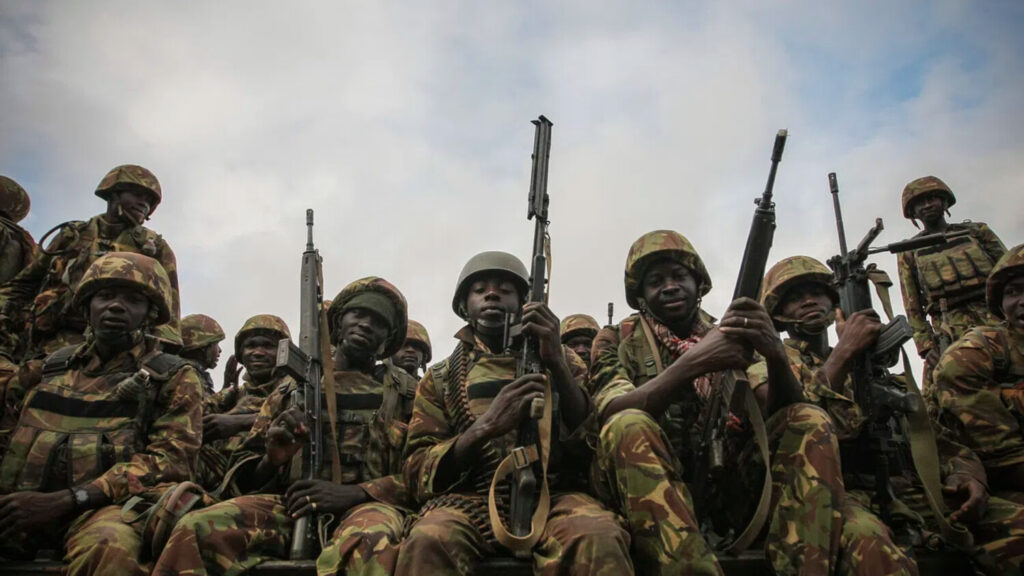
The Russia-Ukraine war has fundamentally reshaped the European security order by ending post-Cold War expectations of stable, rules-based cooperation. Russia’s 2022 invasion challenged sovereignty and territorial integrity, forcing Europe to rethink its reliance on diplomacy and economic interdependence. This has led to accelerated rearmament, stronger defense integration, and renewed emphasis on deterrence. NATO has re-emerged as the central security institution in Europe, expanding its presence in Eastern Europe and reinforcing collective defense commitments (NATO, 2023). Europe’s dependence on Russian energy has also exposed structural vulnerabilities, driving diversification strategies (Yergin, 2022). Overall, Europe has shifted from cooperative security to a competitive geopolitical order shaped by hard power and uncertainty. From a Realist perspective, the war reflects power politics in an anarchic system where states prioritize survival. Russia seeks to block NATO expansion, while Western powers, including the UK and US, work to maintain balance of power (Mearsheimer, 2022).
The UK’s strategic role in reshaping European security
The war has generated major political risks across Europe, including military escalation, economic instability, energy insecurity, and political polarization. European unity has been challenged as states differ in their support for Ukraine and relations with Russia. Energy shortages and inflation have increased domestic pressures and weakened public trust in governments (European Council, 2024). Security fragmentation is evident through unequal defense capacities and differing priorities between Eastern and Western Europe, creating inconsistencies in EU policy coordination. Meanwhile, escalation risks remain high due to miscalculation and spillover effects, making Europe highly volatile. In response, the United Kingdom has emerged as a key strategic actor, reinforcing its post-Brexit global role by providing military, intelligence, and financial support to Ukraine (UK Ministry of Defence, 2023). It has strengthened NATO engagement, increased defense spending, and enhanced cyber and intelligence capabilities, reaffirming its position as a central European security guarantor.
Hybrid warfare: emerging cyber, energy, and information threats
The Russia-Ukraine war has intensified hybrid warfare, combining military and non-military tools to achieve strategic objectives. Cyberattacks on critical infrastructure, financial systems, and government institutions have become central features of the conflict, while energy has been weaponized through Russian gas supply manipulation, exposing Europe’s structural vulnerabilities (Yergin, 2022). Disinformation campaigns further undermine political cohesion by shaping public opinion and deepening divisions. These hybrid threats blur the line between war and peace, creating continuous insecurity beyond the battlefield. In response, European states, including the UK, are investing in cyber resilience, energy diversification, and strategic communication systems. At the same time, the war has both strengthened and strained NATO and transatlantic relations. While NATO shows renewed unity, higher defense spending, and expanded eastern deployment (NATO, 2023), tensions persist over burden-sharing and strategic autonomy debates within Europe.
The future of Europe
The Russia-Ukraine war marks a major turning point in European security, ending post-Cold War optimism and reintroducing geopolitical rivalry. Europe has transitioned into a fragmented and deterrence-driven security environment shaped by hybrid warfare, energy insecurity, and shifting alliances. While NATO and the UK have strengthened their roles, long-term stability remains uncertain due to persistent risks of escalation and fragmentation. The war highlights the return of power politics and the fragility of international stability. Future European security will depend on balancing deterrence, cooperation, and resilience in an increasingly volatile global order.
The Russia-Ukraine war has fundamentally reshaped European security by reviving great-power politics and increasing political, economic, and hybrid risks across the region, while from a UK perspective it has reinforced a shift toward deterrence, alliance dependence, and strategic uncertainty. The study finds that the conflict has intensified political fragmentation, energy insecurity, and hybrid threats, while also strengthening NATO’s central role in European defense architecture and highlighting the UK’s growing strategic importance in managing these challenges. It recommends that European states, particularly the UK, enhance collective defense mechanisms, cyber resilience, and energy diversification to reduce vulnerabilities. Furthermore, stronger NATO coordination and more unified policy responses are essential to address long-term instability and prevent further geopolitical escalation in an increasingly volatile European security environment.
Recommendations
The Russia-Ukraine war has fundamentally reshaped the European security landscape by intensifying geopolitical polarization, exposing strategic vulnerabilities, and accelerating the militarization of regional politics. In response, European policymakers must move beyond short-term crisis management toward a comprehensive and sustainable security strategy. This requires strengthening NATO’s deterrence posture, institutionalizing greater European strategic autonomy, and diversifying energy and economic dependencies that have historically increased external leverage over European states.
Furthermore, diplomatic channels among Russia, Ukraine, the European Union, and major global powers should remain actively engaged to prevent prolonged strategic escalation and the emergence of a wider continental conflict. European authorities must also prioritize cyber defense, intelligence coordination, and hybrid threat management to address evolving non-traditional security threats. A balanced framework combining military preparedness, diplomatic conflict resolution, economic resilience, and multilateral cooperation remains essential for preserving long-term peace, stability, and strategic equilibrium in Europe.
Bibliography
European Council (2024) EU response to Russia’s invasion of Ukraine. Available at: https://www.consilium.europa.eu.
European Council (2024) EU Security and Defence Policy. Available at: https://www.consilium.europa.eu.
Mearsheimer, J.J. (2022) ‘The causes and consequences of the Ukraine war’, Foreign Affairs.
NATO (2023) Cyber Defence and Hybrid Threats. Available at: https://www.nato.int.
NATO (2023) Strategic Concept 2022. Available at: https://www.nato.int.
UK Ministry of Defence (2023) Defence in a Competitive World. Available at: https://www.gov.uk.
Waltz, K.N. (1979) Theory of International Politics. New York: McGraw-Hill.
Yergin, D. (2022) The New Map. London: Penguin Press.