Evaluating the Impact of Coal Stock Depletion in India’s Thermal Power Industry Amid Weather-Driven Demand Surges
How supply-chain bottlenecks, monsoon disruptions and rising electricity demand expose vulnerabilities in India’s energy security.
Coal remains central to India’s electricity generation mix. In September 2026, a significant number of India’s coal-fired thermal power stations were operating with critically low fuel stocks amid elevated electricity demand (Reuters, 2026). Coal accounted for approximately 79% of India’s primary energy generation in FY2024–25, while also supplying the majority of its electricity generation (MoSPI, 2026).
Data from the Central Electricity Authority (CEA, 2026) indicate that a substantial proportion of monitored thermal power plants were operating with critically low coal stocks, defined according to the applicable inventory norms. The situation reflected a combination of elevated electricity demand, weather-related pressures and constraints in the delivery of coal to generating stations.
The climate in South Asia has been significantly impacted by El Niño, which has brought unseasonal heat and caused a significant delay in the monsoon (Reuters, 2026). Higher temperatures can increase electricity consumption through cooling requirements in industrial and residential settings, while inadequate rainfall can increase demand for irrigation pumping in agricultural areas. Reduced hydropower availability may also increase reliance on thermal generation. However, El Niño’s impact should be considered alongside other systemic and operational factors.
This article investigates the structural and weather-related drivers behind India’s coal-supply pressures, including the implications for electricity demand and hydropower generation. Using daily operational data published by the CEA (2026), it examines vulnerabilities in India’s energy infrastructure, assesses the government’s emergency measures and proposes policy interventions to strengthen long-term grid resilience.
Distribution of Coal Inventories and Regional Operational Constraints
The effects of coal-stock depletion vary geographically due to differing railway connectivity, proximity to mine pitheads and dependence on transported fuel (IEA, 2021). Non-pithead power plants situated several hundred kilometres from mines in eastern India are more exposed to rail supply disruptions, as delays can prevent available coal from reaching generating stations in time.
The following chart presents regional thermal power plant stock-monitoring metrics based on daily CEA reporting (CEA, 2026).
Structural Constraints in Logistics and Freight Infrastructure
India’s coal supply challenges extend beyond domestic production capacity to the efficiency of its transportation and distribution networks. Although Coal India Limited (CIL) has increased coal production to meet rising demand, increased output does not necessarily translate into timely deliveries to generation stations. The Ministry of Coal has identified inadequate railway capacity, congestion along high-density routes and operational constraints involving the availability and turnaround of railway rakes as key bottlenecks in coal evacuation (Ministry of Coal, 2026a).
Railways remain a major component of India’s coal transportation network, particularly for moving supplies from producing states such as Odisha, Jharkhand and Chhattisgarh to power plants across the country. However, congestion along critical freight corridors and delays in railway infrastructure development can restrict the movement of coal, creating disparities between production levels and the availability of stocks at individual power stations. The Ministry of Coal’s Integrated Coal Logistics Plan consequently identifies railway capacity expansion and improved connectivity as important priorities for strengthening the country’s coal supply chain (Ministry of Coal, 2025).
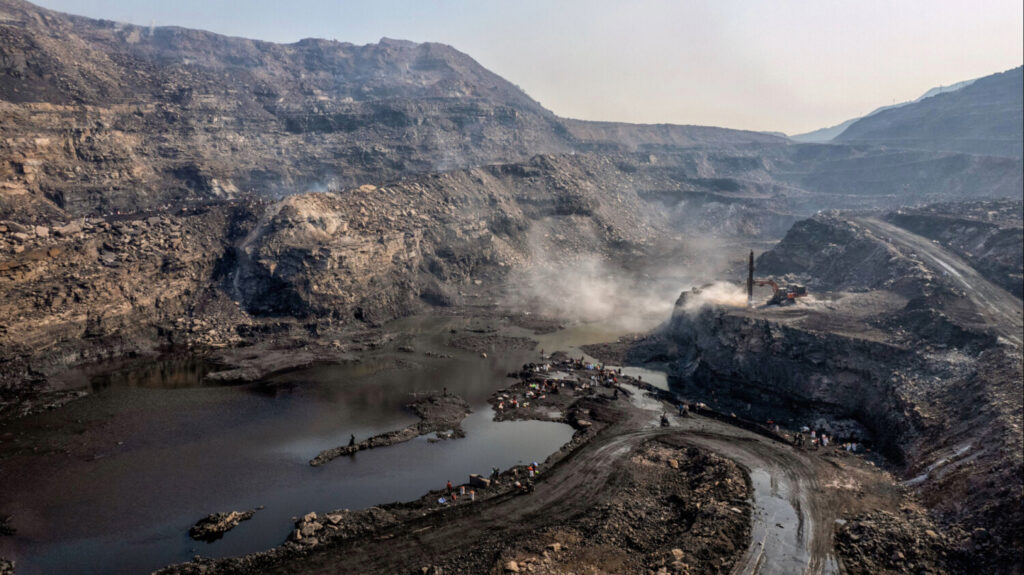
Weather conditions can further compound these logistical challenges. Heavy monsoon rainfall across coal-producing regions can affect mining and transportation operations, particularly at open-cast mines. In September 2026, the Ministry of Coal reported that prolonged rainfall during July and August had left coal beds wet and sticky, while some lower mine sections had become submerged. These conditions complicated coal handling and dispatch, with mining companies undertaking dewatering and road repairs as rainfall eased (Ministry of Coal, 2026c; Ministry of Coal 2026d). Such disruptions illustrate how weather-related pressures can affect not only coal extraction but also the subsequent handling and transportation of supplies.
Regulatory Interventions and Emergency Policy Responses
In 2026, the Indian government introduced several measures to strengthen coal availability and maintain the reliability of thermal power generation. These focused primarily on improving domestic coal allocation, coordinating transportation and maximising existing generating capacity.
To improve coal distribution, the government strengthened inter-ministerial coordination between the Ministries of Power, Coal and Railways, with daily monitoring of coal supplies and priority allocation of railway rakes to power stations (Ministry of Power, 2026). The Ministry of Coal also increased Annual Contracted Quantities (ACQs) to as much as 100% of normative requirements and reaffirmed its 2022 decision for coal companies to fulfil the full Power Purchase Agreement requirements of existing power-sector linkage holders. These measures were intended to improve access to domestic coal and reduce reliance on imported supplies (Ministry of Coal, 2026b).
Strategic Policy Recommendations and Solutions
To develop a reliable, lower-carbon electricity system that balances variable renewable energy with dependable generation, India requires coordinated policy, infrastructure and technological interventions.
- Move beyond short-term emergency measures. Energy authorities should strengthen long-term supply-chain planning to account for seasonal demand fluctuations, transport constraints and weather-related disruptions. This would help address recurring fuel shortages rather than relying primarily on emergency interventions.
- Adopt climate-resilient coal inventory planning. Existing inventory requirements should be supplemented by risk-based seasonal planning that considers weather forecasts, historical demand, fuel consumption and transport lead times. Non-pithead stations with greater exposure to delivery disruptions may require additional reserves before periods of elevated demand. The proposed target of up to 26 days of operational stock should be retained only if supported by CEA norms or an appropriate operational and cost-benefit assessment. Strategically located coal buffer stocks could also facilitate redistribution to plants experiencing unexpected shortfalls.
- Improve freight connectivity and supply-chain coordination. Investment should focus on expanding capacity along demonstrably congested coal routes, improving last-mile railway connections and upgrading loading and unloading facilities. Existing dedicated freight corridors, including the Eastern Dedicated Freight Corridor where operationally relevant, may support freight efficiency, but their suitability must be assessed against the routes connecting coalfields to affected power stations. Multimodal arrangements involving rail and coastal shipping may also be considered for suitable coastal plants where cost and operational assessments demonstrate an advantage.
- Strengthen market-based solutions and demand-side management. Rapid adoption of real-time dynamic pricing for commercial and industrial customers could incentivize peak shaving during events of extreme weather. Simultaneously, expanding battery energy storage systems and pumped-storage hydropower could help meet peak demand and balance variable renewable generation. Continued implementation of applicable minimum technical load requirements for thermal power plants would support more flexible generation, although storage expansion and thermal flexibility should be treated as complementary rather than interchangeable measures.
Bibliography
Central Electricity Authority (2026) Fuel Management Division: Daily coal reports and fuel supply monitoring. Available at: https://cea.adgstaging.in/fuel-management-division/?lang=en.
International Energy Agency (2021) India Energy Outlook 2021. Paris: IEA. Available at: https://www.iea.org/reports/india-energy-outlook-2021.
Ministry of Coal (2025) Annual Report 2024–25. Government of India. Available at: https://www.coal.nic.in/sites/default/files/2025-02/chap13AnnualReport2025en2.pdf.
Ministry of Coal (2026a) First Mile Connectivity and Coal Logistics Infrastructure. Press Information Bureau, Government of India, 20 July. Available at: https://www.pib.gov.in/PressReleasePage.aspx?PRID=2286593®=48&lang=2.
Ministry of Coal (2026b) Decline in coal imports. Press Information Bureau, Government of India, 27 July. Available at: https://www.pib.gov.in/PressReleaseIframePage.aspx?PRID=2289973®=48&lang=2.
Ministry of Coal (2026c) Coal India Output and Dispatch Set to Accelerate as Monsoon Effect Wanes. Press Information Bureau, Government of India, 5 September. Available at: https://www.pib.gov.in/PressReleasePage.aspx?PRID=2306938.
Ministry of Coal (2026d) CIL Production, Power Sector Supplies Pick Up Sharply as Rains Recede. Press Information Bureau, Government of India, 7 September. Available at: https://www.pib.gov.in/PressReleasePage.aspx?PRID=2307504®=6&lang=1.
Ministry of Power (2026) Coal availability for thermal plants. Press Information Bureau, Government of India, 20 July. Available at: https://www.pib.gov.in/PressReleasePage.aspx?PRID=2286557®=3&lang=1.
Ministry of Statistics and Programme Implementation (2026) Energy Statistics India 2026. Government of India. Available at: https://www.mospi.gov.in/uploads/publications_reports/publications_reports1774859128428_05e8ebb5-0598-4112-844c-bbe00e04aab8_33rd_Edition_of_ES-2026_Final.pdf.
Reuters (2026) ‘Nearly 40% of India’s coal power plants running critically low on fuel, data show’, 21 September. Available at: https://www.reuters.com/business/energy/nearly-40-indias-coal-power-plants-running-critically-low-fuel-data-show-2026-09-21/.