Scraping the Barrel: the Russian Labor Market in a Time of Emigration and War
The full-scale invasion of Ukraine triggered an exodus of hundreds of thousands of Russian workers and professionals. Hundreds of thousands more have been recruited into the army. In the midst of the worst labor shortage modern Russia has seen, there are rumors of another mobilization.
In recent weeks, there has been speculation and concern that the Russian government might initiate another wave of mobilization or even escalate tension and conflict along its western border. Against the backdrop of CIA director John Ratcliffe’s visit to Moscow and Steve Witkoff and Jared Kushner’s meetings with Putin and Zelensky, these rumors have only intensified.
With Russia’s military effort in its fourth year and Washington communicating with Moscow directly, it may seem as though Russia has successfully weathered many of the pressures – particularly the economic ones – provoked by the full-scale invasion. But under the hood of the Russian economy, not all is well. Beyond the damage to economic infrastructure inflicted on Russia by Ukraine and the difficulties imposed by western sanctions, there are deeper, less tangible issues which threaten Russia’s economic stability.
The trap of low unemployment
According to data from the Russian Federal State Statistics Service (Rosstat), unemployment in the Russian labor market in the past several years has been lower than it has ever been in the 35 years since the collapse of the Soviet Union, and it has kept falling steadily over the course of the war.
The full-scale invasion of Ukraine triggered an exodus of hundreds of thousands of Russian workers and professionals. Hundreds of thousands more have been recruited into the army. In the midst of the worst labor shortage modern Russia has seen, there are rumors of another mobilization.
In 2026 so far, approximately 74.5 million Russians are employed and only 1.6 million are unemployed (compared to approximately 73 million employed and 3.7 million unemployed on average in 2018 before the COVID-19 pandemic). On its own, despite the unprecedented nature of the statistics, this indicator does not say much about the state of the Russian economy. The picture becomes more revealing in light of the ratio of vacancies and unemployment: Rosstat data demonstrates that the pool of labor in Russia is drying up.
This data reflects the broader statistics about employment, but it shows a specific and very important nuance: there are simply not enough workers in Russia to satisfy the needs of employers. At the height of the pandemic in 2020, there was a glut of labor, with few vacancies and many out of work. In the span of a few years, this configuration has been completely reversed.
Since the end of pandemic measures in Russia in July 2023, there have been 1.78 million vacancies on average, while Rosstat has continued to record a steady decline in the number of people still in the labor market. As of the most recent figures from April 2026, there were approximately 1,600,000 reported vacancies compared to only 380,000 people registered as unemployed by state employment services. In other words, there were less than 24 people registered as unemployed per every 100 reported vacancies in Russia in April, compared to an average of 40 between February 2022 and July 2023 and an average of 65.5 between January 2016 and the start of the pandemic.
This interpretation of the data is supported by a study performed by the Russian Union of Industrialists and Entrepreneurs (RSPP), an organization which represents over 1000 private and state-owned organizations and facilities. According to a survey conducted by the RSPP, 62% of companies identified “the shortage of skilled workers” as “the key challenge for businesses in Russia” in 2025, which had risen to a record 70% in 2024. Shortages of machine operators and plant operators were felt most sharply, with 76% and 72% of respondents identifying shortages in these categories in 2024 and 2025 respectively.
While most respondents identified a shortage of semi-skilled laborers as well, the rate was comparable to pre-pandemic levels. What is striking is the departure from the pre-pandemic era in terms of unskilled labor: only 22% of respondents to the RSPP’s survey identified this as an issue in 2015, but this rose to 56% and 46% in 2024 and 2025 respectively. This indicates that not only is there a lack of sufficient experience in the labor pool, there is also a lack of workers in general.
Shipped Off or Scared Off: Sinkholes in the Russian Labor Pool
There are two major reasons behind the shrinkage of the labor pool in Russia related to declining unemployment: emigration and military recruitment. The full-scale invasion and subsequent fears of mobilization drove hundreds of thousands of Russians out of the country. Many of these émigrés are people with valuable technical skills and higher education, which presents a serious concern for the Russian state (Reuters, 2025). According to data about Russian immigrants compiled from various countries in 2023, approximately 800-900,000 Russians left the country after the outbreak of the war (Re: Russia, 2023). Since then, a significant portion of these émigrés have returned or have attempted to emigrate multiple times, complicating the picture (Kamalov & Sergeeva, 2024). Nonetheless, this wave of emigration contributed significantly to the lack of skilled labor.
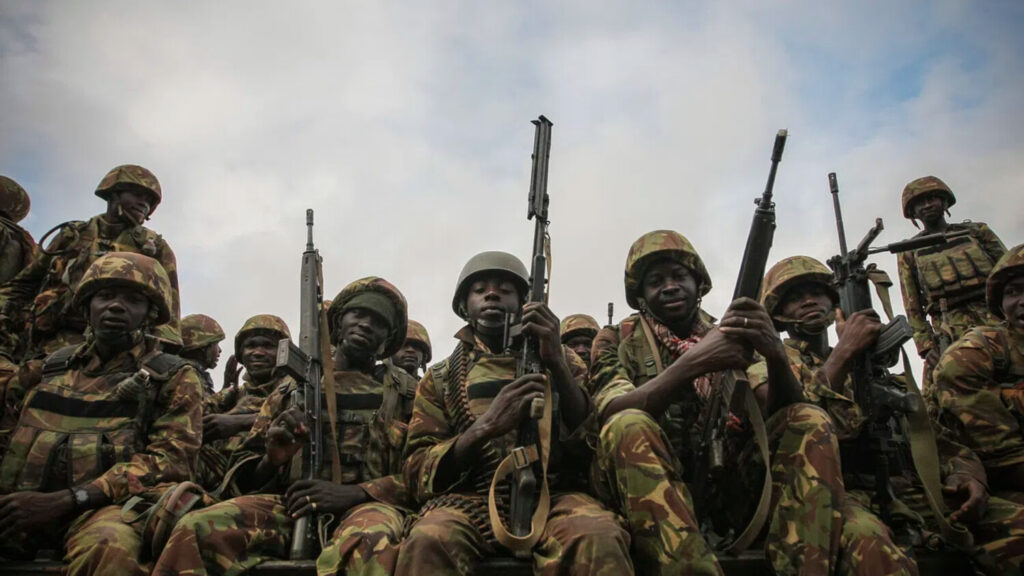
There are also hundreds of thousands of working-age Russians who have joined the Russian army. Russia’s “partial mobilization” drive in 2022 aimed at recruiting 300,000 soldiers, though the exact number actually recruited remains unclear (BBC News Russian Service, 2022). Additional figures reported by the Institute for the Study of War (ISW) indicate Russia recruited a combined total of between 728,600 and 761,600 soldiers in 2023 and 2024 (Stepanenko et al., 2025). Dmitry Medvedev claimed that “around 422,000 people signed contracts with the Russian military” in 2025, though ISW figures indicate that sources in the Russian government inflate military recruitment numbers (The Moscow Times, 2026). Unlike the burst of emigration in 2022, military recruitment has caused a steady drain of available labor from Russia. The socioeconomic character of this group is likely different from that of émigrés on the whole, possibly having a strong effect on the supply of lower-skilled labor, but it still represents a serious factor behind the labor shortage.
Amid the latest fears of another mobilization, it seems another wave of emigration is brewing. Fears of mobilization are not unfounded – according to a number of sources, there are indications that the Russian state is preparing for a new mobilization drive. According to the ISW, recently-passed legislation in Russia has expanded eligibility for military service and expanded the powers of the Rosgvardia (Russia’s national guard) to deal with unrest under the conditions of martial law (Shymkiv et al., 2026). These measures complement a law adopted in 2025 which allows the president “to deploy reservists to combat areas without declaring mobilization” (Ibid). According to Deutsche Welle, in the first half of 2026, Russian enlistment offices issued “hundreds of thousands” of summonses for data verification, which would significantly improve records and streamline the process of conscription in the event of another mobilization (Terentjeva et al., 2026).
Russians are noticing these developments, and there are also signs that many are planning to leave. Realtors in Yerevan, Armenia – one of the most popular destinations for Russian émigrés – have noted a surge in demand comparable to that in 2022 (Kohanets, 2026 & Serova, 2026). Rents have risen 30% in Yerevan and one agent reported that 80% of all inquiries were Russians who had left or were planning to leave Russia (Ibid). Russian search engines also recorded a similar spike in searches for “apartments in Armenia” in July (Kohanets, 2026).
A wave of emigration similar in proportion to that which occurred after the declaration of a “partial mobilization” in Russia in 2022 does not seem unlikely should the fears of another mobilization be realized. Even if this does not occur, recruitment and conscription will inevitably cut into the remaining labor pool in Russia, making it unrealistic that most vacancies will be filled.
Emigration and Immigration: an Alternative for Russia?
Of course, Russia has alternatives when it comes to labor: incoming migrants. German Gref, the “CEO of Russia’s largest lender Sberbank” has argued that “Russia will need to attract millions of skilled migrants” to sustain economic growth (Reuters, 2025). With labor migration from Central Asia becoming more problematic for political (Ibid) and economic reasons in recent years, Russia has been looking further afield for migrants.
In 2025, Russia signed an agreement on labor mobility with India which has allowed tens of thousands of Indians to migrate to Russia for work (Dyuk & Krishnan, 2026). According to Deutsche Welle, 40,000 Indians are expected to come to Russia in 2026 (with quotas providing for up to 70,000) on top of the 70-80,000 already working in Russia at the end of 2025 (Ibid).
Russian economists Igor Lipsits and Andrei Yakovlev point out several major issues with this alternative source of labor migration: the language barrier limits the roles Indian laborers can fill to mostly unskilled labor (Ibid). Meanwhile, countries in Central Asia (which have traditionally been the largest source of migrant laborers for Russia) are facing labor shortages themselves (Ibid). Not only that, but many Central Asians are choosing to work in European labor markets, further driving up competition (Ibid).
Russia has also drawn laborers from North Korea. According to South Korean officials, “10,000 [North Korean] labourers were sent to Russia” in 2024, with Pyongyang apparently having planned to “dispatch more than 50,000 workers” the following year (Mackenzie, 2025). This was partially confirmed by Russian officials, including Sergei Shoigu, who claimed that a division of North Korean workers had been assigned to support reconstruction in Russia’s Kursk region (Ibid).
For the Russian state, attracting migration provides a real stopgap measure to prevent the labor pool from drying up completely, but considering the factors at play, particularly the need for skilled labor and the increased competition for Russian-speaking Central Asian migrants, it is unlikely that these measures will be sufficient to avert a labor crisis in the case of further mass emigration or mobilization.
Conclusion
Like many of the issues facing Russia’s society and economy, the impacts of the labor shortage may be serious, but they are also gradual and latent. Like the proverbial boiling frog, Russians have accepted greater and greater impositions on their quality of life and freedom over the years. An intensification of the current labor shortage by another wave of mobilization could be a great enough shock to the Russian economy to trigger political upheaval, but it is unclear how strong the economic effect would be. Russians have also accepted very serious impositions on their political freedoms and personal convenience in the past year, including fuel shortages, restrictions on internet usage, and the banning of an anti-war opposition party in the lead-up to the country’s parliamentary elections, all of which indicate even more tolerance for current conditions.
There will be a point at which even further willingness to endure and tolerate the inconveniences of the Ukraine war will not be sufficient to keep the Russian economy going. It may be that Russians will eventually tire of the worsening conditions in their country, or it may be that the Russian economy will eventually stop being able to support the war effort. Unfortunately, it seems the latter is likely to occur before the former.
Bibliography
BBC News Russian Service (2022). “Путин объявил о частичной мобилизации в России.” Available at: https://www.bbc.com/russian/news-62977634. (Accessed 16 September 2026).
Dyuk, E., & Krishnan, M. (2026). “Russia looks to India to fill labor shortage.” Deutsche Welle. Available at: https://www.dw.com/en/russia-looks-to-india-to-fill-labor-shortage/a-75598015. (Accessed 16 September 2026)
Federal State Statistics Service of the Russian Federation (2026). “Short-term Economic Indicators.” Available at: https://eng.rosstat.gov.ru/folder/205320. (Accessed 16 September 2026).
Kamalov, E., & Sergeeva, I. (2024) “Should I Stay or Should I Go? Russian Emigration in Flux.” Carnegie Endowment for International Peace. Available at: https://carnegieendowment.org/russia-eurasia/politika/2024/07/russian-emigration-in-flux?center=russia-eurasia/ (Accessed 16 September 2026).
Kohanets, R. (2026). “Russian Mobilization Fears Trigger New Exodus, Sending Armenian Rent Prices Soaring.” United24. Available at: https://united24media.com/world/russian-mobilization-fears-trigger-new-exodus-sending-armenian-rent-prices-soaring-21148. (Accessed 16 September 2026).
Mackenzie, J. (2025). “North Koreans tell BBC they are being sent to work ‘like slaves’ in Russia.” BBC News. Available at: https://www.bbc.com/news/articles/c2077gwjlvxo. (Accessed 16 September 2026).
The Moscow Times (2026). “Russia’s New Military Recruits Dipped in 2025, Figures Show.” Available at: https://www.themoscowtimes.com/2026/01/16/russias-new-military-recruits-dipped-in-2025-figures-show-a91703. (Accessed 16 September 2026).
Re: Russia. (2023) “Escape from War: New data puts the number of Russians who have left at more than 800,000 people.” Available at: https://re-russia.net/en/review/347/. (Accessed 16 September 2026).
Reuters. (2025) “Top banker says Russia needs millions of skilled migrants to boost growth.” Available at: https://www.reuters.com/business/top-banker-says-russia-needs-millions-skilled-migrants-boost-growth-2025-10-24/. (Accessed 16 September 2026).
Russian Union of Industrialists and Entrepreneurs (2026). “О состоянии делового климата в России за период с 2008 по 2025 годы.” Available at: https://rspp.ru/activity/analytics/ under “Доклады РСПП о состоянии делового климата.” (Accessed 16 September 2026).
Serova, S. (2026). “Will Russia start a fresh mobilization drive?” Deutsche Welle. Available at: https://www.dw.com/en/will-russia-start-a-fresh-mobilization-drive/a-78253252. (Accessed 16 September 2026).
Shymkiv, K., Trach, T., Shafiro, S., Frykholm, S., Mappes, G., Sundstrom, N., Thacker, A., Kang-Stryker, A., Sher, A., & Kagan, F. W. (2026). “Russian Offensive Campaign Assessment, July 22, 2026.” Institute for the Study of War. Available at: https://understandingwar.org/research/russia-ukraine/russian-offensive-campaign-assessment-july-22-2026/. (Accessed 16 September 2026).
Stepanenko, K., Trach, T., Olmsted, J., Evans, A., Novikov, D., Harvey, A., & Sobieski, J. (2025). “Russian Force Generation and Technological Adaptations Update June 6, 2025.” Institute for the Study of War. Available at: https://understandingwar.org/research/russia-ukraine/russian-force-generation-and-technological-adaptations-update-june-6-2025/. (Accessed 16 September 2026).
Terentjeva, V., Dik, S., Linke, N., & Dyuk, E. (2026). “Putin rejects mobilization rumors, many Russians unconvinced.” Deutsche Welle. Available at: https://www.dw.com/en/putin-rejects-mobilization-rumors-many-russians-unconvinced/a-79193386. (Accessed 16 September 2026).