Is Türkiye Becoming NATO’s New Regional Gatekeeper?
The 2026 NATO Summit in Ankara highlights Türkiye’s growing importance as NATO’s strategic bridge between the Black Sea, Europe, and the Middle East. By combining geography, military capacity, and regional influence, Ankara has an opportunity to convert its importance into a more central role within the alliance.
The 2026 NATO Summit in Ankara comes at a moment when the alliance is being pushed to rethink its geography, burden-sharing model, and regional priorities. Russia’s war against Ukraine has made the Black Sea a core European security theatre. The Eastern Mediterranean is still tied to energy, migration, and maritime competition. The Middle East continues to produce crises that affect European and transatlantic security, including Syria, which remains unstable. At the same time, Donald Trump’s return to a more transactional style of alliance politics has increased pressure on European and regional allies to carry more responsibility for their defence.
In this environment, Türkiye is no longer simply NATO’s southeastern flank. It is becoming one of the alliance’s main strategic gates. Of course, this shift does not make Ankara NATO’s new leader. It does mean NATO cannot credibly manage the Black Sea, Syria, the Eastern Mediterranean or its southern neighbourhood without taking Türkiye’s needs more seriously.
The Ankara Summit makes this shift visible. Leaders from all 32 NATO member states are expected to attend, with the agenda centred on defence spending, Ukraine, burden-sharing, defence-industrial production, and Türkiye’s own attempt to showcase its defence sector (Reuters, 2026a). NATO leaders are also expected to reaffirm their commitment to Article 5 and identify Russia as a persistent threat to Euro-Atlantic security (Reuters, 2026b). The location therefore matters. Ankara is hosting an alliance meeting while also serving as the setting for a wider debate about NATO’s next operating map.
Leverage Points
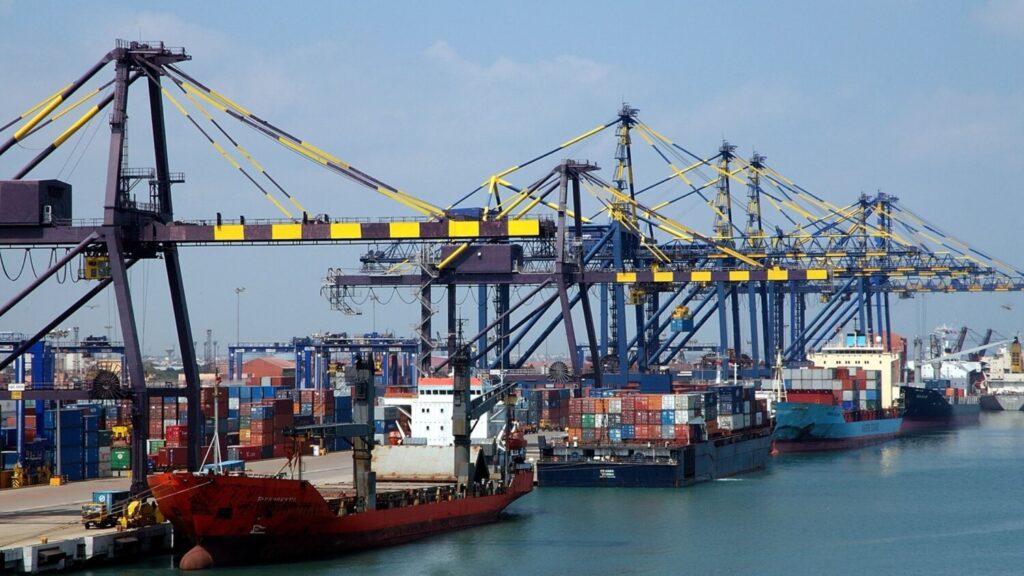
Türkiye’s first source of leverage is geography. The country connects the Black Sea to the Mediterranean, Europe to the Middle East, and the Caucasus to the wider Euro-Atlantic space. Since Russia’s full-scale invasion of Ukraine, this position has become more valuable. Through the Montreux Convention, Türkiye controls naval access to the Black Sea via the Turkish Straits. Any serious NATO approach to maritime security, deterrence and escalation management in the region needs Ankara’s involvement.
The European Council on Foreign Relations argues that deeper cooperation between Europe and Türkiye in the Black Sea is necessary to contain Russia and support Ukraine’s future security (ECFR, 2025). A NATO Parliamentary Assembly report reaches a similar conclusion, stressing that Black Sea stability is vital for regional security, trade, and energy networks, and that NATO and the EU need more cohesive strategies in the region (NATO PA, 2025). These assessments place Türkiye within the practical infrastructure of European security rather than outside it.
Türkiye’s Russia policy remains complicated. Ankara supports Ukraine, defends Ukrainian sovereignty and remains anchored in NATO. It has also kept channels open with Moscow and has not fully aligned with Western sanctions. This creates doubts in Washington and parts of Europe. Still, it gives Türkiye diplomatic utility. Ankara can speak to both Kyiv and Moscow while remaining inside the alliance. In a fragmented international order, that ability has value.
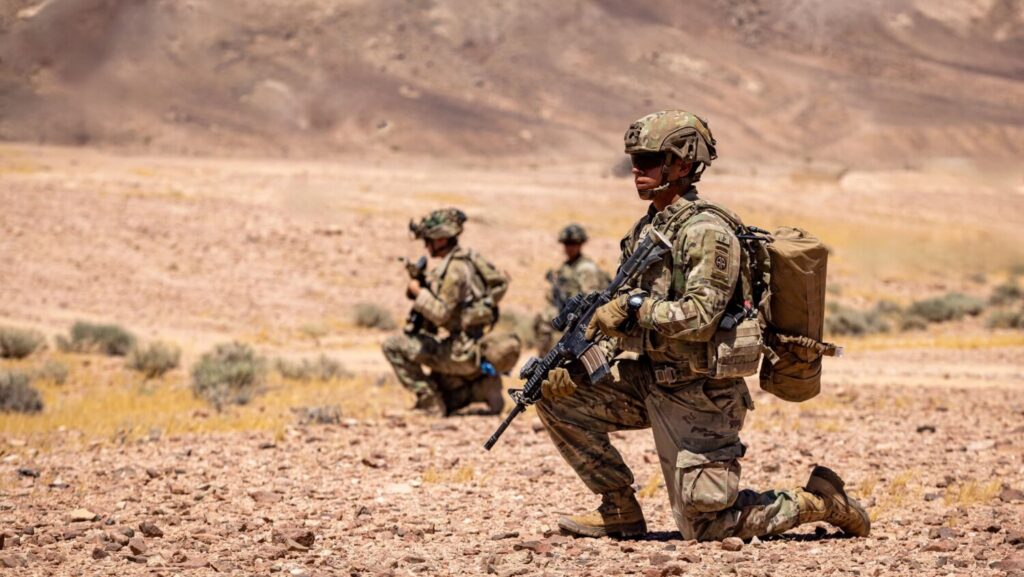
The second pillar of Türkiye’s role is military capacity. NATO Secretary General Mark Rutte stated in 2024 that Türkiye has the second-largest army in NATO and spends more than 2 percent of GDP on defence (NATO, 2024). Türkiye also brings operational experience from Syria, Iraq, Libya, the South Caucasus, and the Eastern Mediterranean. Its defence industry has become increasingly visible through drones, naval platforms, armoured vehicles, missile systems, and air-defence projects.
This capacity matters because NATO is increasingly focused on production, readiness, and burden-sharing. Rutte has stated that tens of billions of dollars in new defence-related contracts will be announced at the Ankara summit, describing the moment as part of a wider defence-industrial push across the alliance (Reuters, 2026c). For Türkiye, this creates a clear opportunity. Ankara can position itself as a producer within the NATO defence ecosystem rather than remaining primarily a buyer of Western systems.
Obstacles
The S-400/F-35 dispute remains the clearest limit to this picture. Türkiye’s acquisition of the Russian S-400 system led to its removal from the F-35 programme, and the issue continues to restrict deeper defence cooperation with the United States. Reuters has reported that Washington has moved forward with some defence-industrial engagement, including a major jet engine sale linked to Türkiye’s KAAN fighter project, while congressional concerns over the S-400 continue (Reuters, 2026d). This captures the current relationship well: Türkiye’s strategic value is rising, but trust has not fully recovered.
Syria is another difficult matter. For more than a decade, it has been one of the main sources of tension between Ankara and Washington. The United States worked with the Syrian Democratic Forces against ISIS, while Türkiye sees the YPG component as linked to the PKK and therefore as a direct security threat. For Ankara, Syria involves terrorism, refugees, border security and the future political balance along its southern frontier. The Ankara Summit presents Türkiye with an opportunity to place Syria within a broader NATO conversation. Trump is expected to meet Ukrainian President Volodymyr Zelenskiy and Syrian President Ahmed al-Sharaa alongside the summit, further making Ankara an important diplomatic platform where different security theatres intersect (Reuters, 2026e).
Policy Recommendations
First, Ankara must push for a structured Black Sea security mechanism with Türkiye, Romania, Bulgaria, and Ukraine at its core. This should focus on maritime surveillance, mine clearance, drone defence, infrastructure protection, and naval deconfliction under the Montreux framework.
Second, Türkiye and the United States should work toward a phased S-400 roadmap. A realistic solution could involve verifiable restrictions, non-integration guarantees, and technical monitoring in exchange for gradual movement on sanctions, industrial cooperation, and eventually a more serious F-35 discussion.
Third, Türkiye should present a clearer Syria endgame to NATO allies. This should include border security, PKK/YPG demilitarisation concerns, counter-ISIS continuity, refugee return, and the integration of local armed actors into a Syrian state framework.
Fourth, Türkiye should deepen defence-industrial cooperation with NATO where interoperability is clear. Drones, electronic warfare, naval systems, ammunition, air defence, and counter-drone technologies are areas where Ankara can become a producer within the alliance ecosystem.
Türkiye does not need to return to the old role of a passive flank state. That period is over. It should also avoid becoming the ally that everyone needs but few fully trust. The stronger position is to become a predictable regional rule-shaper: autonomous enough to matter, but reliable enough to influence alliance decisions.
If Ankara uses this moment carefully, Türkiye can gain a stronger role in European security, expand defence-industrial opportunities, shape Black Sea strategy, and influence Syria’s future from a more institutional position. The Ankara Summit may therefore be remembered less as a symbolic event and more as the moment Türkiye began converting geography and necessity into long-term strategic leverage.
References
ECFR. 2025. “Bridging the Bosphorus: How Europe and Turkey can turn tiffs into tactics in the Black Sea.” European Council on Foreign Relations, 18 March.
NATO. 2024. “Secretary General in Türkiye: Strong Turkish defence capabilities contribute to a strong NATO.” NATO, 25 November.
NATO Parliamentary Assembly. 2025. “The War in Ukraine and Mounting Economic Challenges in the Greater Black Sea Region.” Committee Report 017 ESCTD.
Reuters. 2026a. “NATO Ankara summit: who’s going and what to expect.” Reuters, 6 July.
Reuters. 2026b. “NATO leaders including Trump to affirm ‘ironclad commitment’ to collective defence in Ankara, summit text says.” Reuters, 3 July.
Reuters. 2026c. “NATO’s Rutte says billions in new defense contracts will be announced at summit.” Reuters, 25 June.
Reuters. 2026d. “US moves ahead with $700 million jet engine sale to Turkey despite lawmaker concerns.” Reuters, 25 June.
Reuters. 2026e. “Trump to meet leaders of Ukraine, Syria alongside NATO summit.” Reuters, 5 July.