The AI Race: How Brazil and Kazakhstan Can Gain Leverage
The race for AI is usually presented as a contest between the United States and China. Export controls, access to computing power, and the development of frontier models appear to define the competition. Power, in this view, belongs to the states and firms able to build the most capable systems and attract the largest pools of capital and talent. This article argues that other countries can gain bargaining power by offering the critical infrastructure needed for AI technology.
Its true that Silicon Valley and Shenzhen dominate the AI landscape, alongside firms like Nvidia and Huawei. The United States remains ahead in private AI investment and in the number of leading models produced by its institutions. China is its only serious competitor at a comparable scale. Strategic rivalry between Washington and Beijing, therefore, shapes the most visible layer of the AI economy.
That map remains incomplete.
AI begins long before code and extends far beyond a chatbot. A frontier model depends on a physical system of chips, data centres, electricity, cooling and industrial equipment. It also depends on the minerals, supply chains and transport routes that allow this infrastructure to function. The most advanced models may be developed in a small number of technology hubs, yet their production rests on networks spread across far more countries.
Control over frontier technology is only one source of influence. States can also gain leverage through the conditions under which that technology is built and deployed. A country may not produce a leading model, yet still occupy a valuable position if it supplies a difficult-to-replace mineral or provides reliable, low-cost energy. Industrial capacity, infrastructure and access to key trade routes can produce similar forms of leverage.
AI power, therefore, has a wider geography than the usual image of American and Chinese technology firms suggests. The leading powers remain at the top of the system. They finance infrastructure, shape standards and control access to key technologies through firms and export restrictions. Around them sits a broader group of states whose resources and location are becoming more strategically valuable. Some hold materials required for AI infrastructure; others offer energy, market access or links between competing regions.
It is very unlikely that Brazil and Kazakhstan would become AI superpowers. Instead, the expanding AI supply chain could give countries such as these greater room to negotiate with the powers that are AI superpowers. As competition between the United States and China intensifies, resources, geography and diplomatic flexibility may carry more weight than they did before.
The physical layer
AI capacity is built as much through infrastructure as through software. Training and operating advanced models requires large concentrations of computing equipment, supported by continuous electricity, cooling and high-capacity networks. Data centres are therefore becoming strategic assets in their own right: they connect the digital economy to power systems, industrial supply chains and the ability of states to build at scale.
Electricity is likely to become one of the clearest constraints. The International Energy Agency expects global electricity generation for data centres to rise from around 460 terawatt-hours (TWh) in 2024 to more than 1,000 TWh by 2030. Generating that power is only part of the challenge. It must also reach data centres through transmission lines, substations and transformers. The IEA estimates that grid constraints could delay roughly one-fifth of data-centre capacity planned globally by 2030.
The same pressure runs through the material base of the energy system. Copper is needed to expand grids and connect new facilities. Graphite and rare earth elements are more closely linked to batteries, renewable generation and industrial equipment than to every AI chip itself. Yet they remain part of the wider system that makes large-scale computing possible. These inputs must be mined, refined, manufactured into usable components and moved across borders before they can support an operating data centre.
That process is heavily concentrated. The IEA finds that the three largest refining countries accounted for an average of 86 per cent of supply across major energy minerals in 2024, including copper, graphite and rare earth elements. A disruption in refining capacity, transport routes or access to grid equipment can therefore affect the pace at which AI infrastructure is built. The competition to expand AI is increasingly tied to the resilience of supply chains that sit well beyond the technology sector.
Power Beyond the Superpowers
Power in the AI economy extends beyond ownership of the best model. The United States and China retain structural advantages through their control of advanced technology, capital and the rules that shape access to both. Their decisions influence where infrastructure is built, who can acquire key components and which countries can move further up the value chain.
States outside this top tier still have room to shape the terms of their participation. Brazil represents a large emerging middle power. Its scale gives it a substantial domestic market, regional standing and a resource base that outside powers cannot easily ignore. That position can be leveraged into influence when Brazil acts through coalitions with large or other middle powers, thereby linking access to its market and resources to wider economic gains. Its leverage will depend on the terms it can secure, including investment, processing capacity, and a greater role in the industries built around its resources.
Kazakhstan occupies a different position. It cannot rely on scale, yet its location gives it strategic value at a moment when competing powers are searching for more secure routes, suppliers and partnerships. Its strategy rests on maintaining options across several relationships rather than tying itself too closely to any single partner. This approach resembles hedging: preserving diplomatic and economic flexibility while enhancing its geography to larger powers.
Brazil and Kazakhstan, therefore, enter the AI supply chain with different forms of agency. Brazil can negotiate through scale and coalition-building. Kazakhstan can derive influence from connectivity and strategic flexibility. The next sections examine how far each country can convert those advantages into lasting leverage.
Brazil: Leverage Through Scale
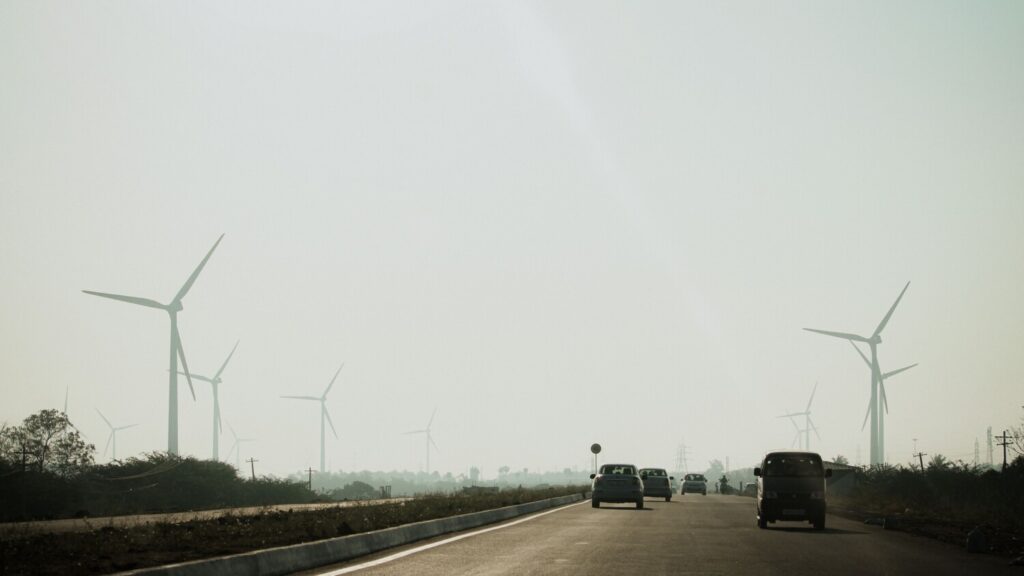
Brazil enters the AI supply chain with assets that extend beyond a single mineral deposit. Its large domestic market, established mining sector and broad resource base give outside powers reasons to treat it as more than an export platform. Brazil holds reserves of minerals used across energy and technology supply chains. Its industrial base gives it greater scope than many resource-rich states to pursue processing and manufacturing at home.
The central question is whether Brazil exports raw materials or uses access to them to negotiate a larger role in the value chain. Refining minerals, producing specialised materials, and building related industrial capacity would retain more investment, technical knowledge and employment within the country. Brazil’s government has framed critical-mineral policy around this objective, seeking foreign partnerships that support domestic processing, research and skills development rather than extraction alone.
Competition among China, the United States and Europe strengthens Brazil’s bargaining position. Each is seeking more secure and diversified access to minerals that support energy systems, advanced manufacturing and digital infrastructure. Brazil can use that interest to seek investment packages that include local facilities, technology partnerships and longer-term industrial commitments. Recent European engagement has focused explicitly on refining capacity and technology transfer, while Brazilian public institutions have committed funding to projects involving higher-value products such as permanent magnets, battery cells and photovoltaic components.
None of this guarantees that Brazil will move beyond an extractive role. Processing plants require capital, infrastructure, technical expertise and stable regulation. Foreign firms may still prefer to extract material in Brazil and carry out the most profitable stages elsewhere. Brazil’s potential influence lies in its ability to turn growing external demand into negotiated industrial gains, rather than allowing its resources to leave the country with little transformation.
Kazakhstan: Leverage Through Position
Kazakhstan will not compete with the leading developers of AI technology. Its relevance lies in the material networks that support the AI economy. Namely, the movement of minerals, industrial equipment and energy infrastructure across Eurasia. The country sits between China and Russia, with a westward outlet across the Caspian Sea. That geography has become more valuable as governments and firms search for routes that reduce dependence on a single corridor.
Kazakhstan has sought to preserve room for manoeuvre through a multi-vector foreign policy. It maintains relationships with China, Russia, the European Union and the United States, while avoiding exclusive dependence on any of them. Several outside powers, therefore, have an interest in Kazakhstan remaining stable, connected and open to investment. This gives Astana a stronger position in negotiations over infrastructure, market access and industrial partnerships.
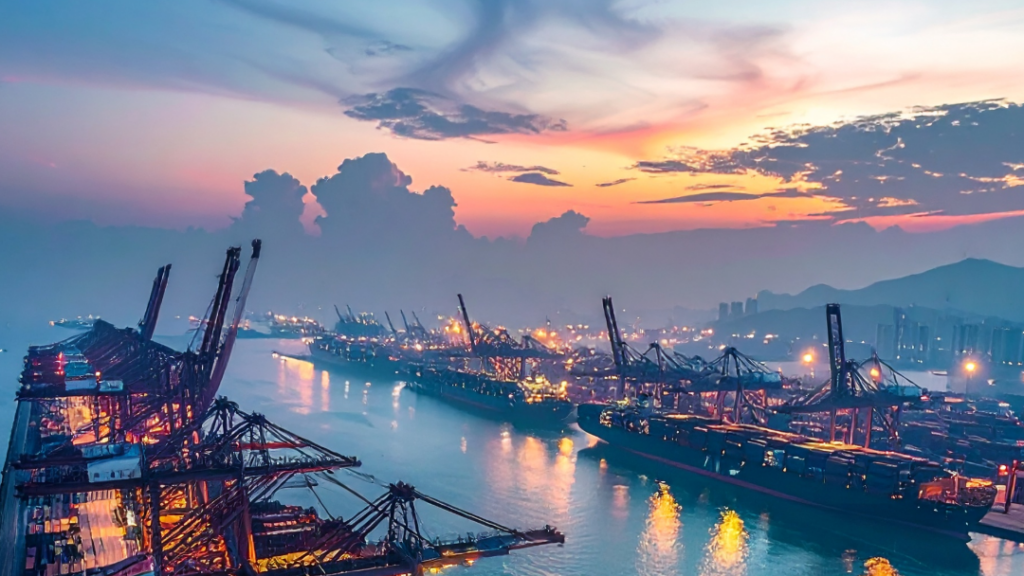
The Middle Corridor gives this strategy a physical form. It links Chinese and European markets through Kazakhstan and the South Caucasus, crossing the Caspian Sea before continuing towards Türkiye and European markets. The route offers an additional channel for freight, including industrial equipment, minerals and components used in energy and digital infrastructure.
Kazakhstan’s mineral base reinforces its value within these networks. It is the world’s largest uranium producer and can export 21 of the 34 critical raw materials on the European Union’s official list. These assets place the country within supply chains that larger powers are trying to diversify, even though Kazakhstan will remain outside the leading group of AI-producing states.
Geography alone will not secure lasting influence. Kazakhstan’s bargaining position depends on whether the Middle Corridor becomes reliable enough for firms to use at scale. Port capacity, rail links, customs systems and coordination across borders will decide whether its position develops into a durable source of leverage.
Frontier AI leadership will remain concentrated in the United States and China. Their firms command the largest pools of capital, computing power and technological expertise, while their governments shape access to advanced chips and other critical systems. The infrastructure beneath those models extends far beyond the two powers. Electricity networks, mineral processing, industrial capacity and transport routes are distributed across a wider group of states.
Brazil and Kazakhstan illustrate two ways that this wider geography can create bargaining room. Brazil can use its resource base, domestic market and industrial potential to seek a larger role in the value chains built around its minerals. Kazakhstan’s influence rests on connectivity, resources and the ability to maintain relationships across competing centres of power. Neither country will determine the direction of frontier AI. Both can shape the terms under which the infrastructure supporting it is built.
The emerging AI order is therefore more interconnected than the familiar US–China frame suggests. Great powers will remain dominant, yet their growing dependence on energy, materials, processing capacity and trade routes gives other states a greater role in the negotiations surrounding AI’s expansion. The race is still led from Washington and Beijing. Its foundations, and some of its future leverage, lie elsewhere.
Bibliography
Brazil, Ministry of Mines and Energy, “Brazil’s Critical Minerals: A Guide for Foreign Investors”, 2026, https://www.gov.br/mme/pt-br/assuntos/secretarias/geologia-mineracao-e-transforma cao-mineral/guia-investidor-minerais-criticos/guia-investidor-estrangeiro-em-minerais criticos/2026/investors-guide-en-us.pdf.
International Energy Agency, “Energy and AI”, Paris: International Energy Agency, 2025, “AI and Energy Security.” https://www.iea.org/reports/energy-and-ai/ai-and-energy-security.
International Energy Agency, “Global Critical Minerals Outlook 2025”, Paris: International Energy Agency, 2025. https://www.iea.org/reports/global-critical-minerals-outlook-2025.
Jordaan, Eduard, “The Concept of a Middle Power in International Relations: Distinguishing between Emerging and Traditional Middle Powers”, Politikon: South African Journal of Political Studies, 30, no. 1 (2003): 165–181. https://doi.org/10.1080/0258934032000147282.
Kazakhstan, President of the Republic of Kazakhstan, “On the Concept of the Foreign Policy of the Republic of Kazakhstan for 2020–2030”, Decree No. 280, March 6, 2020. https://www.akorda.kz/en/legal_acts/decrees/on-the-concept-of-the-foreign-policy-of -the-republic-of-kazakhstan-for-2020-2030.
Organisation for Economic Co-operation and Development, “Advancing Security and Transparency for the Governance of Critical Raw Materials in Central Asia”, Paris: OECD Publishing, 2026. https://doi.org/10.1787/42a74a65-en.
Organisation for Economic Co-operation and Development, “Competition in Artificial Intelligence Infrastructure”, OECD Roundtables on Competition Policy Papers, no. 330, Paris: OECD Publishing, 2025. https://doi.org/10.1787/623d1874-en.
World Bank, “The Middle Trade and Transport Corridor: Policies and Investments to Triple Freight Volumes and Halve Travel Time by 2030”, Washington, DC: World Bank, 2023. https://www.worldbank.org/en/region/eca/publication/middle-trade-and-transport-corridor.