Smarter Defence, Stronger Nations: The Critical Case for Advanced Capabilities in the UK
Why Britain must invest in advanced military technologies to deter threats, enhance alliance security and safeguard its global influence.
Recent conflicts have forced Britain to acknowledge the changing landscape of warfare and stressed the critical importance of adopting advanced capabilities. On June 1st, 2025, Ukrainian forces launched Operation Spiderweb, deploying over 100 drones, which struck multiple Russian air bases deep within Russian territory. Within just three months, Russia responded by integrating AI-powered drones into its own military operations (Horowitz, 2025; Hambling, 2025).
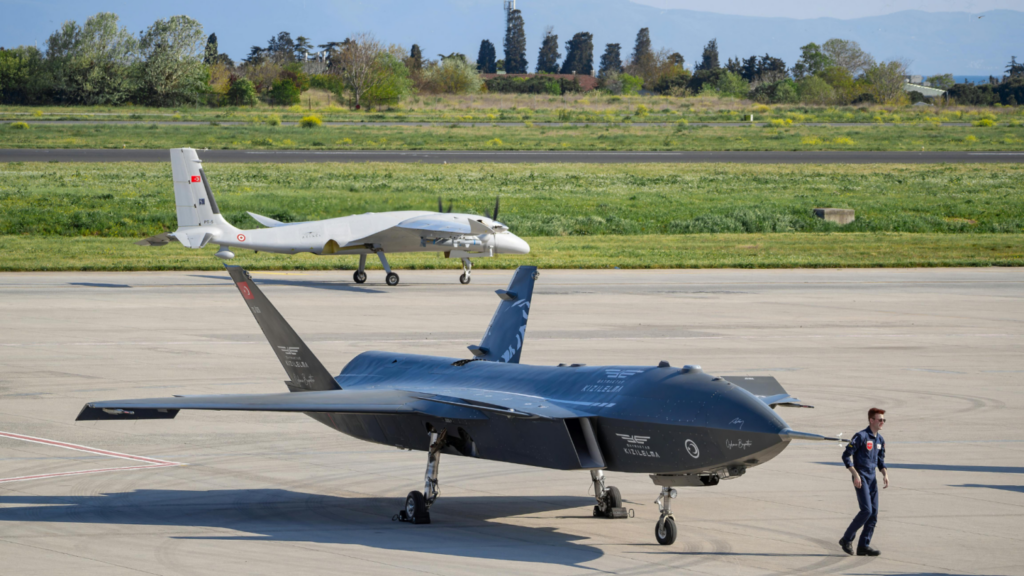
In this case, advanced capabilities refer to highly sophisticated and technologically advanced weapons and systems. The weapons are made ‘advanced’ by their increased speed, accuracy and ability to enhance operational effectiveness. These may include drones, AI, cyber warfare and lethal autonomous weapons systems.
We are entering a new arms race, defined and shaped by the integration of AI and autonomous systems. This prospect should not instill fear, but it demands cautious consideration. Rather than succumbing to paranoia over ‘killer robots’, policymakers should pursue the responsible adoption of advanced capabilities. Pursued effectively, these advanced capabilities will increase operational effectiveness, act as a credible strategic deterrent, and modernise the UK’s resources.
It is crucial for the UK to reevaluate its defence strategy to include these capabilities; failure to do so risks not just obsolescence in global defence, but exposure to new vulnerabilities.
Context and Transformation of Warfare
The shift from traditional warfare to today’s battles of machines over soldiers demands a distinctly different approach from that of the past. Technological advancements have shaped Britain’s defence doctrine in the past, and it is important they do so again.
AI and autonomous systems enable battles to be fought at lightning speed with persistent surveillance, rapid data analysis, and precision – attributes critical to modern counterinsurgency and hybrid warfare domains. Autonomous systems are redefining warfare, as seen in the rapid integration of drone swarms capable of coordinated strikes without human input.
Advanced capabilities have, so far, determined the course of the Russo-Ukrainian war, rapidly increasing the speed at which these technologies are being developed. In December 2024, Ukraine launched its first fully unmanned operation near Lyptsi, where drones and UGVs successfully dislodged Russian forces (Bondar 2025). Additionally, Ukraine has deployed the Bayraktar TB2 drone, which used its autonomous flight, target acquisition, and precision strike capabilities to neutralise a Russian 122mm D-30 howitzer, thereby minimising risks to civilians. (Connolly, 2022; Kay, 2021).
As Britain and its allies invest in advanced capabilities, so too do hostile nations. Over the past two years, the UK has endured 90,000 cyber attacks from hostile actors, with these relentless assaults growing in sophistication (Ministry of Defence, 2025). Meanwhile, China is advancing military AI capabilities and investing heavily in emerging technologies. Their vast economy, combined with close military-civilian integration, allows for rapid deployment of cutting-edge technologies. Russia has established itself as a formidable cyber adversary, engaging in a form of hybrid warfare. The government has determined their responsibility for some of the most recent and devastating UK cyber attacks (Development Office, 2025). These threats illustrate that technological superiority and cybersecurity resilience are paramount to national security.
The Strategic Defence Review recommended ‘a shift towards greater use of autonomy and Artificial Intelligence within the UK’s conventional forces’ (Ministry of Defence, 2025a, p. 20). This is a promising stride forward for the UK, but the country’s ambitions must not simply be reactionary to the progress of potential adversaries. Instead, Britain should draw inspiration from its successful allies and recognise the compelling opportunity to reassert itself as a leading security power. Without recognition of the substantial operational and strategic advantages that advanced capabilities offer – the nation risks weakened deterrence and undermines its long-term security and influence.
Why Advanced Capabilities Are Imperative
As evidenced in Ukraine, AI and autonomous systems represent a transformative leap in military operational effectiveness, particularly in asymmetric environments where traditional methods struggle.
Autonomous drones and AI increase target success rates from 10–20% to 70–80% (Bondar, 2025). Unlike humans, they evaluate target size, orientation, and possible obstructions to distinguish combatants from civilians more accurately than human operators, reducing civilian casualties and thereby maintaining military legitimacy and public support (Saeed et al., 2019).
Not only do autonomous systems improve accuracy, they do so at great speed. AI enhances data processing speed and facilitates more proactive security measures, preventing attacks and operational errors by tracking threat patterns (Chowdhury et al., 2024). AI can anticipate threats, predict insurgent movements, and streamline decision-making under pressure, without the typical human drawbacks, allowing forces to respond to emerging threats flexibly and rapidly. Past counterinsurgency operations have been plagued by two major issues: intelligence shortfalls and slow decision-making. Autonomous systems present a genuine opportunity to address these persistent challenges by facilitating more proactive security measures, preventing attacks, and reducing operational errors by tracking threat patterns (Chowdhury et al., 2024).
Counterintuitive to the ‘killer robot’ conception, autonomous systems possess a real ability to reduce human risk. Autonomous platforms such as UAV swarms, unmanned ground vehicles (UGVs), and AI-guided missile systems allow military personnel to conduct operations with minimised exposure to hazardous frontline combat. Autonomous systems not only offer the opportunity to save the lives of military personnel, but also civilians. Increased precision strikes will reduce collateral damage and possibly prevent further attacks.
Autonomous systems offer the opportunity to enhance operational effectiveness while playing a vital role in establishing a credible and forward-looking strategic defence posture. Advantage lies not only in establishing a firm UK deterrent; these systems also offer a crucial opportunity to reposition the UK back into NATO’s centre stage. Similar to the deterrent effect of nuclear weapons during the Cold War, advanced capabilities raise the stakes for potential adversaries. Not only are attacks less appealing, they are operationally much harder to execute. The UK’s deployment of integrated AI systems enables quicker, multi-domain responses across land, sea, air, cyber, and space domains. Aggression against the UK or its allies is thus less feasible.
Alongside maintaining technological parity, the UK must focus on establishing itself as a global defence innovator, or risk technological obsolescence and exposure to greater risks. Through spearheading NATO’s Common Digital Foundation initiative, the UK has boosted collective security by driving interoperability, dynamising intelligence sharing, and enhancing multi-domain warfare capabilities (Giordano, 2025). This initiative reinforces alliance cohesion and strengthens Britain’s role within NATO. Crucially, this platform must also be used to set ethical standards for the use of these weapons in order to effectively address existing concerns regarding their deployment. As competitors rapidly develop their autonomous capabilities, NATO’s technological alliance will be a critical advantage in securing field dominance.
The UK has long been a global leader in setting standards and norms; it is essential to continue this trend through the integration of advanced capabilities. By being early adopters, the UK can establish ethical standards, assist allied nations, and influence both domestic and international legislation governing these weapons. This strategy could also strengthen Britain from a soft power perspective.
Aside from operational and strategic benefits, the integration of autonomous systems offers a key opportunity to remedy some of Britain’s prevailing defence challenges. It is no secret that the British military has struggled in recent years, with rising recruitment challenges and a constrained defence budget leaving senior personnel frustrated (Thomas, 2025). Advanced capabilities provide a vital solution not only to sustain but to enhance British military capability while focusing on cost-effectiveness and sustainability. Autonomous platforms function at a significantly lower operational cost compared to manned operations. For example, swarm drones offer scalable, reusable tactical assets. This reduces personnel requirements and optimises resource allocation, enabling forces to maintain high readiness and adaptability while managing budgets more sustainably (Smith, 2023).
One of the most significant advantages of unmanned systems is their ability to lower human risk and preserve lives, a perspective often overlooked. Autonomous systems do not replace boots on the ground, but they do enable a smaller force to conduct larger and more complex operations. AI-supported systems allow for continuous intelligence, surveillance, and reconnaissance without the fatigue or risk limitations which accompany human soldiers.
Addressing Concerns Surrounding Autonomous Systems
Concern and political debate surrounding this topic is significant, driven largely by fears of ‘killer robots’ operating without human oversight. Understandably, these concerns raise serious questions of morality, legality, and safety about the delegation of such serious decisions to machines. The UK government and Parliament have engaged actively with these ethical issues, emphasising frameworks that stress meaningful human control, rigorous AI testing and certification, and transparency in deployment to ensure accountability and civilian protection (Kelly, 2022).
Britain should take the reins, maintaining its tradition as a defence leader and innovator, by setting global standards and shaping legislation for the ethical use of these weapons. This proactive approach will ensure that the UK remains at the forefront of technological advancement while safeguarding its strategic interests and upholding international norms.
Britain’s leadership is vital in preventing irresponsible proliferation and unintended escalation. This includes careful scrutiny of private defence technology firms, such as Palantir, ensuring their AI developments align with existing legislation while facilitating innovation that benefits military effectiveness. The UK is uniquely positioned to lead an ethically informed adoption of AI in defence, balancing operational advantages with adherence to international humanitarian law. As the laws of warfare are being rewritten, Britain must also reconsider domestic legislation to ensure that these weapons do not violate human rights.
Ethical regulatory failures are a serious question to answer as autonomous systems continue to develop apace. Beyond simple domestic backlash, nations must concern themselves with setting international standards and the consequences of violations. Autonomous systems are becoming a key part of defence diplomacy; Britain must strike a careful balance between advocacy and caution to secure moral leadership alongside military advantage.
The rapid evolution of warfare means the UK cannot delay. Without swift action, we risk falling behind our adversaries. Britain’s existing strengths in defence innovation, military leadership, and robust alliances place us in a unique and valuable position to adopt AI responsibly and effectively.
It is crucial that the UK implements a multi-faceted approach to fully and safely harness AI and autonomous systems in defence. The government must pursue the rapid procurement of autonomous drones and unmanned ground vehicles, drawing on Ukraine’s success and reducing frontline risk. These weapons should undergo rigorous testing programmes to evaluate the effectiveness of hybrid systems and refine operational doctrine. Investment in AI-driven cyber defence will strengthen efforts to combat increasingly sophisticated attacks; close collaboration with the private sector and NATO allies is vital to improve intelligence sharing and enhance alliance-wide interoperability, which will bolster collective cyber resilience. Perhaps the largest challenge is addressing ethical concerns. The UK must lead in the establishment of ethical and legal frameworks which ensure that meaningful human oversight complies with international law. Public engagement efforts will aid in addressing ethical concerns and reinforce transparency. Implementing these policies will safeguard the UK’s strategic advantage, ensure effective implementation, and establish ethical leadership in the emerging technological battlefield.
Recent years have ushered in a new era where defensive strength is defined by technological innovation rather than sheer manpower. The safety of the United Kingdom, our defence credibility, and moral integrity hinge on our ability to safely and effectively integrate autonomous systems into our defence plans. We have the opportunity to protect personnel, deter attacks, and set the global standard. It is imperative that we take this opportunity. This is a transformative moment; the UK must seize it to lead the efforts toward a smarter and ethically informed defence environment or risk becoming strategically irrelevant and operationally vulnerable in an evolving security landscape.
Bibliography
- Bondar, K. (2025) Ukraine’s Future Vision and Current Capabilities for Waging AI-Enabled Autonomous Warfare. [online] Csis.org. Available at: https://www.csis.org/analysis/ukraines-future-vision-and-current-capabilities-waging-ai-enabled-autonomous-warfare.
- Chowdhury, R., Prince, N., Abdullah, S. and Mim, L. (2024) ‘The role of predictive analytics in cybersecurity: Detecting and preventing threats’, World Journal of Advanced Research and Reviews, 23(2), pp. 1615–1623. doi: 10.30574/wjarr.2024.23.2.2494.
- Connolly, C. (2022) Weapons systems with autonomous functions are used in Ukraine. [online] Automated Decision Research. Available at: https://automatedresearch.org/news/weapons-systems-with-autonomous-functions-used-in-ukraine/.
- Development Office (2025) UK smashes Russian cybercrime networks responsible for attacks on UK businesses. [online] GOV.UK. Available at: https://www.gov.uk/government/news/uk-smashes-russian-cybercrime-networks-responsible-for-attacks-on-uk-businesses.
- Giordano, P. (2025) Digital Transformation: Building the Foundations for a Multi-Domain Operations Enabled Alliance – NATO’s ACT. [online] NATO’s ACT. Available at: https://www.act.nato.int/article/data-centricity/.
- Hambling, D. (2025) ‘Russia Has An Arsenal Of New AI Drones Built With Smuggled Nvidia Chips’, Forbes, 8 Aug. [online] Available at: https://www.forbes.com/sites/davidhambling/2025/08/08/russia-has-an-arsenal-of-new-ai-drones-built-with-smuggled-us-chips/.
- Horowitz, M.C. (2025) Ukraine’s Operation Spider’s Web Shows Future of Drone Warfare. [online] Council on Foreign Relations. Available at: https://www.cfr.org/expert-brief/ukraines-operation-spiders-web-shows-future-drone-warfare.
- Kay, L. (2021) Ukrainian Military Deploys Turkish-made Bayraktar Drone in Donbas. [online] Defence World. Available at: https://www.defenseworld.net/2021/10/27/ukrainian-military-deploys-turkish-made-bayraktar-drone-in-donbas.html#.YXlXmZ5ByUk.
- Kelly, B. (2022) Enabling the responsible use of AI in defence – Responsible Technology Adoption Unit Blog. [online] rtau.blog.gov.uk. Available at: https://rtau.blog.gov.uk/2022/06/15/enabling-the-responsible-use-of-ai-in-defence/.
- Ministry of Defence (2025) UK to deliver pioneering battlefield system and bolster cyber warfare capabilities under Strategic Defence Review. [online] GOV.UK. Available at: https://www.gov.uk/government/news/uk-to-deliver-pioneering-battlefield-system-and-bolster-cyber-warfare-capabilities-under-strategic-defence-review.
- Ministry of Defence (2025a) Strategic Defence Review. [online] Available at: https://assets.publishing.service.gov.uk/media/ 683d89f181deb72cce2680a5/The_Strategic_Defence_Review_2025_-_Making_Britain_Safer_-_secure_at_home__strong_abroad.pdf.
- Saeed, A., Abdelkader, A., Khan, M., Neishaboori, A., Harras, K.A. and Mohamed, A. (2019) ‘On Realistic Target Coverage by Autonomous Drones’, ACM Transactions on Sensor Networks, 15(3), pp. 1–33. doi: 10.1145/332512.
- Smith, B. (2023) ‘AI-Powered Drones in the Russia-Ukraine Conflict: A Case Study’, Journal of Cyber Policy, 5(2), pp. 78–93.
- Thomas, R. (2025) What is the UK Government hiding from defence observers? [online] Army Technology. Available at: https://www.army-technology.com/news/what-is-the-uk-government-hiding-from-defence-observers/?cf-view