How Much Is Too Much? A Defensive Realist Analysis of Japan’s Military Buildup
From the perspective of defensive realism, the critical question is not whether Japan is building up its military, but how much is too much before Japan’s buildup provokes the very threat it seeks to deter.
Defensive realism holds that states seek security, not hegemony, and when one state builds up its forces, neighbouring states perceive that buildup through the lens of their own vulnerabilities and respond accordingly. The result is the security dilemma, a structural trap where each side’s precautionary measures become the other’s justification for further arming. Japan’s trajectory sits directly inside this trap.
At the 2026 Shangri-La Dialogue in Singapore, US Defence Secretary Pete Hegseth declared that the US would not walk away from Asian allies, but his reassurance came with a sharp condition that allies must boost defence budgets to 3.5 per cent of GDP, while warning of China’s rapid military expansion. The reactions across the region showed divided responses. Australia’s Prime Minister Albanese publicly said his government would determine its own defence spending rather than commit to 3.5 per cent of GDP. South Korea defended its trajectory, saying its defence spending is already higher than most NATO member states. While Hegseth praised several Indo-Pacific partners for increasing defence spending, Japan alone embraced the target without resistance.
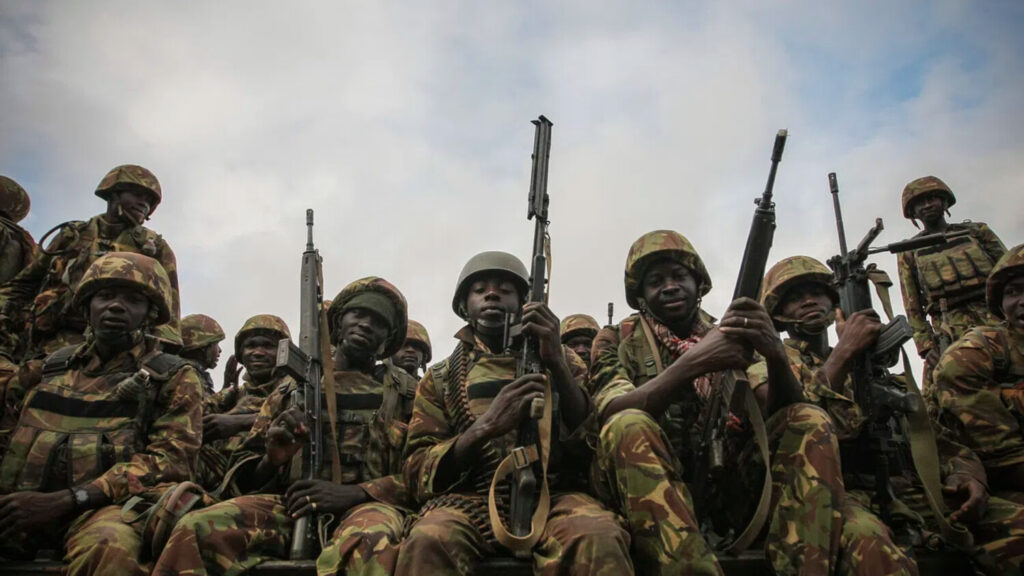
Japan’s acceptance is both exceptional and consequential. Under Prime Minister Sanae Takaichi, Japan has launched the largest defence buildup in its postwar history, accelerating spending to 2 per cent of GDP two years ahead of schedule and approving a record budget exceeding 9 trillion yen or about 58 billion USD. For decades, Japan capped defence spending at roughly 1 per cent of GDP, which was a deliberate expression of postwar pacifist norms that has now been abandoned. The country is developing long-range counterstrike missiles, coastal defence systems, and unmanned arsenals that were constitutional red lines for decades.
Japan’s unique acceptance lies in how it views China. For Australia and South Korea, China is both a security challenge and an economic partner, but Japan sees China as an existential threat due to historical antagonism and ongoing territorial disputes in the East China Sea. China’s military modernisation, coercion in the East China Sea, and proximity to the Senkaku Islands challenge Japanese sovereignty directly, and this perception was further sharpened by Japanese Defence Minister Shinjiro Koizumi’s rejection of “new militarism“ accusations at the Shangri-La Dialogue. The same threat perception made Takaichi’s warning about Taiwan so politically consequential. She stated that a Chinese attack on Taiwan could threaten Japan’s survival, signalling that Tokyo might use force under the 2015 security laws. China responded with economic coercion, but Takaichi refused to back down.
Japan is investing heavily in standoff missile capability, allocating significant resources to long-range systems including an upgraded Type-12 surface-to-ship missile with a range of approximately 1,000 kilometres. The country is co-developing next-generation fighter jets with Britain and Italy, deploying a drone shield combining unmanned aerial, surface, and undersea assets, and accelerating co-production with the US, framing industrial capacity as central to deterrence. What makes this buildup unique is not just the budget, but what Tokyo does with it. Japan is co-developing and mass-producing advanced missile systems with the US under Operation Supercharge, which represents a shift from purely defensive forces to deterrence including offensive strike capabilities, a transformation that was politically impossible a decade ago. Takaichi’s government is pursuing constitutional revision, legitimising these changes and making this the first time since 1945 that Japan has deliberately redefined its postwar identity.
Japan’s government frames every element as defensive, and Takaichi argues that Japan must take the initiative in strengthening capabilities. Japan’s 2022 security strategy names China as the greatest strategic challenge while endorsing a more offensive role for the Self-Defence Force under the US alliance, with the underlying logic being deterrence by denial. But defensive realism raises a troubling question about the point at which Japan’s buildup crosses from deterrence to provocation, as China reads the same evidence differently. China’s Foreign Ministry states that Japan is deviating from peaceful development, and from Beijing’s vantage point, long-range missiles reaching Chinese territory do not look defensive regardless of what Japan calls them. This divergence is how security dilemmas escalate, since Japan’s standoff missiles sit in an ambiguous space where a missile destroying a launch pad before it fires is a counterforce weapon, and whether it is intended for pre-emption or retaliation, the adversary cannot always know. Van
Evera’s offence-defence theory is clear on this point. When offence dominance takes hold or is even perceived, states arm faster, arms control becomes harder, and the risk of war rises. While Japan does not want this environment, wanting and doing differ, as acquiring systems that appear offensive, particularly long-range strike missiles near disputed territories, shifts the regional balance in ways Japan cannot fully control through declaratory policy alone.
Japan’s buildup is also compounded by something defensive realism has not fully explained, which is uncertainty not about the adversary but about the patron. Standard defensive realism explains why states seek security by focusing on uncertainty about what their rivals want, whether a rival is benign or aggressive. Japan’s case adds a second layer of uncertainty about whether its patron will stay reliable. Glenn Snyder’s alliance security dilemma framework establishes that states depending on a patron fear being abandoned, and the more they rely on that patron, the more they worry. Japan’s rapid military buildup is how that fear shows up in practice. Snyder predicts this problem should be less severe in structurally stable alliances where abandonment is not a credible threat, but the Trump administration’s unpredictable behaviour on alliances has brought back fears of abandonment even though the balance of power has not changed.
This suggests that political instability at the patron level can create the same abandonment pressures that usually appear in multipolar systems, even inside what looks like a stable alliance. Defensive realism has not seriously examined how this kind of uncertainty within an alliance makes the usual security problem with adversaries worse, and Japan’s case shows the theory needs to be expanded. The consequences show up in the numbers, given that nearly 1 trillion yen of the expanded defence budget went unspent, suggesting that the rush to show commitment moved faster than actual strategic planning. Koizumi pressed Hegseth on whether the US could be relied on, and Hegseth replied that the US is not turning away from Asia but expects allies to invest more heavily, making Japan’s historic buildup and the US conditional commitment the defining features of this alliance moment.
So how much is too much? Defensive realism suggests the answer is not a fixed number. Japan’s buildup may be defensible on deterrence grounds, but the logic driving it creates pressure toward further expansion with no natural ceiling. When a state builds to deter an adversary and hedge against an unreliable patron, the two anxieties compound. Satisfying one does not satisfy the other, and each new increment raises the threshold for what feels like enough. Too much is not where Japan is today, but it is wherever Japan’s next increase triggers a Chinese response that leaves Japan less secure, and the combination of a threat from China and uncertainty about whether the US will stay reliable makes that point easier to reach than either problem would on its own.
The 2026 Shangri-La Dialogue revealed a new Asian reality. Japan is undergoing its most significant military transformation since World War II, the American commitment is explicit but conditional, and Japanese power is quietly redefining the postwar order. The danger is not that Japan is building, but that the forces pushing Japan to build more have no obvious stopping point, and defensive realism offers no mechanism to tell when deterrence becomes provocation until after the escalation has already begun.
References
Asia, C.N. (2026) “Pete Hegseth: US defense secretary at Shangri-La Dialogue 2026,” Channel News Asia [Preprint]. Available at: https://www.channelnewsasia.com/asia/pete-hegseth-us-defense-secretary-shangri-la-dialogue-2026-6150881.
Bekampis, J. (2023) “China’s Rising Military Threat in the Indo-Pacific Region: Change in Japan’s Defence Policy in 2013–2022,” Lithuanian Annual Strategic Review [Preprint]. Available at: https://doi.org/10.47459/lasr.2023.21.2.
Daily, K.J. (2025) “US may require Korea to spend 5% of GDP on defense,” Korea JoongAng Daily [Preprint]. Available at: https://koreajoongangdaily.joins.com/news/2025-06-20/national/defense/US-may-require-Korea-to-spend-5-of-GDP-on-defense/2335047.
Defense, B. (2026) “UK eyes sixth-generation GCAP fighter contract signing in weeks,” Breaking Defense [Preprint]. Available at: https://breakingdefense.com/2026/06/uk-eyes-sixth-generation-gcap-fighter-contract-signing-in-weeks/.
Evera, S.V. (1998) “Offense, Defense, and the Causes of War,” International Security, 22(4), pp. 5–43. Available at: https://doi.org/10.1162/isec.22.4.5.
Independent, T. (2025) “Japan missiles Type 12 China,” The Independent [Preprint]. Available at: https://www.independent.co.uk/asia/japan/japan-missiles-type-12-china-b2948932.html.
Jazeera, A. (2025a) “Japan govt greenlights record $58bn defence budget amid regional tension,” Al Jazeera [Preprint]. Available at: https://www.aljazeera.com/news/2025/12/26/japan-govt-greenlights-record-58bn-defence-budget-amid-regional-tension.
Jazeera, A. (2025b) “US urges Australia to increase defence spending to 3.5% of GDP,” Al Jazeera [Preprint]. Available at: https://www.aljazeera.com/news/2025/6/2/us-urges-australia-to-increase-defence-spending-to-3-5-of-gdp.
NPR, N. (2025) “Japan PM warns China that attack on Taiwan could trigger military response.” Available at: https://www.npr.org/2025/11/17/nx-s1-5610418/japan-pm-warns-china-that-attack-on-taiwan-could-trigger-military-response.
Reuters, R. (2026) “Japan pushes back against accusations of ‘new militarism,’” Reuters [Preprint]. Available at: https://www.reuters.com/world/china/japan-pushes-back-against-accusations-new-militarism-2026-05-31/.
Snyder, G.H. (1984) “The Security Dilemma in Alliance Politics,” World Politics, 36(4), pp. 461–495. Available at: https://doi.org/10.2307/2010183.
Taliaferro, J.W. (2001) “Security Seeking under Anarchy: Defensive Realism Revisited,” International Security, 25(3), pp. 128–161. Available at: https://doi.org/10.1162/016228800560543.
Times, B. (2026) US Hegseth hails Asian partners boosting security spending, omits Taiwan roll call, Business Times. Available at: https://www.businesstimes.com.sg/singapore/us-hegseth-hails-asian-partners-boosting-security-spending-omits-taiwan-roll-call.
Times, T.J. (2025) “Japan defense budget drones,” The Japan Times [Preprint]. Available at: https://www.japantimes.co.jp/news/2025/08/29/japan/japan-defense-budget-drones/.
Times, T.J. (2026) “Japan US Hegseth Koizumi missiles,” The Japan Times [Preprint]. Available at: https://www.japantimes.co.jp/news/2026/05/30/japan/us-japan-hegseth-koizumi-missiles/.
Xinhua (2025) “China says Japan deviates from peaceful development.” Available at: https://english.news.cn/20251226/93fc8e570bcd47ed92ae4f77bd0b8d51/c.html.