How America’s Illegal Invasions Disrupt the Expansion of China’s Economic Growth
In a unipolar world lasting since the collapse of the Soviet Union, one dominant powerhouse was left in control of the world’s political and economic structure. The United States, sitting on a separate landmass tucked away from potential competitors by two oceans, held a unique geopolitical position.
This position gave vast opportunity for vital internal growth to expand and allowed a rich and resourceful nation to develop even further. America’s foreign policy allowed healthy trade, exporting internal supplies throughout the world in return for money and influence, while maintaining a respected voice in the international system. It had no rivals economically or militarily and became the policeman of the world, supporting and implementing human rights ideologies and social constructions which became heavily influential throughout the Western world.
In the last five to ten years, this superpower has seen rising powers that match it militarily, but also rival powers which compete not just militarily, but economically and politically too: Russia and China.
Russia, with its huge natural gas reserves, massive nuclear warheads, and large standing army, has the people of Europe currently spooked, especially with a fellow European power under attack in Ukraine. Secondly, America’s most threatening adversary, China, is unlike Russia in that it is a more prominent threat with an increasingly quick expansion, from its naval presence in the Asian Pacific, to its economic and trade power in all regions of the world, to a self-sufficient independent network which shows evidence of functioning as a self-sufficient nation without the importance of cooperating on a global stage if required.
China is notorious for its geopolitical features, with a warm climate and consistent rainfall which makes two harvests a year possible (Marshall, 2015). Furthermore, with projects like the Belt and Road Initiative designed by Xi Jinping in 2013, China launched a global infrastructure development plan aimed at helping countries connect worldwide and collaborate through trade and investments, stretching from Asia to Europe and Africa.
This initiative can be seen as a rival to the current US global design known as the Liberal international order, whose design was intended to create a congruent global structure with the aim of preventing another world war. China’s rapid industrial expansion is linked to its global trade through foreign infrastructure, buying and building across the world. While this can appear to be a healthy development plan on the outside, with third world countries benefiting from Chinese investment, other powers such as the US see an alternative, more sincere strategy from China (Xiaoyang, 2024).
China’s foreign investments can also make some powers uncomfortable and even insulted, as seen in the recent tension between London and Beijing. A Chinese company called Jingye Group refused to continue holding its original agreement of buying certain raw materials, which added tension and threatened to close blast furnaces at the British steel factory. This would have meant the UK becoming the only country in the G7 unable to produce its own virgin steel (Gregory, 2025).
America has taken actions to control China’s rapid industrial expansion, but most notably this has been seen under Trump’s administration. America has been seen through the liberal media to move away from the notion of soft power and towards a more hardened power concept. Firstly, Trump’s trade war targeted high percentages of tariffs towards China with the aim of forcing China to change its current trade practices with America, and to undo any unfair trade practices which America believed China were showing negligence towards and negatively affecting American businesses. This resulted in over $60 billion in tariffs on Chinese goods. Moreover, the US has also restricted Chinese companies such as the telecommunications giant Huawei, and has spoken out against Beijing’s new rule related to Hong Kong’s human rights law, as well as having shown solidarity towards Taiwan and increased its naval presence in the region (O’Rourke, 2024).
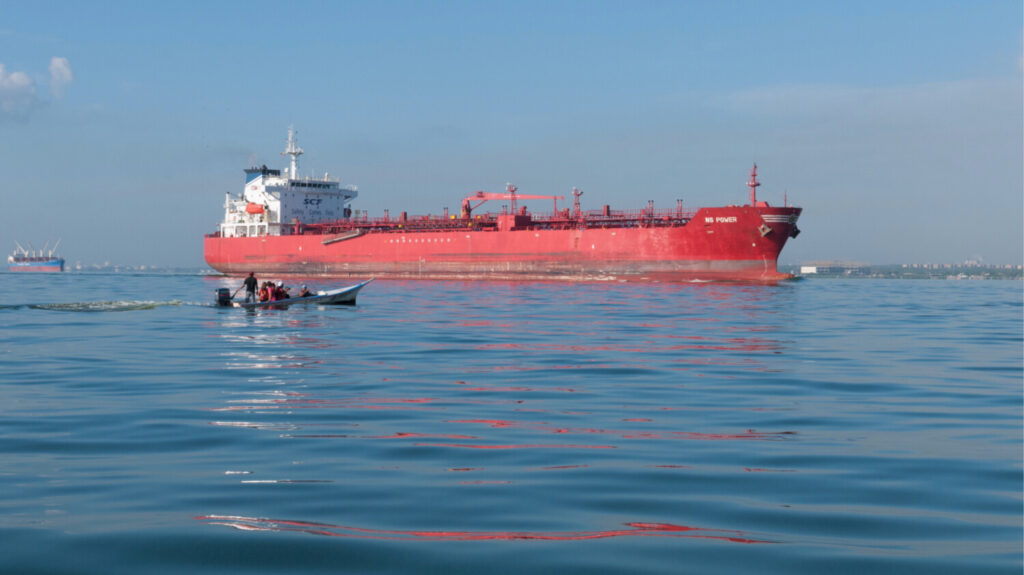
In current affairs terms, America’s hard power approach can be seen as a giant step in attempting to control China’s fast global climb. It has been noted that some kind of strategy may be at play with the current regime’s notable actions. It is globally known that China has been investing heavily in Latin America, with $60 billion in loans given to Venezuela, and roughly 3–4 percent of China’s oil coming from Venezuela (Federici, 2026). Even if it is a small percentage, hitting Venezuela has stopped vast opportunities for Chinese business growth in the region.
The current situation unfolding in Iran has many publicly stated reasons for the actions of the American administration, but perhaps there is one more reason which is notably not openly discussed: the current relationship between Iran and China.
Beijing has decisively invested billions into creating a structural system in Iran where they can be a valuable economic partner. With last year’s 12-day war between Iran and Israel and the current war involving America bombing military sites, munition factories, and senior cabinet ministers including the supreme leader, those actions can be seen as more than simply punishing Iran, but also as a way of controlling China’s regional economic structure.
China has publicly condemned this war, which is not surprising as Iran supplies around 13 percent of China’s oil, while many oil fields are reportedly being targeted. Reportedly 91 percent of Iran’s oil exports go to China, which shows the value and importance of the relationship, as a huge amount of Iran’s economy relies on it. However, the two rival powerhouses to America remain relatively silent. Russia’s strategic alliance with Iran, shared technology links, and Russia’s own trade interests suggest that in the action of war, China and Russia would rather keep themselves independent rather than directly confront the one rival they fear can disrupt them all (Riboua, 2026).
Bibliography
- Gregory, A. (2025). What happened with British Steel’s Chinese owners and why have the government now taken control? The Independent.
- Marshall, T. (2015). Prisoners of Geography. London: Elliott & Thompson.
- O’Rourke, R. (2024). Great Power Competition: Implications for Defense—Issues for Congress. Congressional Research Service.
- Riboua, Z. (2026). The Iran Strike Is All About China. The Free Press.
- Xiaoyang, Z. U. (2024). How Is China’s Economic Transition Affecting Its Relations With Africa? CARNEGIE ENDOWMENT FOR INTERNATIONAL PEACE.