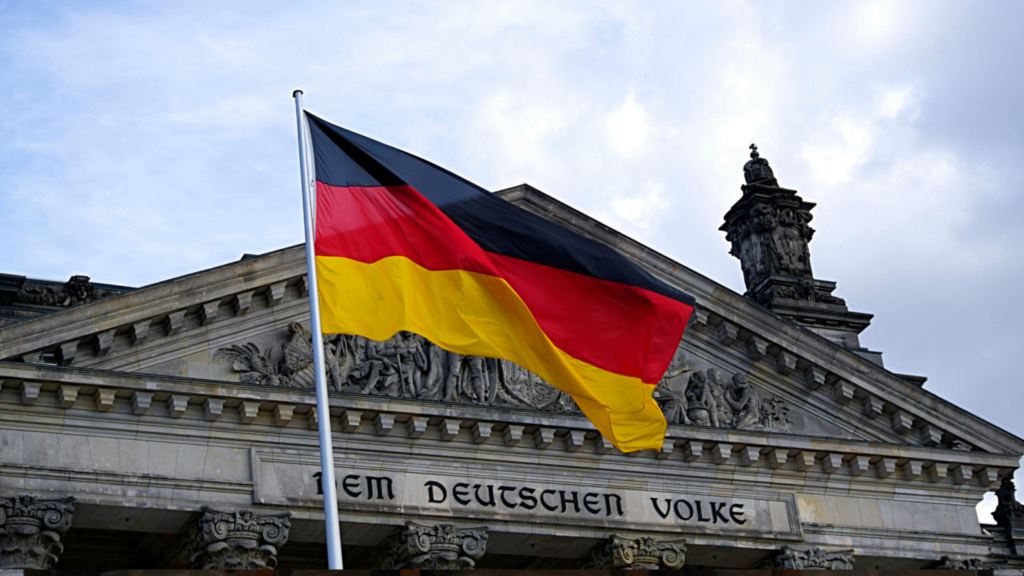
Germany’s Path to Kriegstüchtigkeit: The 2026 Defence Budget
On November 28, 2025, Germany approved a €524.54 billion budget for 2026. The new budget allocates €82.69 billion for the German Armed Forces (Bundeswehr), about 15% of the budget (Deutscher Bundestag, 2025). Although the target of spending 3.5% of GDP by 2029 remains unlikely, Germany’s defence spending trajectory has shifted decisively upward, with the 2026 budget marking another major step in Berlin’s rearmament efforts.
Germany’s 2026 budget reflects Berlin’s more serious and sober approach to defence policy and its NATO role. If Berlin is able to deliver on its plan to rearm itself and become the ‘strongest conventional army in Europe’ (Nöstlinger, 2025), the rest of Europe, the US and Russia will have to adjust to this new, well-armed Germany.
Breakdown and Main Takeaways
The budget defines a broad operational remit for the Bundeswehr, reflecting both NATO commitments and expanding domestic and international responsibilities. The primary tasks being:
- National and collective defense as a core mission within the framework of NATO
- Military contributions to the Federal Government’s international crisis management within the framework of international organizations, alliances and partnerships
- Homeland security, national crisis and risk preparedness and subsidiary support services in Germany within the scope of available capacities
- Partnerships and cooperation
- Humanitarian emergency and disaster relief
The 2026 budget is around €82.6 billion; this is a €20.2 billion increase from the 2025 budget. Combined with the Special Fund (Sondervermögen), total defence spending is around €108 billion (Einzelplan 14, 2025).
Military procurement saw the largest increase, rising by €16.8 billion to account for 27.06% of the defence budget. Many of these items are basic yet essential, such as €1.5 billion for new vehicles and their accessories (554 06) or €1.89 billion for field equipment (554 10). Furthermore, the Special Fund (Sondervermögens) allocates a further €25.5 billion and it includes items such as €2.74 billion for upgrading and digitizing Bundeswehr vehicles (554 32), or acquiring new assets and capabilities like; funding for ground-based air defense systems (554 59 and 554 63) or €1.4 billion for the growing PUMA IFV fleet (554 45) (Halna du Fretay, 2025).
Lessons Learned
The budget also reflects lessons the Bundeswehr has drawn from the war in Ukraine. For instance, the vital role of intelligence on the modern battlefield has been proven beyond any doubt. The modern battlefield is transparent. Consequently, the Bundeswehr is investing heavily in space and cyber capabilities. Berlin plans to invest billions over the years to fill this capability gap (Pultarova, 2025; Höller, 2025).
Similarly, the rate at which ammunition is expended in Ukraine is significantly higher than it was under GWOT. The budget allocates about €15 billion for ammunition. While allocating funds and placing orders is a positive step, munitions manufacturers across Europe and the US face severe backlogs and limited capacity to scale production.
“There is no reason to complain anymore” – Boris Pistorius, Minister of Defence
A major and persistent issue for Berlin and the Bundeswehr has been the complex and often confusing procurement system. Although Germany’s defence industry is sophisticated and capable of producing world-leading equipment, it has largely relied on exports rather than domestic orders.
However, since the ‘Zeitenwende’, Berlin has introduced legal measures to streamline procedures to accelerate deliveries (Federal Ministry of Defence, 2023; Brüggemann & Schaadt-Wambach, 2025). Additionally, the new draft “Bundeswehr Planning and Procurement Acceleration Act” (BwPBBG), is now making its way through the Bundestag and will likely come into force in early 2026 (Hofmann, 2025).
The war in Ukraine has resulted in Berlin taking defence policy and rearming the Bundeswehr more seriously, and Defence Minister Pistorius has taken steps to reassure the German defence industry that Berlin is committed to this and the 2026 budget is another step in that direction (TVP World, 2025). Many budgeted projects are multi‑year, signalling to industry that Berlin views rearmament as a long‑term commitment.
This combination of a faster, more practical procurement process and sustained long‑term funding should ease concerns within the defence industry. Nevertheless, it will still take time for industry to fully meet the needs of Berlin and the Bundeswehr. Beyond domestic reform and procurement, Germany’s expanding defence budget carries significant geopolitical implications for its key strategic partners and adversaries.
Implications and Consequences
Russia
For Moscow, this budget should signal Berlins renewed commitment to NATO and its willingness to take tangible steps toward playing a more active role. Nevertheless, rearming the Bundeswehr remains a long-term effort and it will take time for it to fully materialize. One such example of this is with regards to ammunition, despite the large funds now and previously allocated, Russian ammunition production outpaces German but also European and NATO rates (Satta, 2025).
United States
For Washington, the budget should reaffirm Berlin’s commitment to rearmament and its willingness to shoulder a greater share of the collective defence burden (Raik, Terlikowski & Baumann, 2025), something which Washington has long called for (Ruitenberg, 2025). This will also however, allow for Berlin to take a more leading role in policy making, something which may frustrate Washington if their aims don’t align.
NATO/ Europe
A rearmed Bundeswehr will enable Berlin to take a ‘leading role’ in NATO (Lunday & Bennink, 2025). European allies will need to adapt to a more capable and assertive Germany. For example, Berlin has committed to station a permanent heavy brigade in Lithuania (Davalou, 2025). But Germany has also been willing to carry out German-led military exercises with allies (Şimşek, 2025). A strengthened Bundeswehr will thus be more engaged in NATO operations and policy making than ever before.
Conclusion
While the 2026 budget is a positive step towards rearming the Bundeswehr, it is still only one step. It will take time for procurement reforms to take hold, for industry to adjust and expand production, and for new equipment to be delivered, deployed, and integrated into training cycles. Although Berlin still faces challenges, a steady, serious, long-term defence budget like this will help address them.
Bibliography
- Brüggemann, M. & Schaadt-Wambach, J. (2025) “Accelerated Bundeswehr Procurement 2.0.” TaylorWessing. Published 1st July 2025. Available at: https://www.taylorwessing.com/en/insights-and-events/insights/2025/07/beschleunigte-bundeswehrbeschaffung/
- Davalou, L. (2025) “Germany bolsters NATO’s eastern flank with new brigade in Lithuania.” Euronews. Published 22nd May 2025. Available at: https://www.euronews.com/my-europe/2025/05/22/chancellor-merz-inaugurates-german-brigade-in-lithuania-to-strengthen-natos-eastern-flank
- Deutscher Bundestag. (2025) “Bundestag beschließt Ausgaben von 524,54 Milliarden Euro für 2026.” Deutscher Bundestag. Published December 2025. Available at: https://www.bundestag.de/dokumente/textarchiv/2025/kw48-de-haushaltsgesetz-2026-dritte-lesung-1126152
- Einzelplan 14 (2025) “Einzelplan 14 Target 2026.” Bundesministerium der Finanzen. Available at: https://www.bundeshaushalt.de/DE/Download-Portal/download-portal.html
- Federal Ministry of Defence. (2025) “Defense Policy Guidelines 2023.” Federal Ministry of Defence. Published 10th November 2023. Available at: https://www.bmvg.de/en/news/new-defence-policy-guidelines-call-for-warfighting-5702800
- Halna du Fretay, E. (2025) “Germany targets European defense leadership with most modern Puma IFV fleet and layered air defense.” Army Recognition. Published 28th October 2025. Available at: https://www.armyrecognition.com/news/army-news/2025/germany-targets-european-defense-leadership-with-most-modern-puma-ifv-fleet-and-layered-air-defense/
- Hofmann, H. (2025) “„Rascher Fähigkeitenzuwachs“: Kabinett entscheidet über Gesetzesentwurf für beschleunigte Bundeswehrvergaben.” Oppenhoff. Published 16th July 2025. Available at: https://www.oppenhoff.eu/de/news/detail/rascher-faehigkeitenzuwachs-kabinett-entscheidet-ueber-gesetzesentwurf-fuer-beschleunigte-bundeswehrvergaben/
- Höller, L. (2025) “Germany unveils $40bn military-space investment, citing new threats.” Defense News. Published 25th September 2025. Available at: https://www.defensenews.com/global/europe/2025/09/25/germany-unveils-40bn-military-space-investment-citing-new-threats/
- Lunday, C. & Bennink, J. (2025) “Surprise defense spending pledge splits German coalition.” Politico. Published 15th May 2025. Available at: https://www.politico.eu/article/spd-pushes-back-on-wadephul-surprise-defense-spending-cdu/
- Nöstlinger, N. (2025) “Germany’s Merz vows to build Europe’s strongest army.” Politico. Published 14th May 2025. Available at: https://www.politico.eu/article/friedrich-merz-germany-bundestag-europe-conventional-army/
- Pultarova, T. (2025) “What Germany’s $41B investment in space could mean for Europe.” Space News. Published 1st October 2025. Available at: https://spacenews.com/what-germanys-41b-investment-in-space-could-mean-for-europe/
- Raik, K., Terlikowski, M. & Baumann, M. (2025) “Beyond Burden Sharing: Conceptualizing the European Pillar of NATO.” DGAP. Published 17th June 2025. Available at: https://dgap.org/en/research/publications/beyond-burden-sharing-conceptualizing-european-pillar-nato
- Ruitenberg, R. (2025) “NATO allies agree to boost defense spending to 5% at The Hague summit.” Defense News. Published 25th June 2025. Available at: https://www.defensenews.com/global/europe/2025/06/25/nato-allies-agree-to-boost-defense-spending-to-5-at-the-hague-summit/
- Satta, M. (2025) “The Strategic Ammunition Gap: NATO’s Industrial Lag Risks Deterrence.” Atlas Institute. Published 19th October 2025. Available at: https://atlasinstitute.org/the-strategic-ammunition-gap-natos-industrial-lag-risks-deterrence/
- Şimşek, A. (2025) “Germany-led military exercise begins in Baltic Sea region amid tensions with Russia.” AA. Published 1st September 2025. Available at: https://www.aa.com.tr/en/europe/germany-led-military-exercise-begins-in-baltic-sea-region-amid-tensions-with-russia/3675576
- TVP World. (2025) “‘Stop complaining, start producing,’ German defense minister tells arms industry.” TVP World. Published 14th July 2025. Available at: https://tvpworld.com/87829887/german-minister-tells-arms-sector-to-produce-not-complain