Regional and International Actors in Sudan’s Current Conflict
The war that erupted on 15 April 2023 between the Sudanese Armed Forces (SAF) and the Rapid Support Forces (RSF) has turned Sudan into one of the world’s most acute humanitarian and geopolitical crises. By 2025, an estimated 24.8 million people needed humanitarian assistance, including 13.6 million children, and more than 10.8 million people had been displaced from their homes (UNICEF, 2024). Updated figures for 2025 suggest needs have risen to 30.4 million people, underscoring a rapidly deteriorating situation (UNICEF, 2025). The European Union Agency for Asylum similarly describes a nationwide security collapse, with large parts of Sudan’s territory affected by sustained violence and mass displacement (EUAA, 2025).
In this context, Sudan’s conflict is no longer simply an internal power struggle. It has become a regional and internationalized war, shaped by neighboring states, Gulf powers, global actors and multilateral institutions pursuing diverse and sometimes competing agendas (Gregoire, 2024; Abdalla, 2024; Salih, 2024).
 Humanitarian Scale and Strategic Context
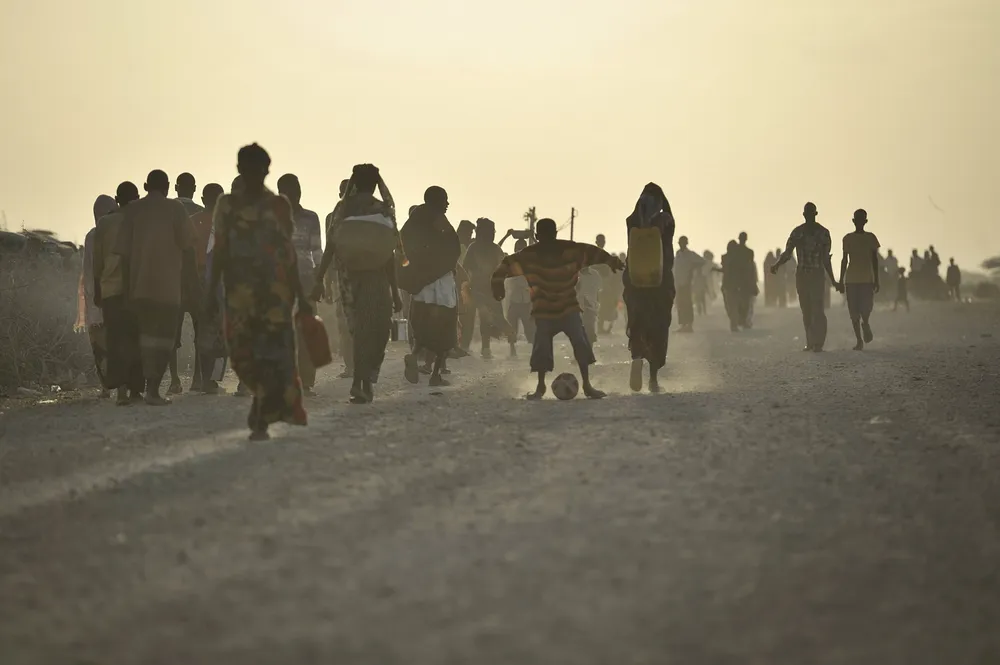
Humanitarian assessments highlight the scale of the crisis. The Sudan Humanitarian Needs and Response Plan 2024 noted tens of millions of people in need and warned that basic services—health, water, education and food systems—were collapsing (OCHA, 2023). WHO’s Regional Office for the Eastern Mediterranean described Sudan as a “forgotten crisis”, reporting tens of thousands killed or injured and extensive attacks on health facilities by late 2023 (WHO EMRO, 2023).
Subsequent analysis shows Sudan now faces one of the world’s worst hunger emergencies, driven by conflict, market disruption and restricted humanitarian access (Dacrema, 2025). In Darfur, for example, attacks by the RSF and allied militias on camps around al-Fashir in 2024 forced around 60 percent of more than 100,000 residents to flee in a single episode (Reuters, 2024). Displacement and violence on this scale create fertile ground for regional and international actors to intervene, whether for strategic, economic or security reasons (Gowayed, 2024; EUAA, 2025).
Neighbouring States: Security, Borders and Spillover
Sudan’s immediate neighbours—Egypt, Ethiopia, Eritrea, Chad and South Sudan—view the conflict through the lens of border security, refugee inflows and long-standing territorial and water disputes. Gregoire (2024) shows how tensions over the Grand Ethiopian Renaissance Dam (GERD), the al-Fashaga border triangle and unresolved conflicts in Ethiopia and South Sudan shape each neighbour’s perception of the war. Egypt has historically maintained close ties with Sudan’s regular army and continues to favour the SAF as a partner that can help protect its interests in Nile waters and regional security (Gregoire, 2024; SETA, 2024). Ethiopia and Eritrea, by contrast, have pursued more complex and sometimes opaque relationships with Sudanese actors, influenced by their own security calculations and previous alliances during the Tigray conflict (Kurtz, 2024; Gregoire, 2024). Chad, which shares ethnic and economic linkages with Darfur, has been accused in some analyses of functioning as a logistical corridor for arms and supplies, although N’Djamena denies direct involvement (Abdalla, 2024; EUAA, 2025).
These neighbouring states thus play a dual role: they host large numbers of Sudanese refugees and are directly threatened by cross-border insecurity, yet their alliances and security interests can also reinforce the conflict dynamics inside Sudan (Gregoire, 2024; Musso, 2025).
Gulf Powers and the Red Sea Arena
Gulf states—especially Saudi Arabia and the United Arab Emirates (UAE)—are among the most influential external actors. The SETA “One Year at War” report underlines that Sudan’s strategic location on the Red Sea, combined with its gold reserves and agricultural potential, has made it a focal point of Gulf competition (SETA, 2024).
Abdalla (2024) documents how, after April 2023, the roles of Saudi Arabia and the UAE diverged: Riyadh has tried to position itself as a stabilizing mediator, hosting ceasefire talks in Jeddah, while numerous reports indicate that the UAE has supplied financial and military support to the RSF, including through networks linked to gold exports. These findings are echoed in broader geopolitical analyses that describe Sudan as part of a “Gulf chessboard”, where Abu Dhabi and Riyadh project influence through alliances with local armed actors (Musso, 2025; Dacrema, 2025).
Turkey and Qatar have also been associated more closely with political and social forces linked to the former Islamist regime, and thus perceived as leaning towards actors closer to the SAF (SETA, 2024; Salih, 2024). This complex web of Gulf engagement makes it difficult to separate mediation efforts from strategic competition along the Red Sea.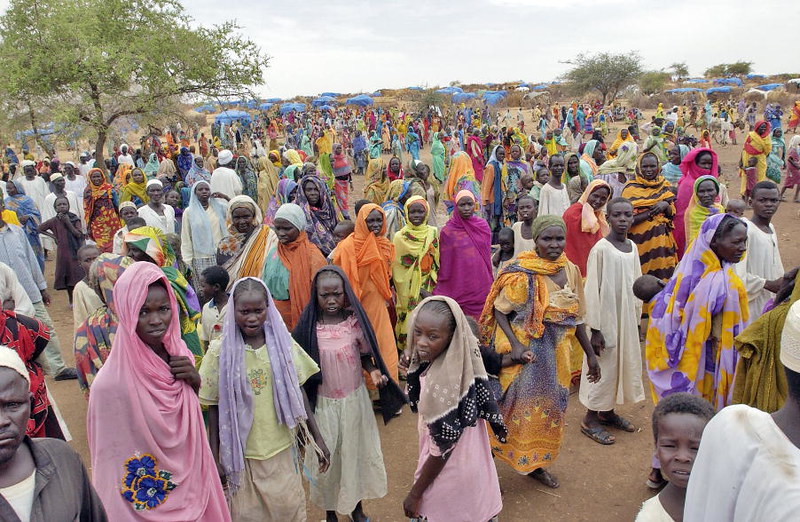
Global Powers, Mediation and International Inertia
Beyond the region, global powers have played a significant, if often inconsistent, role. The United States and Saudi Arabia jointly sponsored the Jeddah talks, seeking ceasefires and humanitarian access, yet their leverage has been limited and ceasefires repeatedly broken (Aftandilian, 2023; Gohar, 2025). Aftandilian (2023) argues that Washington’s influence is constrained by competing priorities and its need to balance relations with both Gulf allies and regional partners.
European states and the European Union have focused largely on humanitarian funding, sanctions, and support for African-led mediation efforts. However, the fragmentation of mediation platforms—among Jeddah, African Union, IGAD and other initiatives—has produced what Gohar (2025) calls a “failure of mediation”, in which no single framework commands enough legitimacy or unified external backing to pressure the warring parties.
Russia, meanwhile, seeks access to Sudan’s gold and a potential Red Sea naval facility, building on longstanding security ties and previous cooperation with Wagner-linked networks (Kurtz, 2024; SETA, 2024). While the full extent of current Russian or post-Wagner involvement is debated, Musso (2025) highlights how Sudan’s war has become entangled in broader global rivalries, including those linked to the war in Ukraine.
China remains more cautious, largely prioritising stability for its investments and shipping routes, and avoiding overt military entanglement (Musso, 2025; Kurtz, 2024). Nonetheless, both Russia and China have been criticised for blocking or watering down stronger measures in the UN Security Council (EUAA, 2025).
 Informational Warfare, Social Fragmentation and Trans-Regional Dynamics
Recent research emphasises that external actors influence not only the battlefield but also information environments and social cohesion. Sulaiman (2025) shows how hate speech—circulating via television, radio and social media—has been instrumental in legitimising violence and deepening ethnic and regional fragmentation, often amplified or tolerated by external patrons.
Musso (2025) describes Sudan as part of a “trans-regional conflict system” linking the Sahel, the Horn of Africa and the Red Sea, where aspiring regional hegemons, fragile neighbours and opportunistic spoilers interact. This framework helps explain why the conflict has persisted despite catastrophic humanitarian costs and repeated diplomatic efforts (Musso, 2025; Dacrema, 2025).
Quantitative Patterns and the Humanitarian–Military Imbalance
A striking feature of the current crisis is the imbalance between military and humanitarian flows. UNICEF estimates that people in need rose from 24.8 million in 2024 to 30.4 million in 2025, a 23 per cent increase, while humanitarian funding has lagged far behind requirements (UNICEF, 2024; UNICEF, 2025). The Sudan Humanitarian Needs and Response Plan 2024 shows large financing gaps across food security, health, shelter and education sectors (OCHA, 2023; FAO & OCHA, 2024).
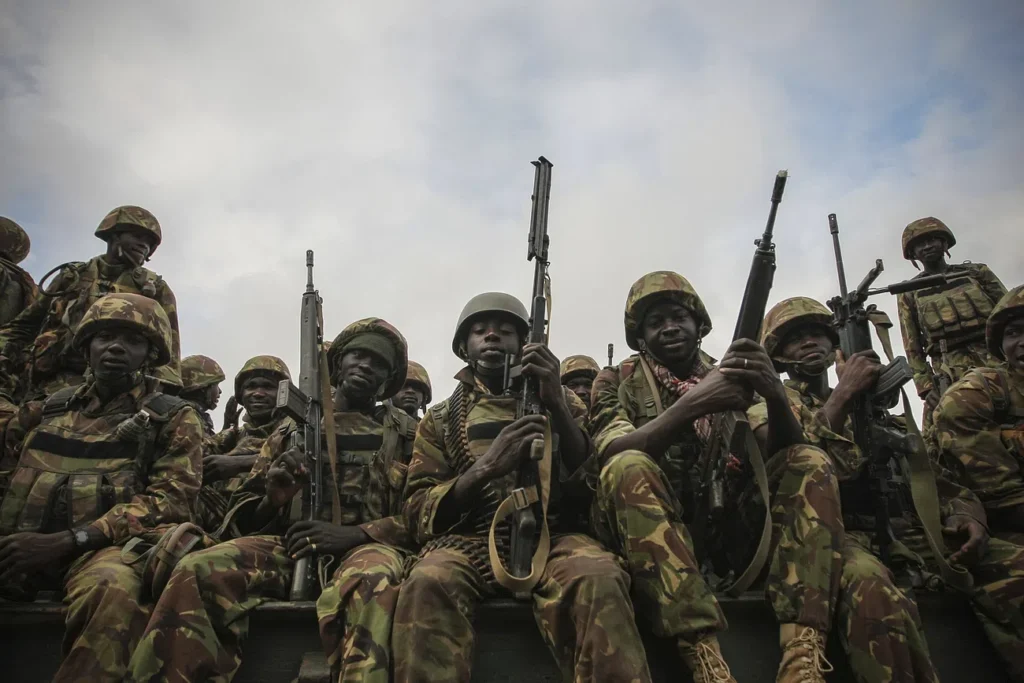
At the same time, EUAA (2025) and independent conflict mapping show the proliferation of weapons and the spread of fighting to most of Sudan’s states, especially Khartoum, Darfur and Kordofan. SETA’s assessment notes that external military support has been crucial in allowing both the SAF and RSF to continue fighting despite heavy losses and the near-total destruction of parts of Khartoum (SETA, 2024).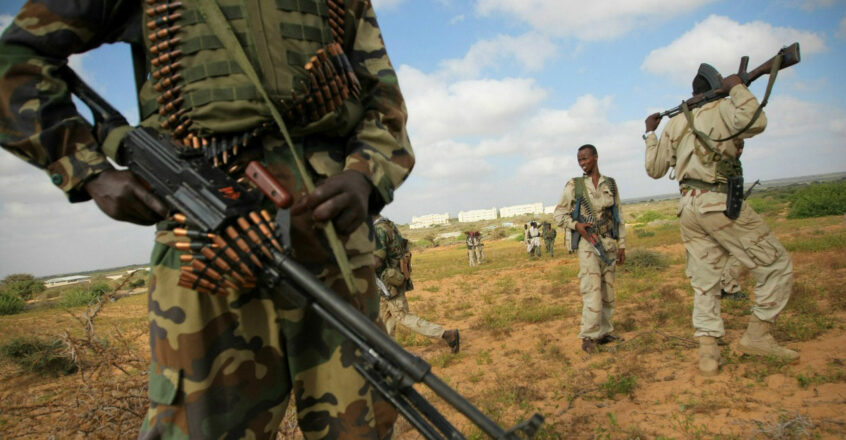
This contrast—between underfunded humanitarian operations and continued flows of arms, money and political backing from external actors—illustrates how international engagement has often prolonged rather than resolved the conflict (Abdalla, 2024; Gohar, 2025).
Conclusion
Sudan’s current conflict is best understood as a multi-layered war in which regional and international actors are central protagonists, not peripheral spectators. Neighbouring states seek to manage refugee flows and border security while advancing their own disputes; Gulf powers pursue influence along the Red Sea and in Sudan’s economy; global powers fold Sudan into wider strategic competitions; and multilateral institutions struggle to coordinate effective mediation amid fragmented external agendas (Gregoire, 2024; Salih, 2024; Musso, 2025).
Quantitative indicators—from the tens of millions in need and massive displacement to the documented spread of conflict events—underscore that external involvement is a key driver of both the war’s intensity and its duration (UNICEF, 2024; EUAA, 2025; Dacrema, 2025). Qualitative analyses converge on the conclusion that, without a fundamental shift in the behaviour of regional and international actors—away from proxy competition and selective intervention towards coordinated, civilian-centred diplomacy—Sudan risks deeper fragmentation and prolonged human suffering (Abdalla, 2024; Gohar, 2025; Gowayed, 2024).
Any sustainable solution will therefore require not only a domestic political settlement, but also a reconfiguration of external incentives, including restrictions on arms transfers, genuine support for unified mediation, and long-term investment in Sudan’s civilian institutions and social reconstruction.
References
Abdalla, A 2024, ‘The Roles of External Parties in the April 15 War and Their Interests in Sudan’, The Journal of Social Encounters, vol. 8, no. 2, pp. 108–133, https://digitalcommons.csbsju.edu/social_encounters/vol8/iss2/7/
Aftandilian, G 2023, The US and the Sudan Conflict: Motives and Ability to Influence Events, Arab Center Washington DC, https://arabcenterdc.org/resource/the-us-and-the-sudan-conflict-motives-and-ability-to-influence-events/
Dacrema, E 2025, ‘Sudan’s Hunger Emergency: A Humanitarian Catastrophe in the Shadows’, ISPI Commentary, 30 April, https://www.ispionline.it/en/publication/sudans-hunger-emergency-a-humanitarian-catastrophe-in-the-shadows-207349
European Union Agency for Asylum (EUAA) 2025, Sudan: Security Situation, Country of Origin Information Report, 11 February, https://coi.euaa.europa.eu/administration/easo/PLib/2025_02_EUAA_COI_Report_Sudan_Security_Situation.pdf
FAO & OCHA 2024, The Sudan: Humanitarian Needs and Response Plan 2024, FAO, Rome, https://openknowledge.fao.org/handle/20.500.14283/cc9996en
Gohar, I 2025, ‘Sudan’s War: The Failure of Mediation and the Struggle for Civilian Rule’, Arab Center Washington DC, 31 October, https://arabcenterdc.org/resource/sudans-war-the-failure-of-mediation-and-the-struggle-for-civilian-rule/
Gowayed, H 2024, ‘War and Displacement in Sudan’, Arab Center Washington DC, 22 October, https://arabcenterdc.org/resource/war-and-displacement-in-sudan/
Gregoire, R 2024, ‘Sudan’s Current Conflict: Implications for the Bordering Regions and Influence of the Key Regional/International Actors’, The Journal of Social Encounters, vol. 8, no. 2, pp. 134–158, https://digitalcommons.csbsju.edu/social_encounters/vol8/iss2/8/
Kurtz, G 2024, Power Relations in Sudan after the Fall of Bashir: From Revolution to War, SWP Research Paper 2024/RP05, Stiftung Wissenschaft und Politik, Berlin, https://www.swp-berlin.org/publications/products/research_papers/2024RP05_SudanAfterBashir.pdf
Musso, G 2025, ‘Sudan and the Danger of a Trans-Regional Conflict’, ISPI Commentary, 30 April, https://www.ispionline.it/en/publication/sudan-and-the-danger-of-a-trans-regional-conflict-207351
OCHA 2023, Sudan Humanitarian Needs and Response Plan 2024, ReliefWeb, 21 December, https://reliefweb.int/report/sudan/sudan-humanitarian-needs-and-response-plan-2024-december-2023
Reuters 2024, ‘Tens of thousands flee as paramilitaries attack Sudan’s al-Fashir, activists say’, 24 May, https://www.reuters.com/world/africa/tens-thousands-flee-paramilitaries-attack-sudans-al-fashir-activists-say-2024-05-24/
Salih, ZM 2024, ‘Conflict in Sudan: A Map of Regional and International Actors’, Wilson Center Middle East Program, 19 December, https://www.wilsoncenter.org/article/conflict-sudan-map-regional-and-international-actors
SETA Foundation 2024, One Year at War: The Past, Present and Future of Sudan’s Civil War and Proposed Solutions, SETA, Ankara, https://media.setav.org/en/file/2024/06/one-year-at-war-the-past-present-and-future-of-sudans-civil-war-and-proposed-solutions.pdf
Sulaiman, S 2025, ‘A War Fueled by Hate Speech: Sudan’s Fall into Fragmentation’, Carnegie Endowment for International Peace, 29 October, https://carnegieendowment.org/sada/2025/10/a-war-fueled-by-hate-speech-sudans-fall-into-fragmentation
UNICEF 2024, Humanitarian Action for Children: Sudan – 2024 Revision 1 (August 2024), UNICEF, https://www.unicef.org/media/162941/file/2024-HAC-Sudan-rev-Aug.pdf
UNICEF 2025, Humanitarian Action for Children: Sudan – 2025 Appeal, UNICEF, https://www.unicef.org/media/167966/file/2025-HAC-Sudan.pdf
WHO EMRO 2023, ‘Regional Director Statement on the Health Crisis in Sudan’, World Health Organization Eastern Mediterranean Regional Office, 21 November, https://www.emro.who.int/media/news/regional-director-statement-on-the-health-crisis-in-sudan.html