A Turning Point or a Temporary Fix? The UN Security Council’s Gaza Decision and the Limits of International Intervention
On 17 November 2025, the United Nations Security Council adopted Resolution 2803, authorising an international stabilization force and a temporary civilian administrative mechanism in Gaza. The outcome was notable both for its substance and for the rare alignment it produced: 13 states voted in favor, while Russia and China abstained rather than vetoing the measure (FT, 2025; UNSC, 2025). Given the Council’s persistent paralysis on conflicts in Ukraine, Syria and Sudan, the passage of this resolution seemed at first to signal a renewed capacity for collective action. Yet the convergence was fragile and strategic rather than principled, shaped by humanitarian pressure and shifting geopolitical incentives.
The resolution emerged against the backdrop of a severe governance and humanitarian crisis in Gaza. Years of blockade, repeated conflict, and the intense escalation of 2024-2025 had eroded Hamas’ control, leaving a vacuum in policing, administration and basic service delivery. UN agencies reported rising food insecurity, large-scale displacement, and the collapse of health infrastructure (OCHA, 2025). For many states, humanitarian aid alone was no longer adequate; an organised security and governance structure was deemed necessary to stabilize conditions on the ground.
For the United States, this situation offered both an obligation and strategic opening. Following years of perceived disengagement from the Middle East, Washington sought to reassert diplomatic leadership by proposing a multilateral stabilisation plan that combined security, humanitarian access and transitional administration (FT, 2025). European governments, including France and Germany endorsed the plan, viewing it as a buffer against renewed escalation and a mechanism to prevent extremist groups from capitalising on the vacuum.
The abstentions of Russia and China revealed the tactical and conditional basis of the Council’s alignment. For Russia, burdened by the fallout from the Ukraine war and heightened Western diplomatic isolation, vetoing a humanitarian-focused resolution offered little strategic value. Blocking it risked straining relationships with key regional partners such as Egypt and the Gulf states, while endorsing a US-led initiative would have conflicted with Moscow’s broader geopolitical messaging (Reuters, 2025a). Abstaining enabled Russia to avoid Reputational costs without explicitly supporting US leadership.
China’s abstention stemmed from a similarly cautious calculus. Beijing has worked to present itself as a responsible global actor, particularly to the Global South, making opposition to a humanitarian resolution inconsistent with its desired image. Yet China also resists endorsing Western-led interventions, particularly amid intensifying US-China rivalry (Reuters, 2025b). Abstention allowed China to maintain its emphasis on sovereignty and non-interference while avoiding explicit alignment with either bloc.
These dynamics demonstrate that Resolution 2803 did not arise from a shared strategic vision for Gaza but from a temporary overlap of distinct interests: the United States sought renewed influence, Europe sought stability, and Russia and China sought to avoid political costs. The Council acted not due to renewed coherence in the international system but because the costs of inaction had grown higher than those of limited cooperation.
Legal Ambiguities and the Challenges of Implementation
Although the adoption of Resolution 2803 was politically notable, its legal and operational foundations remain complex. Gaza’s status is ambiguous: it is neither a fully sovereign entity nor a traditionally occupied territory, yet Israel retains control over borders, airspace and elements of security. This ambiguity makes it difficult to construct a clear legal justification for external administration. Supporters draw parallels to transitional arrangements in East Timor and Kosovo, where governance collapse necessitated international oversight (Chesterman, 2005). Critics, however, argue that outsourcing administration risks diminishing Palestinian political agency and may shift legal responsibilities away from actors with obligations under international humanitarian law (ICRC, 2025).
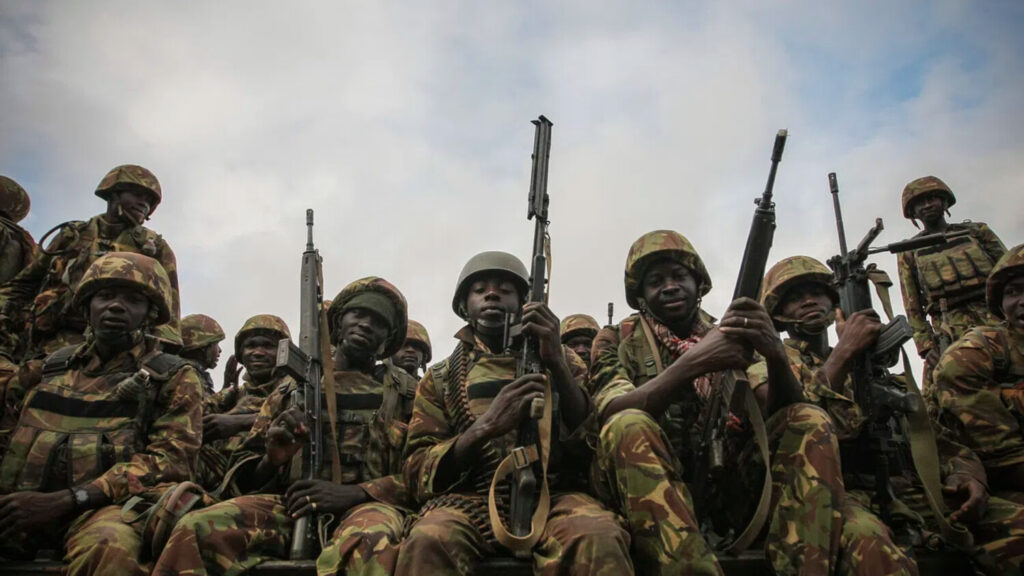
Substantial operational uncertainty also remains. Although the resolution sets broad goals, it does not specify which states will supply troops or resources. European states such as France, Italy and the Netherlands have expressed cautious interest, yet domestic constraints and fear of mission creep limit their willingness to commit sizeable forces. Arab states, including Egypt and Jordan, endorse the idea of stabilization yet remain reluctant to assume direct security roles due to concerns about regional legitimacy and historical sensitivities.
A NATO-branded mission is politically infeasible, though individual NATO states may contribute independently. Without clearly defined contributors, the maintenance mission risks inheriting the same structural weaknesses that have undermined previous interventions.
The mission’s success depends not only on troop deployment but on political coordination. While a stabilization force can ensure temporary security and humanitarian access, it cannot address the deeper political conditions that drive recurring conflict. The resolution does not outline a long-term political framework for Gaza or clarify how the temporary administration will transition to sustainable local governance. Without this clarity, the mission risks becoming technocratic, focusing on short-term order rather than addressing underlying political fragmentation.
The broader significance of Resolution 2803 lies in what it reveals about the contemporary international system. It shows that limited convergence is still possible when humanitarian crises escalate beyond existing political frameworks. At the same time, it exposes the fragility of such convergence: the abstentions signal reluctance, legal ambiguities remain unsettled, and operational commitments are uncertain. The resolution thus functions less as evidence of renewed multilateral strength and more of a test of how much capacity truly remains within the Security Council to manage crises in an increasingly fragmented geopolitical environment.
Whether the mission succeeds in stabilizing Gaza or ends up another symbolic intervention will depend on decisions yet to be made. Its implementation will indicate whether the UN can continue to exert a meaningful influence in complex conflict zones or whether it is increasingly confined to procedural responses that acknowledge crisis without fundamentally addressing its drivers.
Bibliography
Chesterman, S. (2005). You, The People: The United Nations, Transitional Administration, and State-Building. Oxford: Oxford University Press.
Financial Times (2025). “UN approves US-backed resolution for Gaza stabilisation force”, 17 November.
ICRC (2025). Gaza: International Humanitarian Law Overview.
OCHA (2025). Gaza Humanitarian Update, October 2025.
Reuters (2025a). “Russia abstains in UN vote on Gaza mission”, 18 November.
Reuters (2025b). “China says it will not block humanitarian stabilisation effort in Gaza”, 18 November.
UNSC (2025). Resolution 2803 (2025).